Birch polypore vs chaga: how to tell them apart
Quick answer
Birch polypore is a smooth, pale, kidney-shaped bracket with a rolled edge over a white pore surface; chaga is an irregular black mass, deeply cracked like burnt charcoal, with no bracket shape and no pores. Inside, chaga is hard and rusty orange-brown, while birch polypore is thick, white and rubbery to corky.
Side by side
The tell for each
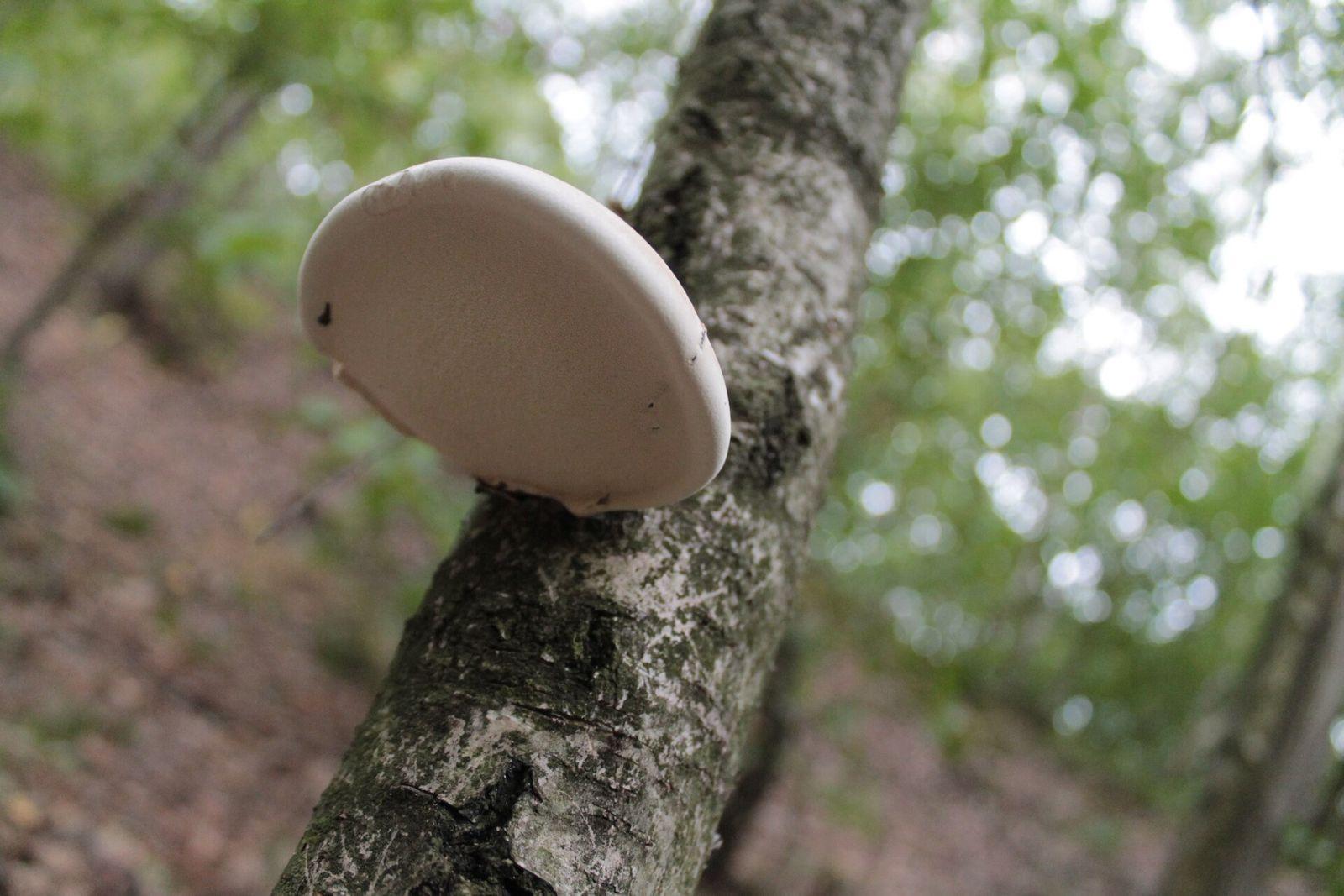
The tellA smooth, pale, kidney-shaped bracket that grows only on birch, with a rolled edge overhanging white pores.
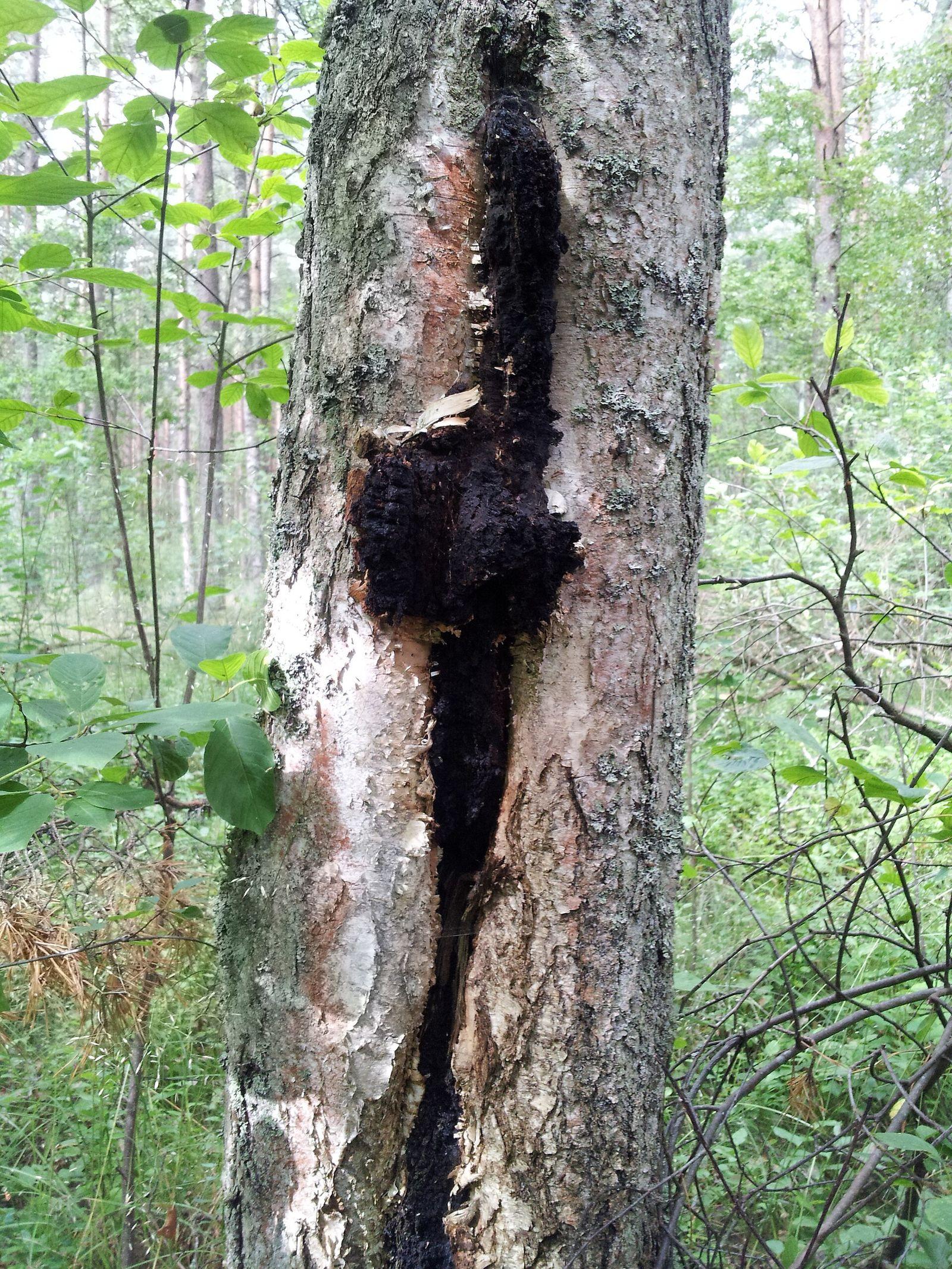
The tellA black, deeply cracked, charcoal-like lump on a living birch, rusty orange-brown inside.
How they differ
| Feature | Birch Polypore | Chaga |
|---|---|---|
| Shape | Birch PolyporeA kidney- to hoof-shaped bracket. | ChagaAn irregular lump bursting from the trunk. |
| Outer surface | Birch PolyporeSmooth, white to pale tan or grayish brown, with a thin skin that cracks with age. | ChagaBlack and deeply cracked, like burnt charcoal. |
| Underside | Birch PolyporeWhite pore surface with tiny pores. | ChagaNone on the black mass. |
| Inside | Birch PolyporeThick, white, rubbery to corky. | ChagaHard, corky, rusty yellow-brown to orange-brown. |
| Host | Birch PolyporeDead and dying birch. | ChagaLiving birch, rarely other hardwoods. |
| Lifespan | Birch PolyporeGrows in summer and fall; old brackets persist through winter. | ChagaGrows slowly over many years. |
FAQ
Common questions
Does chaga grow on dead birch?
The black mass grows on living birch, often at an old wound. Its spore-producing stage forms under the bark after the tree dies and is rarely seen.
Is birch polypore poisonous?
It is not known to be toxic. Field guides list it as inedible because it is tough and bitter.
Sources
Where these facts come from
- Fomitopsis betulina
MushroomExpert.com
- Inonotus obliquus
MushroomExpert.com
Keep checking
Read both pages in full
- More on the birch polypore
- More on the chaga
- Not sure it is either? Narrow it down with the identification key
This page states what field guides record. It is not advice to eat, taste or handle anything, and a photo cannot settle edibility. If someone has eaten a wild mushroom that may be toxic, call poison control (1-800-222-1222 in the US) right away, before symptoms start: the deadliest species act hours later.
Waitlist
Hear when it opens
We will send one email when Mushrooms.id opens, and nothing else.
This opens your email app with the request written for you. Send it and we add you to the list. No email app? Write to hello@mushrooms.id with the subject “Add me to the Mushrooms.id waitlist”.