Inedible
Tinder Conk
Fomes fomentarius
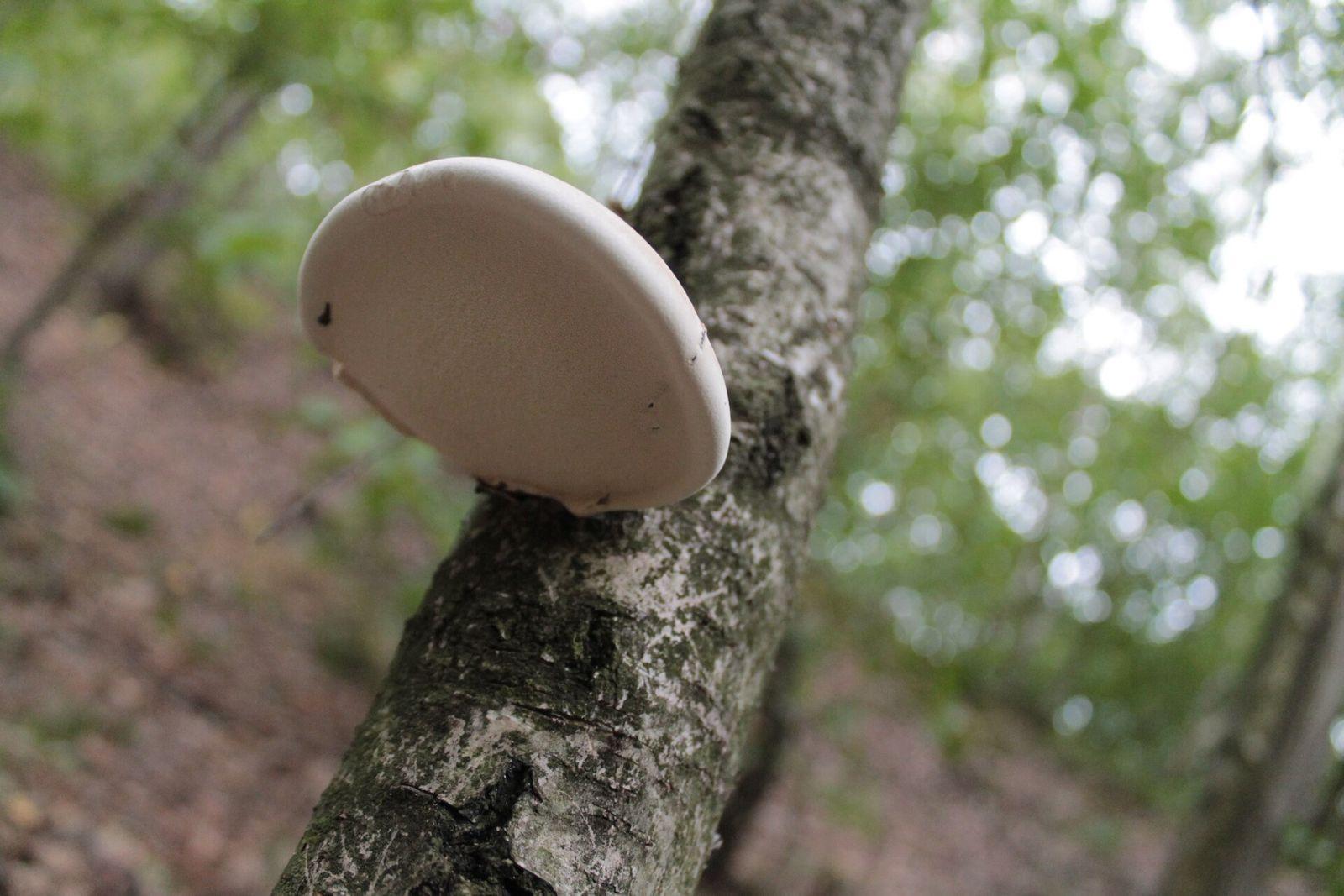
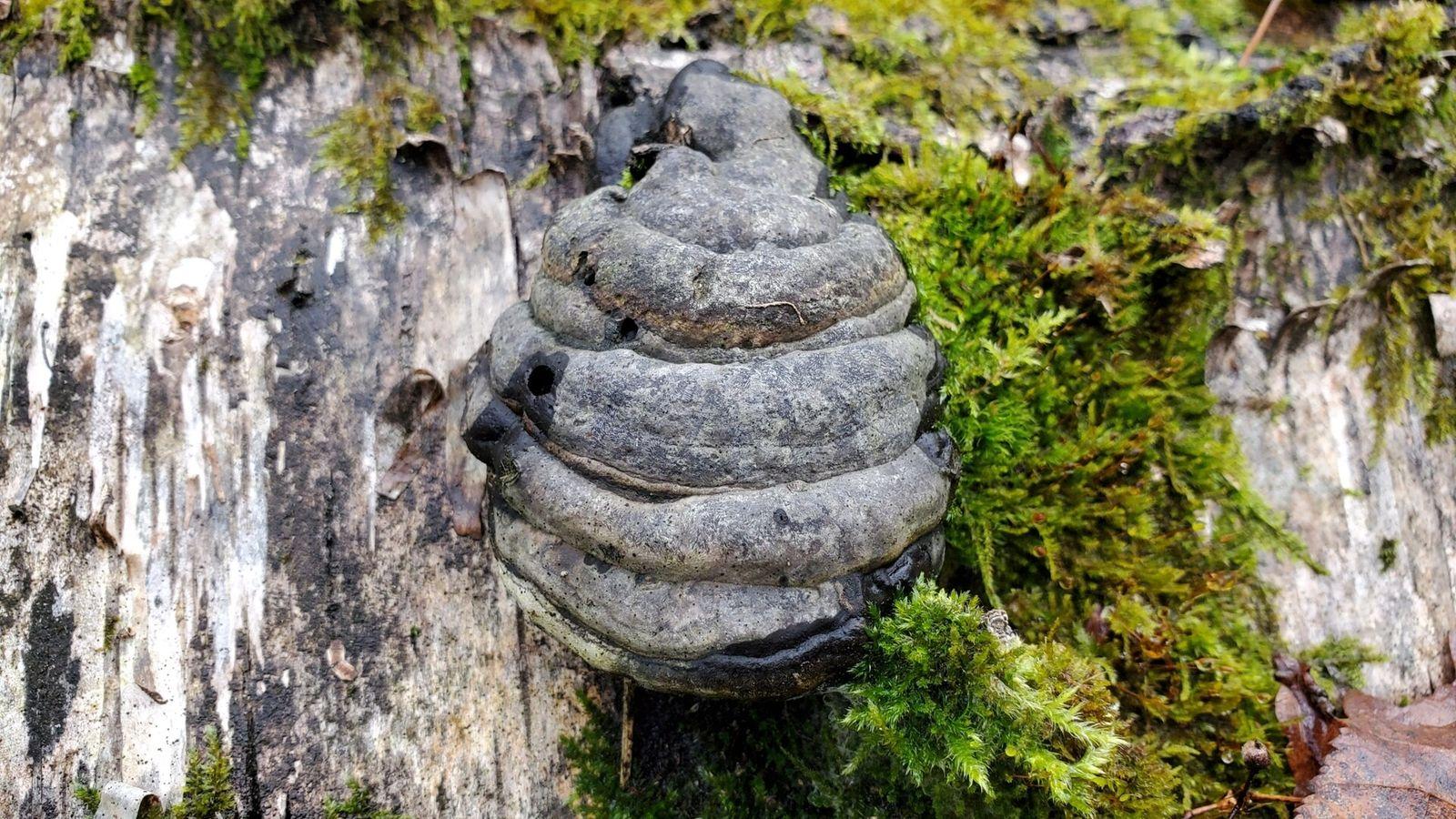
A gray, hoof-shaped bracket with a pore surface underneath. Chaga has no pores on its black mass and no bracket shape.
Inonotus obliquus
Also called clinker polypore, cinder conk, birch canker.
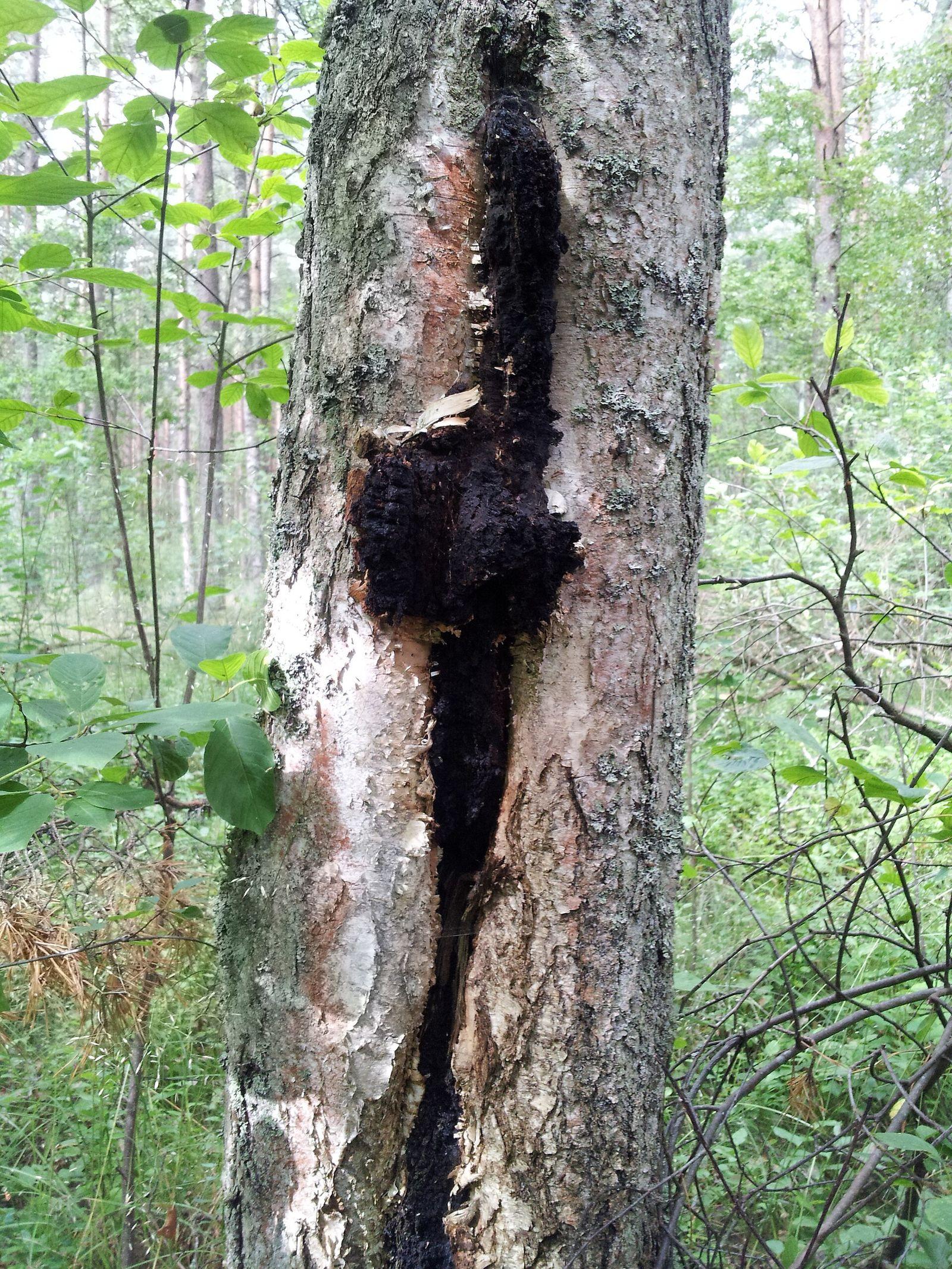
Chaga is a black, cracked growth on living birch trees that looks like burnt charcoal. It is a sterile mass of fungal tissue and wood, rusty orange inside, not a cap. It is too hard to eat and is ground and steeped as a tea.
The tell
A black, deeply cracked, charcoal-like lump on a living birch, rusty orange-brown inside.
Field marks
Cap, underside and stem show in a photo. The spore print does not, and it is often the deciding check.
Where and when
Lookalikes
Each card says how to tell the two apart.
A rounded swelling of the tree's own wood, covered in bark, and woody tan inside rather than black and crumbly outside with orange-brown flesh.
Fomes fomentarius
A gray, hoof-shaped bracket with a pore surface underneath. Chaga has no pores on its black mass and no bracket shape.
Smaller black, lumpy swellings on the twigs and branches of cherry and plum, not on birch trunks.
More side-by-side comparisons
Edibility
Field guides list chaga as inedible because it is hard and corky. It is broken into chunks or ground and steeped in hot water as a tea, a use recorded for centuries in Russia and northern Europe. Chaga contains high levels of oxalate, and a published case report links kidney damage to heavy, long-term chaga powder use.
This page states what field guides record. It is not advice to eat, taste or handle anything, and a photo cannot settle edibility. If someone has eaten a wild mushroom that may be toxic, call poison control (1-800-222-1222 in the US) right away, before symptoms start: the deadliest species act hours later.
FAQ
It is ground or broken into chunks and steeped in hot water as a tea, and it is sold as powders and extracts. The tea tradition goes back centuries in Russia and northern Europe.
A black, deeply cracked lump bulging from the trunk of a living birch, looking like burnt charcoal. Broken open, it is rusty orange-brown and corky inside.
Almost all chaga grows on birch. It is occasionally reported on other hardwoods such as alder, but birch is the host field guides describe.
Sources
MushroomExpert.com
Fungi Growing on Wood, Gary Emberger (MushroomExpert.com)
Index Fungorum
Waitlist
We will send one email when Mushrooms.id opens, and nothing else.
This opens your email app with the request written for you. Send it and we add you to the list. No email app? Write to hello@mushrooms.id with the subject “Add me to the Mushrooms.id waitlist”.