Inedible
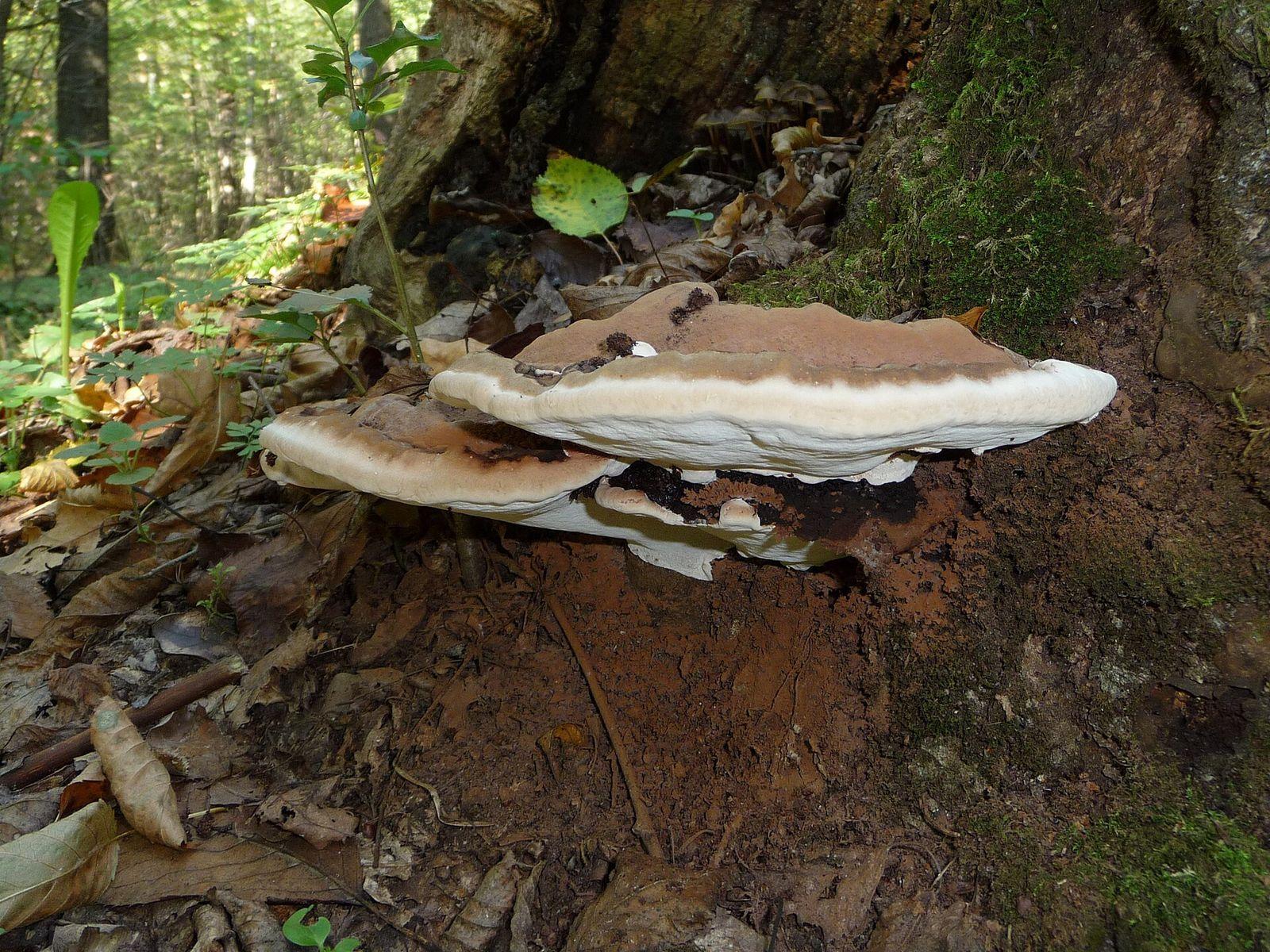
Artist's Conk
Ganoderma applanatum
Flatter and brown, with a white pore surface that turns dark brown immediately when scratched.
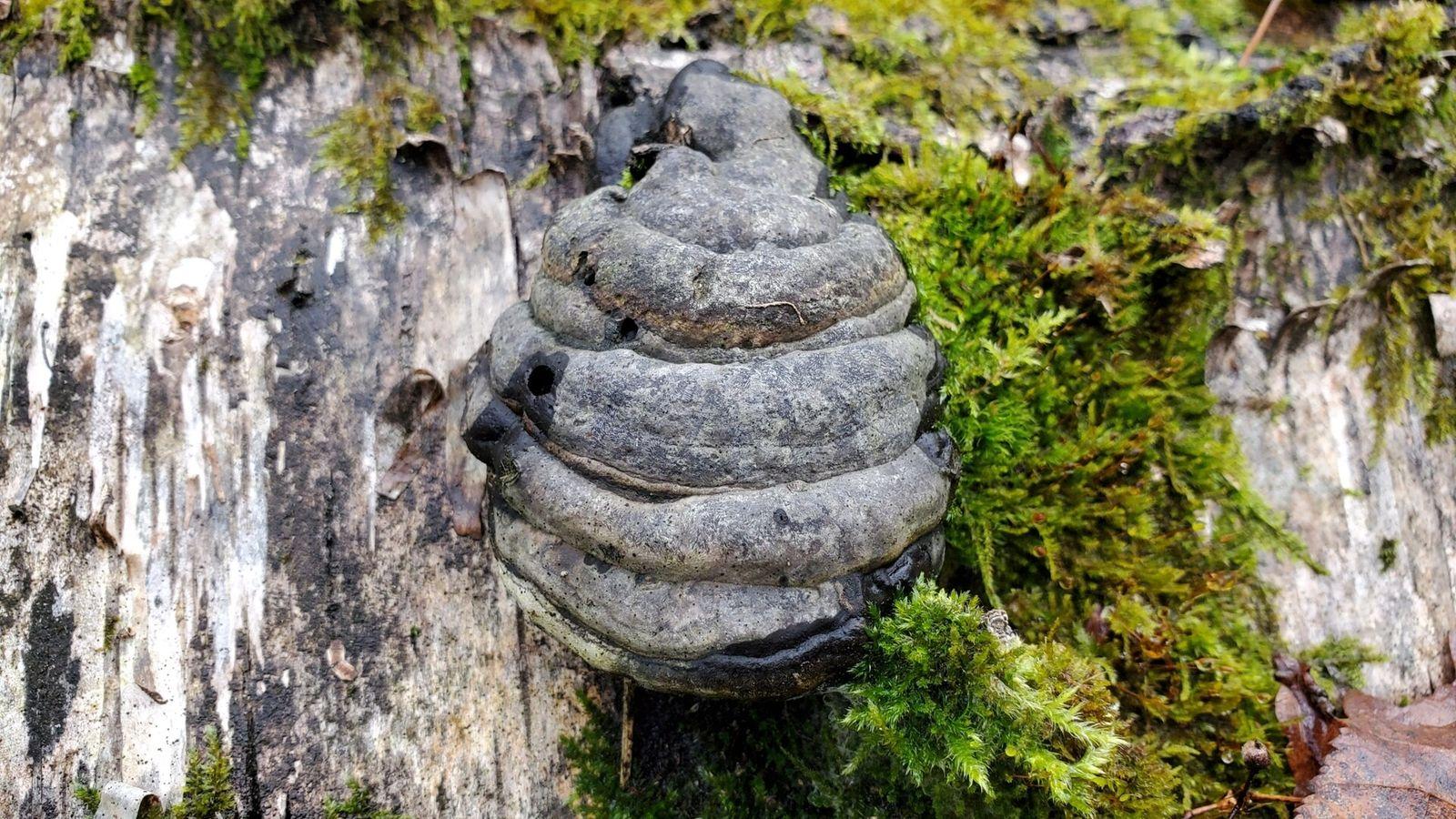
Fomes fomentarius
Also called hoof fungus, tinder fungus, horse's hoof fungus.
The tinder conk is a gray, hoof-shaped bracket fungus that grows on birch, beech and other hardwoods. It is hard and perennial, adding a layer each year. Its felt-like inner tissue, amadou, was used for thousands of years to catch sparks and carry fire.
The tell
A gray, hoof-shaped, ridged and rock-hard bracket on birch or other hardwoods.
Field marks
Cap, underside and stem show in a photo. The spore print does not, and it is often the deciding check.
Where and when
Lookalikes
Each card says how to tell the two apart.
Ganoderma applanatum
Flatter and brown, with a white pore surface that turns dark brown immediately when scratched.
Hoof-shaped and gray to black, often deeply cracked on top, with rusty brown flesh and a brown pore surface.
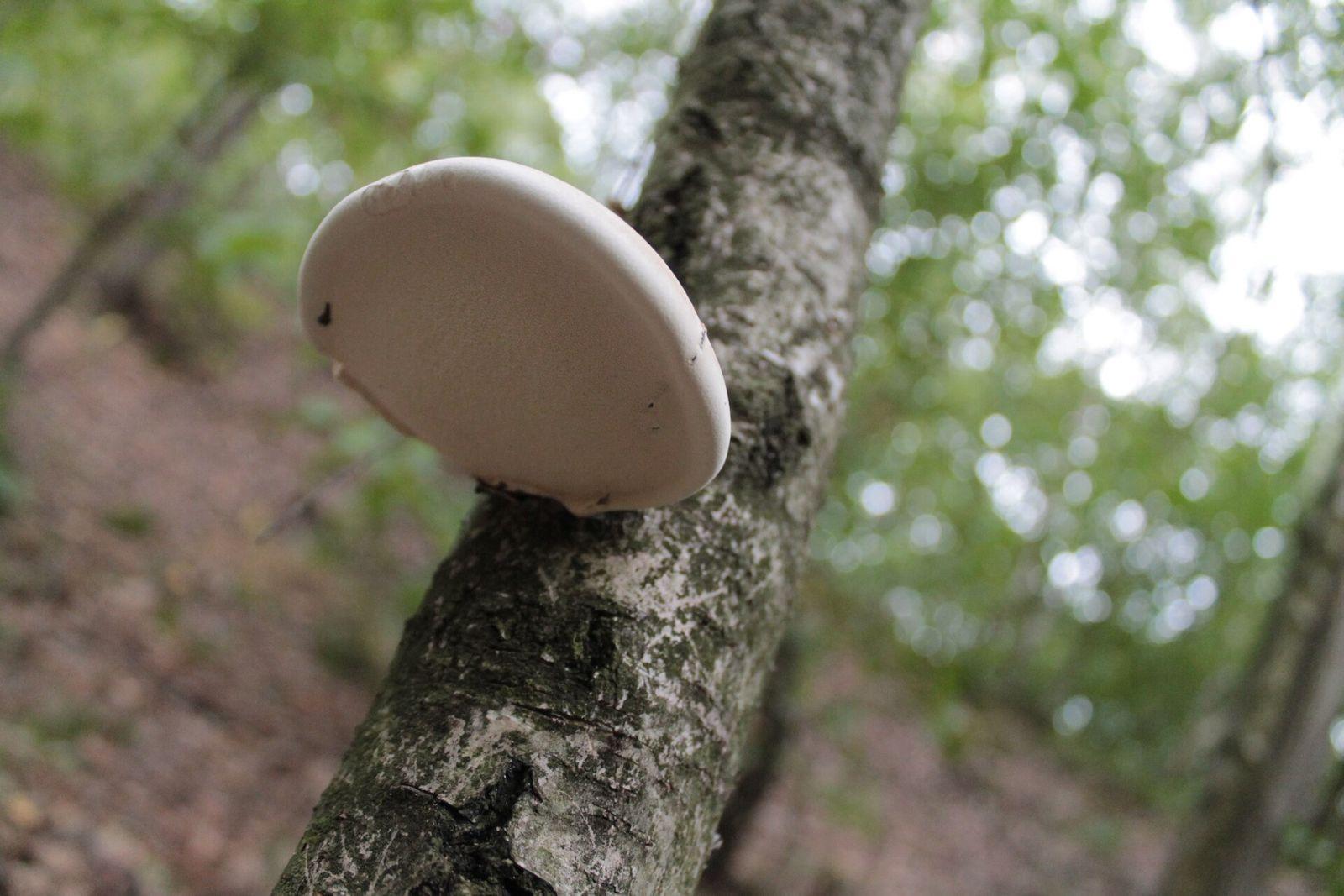
Fomitopsis betulina
Smooth, pale, kidney-shaped and softer, with a white pore surface and a rolled edge. It lasts one season.
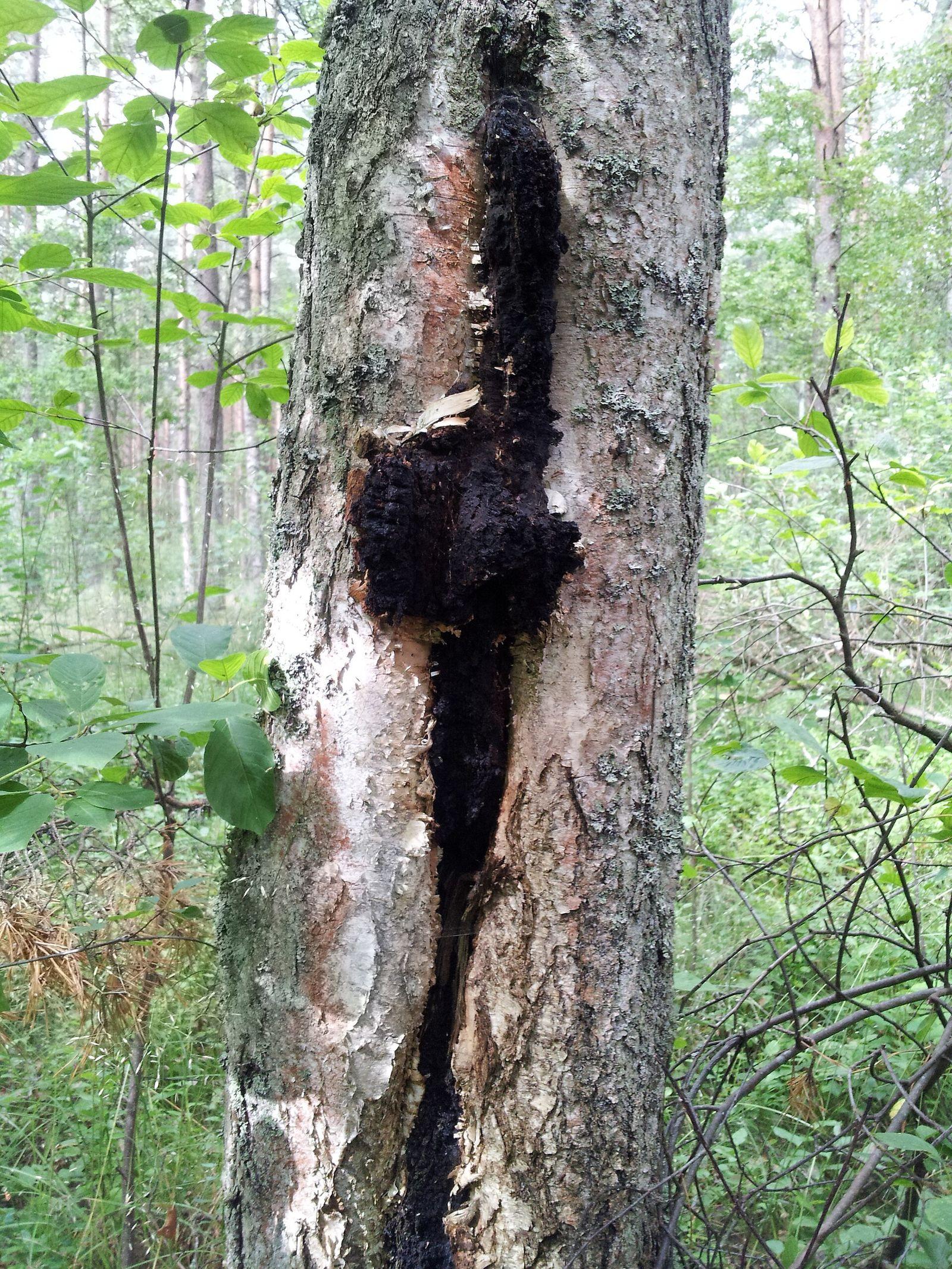
Inonotus obliquus
A black, cracked, charcoal-like mass on living birch, orange-brown inside, with no bracket shape.
Edibility
Field guides list the tinder conk as inedible because it is woody. Its felt-like inner tissue, called amadou, was processed into tinder for starting fires, and a piece was among the fire-making kit carried by Ötzi the Iceman about 5,300 years ago. Amadou was also made into hats and fishing fly dryers.
This page states what field guides record. It is not advice to eat, taste or handle anything, and a photo cannot settle edibility. If someone has eaten a wild mushroom that may be toxic, call poison control (1-800-222-1222 in the US) right away, before symptoms start: the deadliest species act hours later.
FAQ
Its inner tissue, amadou, catches sparks and smolders, so it has been used as tinder since prehistoric times. Ötzi the Iceman carried it, and amadou is still sold for drying fishing flies.
Field guides list it as inedible because it is woody. It is not known to be toxic.
A gray, hoof-shaped bracket with ridges marking each year's growth, very hard to the touch, on the trunk of a birch or other hardwood. The underside is a brownish surface of tiny pores.
Sources
MushroomExpert.com
Fungi Growing on Wood, Gary Emberger (MushroomExpert.com)
Index Fungorum
Waitlist
We will send one email when Mushrooms.id opens, and nothing else.
This opens your email app with the request written for you. Send it and we add you to the list. No email app? Write to hello@mushrooms.id with the subject “Add me to the Mushrooms.id waitlist”.