Inedible
Tinder Conk
Fomes fomentarius
Hoof-shaped and gray, with a brownish pore surface that does not turn dark brown when scratched. It grows mainly on birch.
Ganoderma applanatum
Also called artist's bracket, bear bread.
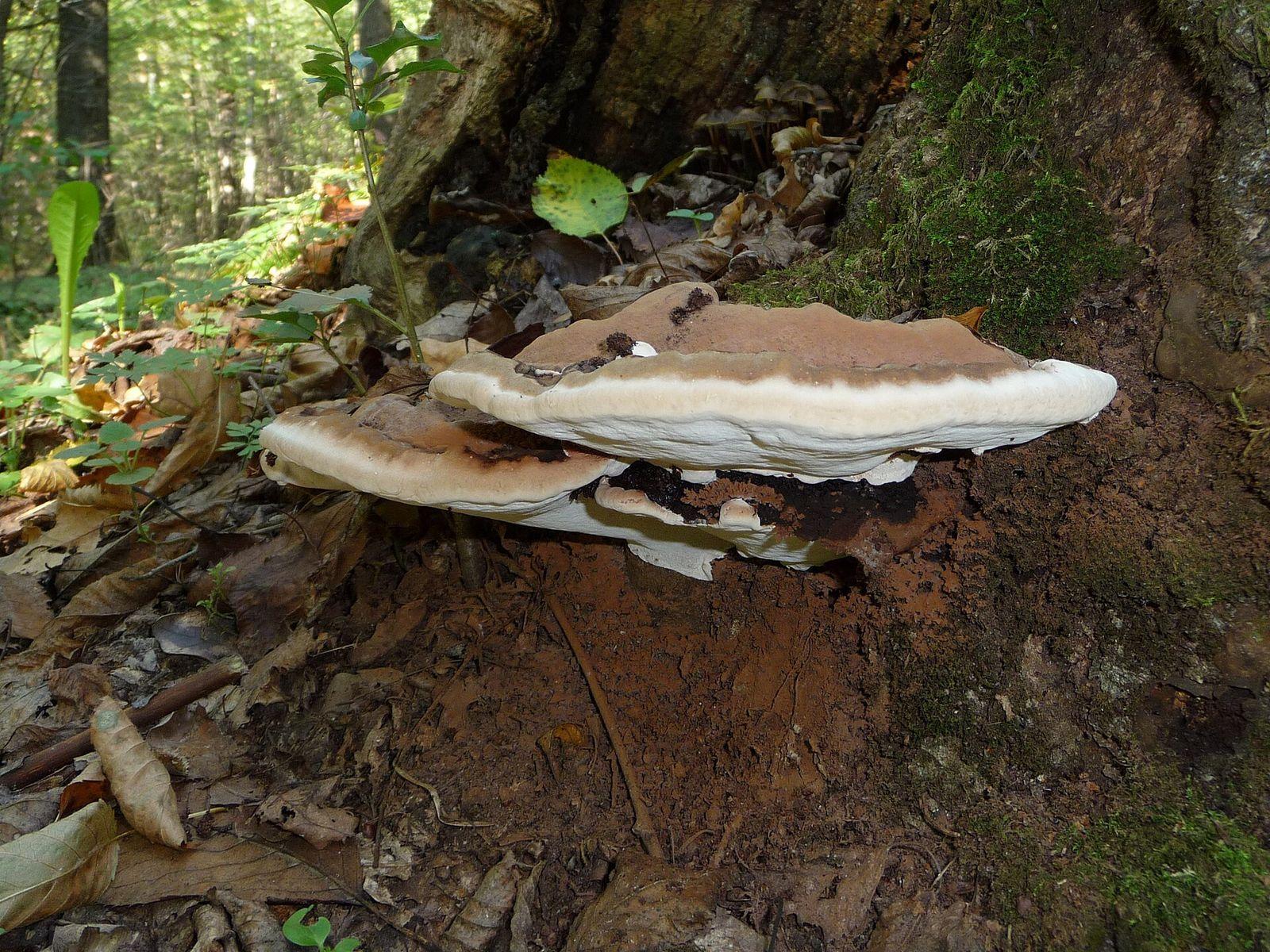
The artist's conk is a large, woody shelf fungus on hardwood logs and trunks. Its white pore surface darkens wherever it is scratched, so people draw and etch pictures on it. It is perennial, adding a new layer of tubes each year.
The tell
A large, flat, hard bracket whose white underside turns dark brown instantly where scratched.
Field marks
Cap, underside and stem show in a photo. The spore print does not, and it is often the deciding check.
Where and when
Lookalikes
Each card says how to tell the two apart.
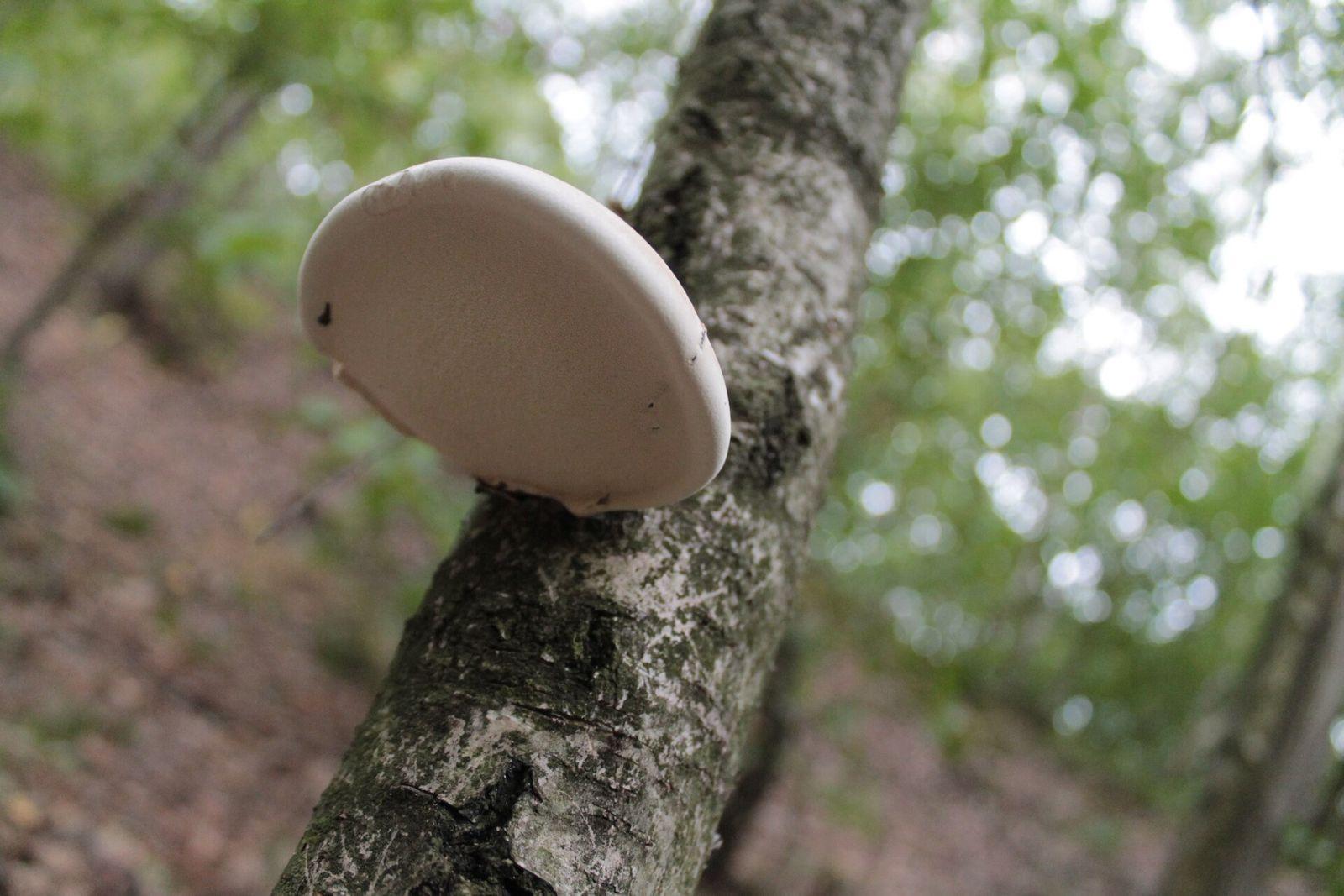
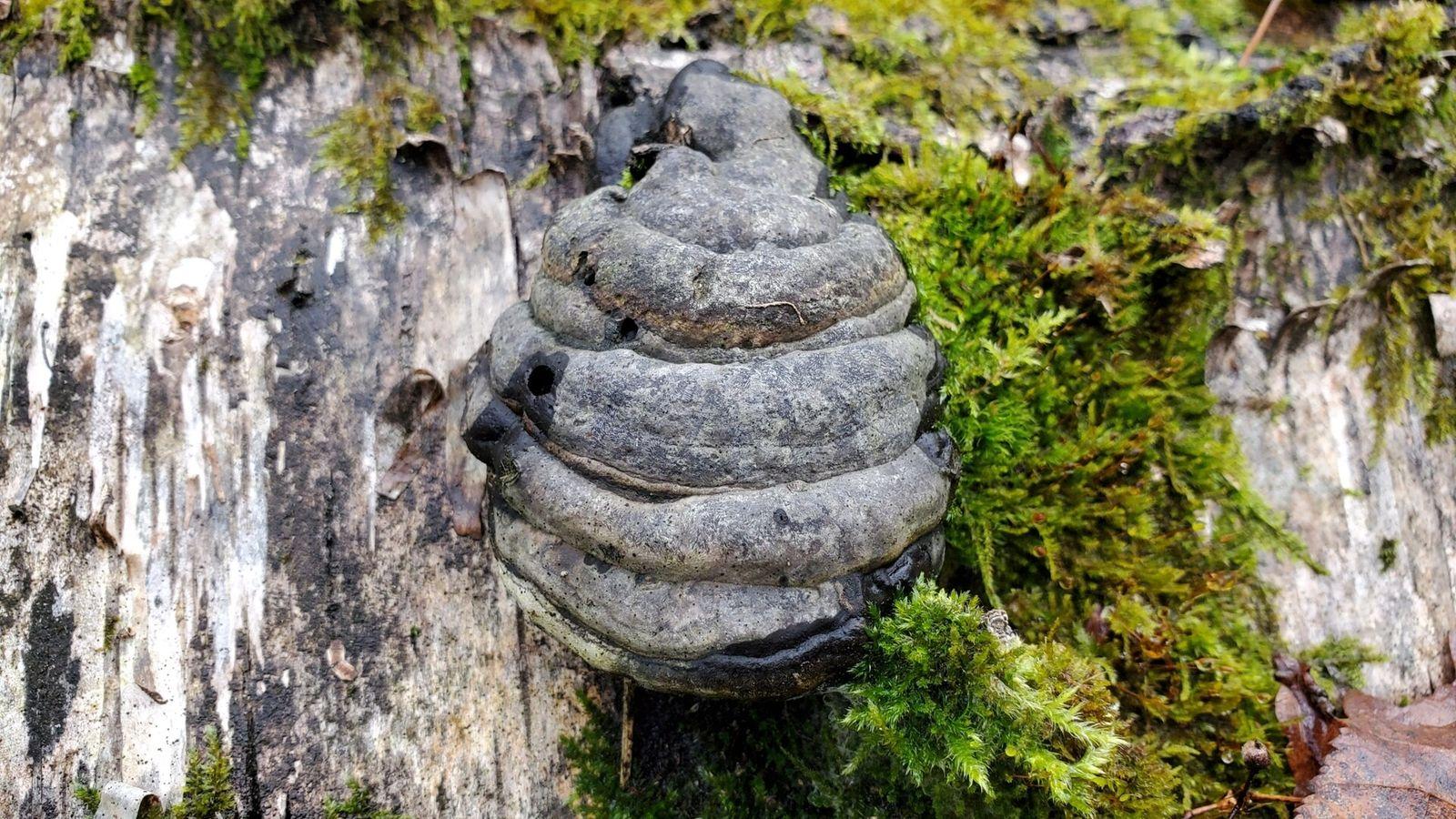
Fomes fomentarius
Hoof-shaped and gray, with a brownish pore surface that does not turn dark brown when scratched. It grows mainly on birch.
Ganoderma tsugae
Photo coming
Ganoderma tsugae
Its top is shiny and lacquered red, and it is softer and smaller, often with a stem.
Hoof-shaped with a reddish band near the edge and a cream pore surface that does not darken sharply when scratched. Common on conifers, less often on hardwoods.
Edibility
Field guides list the artist's conk as inedible because it is hard and woody. It causes white rot in the heartwood of the trees it grows on. Its scratched pore surface keeps the marks permanently once dried, which is why artists use it as a drawing surface.
This page states what field guides record. It is not advice to eat, taste or handle anything, and a photo cannot settle edibility. If someone has eaten a wild mushroom that may be toxic, call poison control (1-800-222-1222 in the US) right away, before symptoms start: the deadliest species act hours later.
FAQ
Scratching the white underside leaves dark brown lines that stay permanent once the bracket dries. People have used it for drawings and etchings for generations.
Field guides list it as inedible because it is woody. It is not known to be toxic.
The bracket is perennial and adds a new layer of tubes each year, so a large conk can be many years old. The layers are visible in a cross section.
Sources
MushroomExpert.com
Fungi Growing on Wood, Gary Emberger (MushroomExpert.com)
Missouri Department of Conservation
Index Fungorum
Waitlist
We will send one email when Mushrooms.id opens, and nothing else.
This opens your email app with the request written for you. Send it and we add you to the list. No email app? Write to hello@mushrooms.id with the subject “Add me to the Mushrooms.id waitlist”.