Inedible
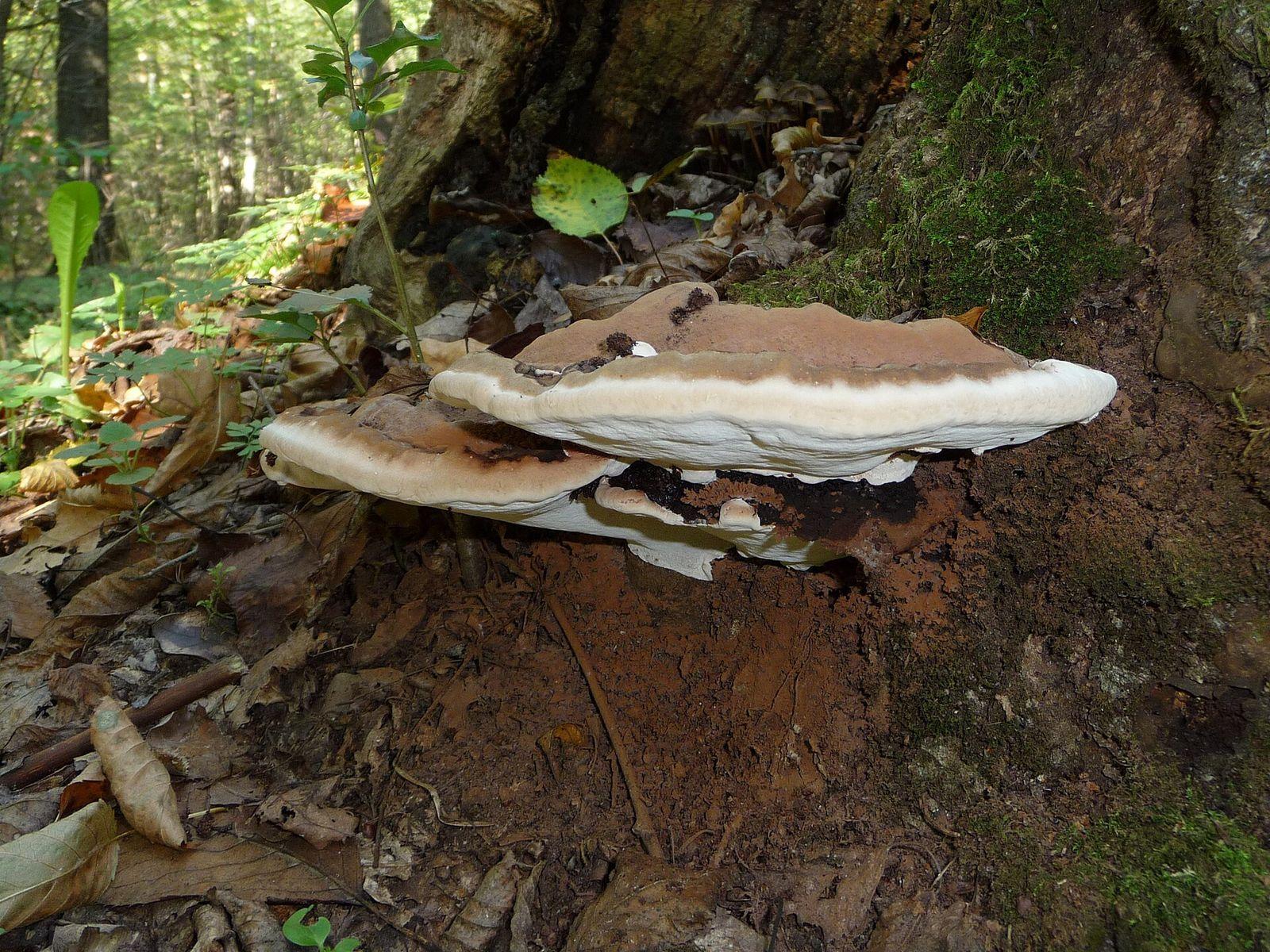
Artist's Conk
Ganoderma applanatum
Hard, flat and perennial, with a dull gray to brown top that is never shiny. Its white pore surface also bruises brown.
Ganoderma tsugae
Also called hemlock varnish shelf, hemlock reishi.
The hemlock reishi, or hemlock varnish shelf, is a glossy red bracket that looks freshly varnished. It grows on dead and dying hemlock in eastern North America. It is too woody to eat. Reishi is dried and brewed as a tea.
Ganoderma tsugae
Photo coming
The tell
A shiny, lacquered red to mahogany bracket on hemlock, with a white pore surface.
Field marks
Cap, underside and stem show in a photo. The spore print does not, and it is often the deciding check.
Where and when
Lookalikes
Each card says how to tell the two apart.
Nearly identical lacquered brackets, but on hardwoods such as oak and maple rather than hemlock.
Ganoderma applanatum
Hard, flat and perennial, with a dull gray to brown top that is never shiny. Its white pore surface also bruises brown.
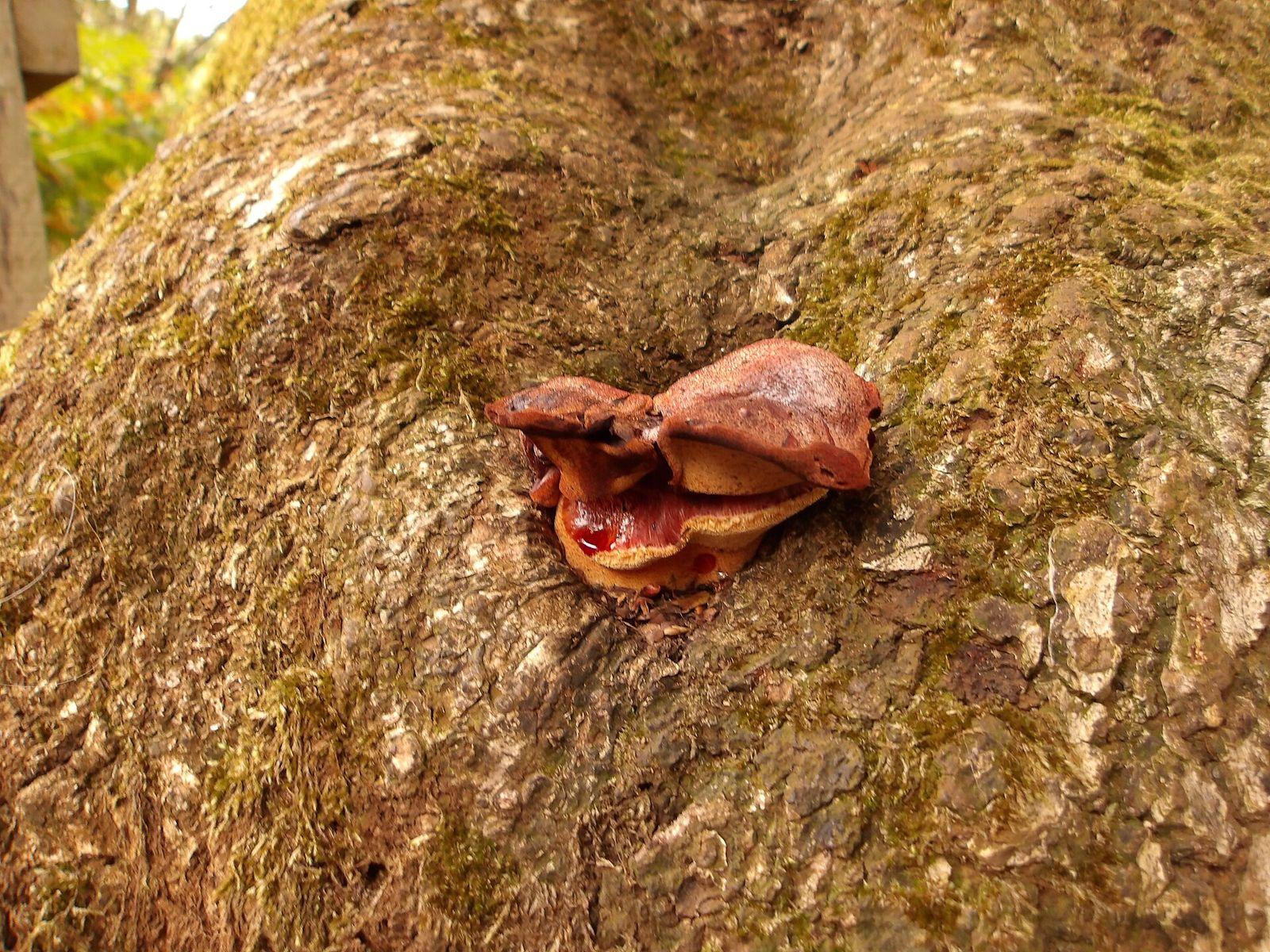
Fistulina hepatica
Red but soft, moist and juicy, with red flesh and separate tubes underneath. It grows on oak, not hemlock.
A larger western relative on conifers in the Pacific Northwest and California.
Edibility
Field guides list reishi as inedible because it is tough and woody. Dried reishi is sliced or ground and simmered in water as a tea, and Ganoderma species have a long history of use in traditional Chinese medicine under the name lingzhi. Commercial reishi is usually cultivated Asian Ganoderma rather than this species.
This page states what field guides record. It is not advice to eat, taste or handle anything, and a photo cannot settle edibility. If someone has eaten a wild mushroom that may be toxic, call poison control (1-800-222-1222 in the US) right away, before symptoms start: the deadliest species act hours later.
FAQ
It is dried and simmered as a tea or sold as powders and extracts. Ganoderma, called lingzhi in Chinese, has been used in traditional Chinese medicine for centuries. It is not eaten as a food because it is woody.
The hemlock reishi grows on dead and dying hemlock in eastern North America. Closely related reishi species grow on hardwoods in the East and on conifers in the West.
A kidney- or fan-shaped bracket with a shiny, varnished red to mahogany surface, often on a short side stem. The underside is white with tiny pores that bruise brown.
Sources
MushroomExpert.com
Fungi Growing on Wood, Gary Emberger (MushroomExpert.com)
Index Fungorum
Waitlist
We will send one email when Mushrooms.id opens, and nothing else.
This opens your email app with the request written for you. Send it and we add you to the list. No email app? Write to hello@mushrooms.id with the subject “Add me to the Mushrooms.id waitlist”.