Edible
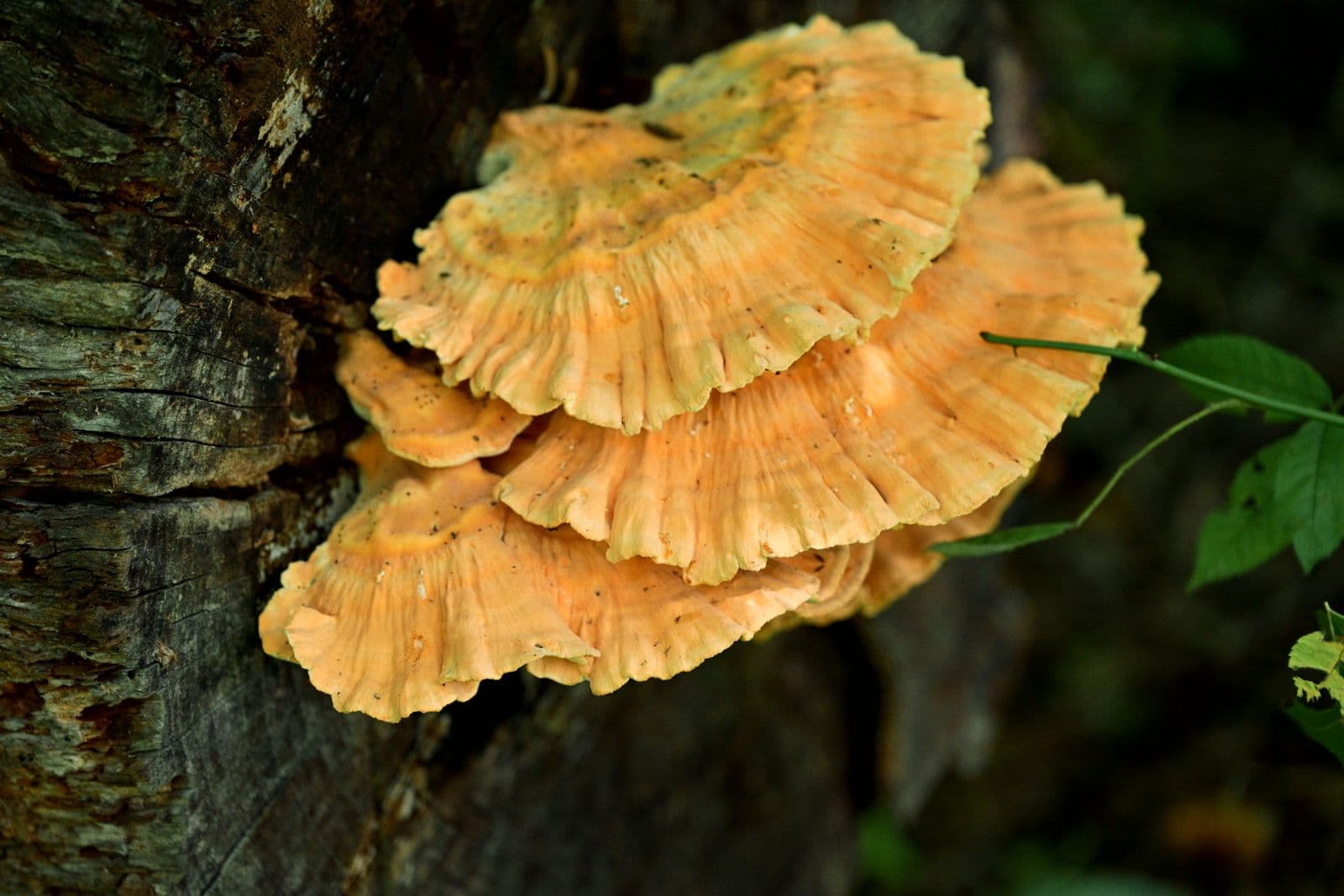
Chicken of the Woods
Laetiporus sulphureus
Orange and yellow rather than red, in overlapping shelves, with fused pores and no red juice.
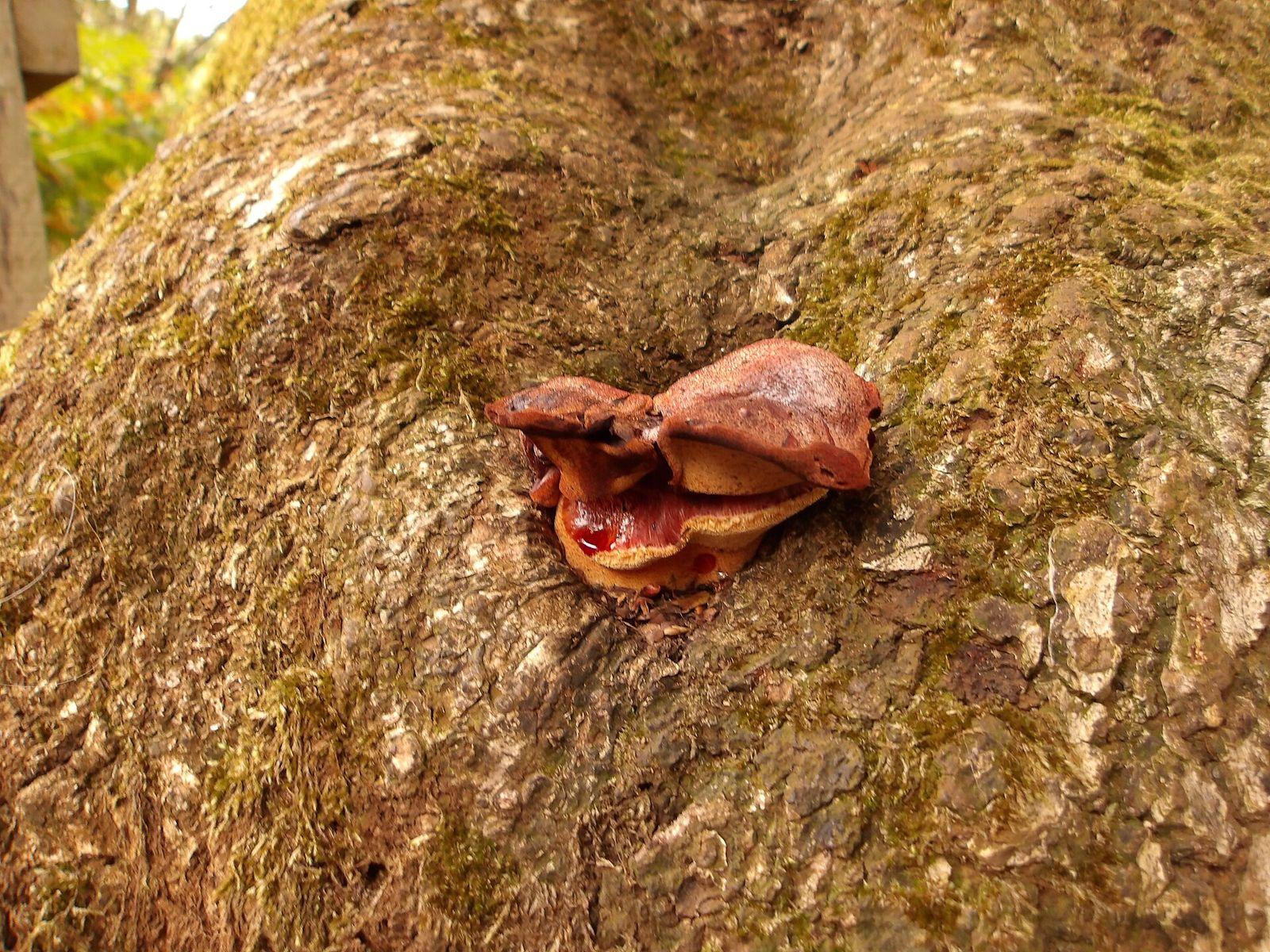
Fistulina hepatica
Also called beefsteak polypore, ox tongue.
The beefsteak fungus is a soft, red, tongue-shaped bracket that grows on oaks and chestnuts. Its cut flesh is streaked like raw beef and leaks red juice. It appears at the base of trunks and on stumps in late summer and fall.
The tell
A blood-red, tongue-shaped bracket on oak whose cut flesh looks like raw meat and oozes red juice.
Field marks
Cap, underside and stem show in a photo. The spore print does not, and it is often the deciding check.
Where and when
Lookalikes
Each card says how to tell the two apart.
Edibility
Field guides list the beefsteak fungus as edible. Its flesh is described as sour or acidic, with a texture like meat. It causes a brown rot in oak heartwood that darkens the wood; furniture makers once valued this as brown oak.
This page states what field guides record. It is not advice to eat, taste or handle anything, and a photo cannot settle edibility. If someone has eaten a wild mushroom that may be toxic, call poison control (1-800-222-1222 in the US) right away, before symptoms start: the deadliest species act hours later.
FAQ
Field guides list it as edible. They describe the flesh as juicy and sour, and red juice runs from it when cut.
Its red, streaked flesh looks like raw beef when cut, and it releases red, blood-like juice. The species name hepatica refers to its liver-like shape and color.
At the base of living oaks and on oak stumps, sometimes on chestnut, in late summer and fall. In North America it is found mainly east of the Rocky Mountains.
Sources
MushroomExpert.com
Fungi Growing on Wood, Gary Emberger (MushroomExpert.com)
Missouri Department of Conservation
Index Fungorum
Waitlist
We will send one email when Mushrooms.id opens, and nothing else.
This opens your email app with the request written for you. Send it and we add you to the list. No email app? Write to hello@mushrooms.id with the subject “Add me to the Mushrooms.id waitlist”.