Blusher vs panther cap: how to tell them apart
Quick answer
The blusher's white flesh slowly turns pinkish red over a few minutes where cut, bruised or eaten by insects, and the stem base often shows reddish stains; the panther cap's flesh stays white. The warts and base differ too: grayish to pinkish warts and a plain bulb on the blusher, pure white warts and a bulb with a neat rolled collar on the panther cap.
Toxic lookalike
The blusher and the panther cap are toxic.
The panther cap (Amanita pantherina) contains ibotenic acid and muscimol. For the closely related western panther amanita, the University of British Columbia's Mushrooms Up! guide records symptoms 30 to 180 minutes after eating, peaking at 2 to 5 hours: confusion, vomiting, delirium, seizures and lethargy or coma, with recovery usually 4 to 12 hours after the first symptoms. The blusher (Amanita rubescens) contains a toxin in its raw state that destroys red blood cells (a hemolytic toxin) and causes anemia, according to First Nature; the same source records that the toxin is destroyed by thorough heating.
If someone has eaten a wild mushroom and feels unwell, or may have eaten one of these, call poison control now: 1-800-222-1222 in the US. Do not wait for symptoms.
Side by side
The tell for each
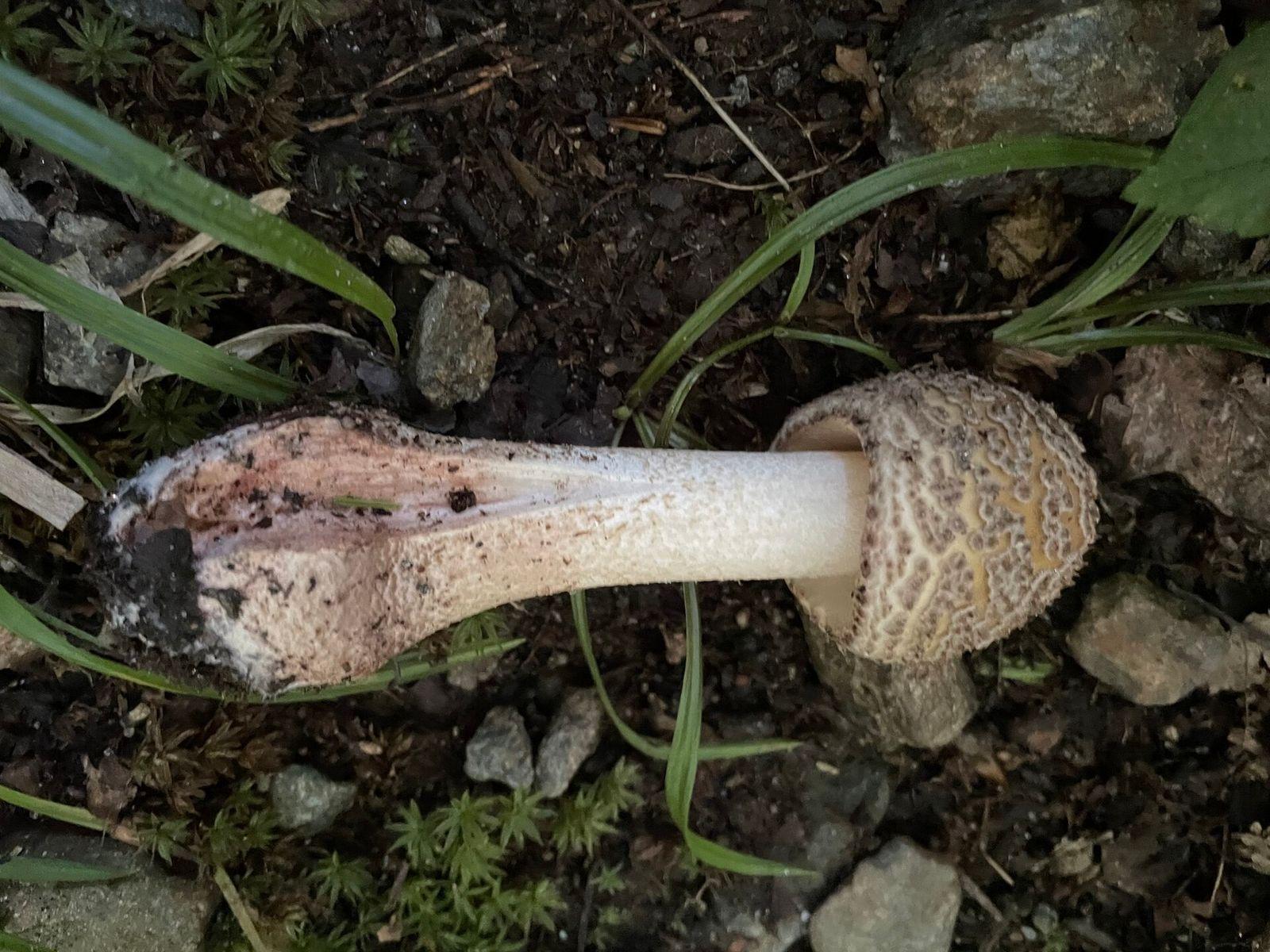
The tellDull reddish brown cap with grayish to pinkish warts, and flesh that slowly turns pinkish red where it is cut, bruised or eaten by insects.
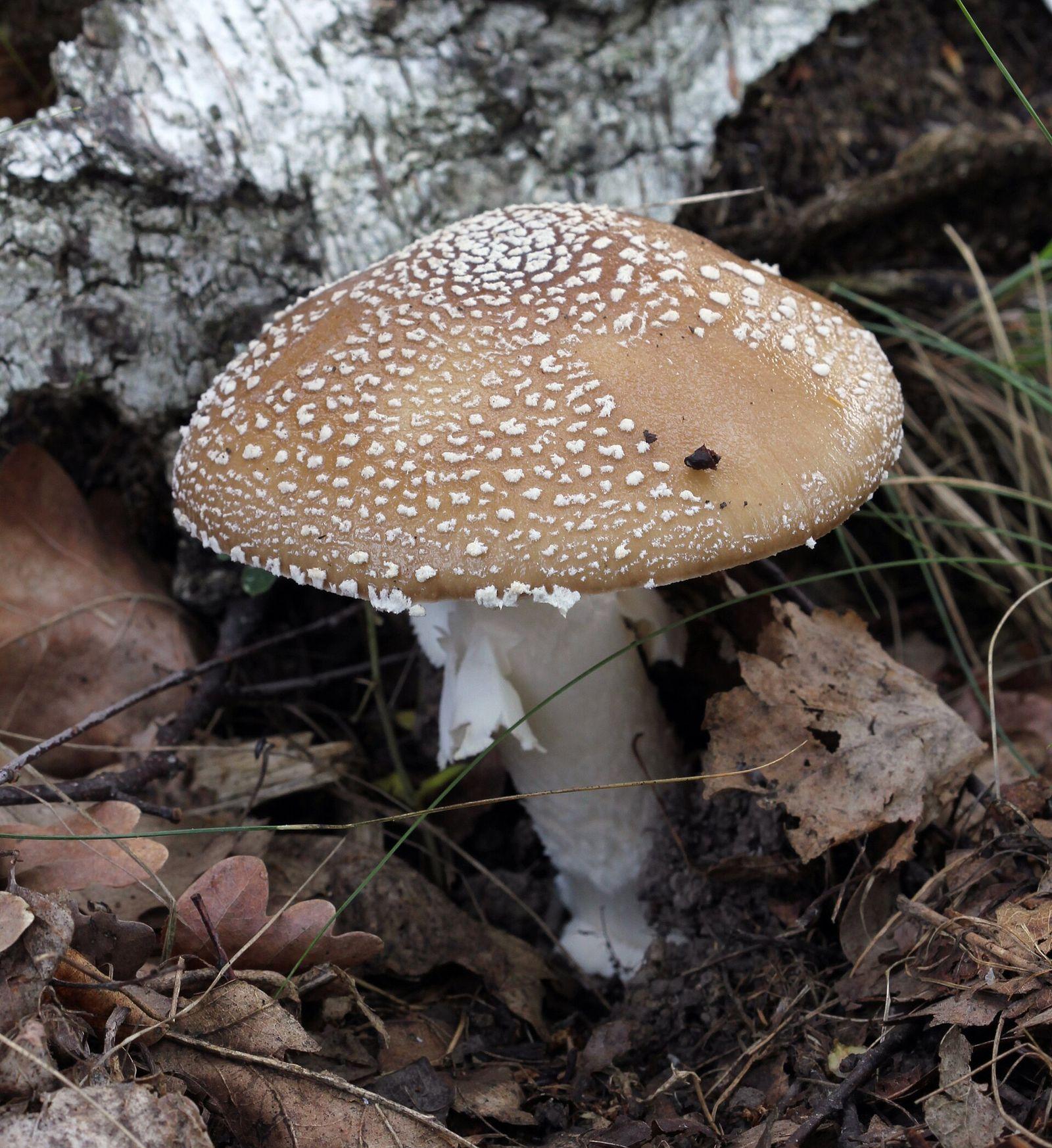
The tellBrown cap with neat white warts and a lined edge, white gills, a ring, and a bulb with a rolled collar at the top.
How they differ
| Feature | Blusher | Panther Cap |
|---|---|---|
| Cut or bruised flesh | BlusherSlowly turns pinkish red; insect holes reddish. | Panther CapStays white. |
| Warts | BlusherGrayish, pinkish or dirty white. | Panther CapSmall and pure white. |
| Cap color | BlusherDull reddish brown, tan or pinkish brown. | Panther CapBrown to tan or yellowish brown, darker at the center. |
| Cap edge | BlusherSmooth or faintly lined. | Panther CapLined with short grooves. |
| Stem base | BlusherA swollen bulb with no cup, often stained reddish. | Panther CapA rounded bulb with a distinct rolled collar at its upper edge. |
| Range | BlusherEastern North America. | Panther CapMost common in the Pacific Northwest and California. |
FAQ
Common questions
Is the blusher poisonous?
Raw, it contains a toxin that destroys red blood cells. European guides list it as edible only after thorough heating, and North American guides add that it is easily confused with the panther cap.
What toxins are in the panther cap?
Ibotenic acid and muscimol, the same compounds as the fly agaric. Symptoms include confusion, delirium, vomiting and deep sleep or coma.
Can you tell a blusher from a panther cap in a photo?
Not reliably. Cap colors overlap, and the reddening flesh only shows after cutting. Pure white warts and a rolled collar on the bulb point to the panther cap if they are visible.
Sources
Where these facts come from
- Amanita rubescens
MushroomExpert.com
- Amanita pantherina
MushroomExpert.com
- Amanita rubescens, Blusher
First Nature
- Amanita pantherinoides, western panther amanita (Mushrooms Up!)
Beaty Biodiversity Museum, University of British Columbia
Keep checking
Read both pages in full
- More on the blusher
- More on the panther cap
- Not sure it is either? Narrow it down with the identification key
This page states what field guides record. It is not advice to eat, taste or handle anything, and a photo cannot settle edibility. If someone has eaten a wild mushroom that may be toxic, call poison control (1-800-222-1222 in the US) right away, before symptoms start: the deadliest species act hours later.
Waitlist
Hear when it opens
We will send one email when Mushrooms.id opens, and nothing else.
This opens your email app with the request written for you. Send it and we add you to the list. No email app? Write to hello@mushrooms.id with the subject “Add me to the Mushrooms.id waitlist”.