Toxic
Panther Cap
Amanita pantherina
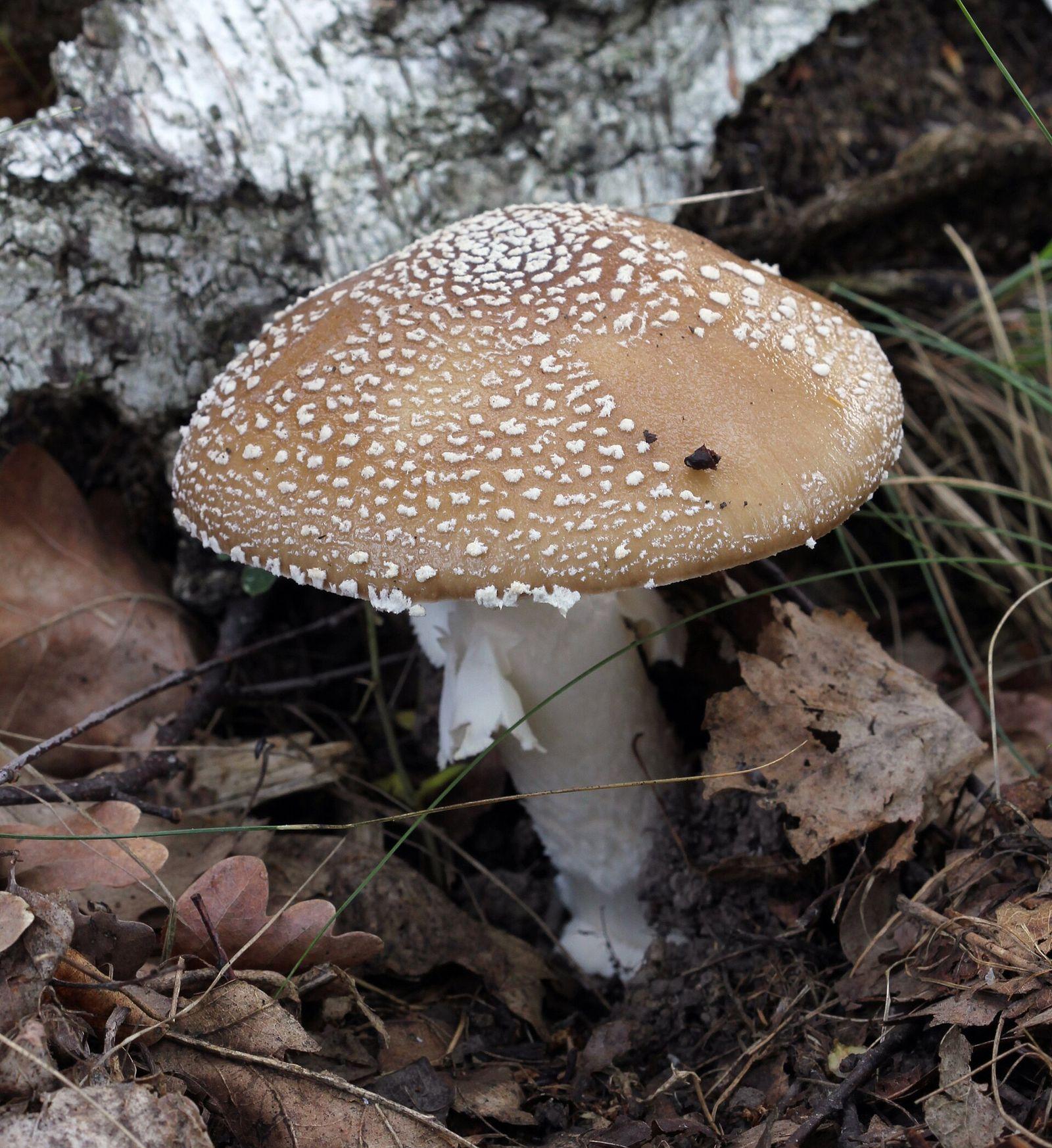
The panther cap has pure white warts, a bulb with a neat rolled collar and flesh that does not redden. It contains ibotenic acid and muscimol.
Amanita rubescens
Also called blushing amanita.
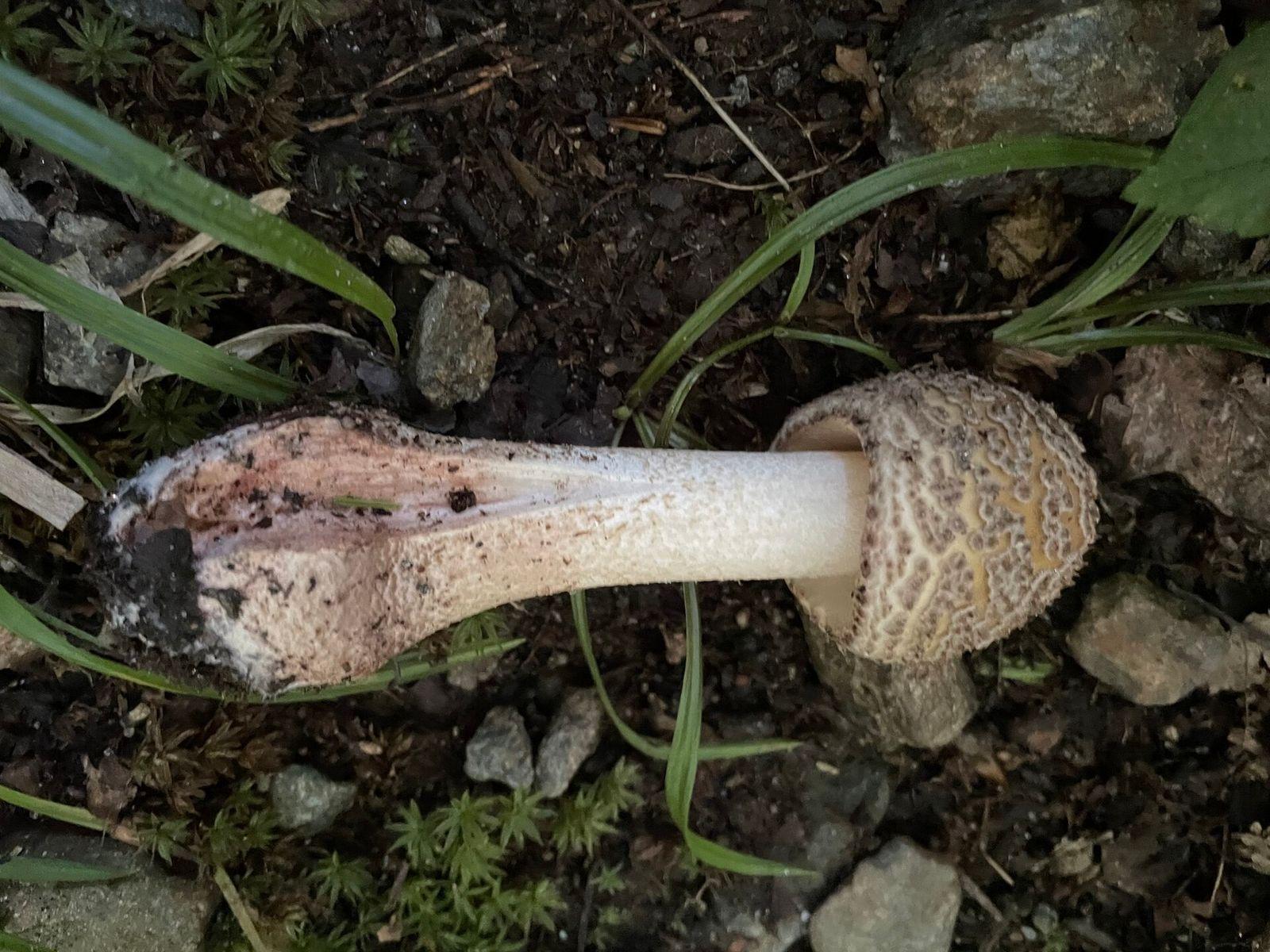
The blusher is a reddish brown amanita whose flesh slowly turns pinkish red wherever it is damaged. It grows in eastern hardwood and mixed forests in summer and fall. It is toxic raw, and it is easily confused with the panther cap.
The tell
Dull reddish brown cap with grayish to pinkish warts, and flesh that slowly turns pinkish red where it is cut, bruised or eaten by insects.
Field marks
Cap, underside and stem show in a photo. The spore print does not, and it is often the deciding check.
Where and when
Lookalikes
Each card says how to tell the two apart.
Amanita pantherina
The panther cap has pure white warts, a bulb with a neat rolled collar and flesh that does not redden. It contains ibotenic acid and muscimol.
Amanita brunnescens has a brown cap with whitish warts and a bulb that is often split vertically. Its flesh bruises reddish brown rather than pinkish red.
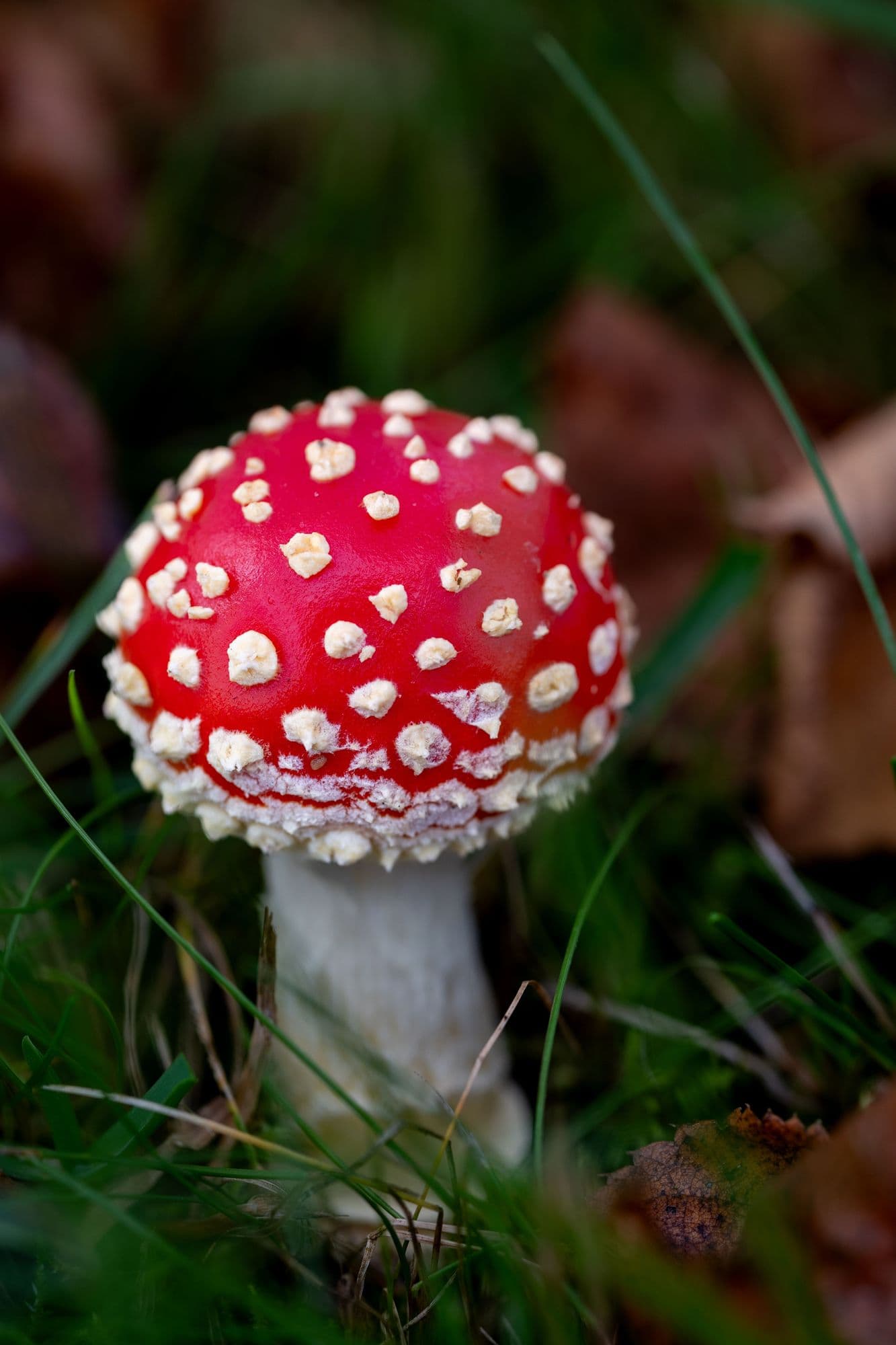
Amanita muscaria
Fly agarics are brighter red, orange or yellow, with white to yellowish warts, and their flesh does not redden.
Edibility
European field guides list the blusher as edible when thoroughly cooked. Raw, it contains a protein that breaks down red blood cells; heat destroys it. North American guides add that it is easily confused with the panther cap and other toxic amanitas, and that North American blushers may be different species from the European one, so most list it with caution.
This page states what field guides record. It is not advice to eat, taste or handle anything, and a photo cannot settle edibility. If someone has eaten a wild mushroom that may be toxic, call poison control (1-800-222-1222 in the US) right away, before symptoms start: the deadliest species act hours later.
FAQ
Raw, it contains a protein that damages red blood cells; cooking breaks it down. European field guides list it as edible when well cooked. North American guides note its close resemblance to the toxic panther cap.
Its white flesh slowly turns pinkish red wherever it is cut, bruised or eaten by insects. Older mushrooms often show reddish stains on the stem and gills.
The blusher's flesh reddens when damaged, and its warts are grayish or pinkish. The panther cap's flesh stays white, its warts are pure white, and its bulb has a neat rolled collar.
Sources
MushroomExpert.com
Missouri Department of Conservation
Index Fungorum
Also on Mushrooms.id
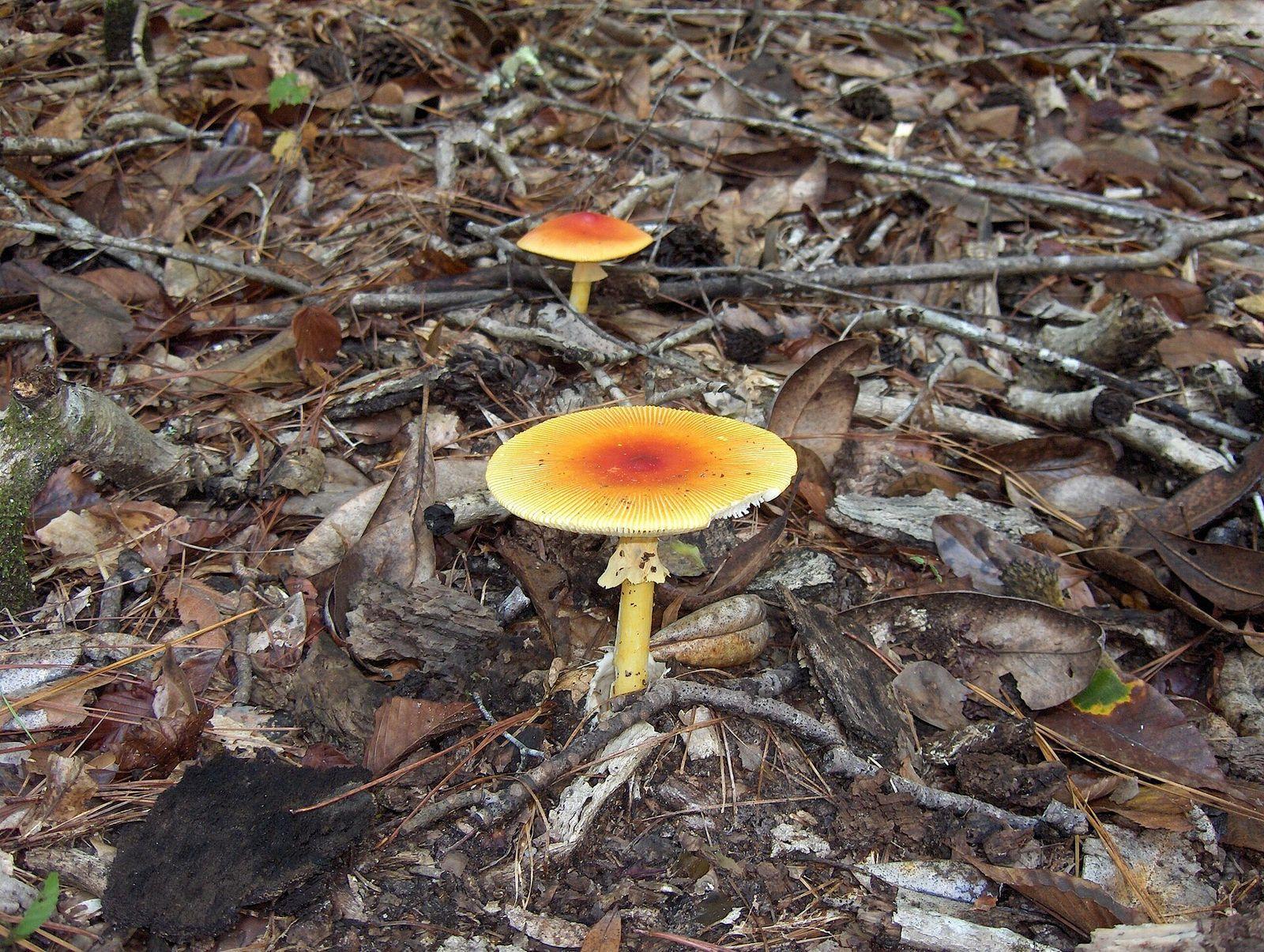
Amanita jacksonii
Bright red to orange cap with a lined edge, yellow gills, a yellow stem and ring, and a thick white sac-like cup at the base.
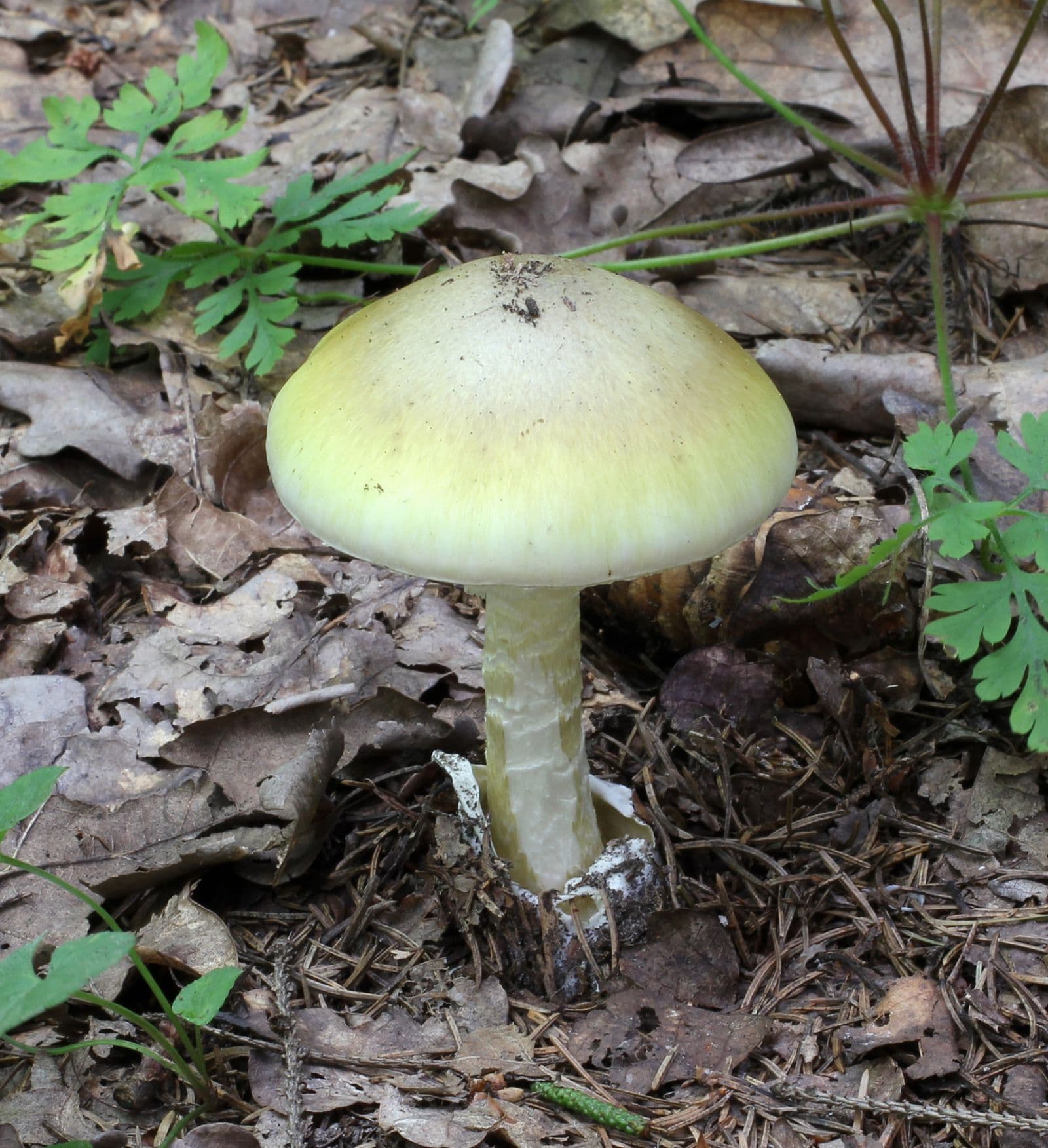
Amanita phalloides
Greenish to yellow-olive cap, white gills, a skirt-like ring, and a white sac-like cup around the base of the stem.
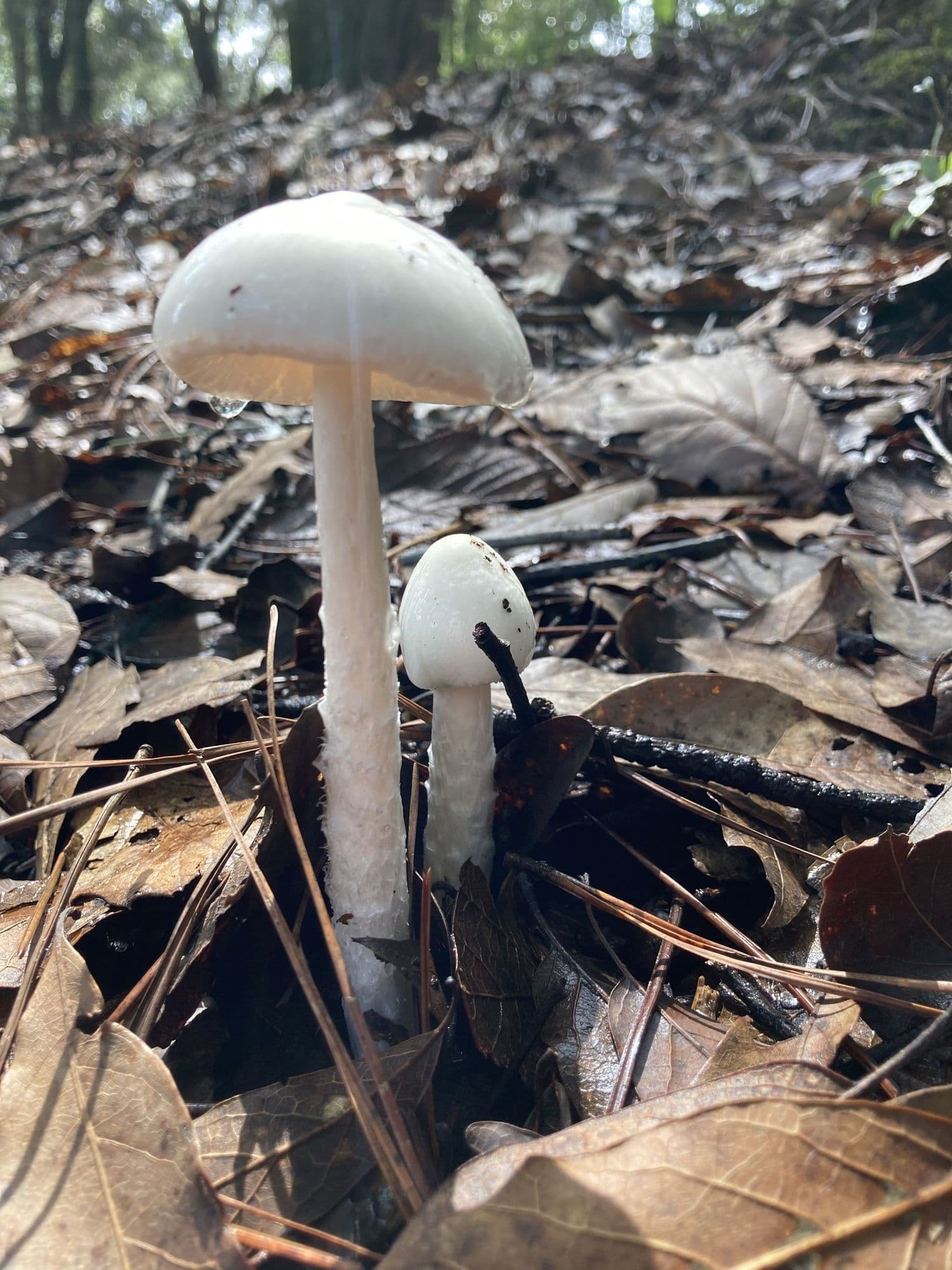
Amanita bisporigera
Pure white all over, with white gills, a skirt-like ring, and a white sac-like cup around a bulb at the base.
Amanita smithiana
Photo coming
Amanita smithiana
Large white amanita with soft, cottony patches on the cap, a ragged ring, and a shaggy, tapering root-like base, under Pacific Northwest conifers.
Waitlist
We will send one email when Mushrooms.id opens, and nothing else.
This opens your email app with the request written for you. Send it and we add you to the list. No email app? Write to hello@mushrooms.id with the subject “Add me to the Mushrooms.id waitlist”.