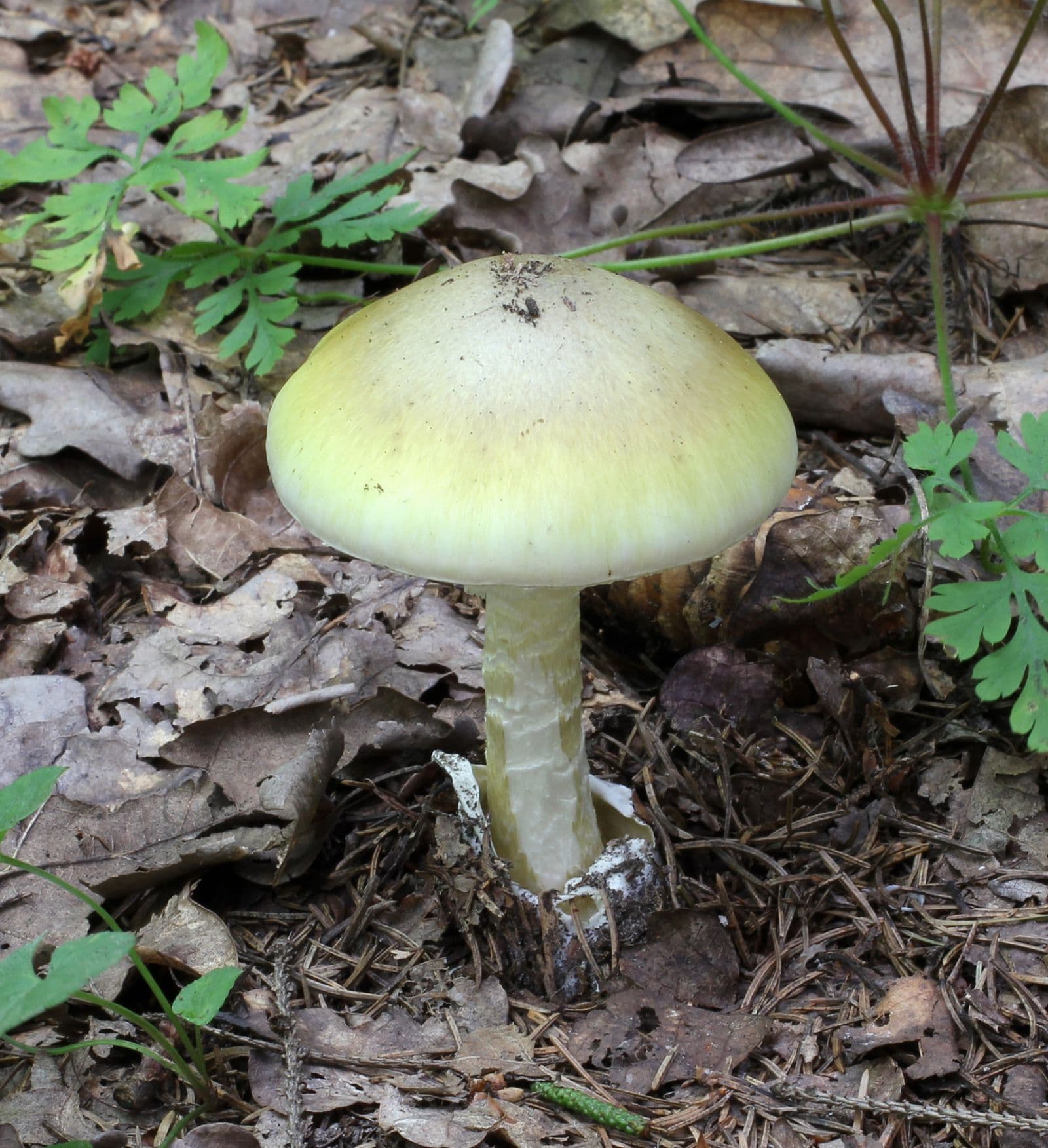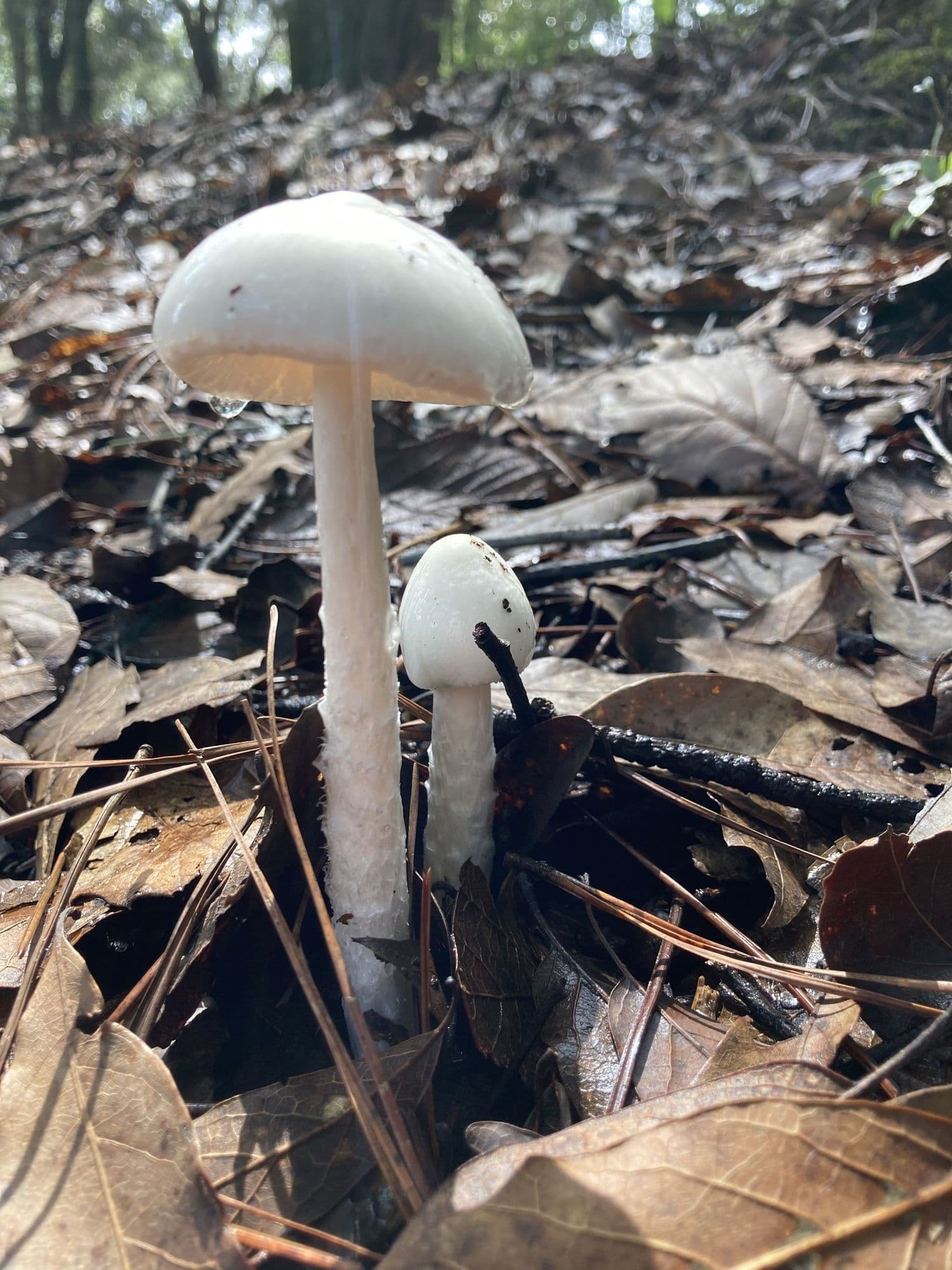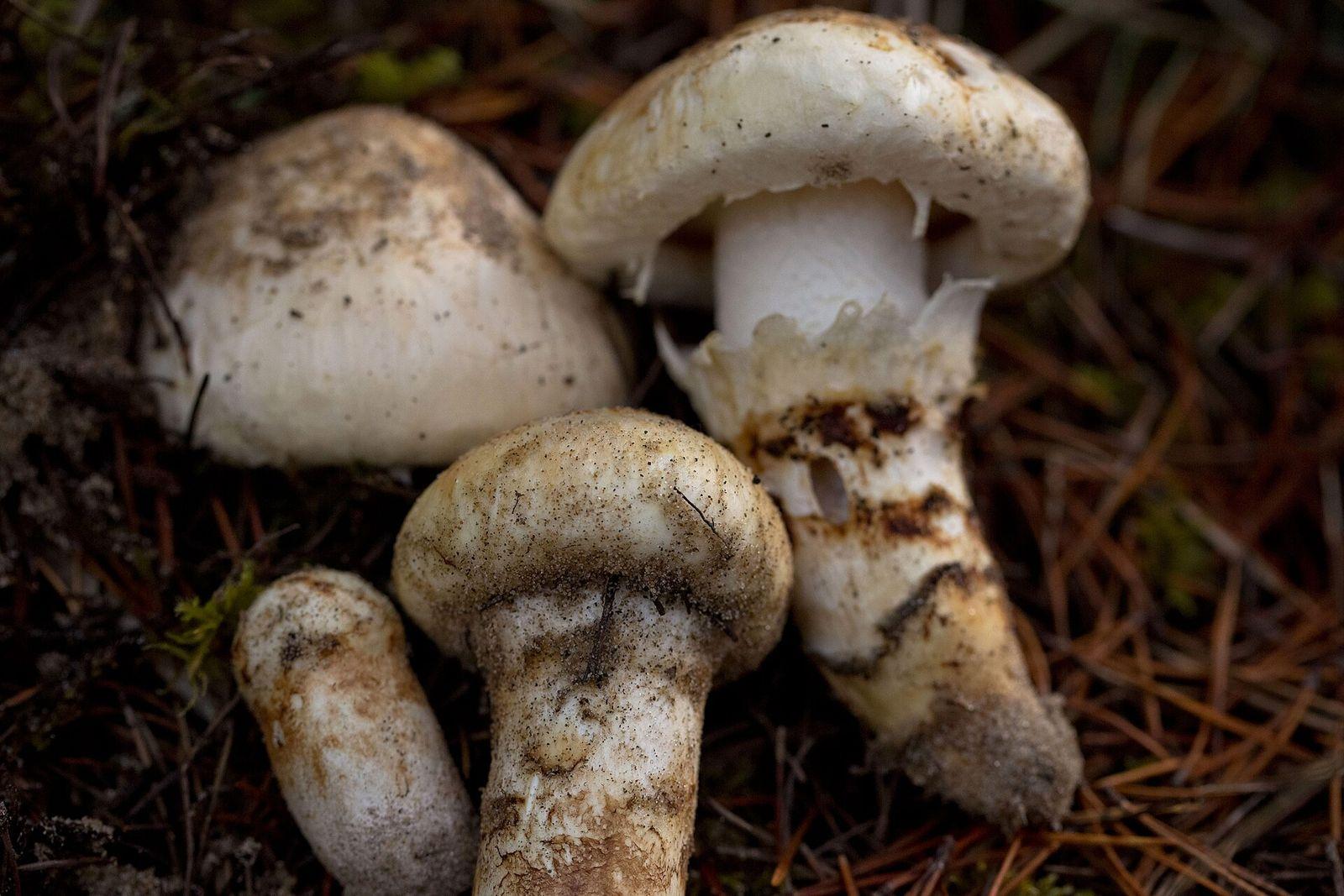
Matsutake
Tricholoma murrillianum
Matsutake have a smooth to brown-streaked cap without cottony warts, a sheathing ring with brownish scales below it, firm flesh that stains brownish, and a strong spicy odor. Smith's amanita lacks the spicy odor.
Amanita smithiana
Smith's amanita is a large white amanita of Pacific Northwest conifer forests that causes kidney failure. Most recorded poisonings came from people who mistook it for the matsutake, which grows in the same forests in the same season.
Amanita smithiana
Photo coming
The tell
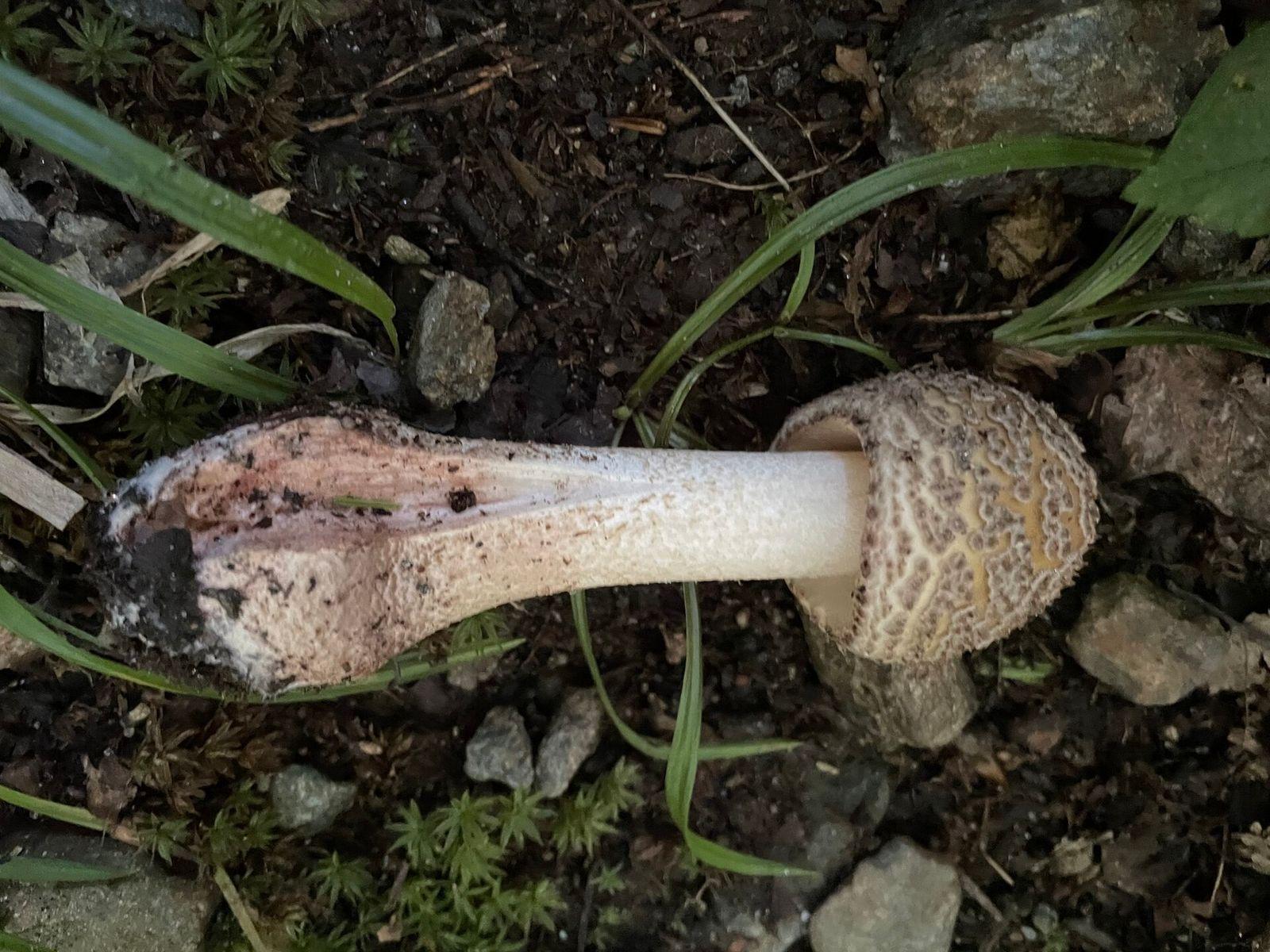
Large white amanita with soft, cottony patches on the cap, a ragged ring, and a shaggy, tapering root-like base, under Pacific Northwest conifers.
Field marks
Cap, underside and stem show in a photo. The spore print does not, and it is often the deciding check.
Where and when
Lookalikes
Each card says how to tell the two apart.

Tricholoma murrillianum
Matsutake have a smooth to brown-streaked cap without cottony warts, a sheathing ring with brownish scales below it, firm flesh that stains brownish, and a strong spicy odor. Smith's amanita lacks the spicy odor.
Amanita silvicola is another white, cottony Pacific Northwest amanita. It is usually smaller, with a short stem, a rounded bulb and little or no ring. Its edibility is not established.
Amanita ocreata
Photo coming
Amanita ocreata
Also white and also deadly. Its cap is smooth rather than cottony, and its base sits in a thin, membranous, sac-like cup rather than tapering into a root.
Edibility
Smith's amanita causes acute kidney failure. Recorded poisonings begin with cramps, vomiting and diarrhea from 20 minutes to a day after the meal, followed 2 to 6 days later by kidney failure, and several patients have needed dialysis. The kidney toxin is attributed to an unusual amino acid, allenic norleucine. Its poisoning differs from the liver damage caused by amatoxin-containing amanitas.
This page states what field guides record. It is not advice to eat, taste or handle anything, and a photo cannot settle edibility. If someone has eaten a wild mushroom that may be toxic, call poison control (1-800-222-1222 in the US) right away, before symptoms start: the deadliest species act hours later.
FAQ
Yes. It causes acute kidney failure, and recorded patients have needed dialysis. Gastrointestinal symptoms come first, from 20 minutes to a day after eating, and kidney failure can follow 2 to 6 days later.
Both are large, white mushrooms with a ring and a tapering base, found in the same Pacific Northwest forests in fall. Matsutake have a strong spicy odor, a sheathing ring, firm white flesh, and a cap and gills that stain brown with age. Smith's amanita has cottony warts on the cap and lacks the odor.
In conifer and mixed forests of the Pacific Northwest, from northern California to British Columbia, often with Douglas fir and western hemlock. It fruits from late summer through fall.
Sources
MushroomExpert.com
Beaty Biodiversity Museum, University of British Columbia
MykoWeb, California Fungi
Index Fungorum
Also on Mushrooms.id

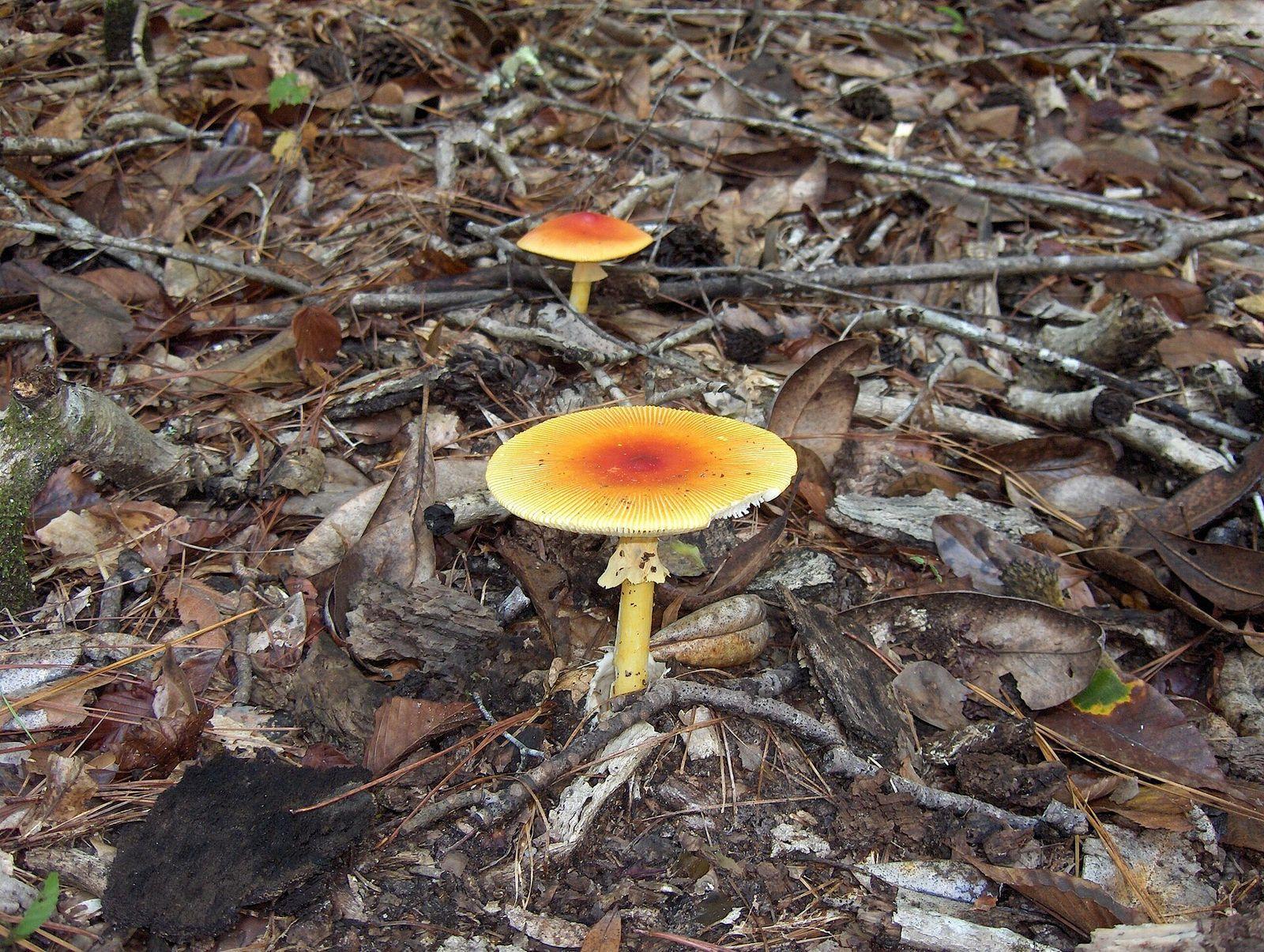
Amanita jacksonii
Bright red to orange cap with a lined edge, yellow gills, a yellow stem and ring, and a thick white sac-like cup at the base.

Amanita rubescens
Dull reddish brown cap with grayish to pinkish warts, and flesh that slowly turns pinkish red where it is cut, bruised or eaten by insects.

Amanita phalloides
Greenish to yellow-olive cap, white gills, a skirt-like ring, and a white sac-like cup around the base of the stem.

Amanita bisporigera
Pure white all over, with white gills, a skirt-like ring, and a white sac-like cup around a bulb at the base.
Waitlist
We will send one email when Mushrooms.id opens, and nothing else.
This opens your email app with the request written for you. Send it and we add you to the list. No email app? Write to hello@mushrooms.id with the subject “Add me to the Mushrooms.id waitlist”.