Smith's amanita vs western destroying angel: two white amanitas, two different poisons

Quick answer

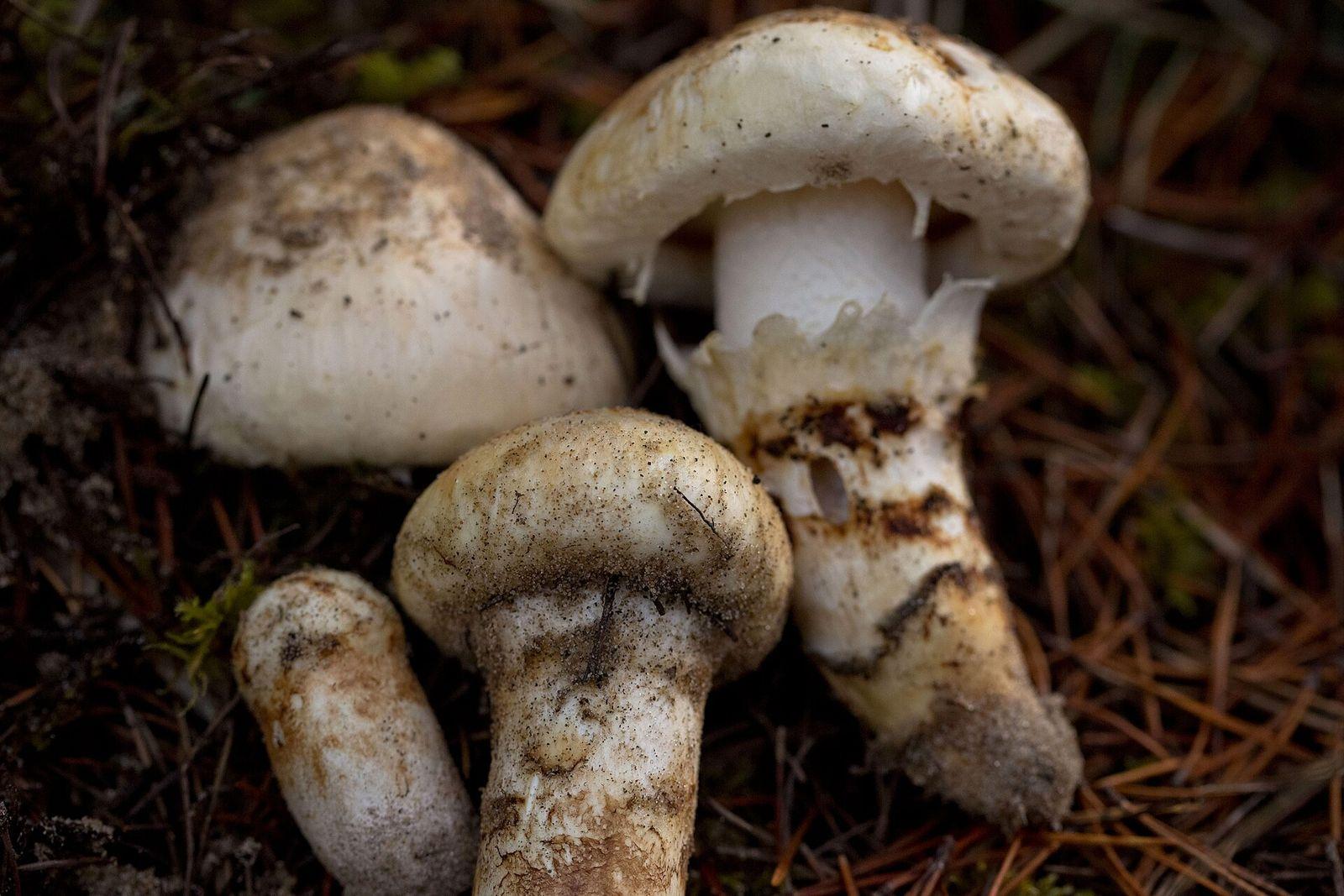
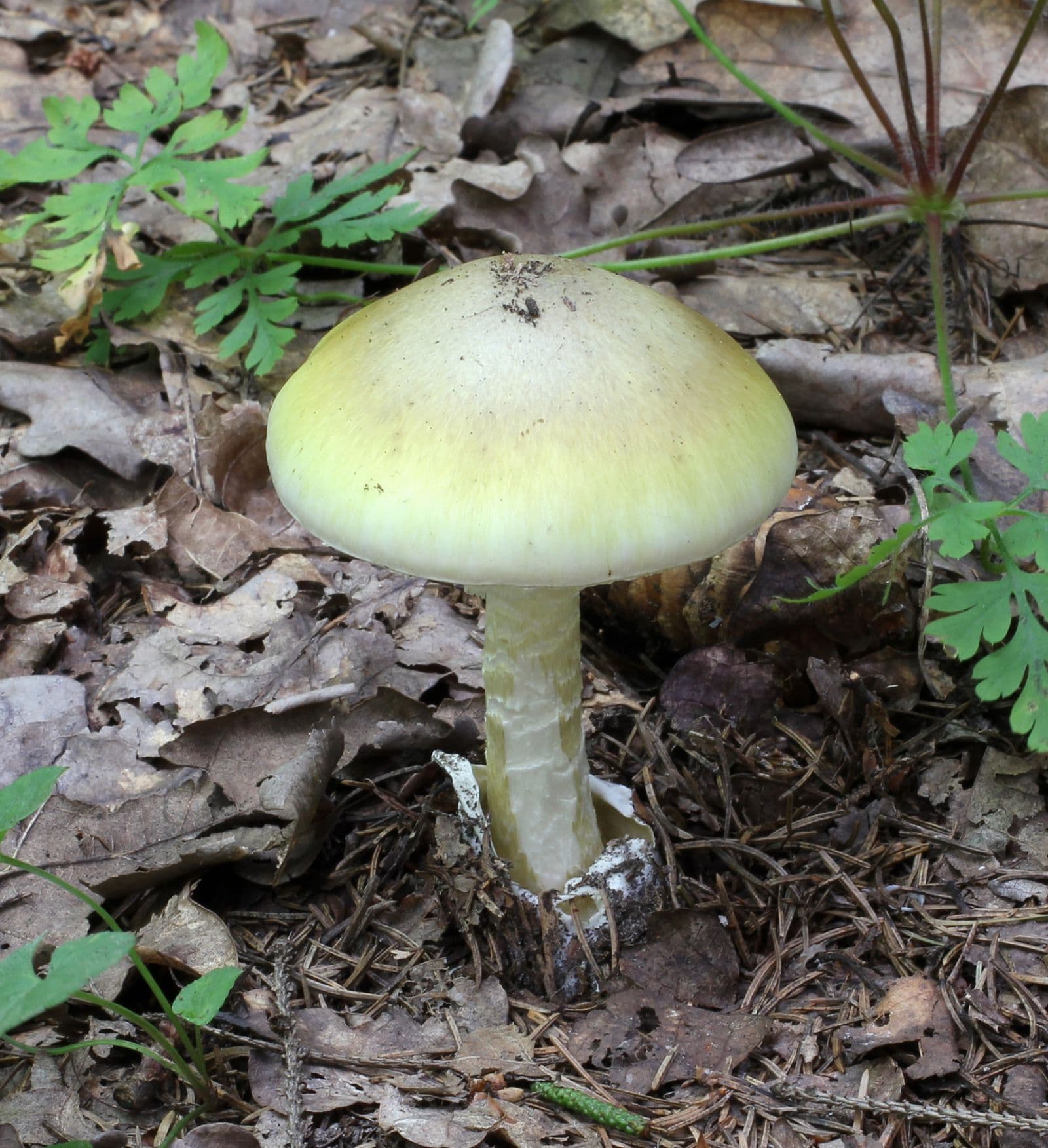
Smith's amanita has a cap covered in soft, cottony patches and a base that swells and then tapers downward like a root, with no cup; the western destroying angel has a smooth cap and a bulbous base in a white, membranous cup. Both are dangerous: Smith's amanita damages the kidneys, the destroying angel the liver.

Deadly lookalike

The western destroying angel is deadly.

Smith's amanita (Amanita smithiana) damages the kidneys. The University of British Columbia's Mushrooms Up! guide records stomach cramps, vomiting and diarrhea from 20 minutes to a day after eating, then kidney failure 2 to 6 days later, sometimes after as few as 2 or 3 mushrooms; patients usually recover but may need hemodialysis. The toxin is not certain; allenic norleucine is the leading candidate. The western destroying angel (Amanita ocreata) is deadly poisonous and contains amatoxins, according to MykoWeb's California Fungi. In the CDC's report on the 2025 to 2026 northern California outbreak, people who ate it developed abdominal pain, nausea, vomiting and diarrhea 8 to 12 hours after the meal; across the 39 Amanita cases in that report, three people needed liver transplants and four died. Amatoxins are not destroyed by cooking.

If someone has eaten a wild mushroom and feels unwell, or may have eaten one of these, call poison control now: 1-800-222-1222 in the US. Do not wait for symptoms.

Side by side

The tell for each

Amanita smithiana

Photo coming

Toxic, kidney damage
Smith's AmanitaAmanita smithiana

The tellLarge white amanita with soft, cottony patches on the cap, a ragged ring, and a shaggy, tapering root-like base, under Pacific Northwest conifers.

Amanita ocreata

Photo coming

Deadly
Western Destroying AngelAmanita ocreata

The tellLarge white to pale tan cap, white gills, a thin ring, and a thin, white, sac-like cup at the base, fruiting under oaks in late winter and spring.

How they differ

Differences between the Smith's amanita and the western destroying angel
FeatureSmith's AmanitaWestern Destroying Angel
Cap surfaceSmith's AmanitaCovered in soft, cottony to powdery warts and patches.Western Destroying AngelSmooth and slightly sticky when moist.
Stem baseSmith's AmanitaSwollen, then tapering like a root, with rings of soft scales; no cup.Western Destroying AngelA bulbous base in a thin, white, membranous cup.
RingSmith's AmanitaRagged and fragile, often falling apart.Western Destroying AngelThin and fragile, often missing.
TreesSmith's AmanitaDouglas fir, western hemlock, true firs and other conifers.Western Destroying AngelCoast live oak and other oaks.
SeasonSmith's AmanitaLate summer through fall.Western Destroying AngelLate winter and spring.
RangeSmith's AmanitaPacific Northwest, northern California to British Columbia.Western Destroying AngelCalifornia and the Pacific coast north into Washington.
ToxinSmith's AmanitaSuspected allenic norleucine; damages the kidneys.Western Destroying AngelAmatoxins; destroy the liver.

FAQ

Common questions

Is Smith's amanita deadly?

It causes kidney failure 2 to 6 days after eating. MykoWeb lists it as deadly poisonous; patients usually recover with hospital care, sometimes including dialysis.

Who gets poisoned by Smith's amanita?

Mostly people collecting matsutake in the Pacific Northwest, where the two grow together, according to MykoWeb and the University of British Columbia's Mushrooms Up! guide.

Sources

Where these facts come from

  1. Amanita smithiana, Smith's amanita (Mushrooms Up!)

    Beaty Biodiversity Museum, University of British Columbia

Waitlist

Hear when it opens

We will send one email when Mushrooms.id opens, and nothing else.

Email us to join

This opens your email app with the request written for you. Send it and we add you to the list. No email app? Write to hello@mushrooms.id with the subject “Add me to the Mushrooms.id waitlist”.