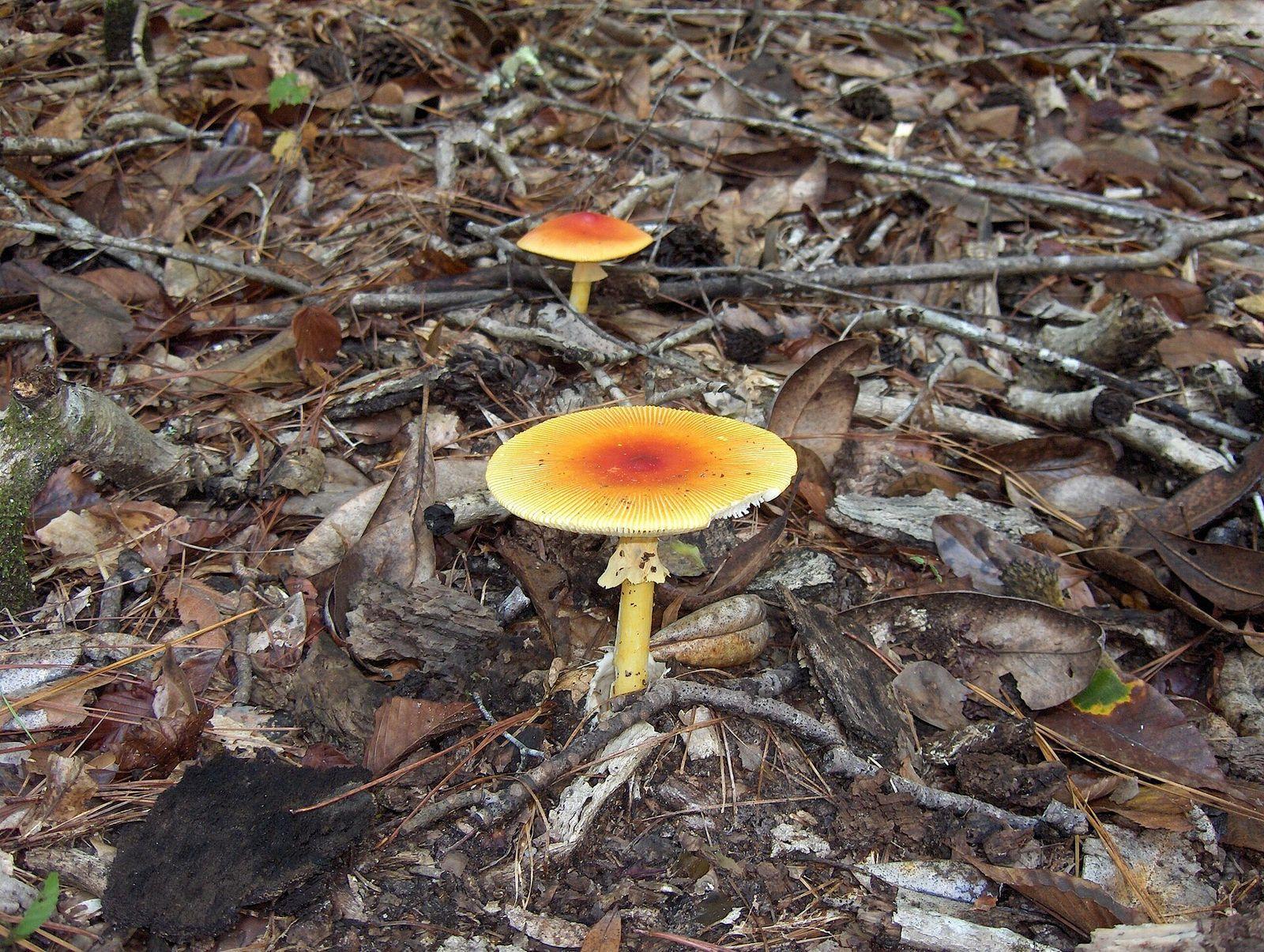
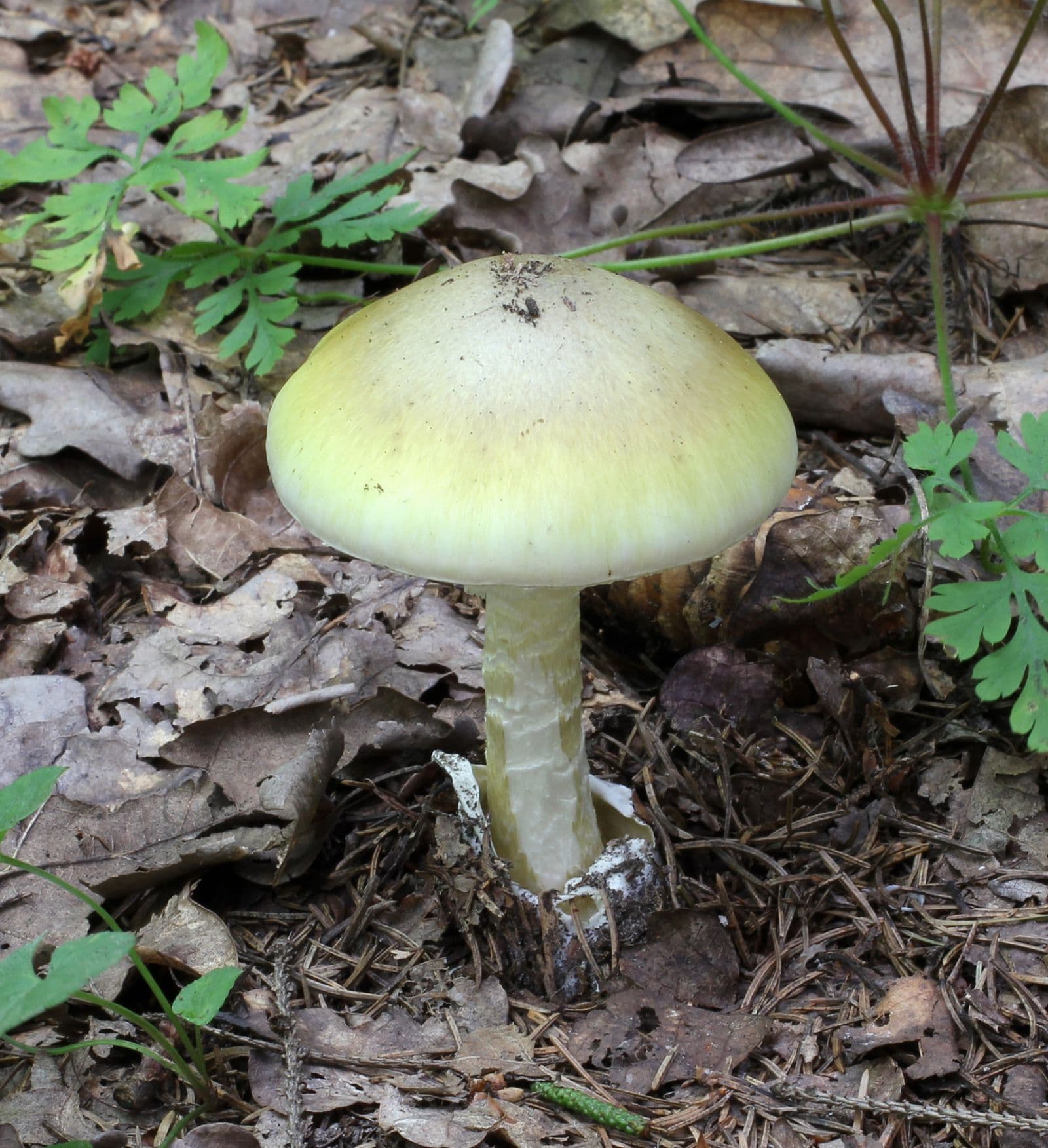
American Caesar's mushroom vs death cap
- Deadly: Death Cap
Both grow from a white cup. Caesar's mushroom has an orange cap and yellow gills; the death cap has a greenish cap and white gills. Their eggs differ.
Quick answer
Both are deadly, both have white gills, a white spore print, a ring and a white cup at the base, and both grow under coast live oak in California. Cap color and season are the usual clues: the death cap is typically yellow-green to olive and fruits mainly from fall to mid-winter, while the western destroying angel is white to cream and fruits from late winter into spring. Dilute potassium hydroxide (KOH) turns the western destroying angel's cap yellow.
Deadly lookalike
Like the western destroying angel, the death cap (Amanita phalloides) contains amatoxins, which halt protein production in cells by binding the enzyme RNA polymerase II. The CDC describes a delay of 6 to 24 hours before vomiting and diarrhea begin, an apparent recovery 24 to 36 hours after the meal, and liver and multiorgan failure typically 3 to 5 days after it. Amatoxins are heat stable and are not inactivated by cooking. In the 2016 northern California outbreak, three of 14 patients needed liver transplants. The western destroying angel (Amanita ocreata) is deadly poisonous and contains amatoxins, according to MykoWeb's California Fungi. In the CDC's report on the 2025 to 2026 northern California outbreak, people who ate it developed abdominal pain, nausea, vomiting and diarrhea 8 to 12 hours after the meal; across the 39 Amanita cases in that report, three people needed liver transplants and four died. Amatoxins are not destroyed by cooking.
If someone has eaten a wild mushroom and feels unwell, or may have eaten one of these, call poison control now: 1-800-222-1222 in the US. Do not wait for symptoms.
Side by side
The tellGreenish to yellow-olive cap, white gills, a skirt-like ring, and a white sac-like cup around the base of the stem.
Amanita ocreata
Photo coming
The tellLarge white to pale tan cap, white gills, a thin ring, and a thin, white, sac-like cup at the base, fruiting under oaks in late winter and spring.
| Feature | Death Cap | Western Destroying Angel |
|---|---|---|
| Cap color | Death CapYellow-green to olive or bronze, sometimes pale. | Western Destroying AngelWhite to cream, sometimes with pinkish or buff tones at the center. |
| Season in California | Death CapMainly fall to mid-winter. | Western Destroying AngelLate winter and spring, roughly January to April. |
| Ring | Death CapA thin white skirt-like ring that can tear away. | Western Destroying AngelA thin, fragile white ring, often missing. |
| Cup | Death CapA white, membranous sac around a rounded bulb. | Western Destroying AngelA thin, white, membranous sac around a bulbous base. |
| Range | Death CapMainly the Pacific coast, with scattered introduced populations in the Northeast. | Western Destroying AngelCalifornia and the Pacific coast north into Washington and south into Baja California. |
FAQ
The death cap. MykoWeb describes it as often very abundant under oaks in the San Francisco Bay Area, while the western destroying angel is seldom abundant, which probably explains why relatively few Bay Area poisonings have been attributed to it.
Yes. Dilute KOH turns the western destroying angel's cap yellow. Both species are deadly, so the test matters only for records.
Sources
CDC, Morbidity and Mortality Weekly Report
CDC, Morbidity and Mortality Weekly Report
Keep checking
This page states what field guides record. It is not advice to eat, taste or handle anything, and a photo cannot settle edibility. If someone has eaten a wild mushroom that may be toxic, call poison control (1-800-222-1222 in the US) right away, before symptoms start: the deadliest species act hours later.
More comparisons
Both grow from a white cup. Caesar's mushroom has an orange cap and yellow gills; the death cap has a greenish cap and white gills. Their eggs differ.
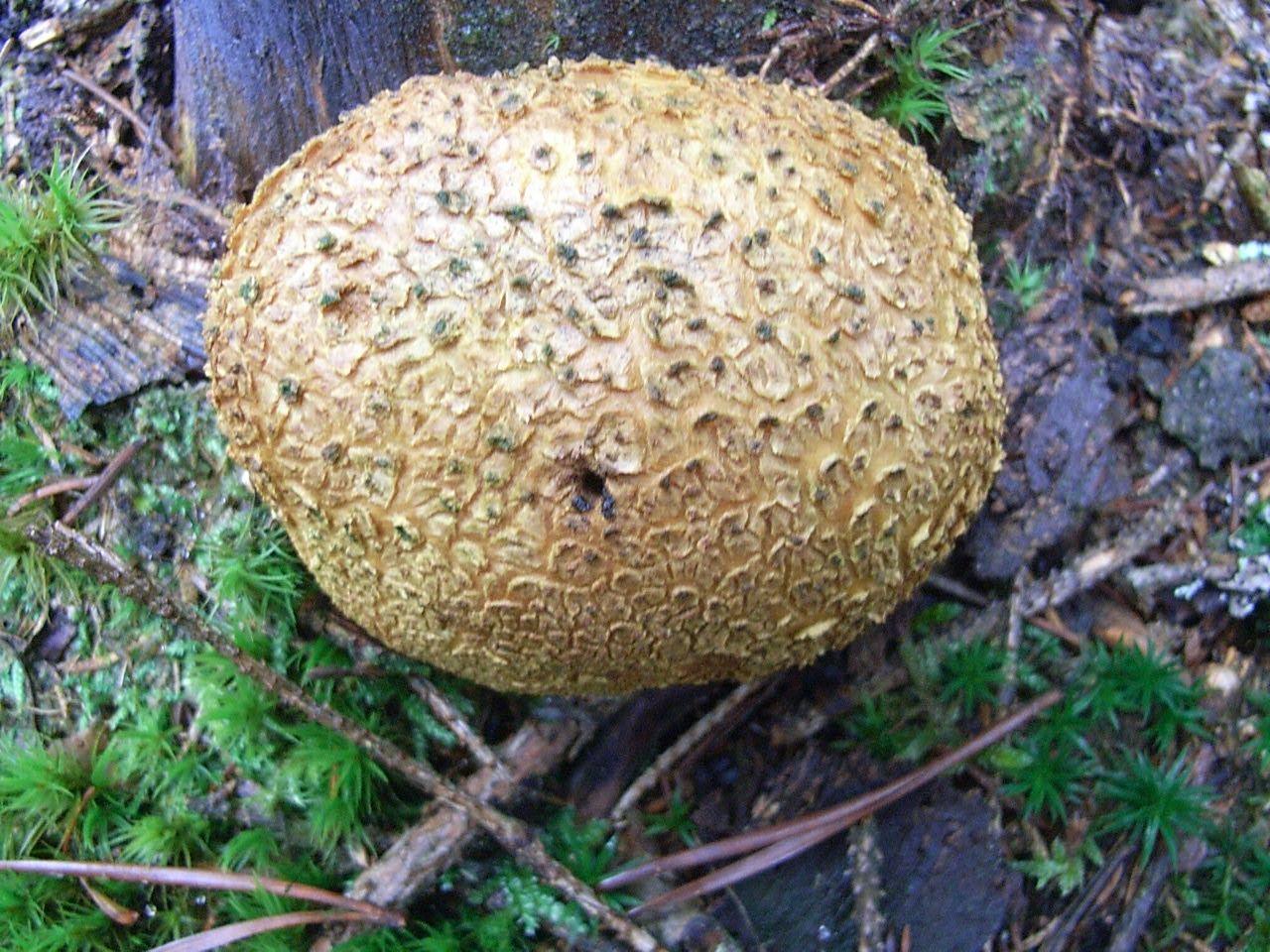
Split top to bottom, a death cap egg shows a cap, gills and stem. An earthball is solid purple-black inside a thick, scaly rind.
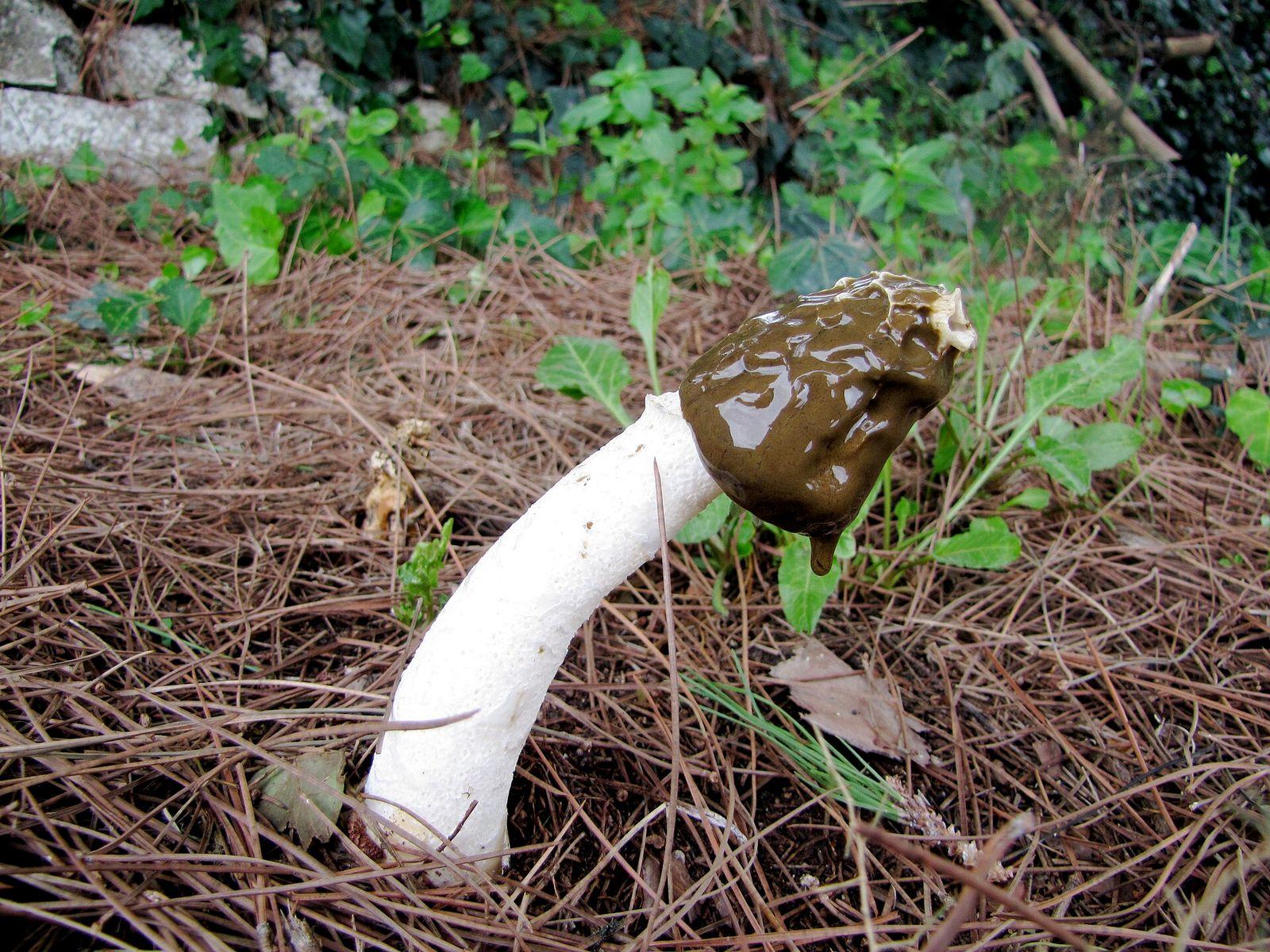
Sliced top to bottom, a stinkhorn egg shows jelly around a folded stalk. A death cap egg shows a cap, gills and stem. Both start as white eggs.
Waitlist
We will send one email when Mushrooms.id opens, and nothing else.
This opens your email app with the request written for you. Send it and we add you to the list. No email app? Write to hello@mushrooms.id with the subject “Add me to the Mushrooms.id waitlist”.