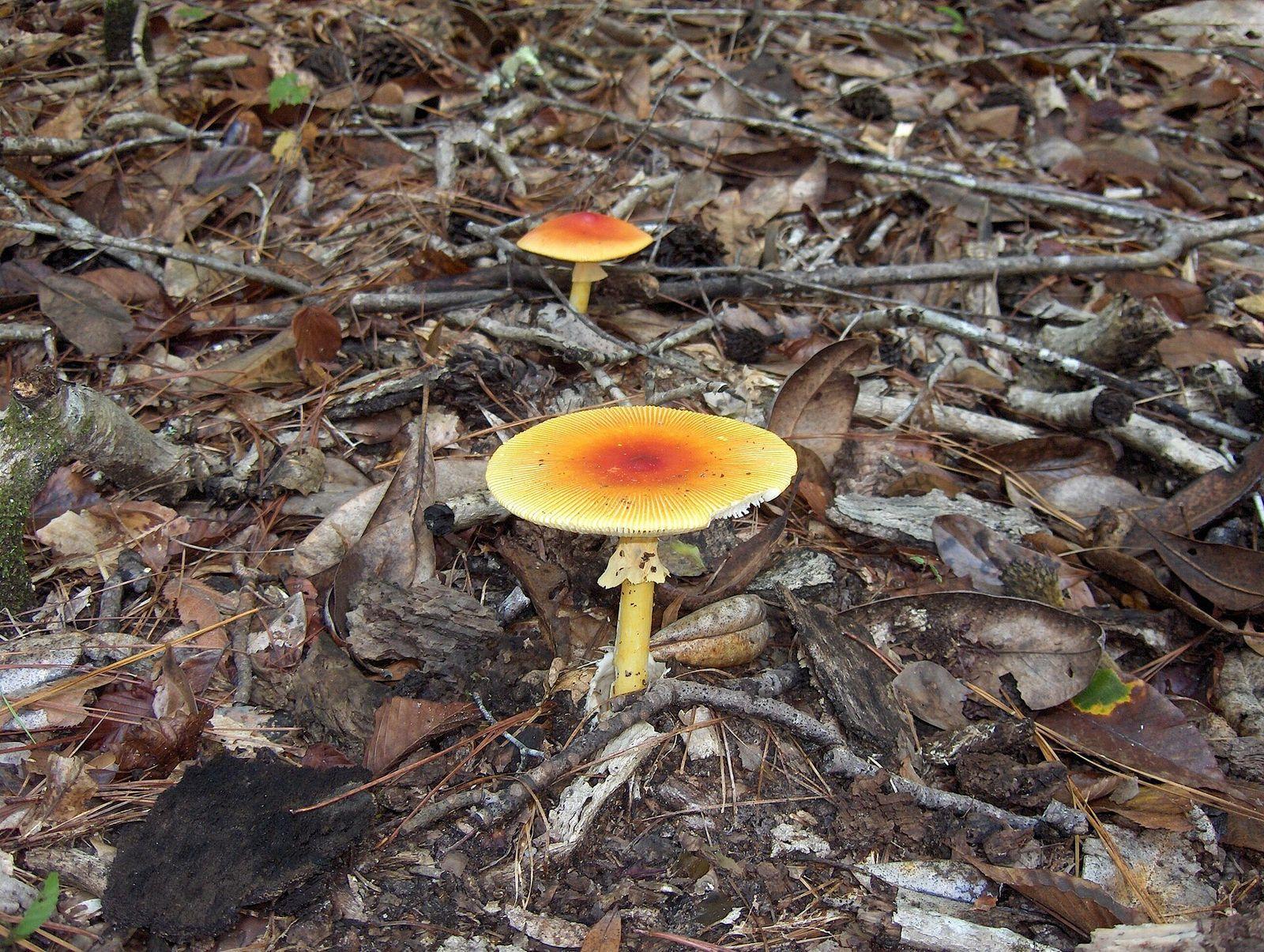
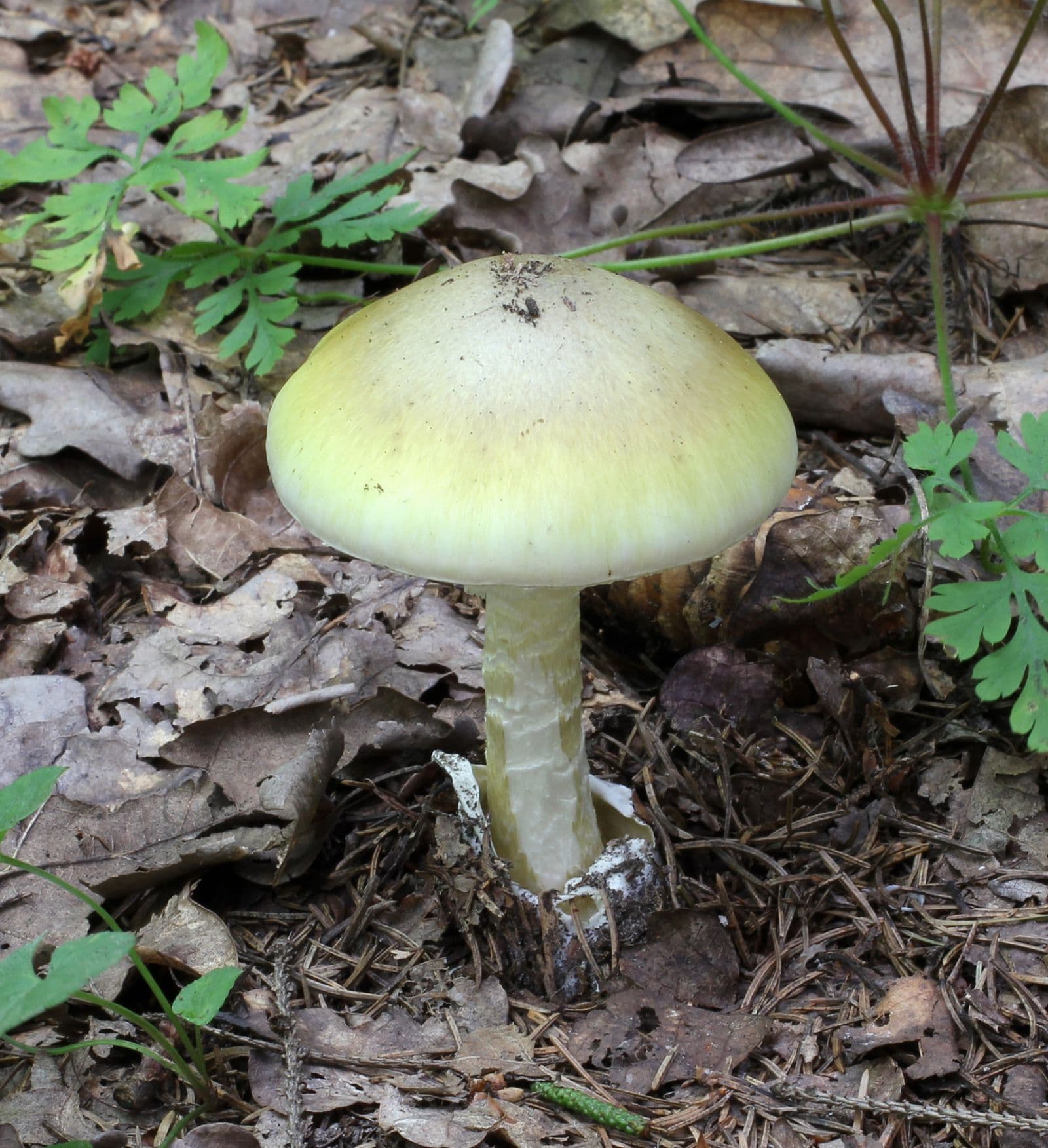
American Caesar's mushroom vs death cap
- Deadly: Death Cap
Both grow from a white cup. Caesar's mushroom has an orange cap and yellow gills; the death cap has a greenish cap and white gills. Their eggs differ.
Quick answer
Sliced top to bottom, an unopened stinkhorn egg shows a whitish folded stalk wrapped in a brownish jelly-like layer; a death cap egg shows the outline of a cap, gills and stem, with no jelly. Mature mushrooms are unmistakable: the stinkhorn becomes a spongy white stalk topped with olive-brown slime that smells of rotting meat.
Deadly lookalike
Unlike the common stinkhorn, the death cap (Amanita phalloides) contains amatoxins, which halt protein production in cells by binding the enzyme RNA polymerase II. The CDC describes a delay of 6 to 24 hours before vomiting and diarrhea begin, an apparent recovery 24 to 36 hours after the meal, and liver and multiorgan failure typically 3 to 5 days after it. Amatoxins are heat stable and are not inactivated by cooking. In the 2016 northern California outbreak, three of 14 patients needed liver transplants. The common stinkhorn is not known to be toxic.
If someone has eaten a wild mushroom and feels unwell, or may have eaten one of these, call poison control now: 1-800-222-1222 in the US. Do not wait for symptoms.
Side by side
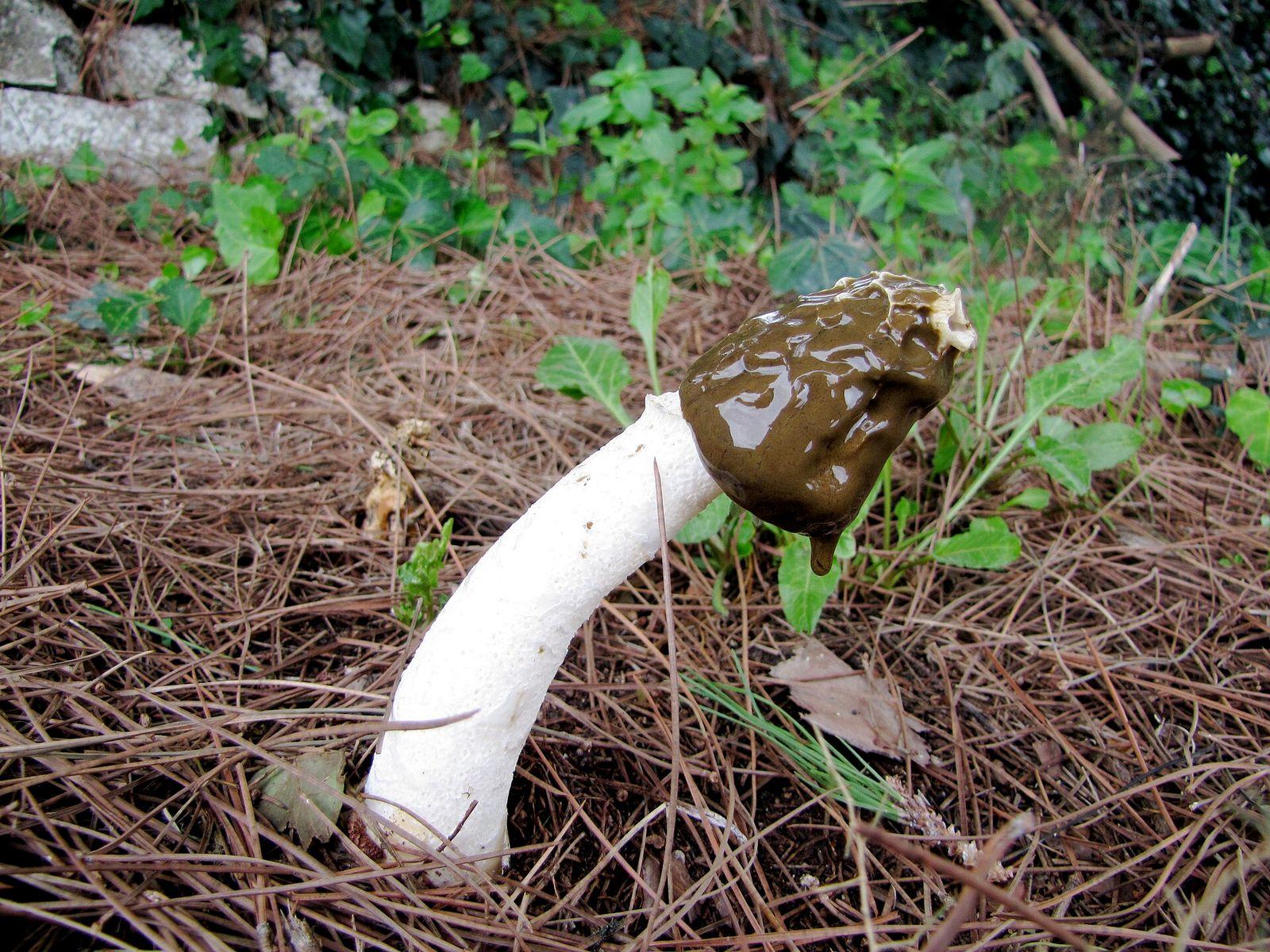
The tellA white, spongy stalk topped by a head coated in olive-brown slime that smells of rotting meat.
The tellGreenish to yellow-olive cap, white gills, a skirt-like ring, and a white sac-like cup around the base of the stem.
| Feature | Common Stinkhorn | Death Cap |
|---|---|---|
| Egg, sliced top to bottom | Common StinkhornA folded white stalk inside a brownish jelly-like layer. | Death CapThe outline of a cap, gills and stem, no jelly. |
| Egg outside | Common StinkhornWhitish to pinkish or purplish, attached by cord-like strands. | Death CapSmooth and white. |
| Mature form | Common StinkhornA white, hollow, spongy stalk with a pitted head of olive-brown slime. | Death CapA cap with white gills and a skirt-like ring on the stem. |
| Smell when mature | Common StinkhornCarrion. | Death CapFaint, becoming sickly sweet with age. |
| Base when mature | Common StinkhornThe egg remains as a cup (volva). | Death CapA bulb in a white, sac-like cup (volva). |
| Where it grows | Common StinkhornMulch, gardens, lawns and rich soil near rotting wood. | Death CapUnder oaks and planted trees. |
FAQ
A whitish, folded stalk encased in a brownish gelatinous layer, with no gills.
Yes. The stinkhorn's egg remains as a cup when the stalk rises, and the death cap grows from a sac-like cup. The cup does not separate them; the inside of the egg does.
Sources
MushroomExpert.com
MushroomExpert.com
Beaty Biodiversity Museum, University of British Columbia
CDC, Morbidity and Mortality Weekly Report
Keep checking
This page states what field guides record. It is not advice to eat, taste or handle anything, and a photo cannot settle edibility. If someone has eaten a wild mushroom that may be toxic, call poison control (1-800-222-1222 in the US) right away, before symptoms start: the deadliest species act hours later.
More comparisons
Both grow from a white cup. Caesar's mushroom has an orange cap and yellow gills; the death cap has a greenish cap and white gills. Their eggs differ.
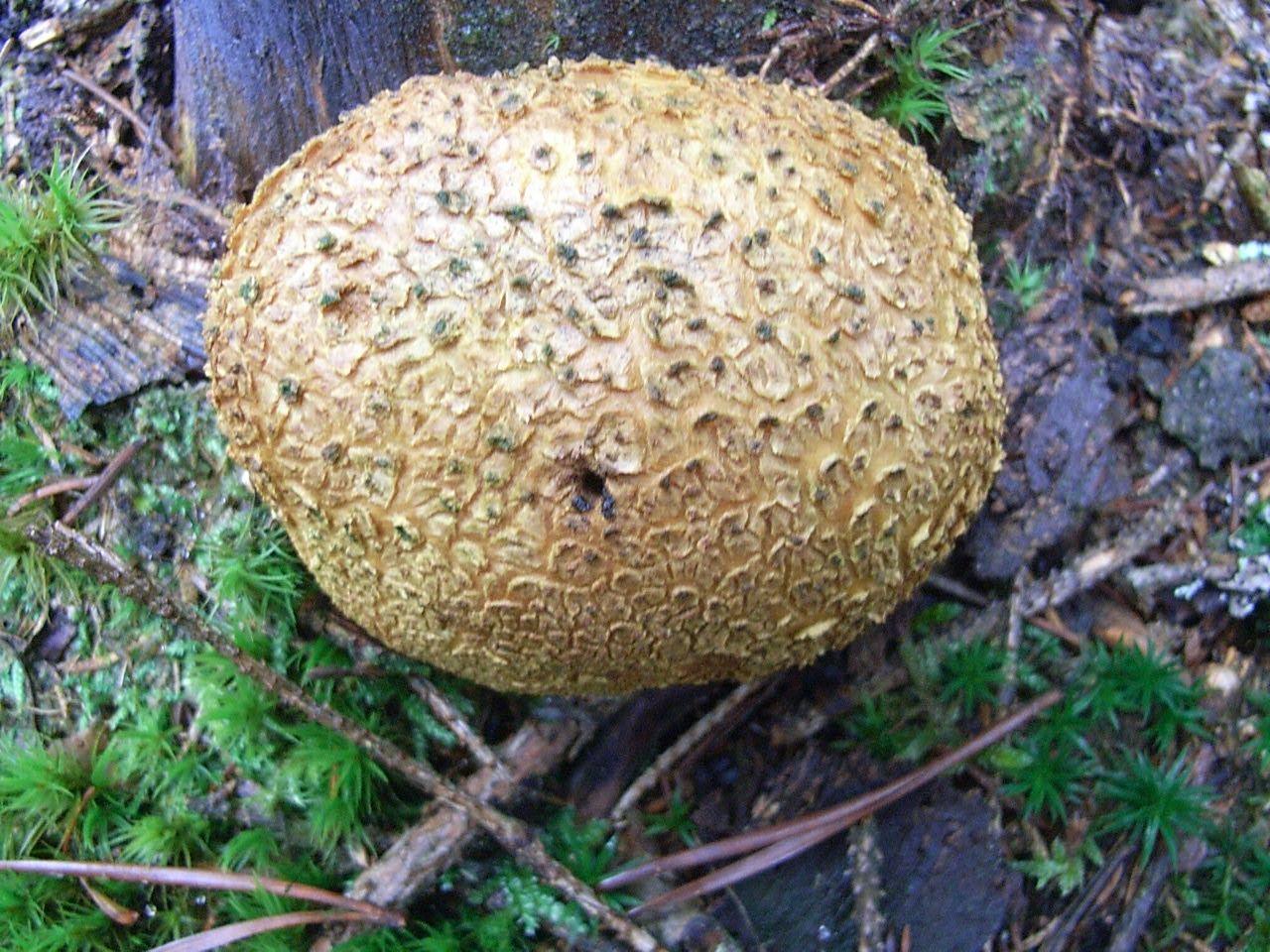
Split top to bottom, a death cap egg shows a cap, gills and stem. An earthball is solid purple-black inside a thick, scaly rind.
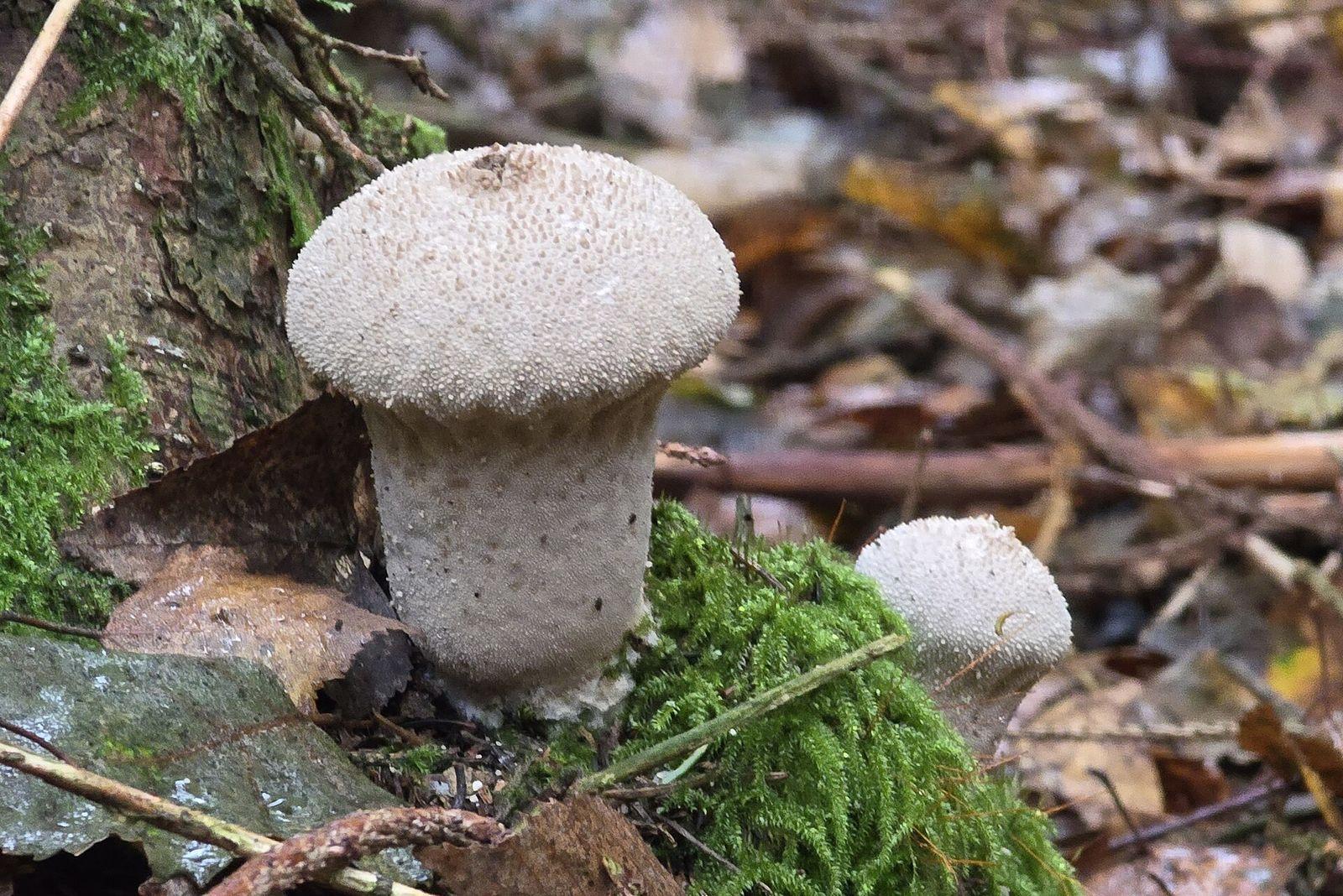
Sliced top to bottom, a puffball is pure white with no structure. A death cap egg shows a cap, gills and stem.
Waitlist
We will send one email when Mushrooms.id opens, and nothing else.
This opens your email app with the request written for you. Send it and we add you to the list. No email app? Write to hello@mushrooms.id with the subject “Add me to the Mushrooms.id waitlist”.