Deadly
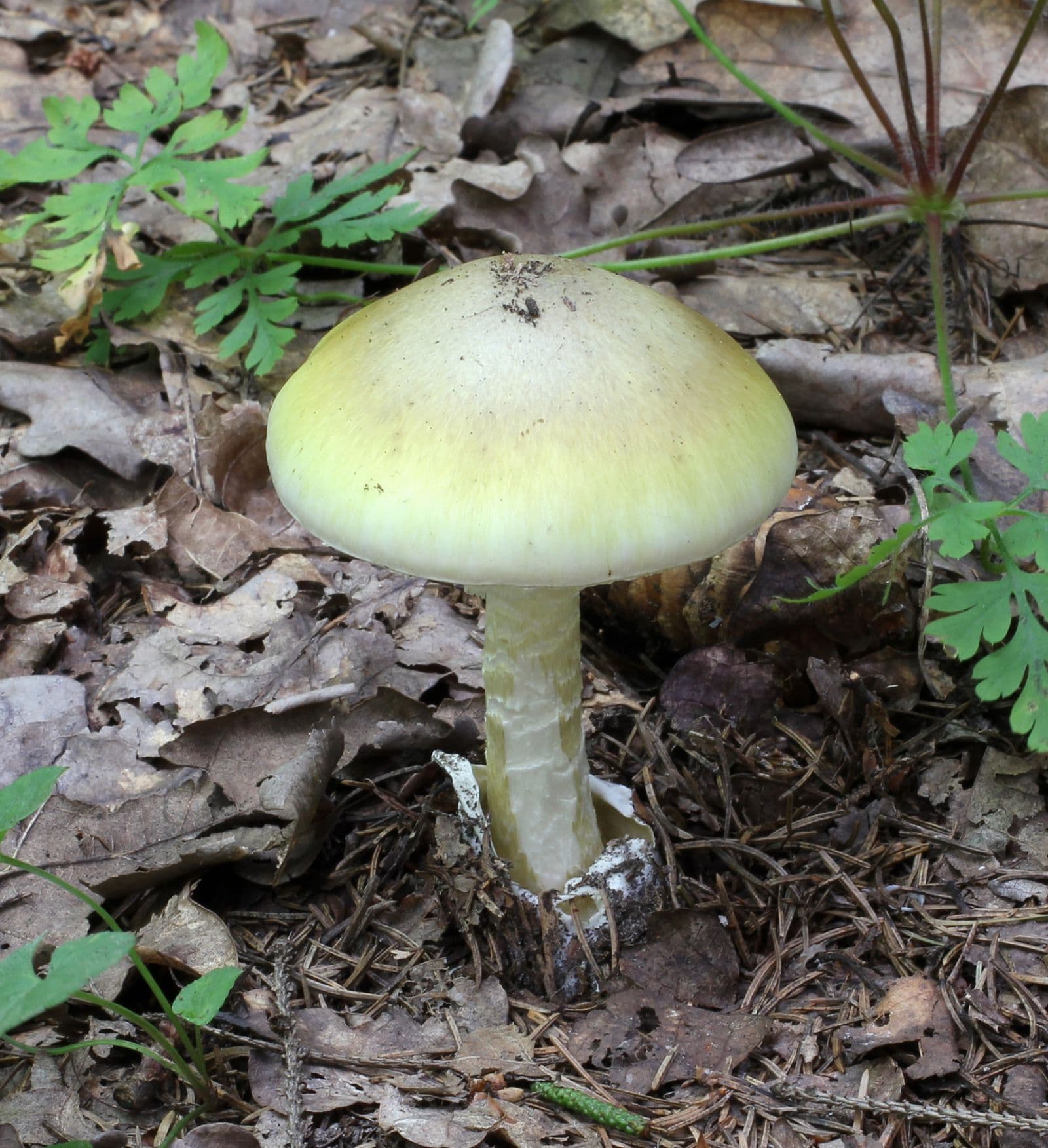
Death Cap
Amanita phalloides
An unopened stinkhorn egg and a young Amanita both look like white eggs. Sliced top to bottom, a stinkhorn egg shows a jelly-like layer around a folded stalk; an Amanita shows the outline of a cap, gills and stem.
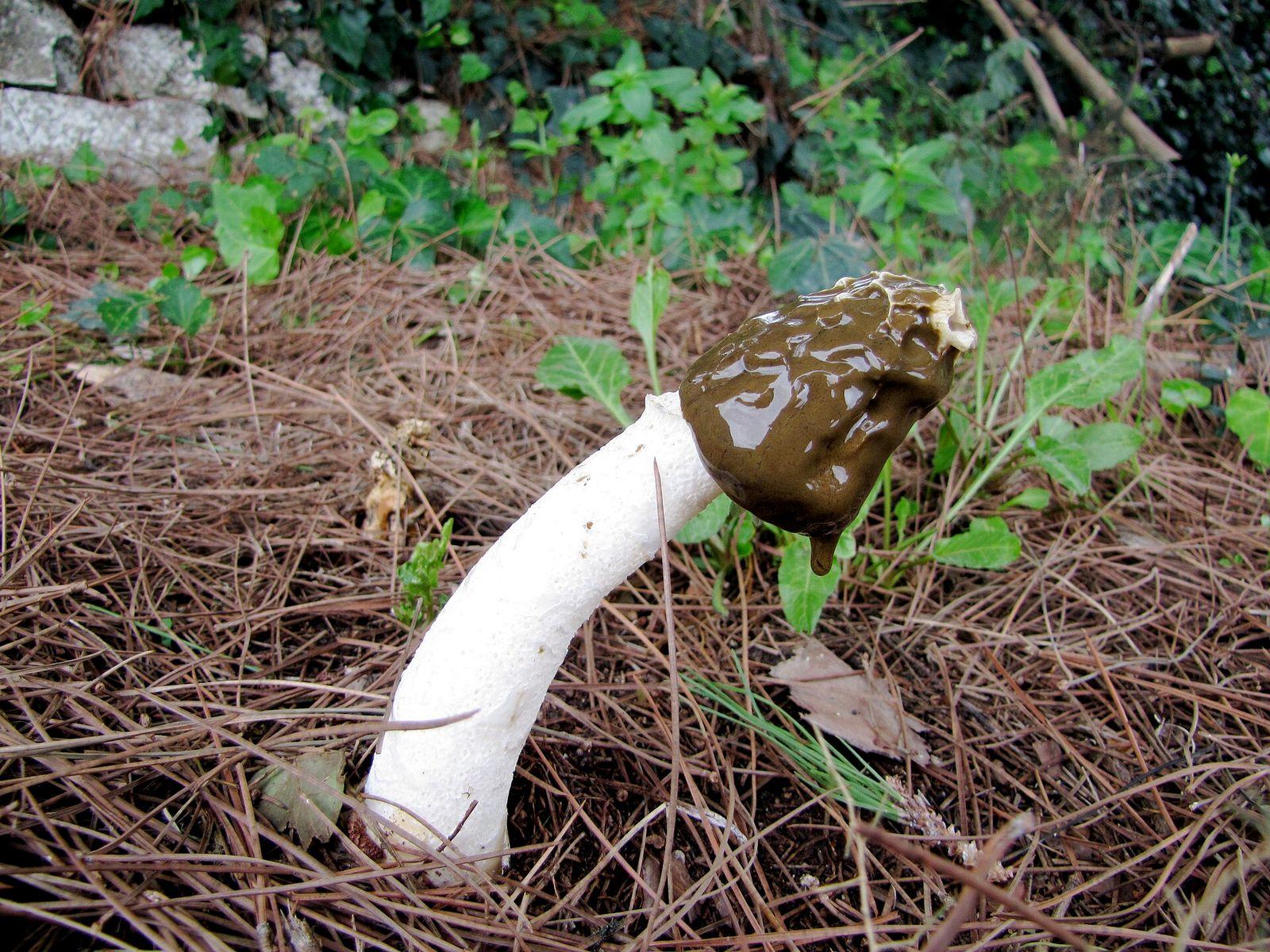
Phallus impudicus
Also called stinkhorn.
The common stinkhorn is a tall, white, spongy stalk with a slimy olive-brown head that smells of carrion. It emerges from a white, egg-like sac in woods, gardens and wood-chip mulch. Flies feed on the slime and carry off its spores.
The tell
A white, spongy stalk topped by a head coated in olive-brown slime that smells of rotting meat.
Field marks
Cap, underside and stem show in a photo. The spore print does not, and it is often the deciding check.
Where and when
Lookalikes
Each card says how to tell the two apart.
Amanita phalloides
An unopened stinkhorn egg and a young Amanita both look like white eggs. Sliced top to bottom, a stinkhorn egg shows a jelly-like layer around a folded stalk; an Amanita shows the outline of a cap, gills and stem.
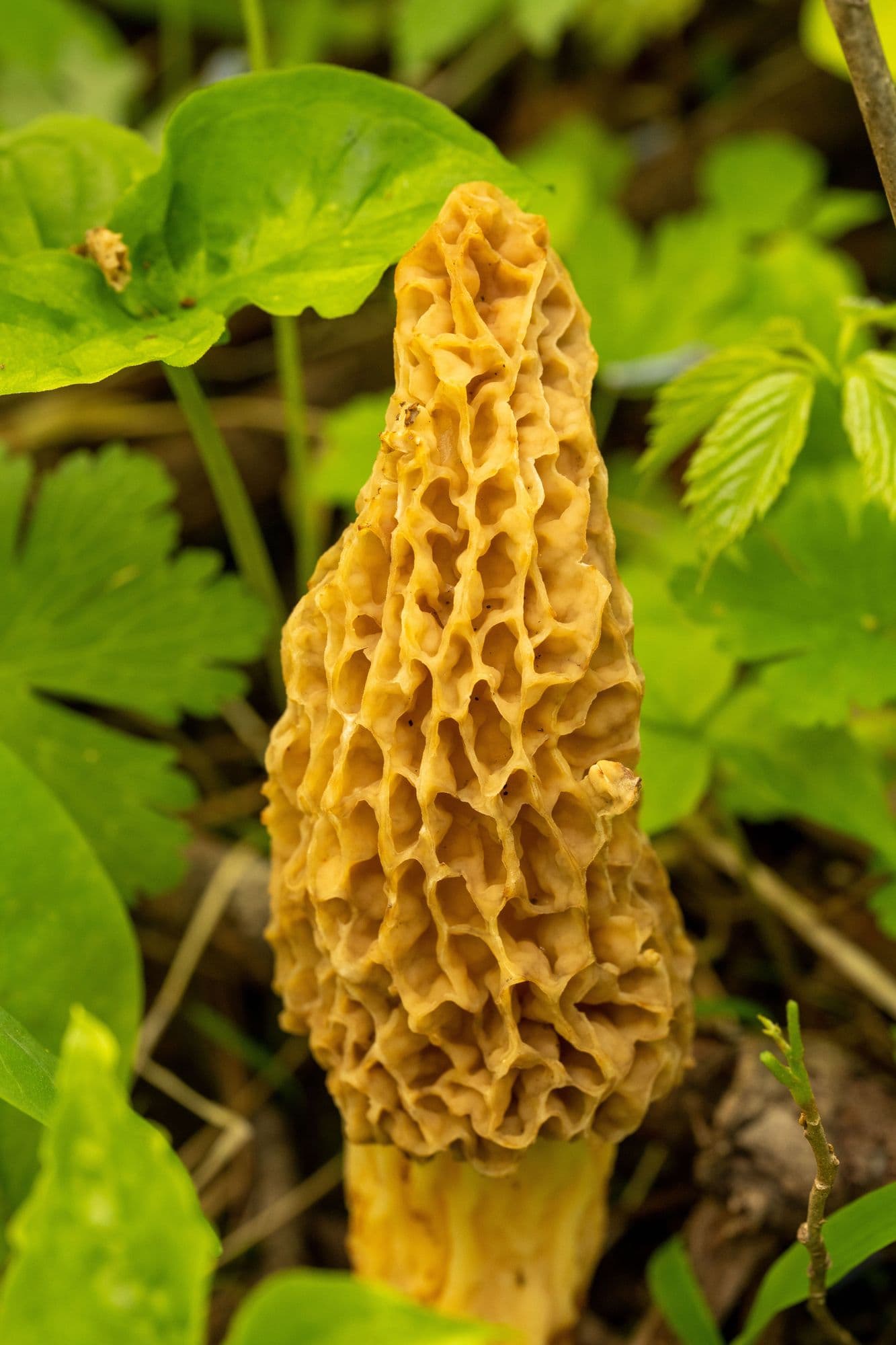
Morchella esculentoides
A morel's pitted cap is dry, not slimy, it has no smell of rot, and it has no egg-like sac at the base.
A common eastern stinkhorn whose head is granular rather than pitted under the slime, with a pinkish to lilac egg.
A slender pink to orange stalk with no separate head, the slime coating only its tapered tip.
Edibility
Field guides list the mature common stinkhorn as inedible because of its slime and smell. It is not known to be toxic, and some European sources record the egg stage being eaten. Its eggs resemble the young stages of deadly Amanitas, which contain amatoxins.
This page states what field guides record. It is not advice to eat, taste or handle anything, and a photo cannot settle edibility. If someone has eaten a wild mushroom that may be toxic, call poison control (1-800-222-1222 in the US) right away, before symptoms start: the deadliest species act hours later.
FAQ
The slime on its head smells of rotting meat, which attracts flies. The flies feed on the slime and spread spores stuck to their bodies.
The common stinkhorn is not known to be toxic. Field guides list the mature fungus as inedible. Its unopened eggs can resemble the eggs of deadly Amanitas.
Stinkhorns break down dead wood, and wood-chip mulch gives them a rich, moist supply. They often appear in landscaped beds in summer and fall.
Sources
MushroomExpert.com
Index Fungorum
Waitlist
We will send one email when Mushrooms.id opens, and nothing else.
This opens your email app with the request written for you. Send it and we add you to the list. No email app? Write to hello@mushrooms.id with the subject “Add me to the Mushrooms.id waitlist”.