Edible
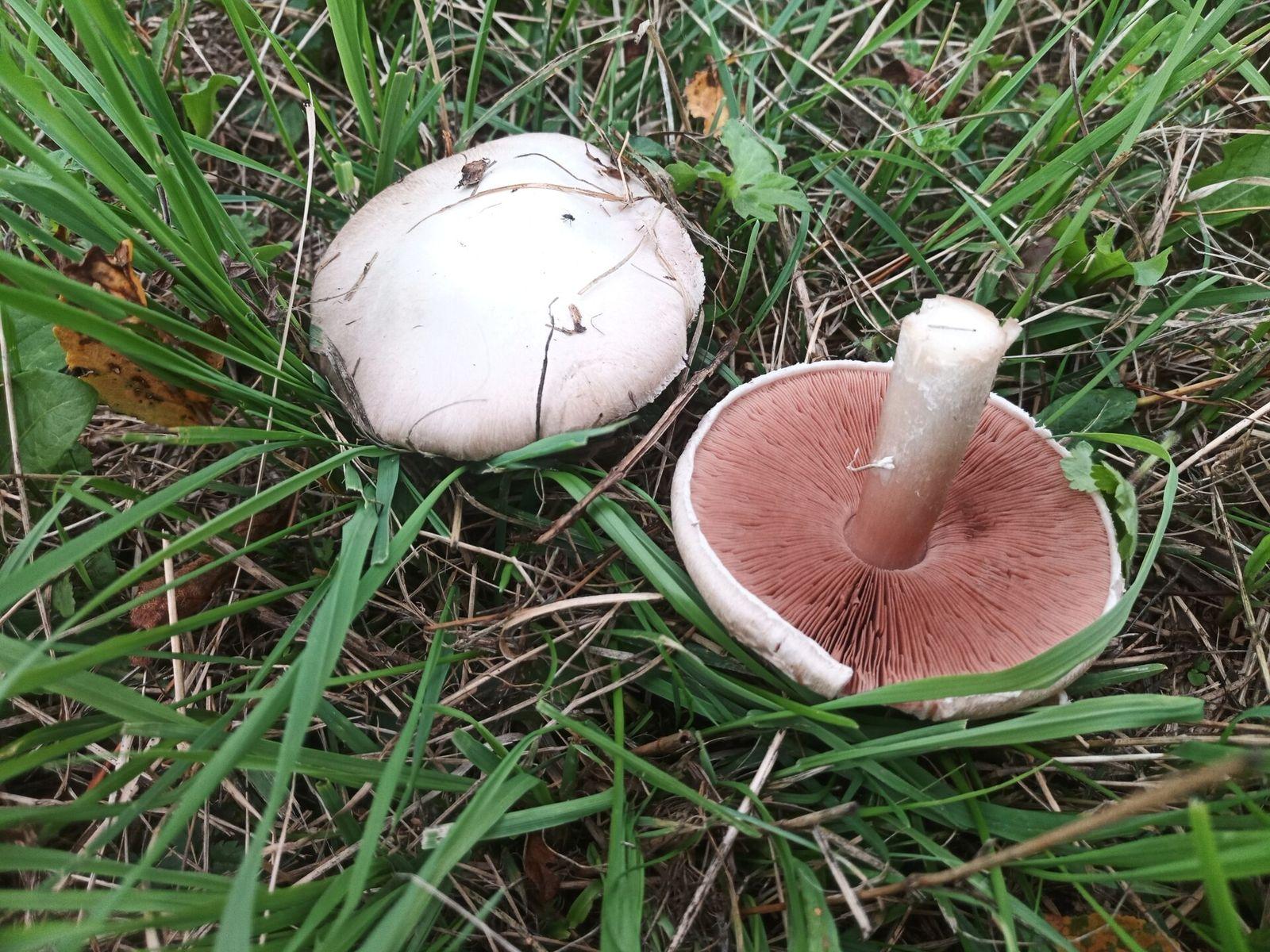
Meadow Mushroom
Agaricus campestris
Agaricus gills are pink when young and chocolate brown when mature, the spore print is dark brown, and there is no cup at the base.
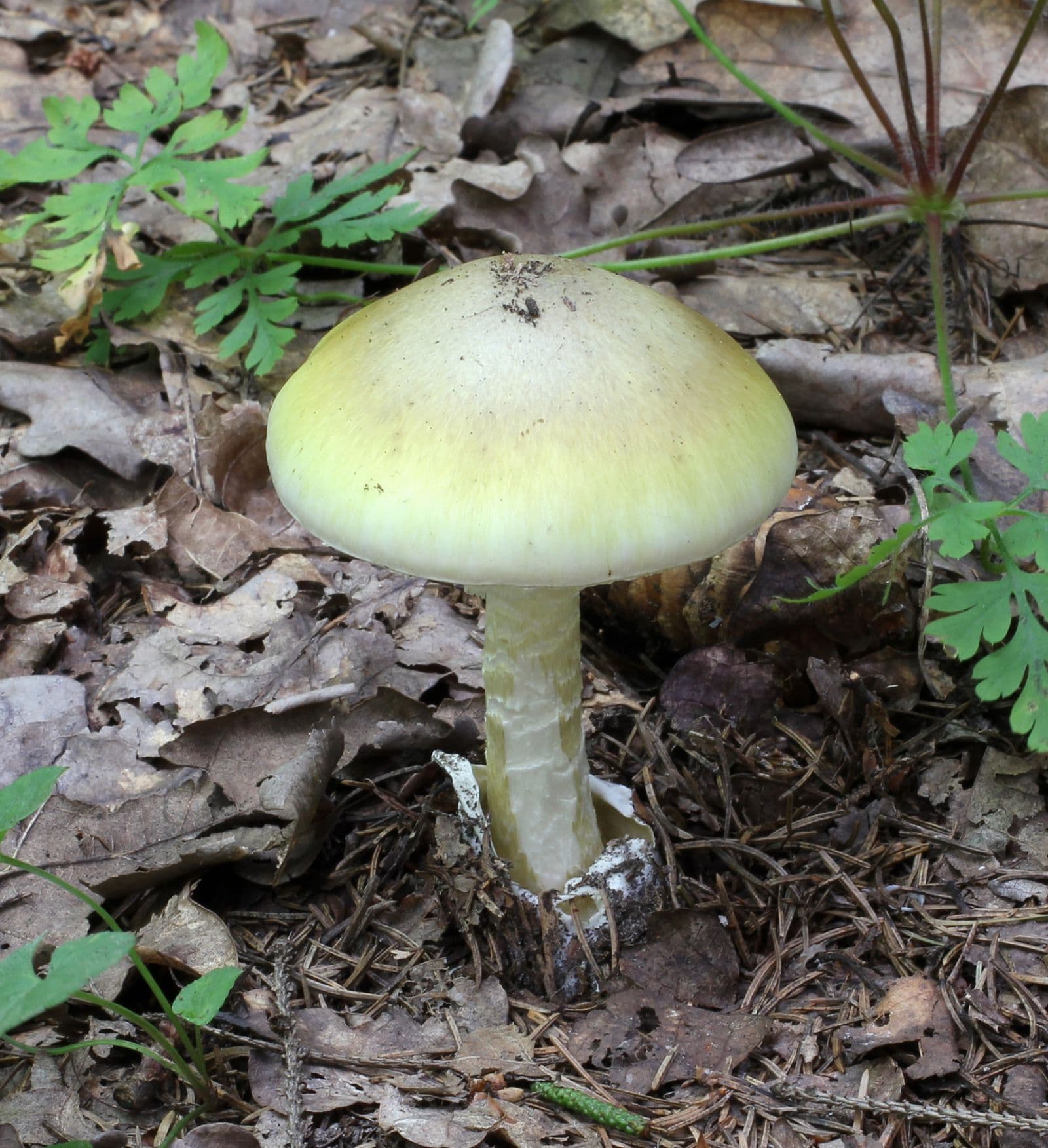
Amanita phalloides
Also called death cup.
The death cap is the mushroom behind most fatal mushroom poisonings worldwide. It has a greenish to olive cap, white gills, a ring and a white cup at the base. In North America it is introduced and most common under oaks in California and the Pacific Northwest.
The tell
Greenish to yellow-olive cap, white gills, a skirt-like ring, and a white sac-like cup around the base of the stem.
Field marks
Cap, underside and stem show in a photo. The spore print does not, and it is often the deciding check.
Where and when
Lookalikes
Each card says how to tell the two apart.
Volvariella volvacea also grows from a cup and its gills are white at first, but they turn pink to brownish pink, its spore print is pink rather than white, and it has no ring. Unopened buttons of the two cannot be told apart. Death caps mistaken for this Asian edible have poisoned people in Australia, New Zealand and the USA.
Agaricus campestris
Agaricus gills are pink when young and chocolate brown when mature, the spore print is dark brown, and there is no cup at the base.
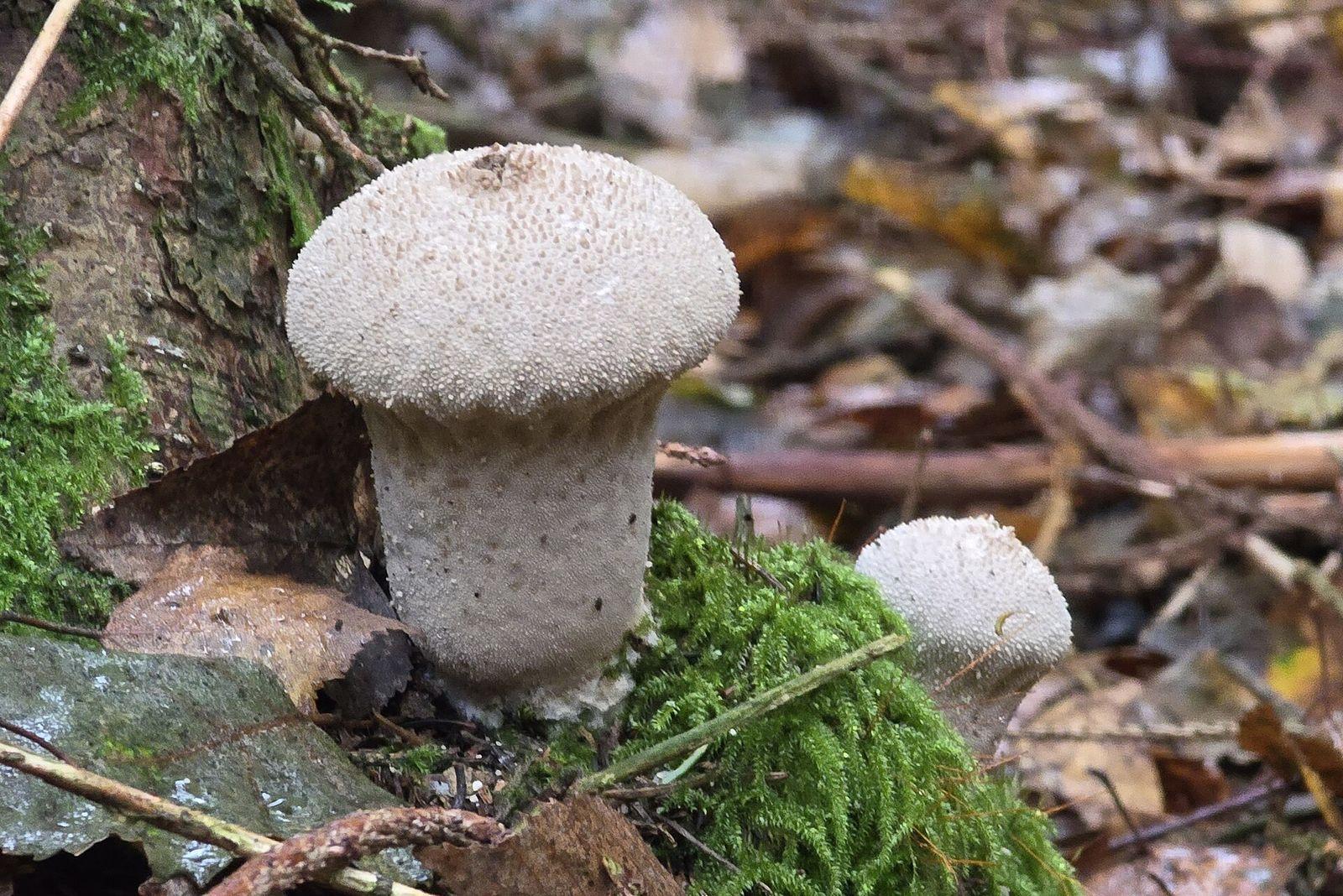
Lycoperdon perlatum
An unopened death cap egg looks like a small white puffball. Cut top to bottom, the egg shows the outline of a cap, gills and stem, while a puffball is uniform white inside.
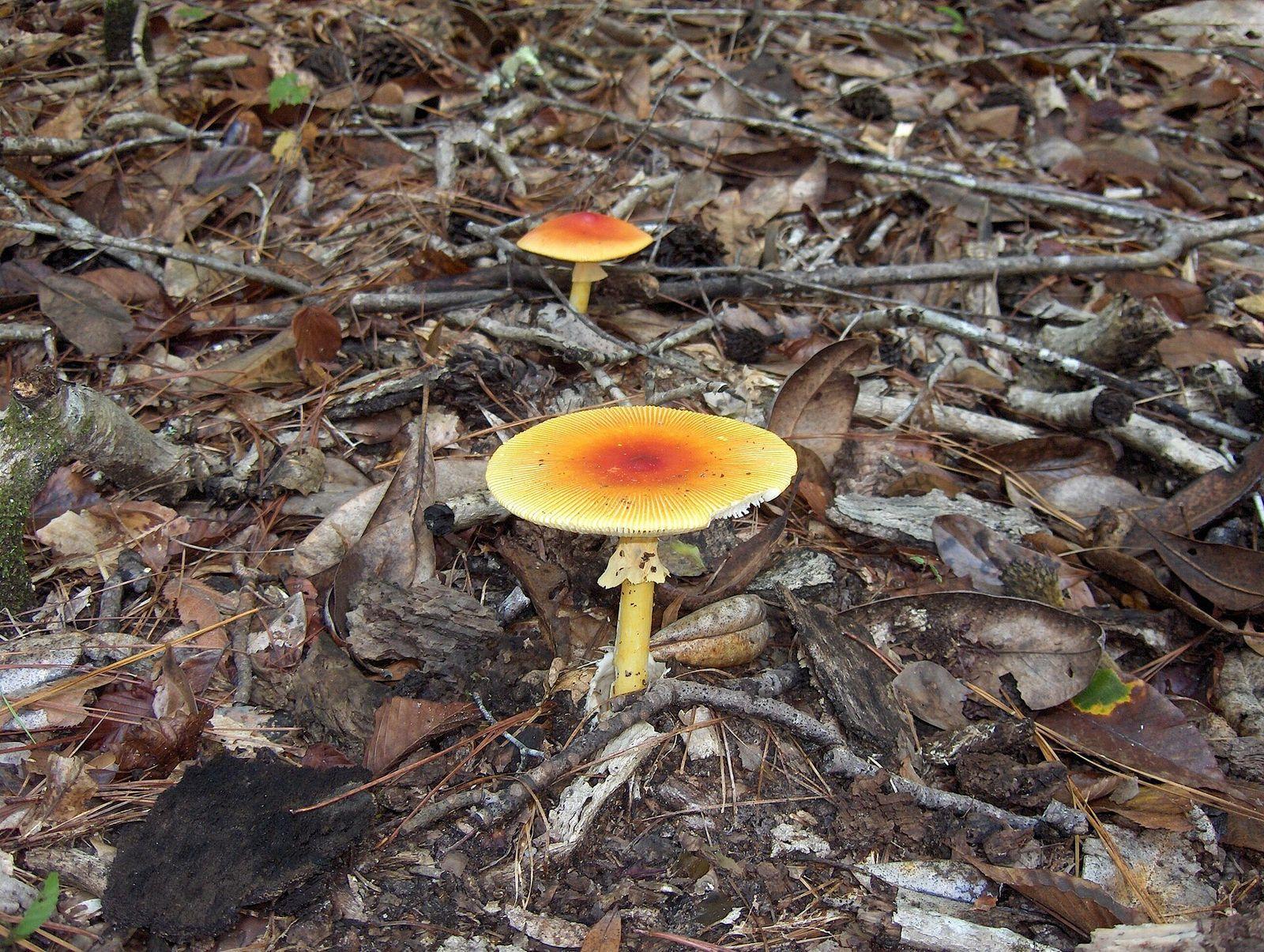
Amanita jacksonii
Caesar's mushrooms have a bright red to orange cap, yellow gills and a yellow stem above a white cup. Their unopened eggs are white and show an orange cap when cut.
Edibility
The death cap contains amatoxins, which shut down protein production in liver and kidney cells. Symptoms usually begin 6 to 24 hours after the meal with severe vomiting, diarrhea and cramps, often followed by a day or two of apparent recovery before liver and kidney failure. Cooking, freezing and drying do not destroy amatoxins. Field guides record that half a cap can kill an adult.
This page states what field guides record. It is not advice to eat, taste or handle anything, and a photo cannot settle edibility. If someone has eaten a wild mushroom that may be toxic, call poison control (1-800-222-1222 in the US) right away, before symptoms start: the deadliest species act hours later.
FAQ
Its amatoxins destroy liver and kidney cells, and field guides record that half a cap or less can kill an adult. It causes most mushroom poisoning deaths worldwide.
Symptoms start 6 to 24 hours after eating, with severe vomiting, diarrhea and abdominal pain. These often ease for a day or two before signs of liver failure appear. The delay means the toxin has already been absorbed by the time symptoms start.
Mainly in California, especially under coast live oaks, and in the Pacific Northwest, where they were introduced on the roots of imported trees. Scattered populations also occur in the Northeast, usually under planted trees.
Sources
MushroomExpert.com
Beaty Biodiversity Museum, University of British Columbia
MykoWeb, California Fungi
Australian National Botanic Gardens
Also on Mushrooms.id
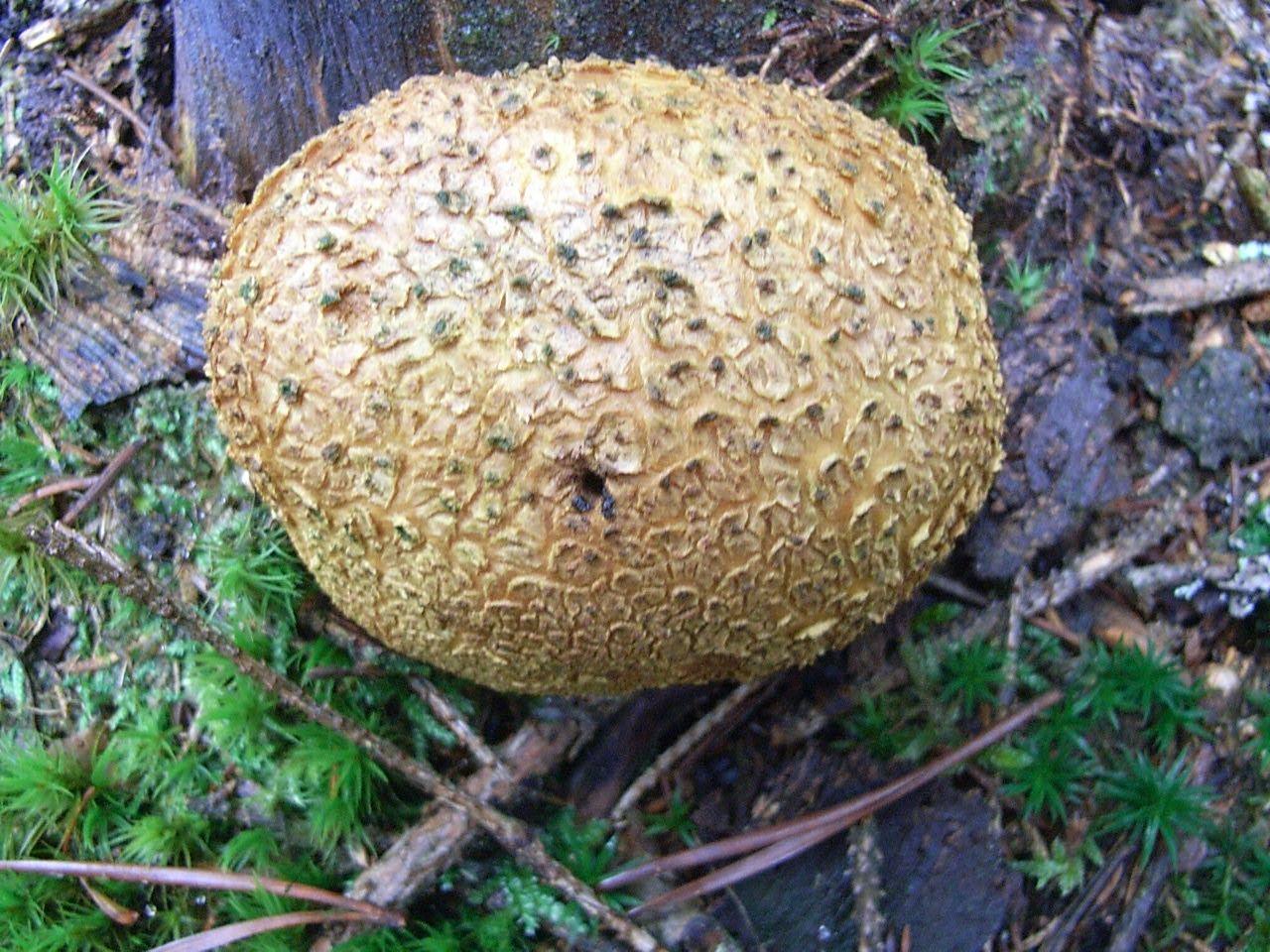
Scleroderma citrinum
A hard, thick-skinned ball with a scaly yellow-brown surface that is purple-black inside, not white.
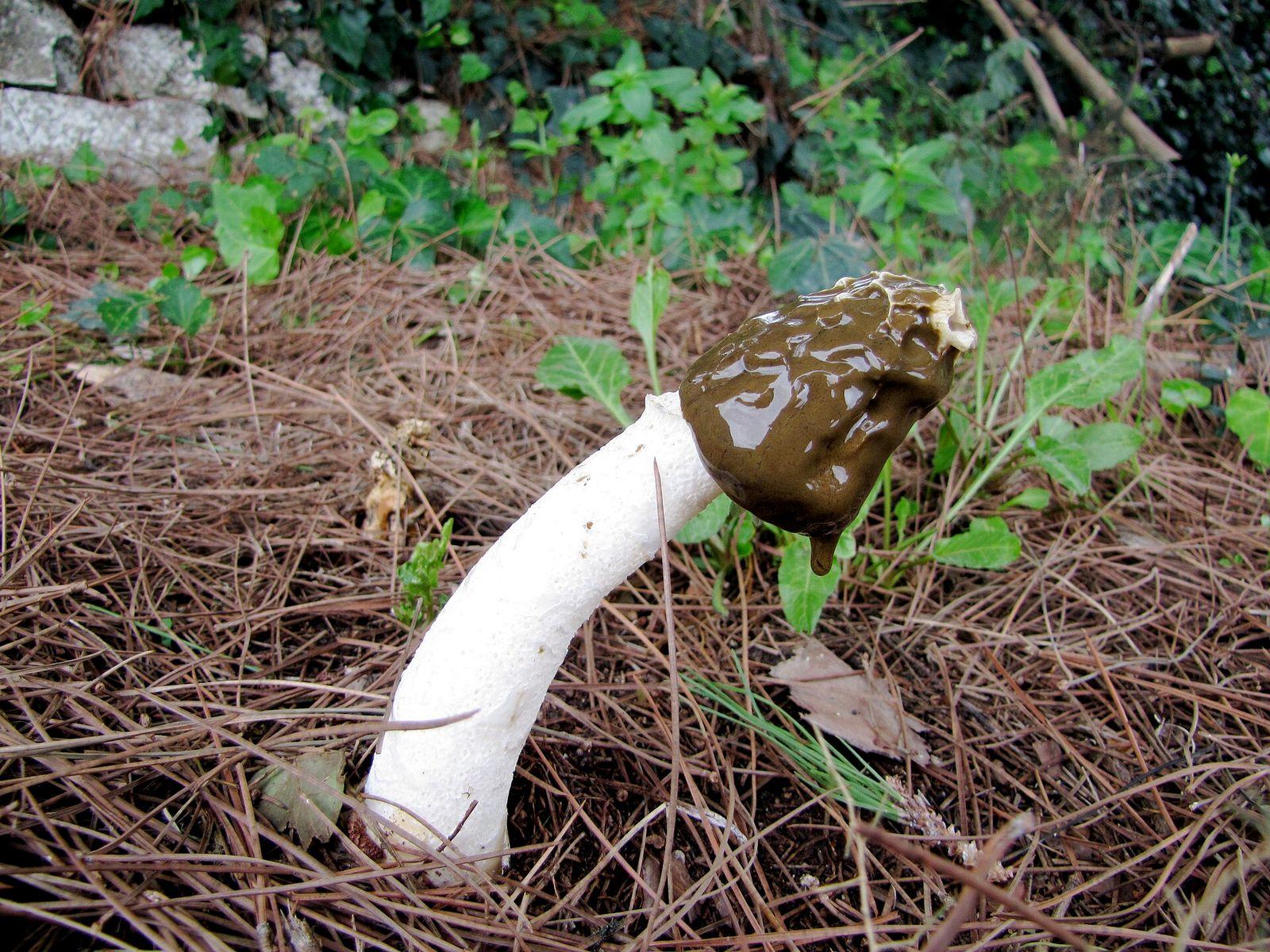
Phallus impudicus
A white, spongy stalk topped by a head coated in olive-brown slime that smells of rotting meat.
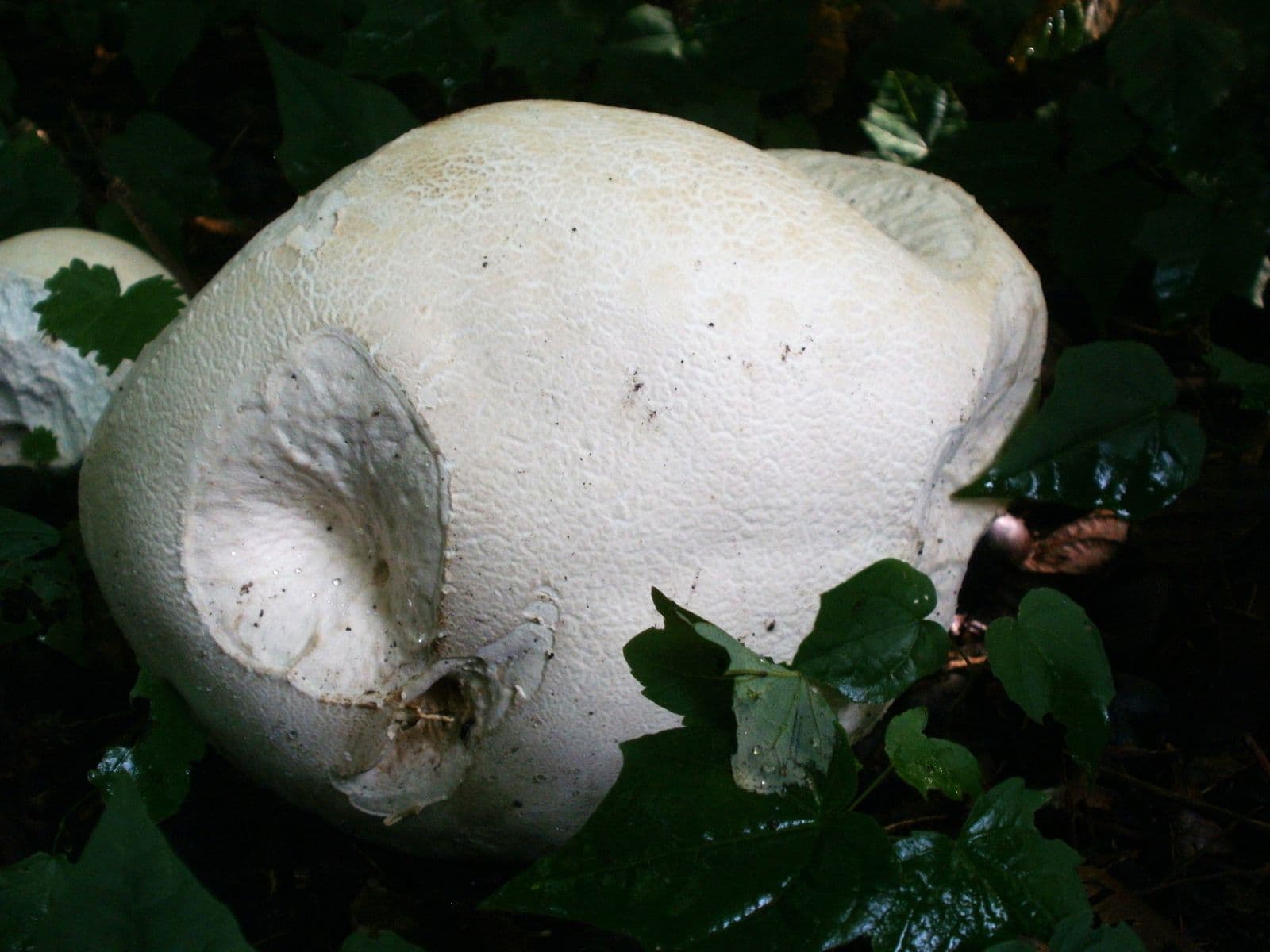
Calvatia gigantea
A smooth white ball the size of a soccer ball or larger, solid and uniformly white inside with no trace of a cap, gills or stem.
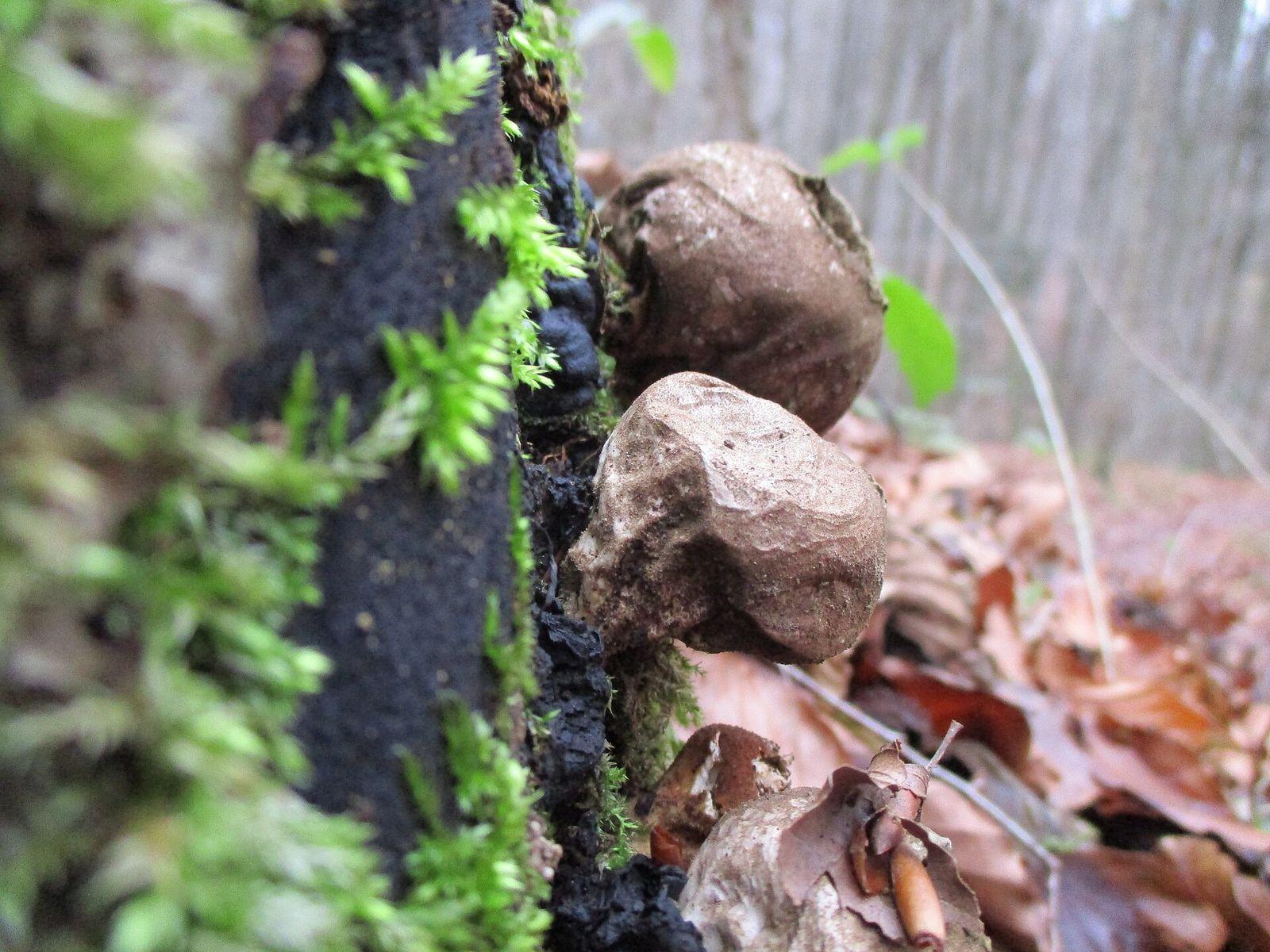
Apioperdon pyriforme
Small pear-shaped puffballs in dense clusters on rotting wood, joined at the base by white cords.
Waitlist
We will send one email when Mushrooms.id opens, and nothing else.
This opens your email app with the request written for you. Send it and we add you to the list. No email app? Write to hello@mushrooms.id with the subject “Add me to the Mushrooms.id waitlist”.