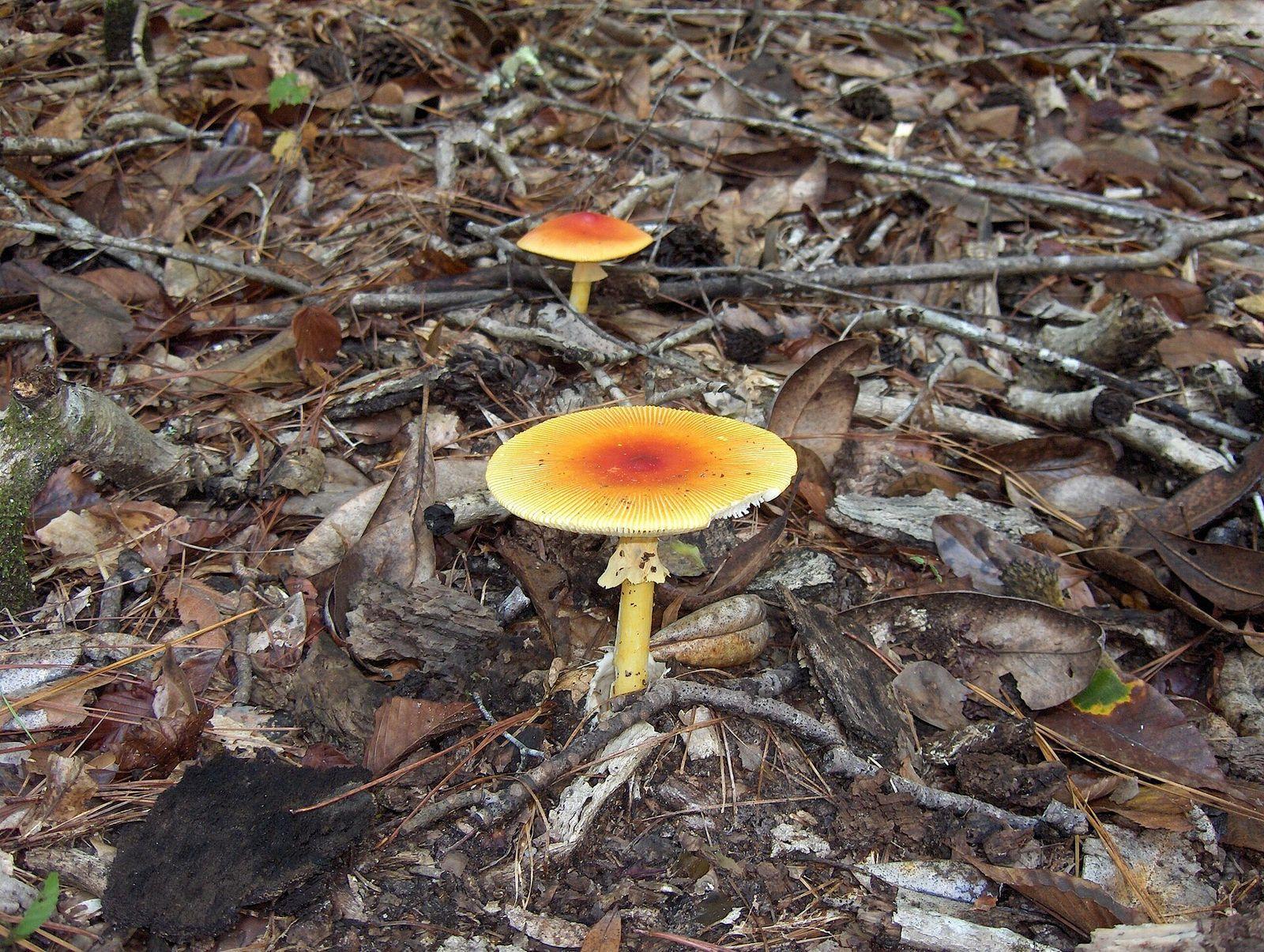
American Caesar's mushroom vs death cap
- Deadly: Death Cap
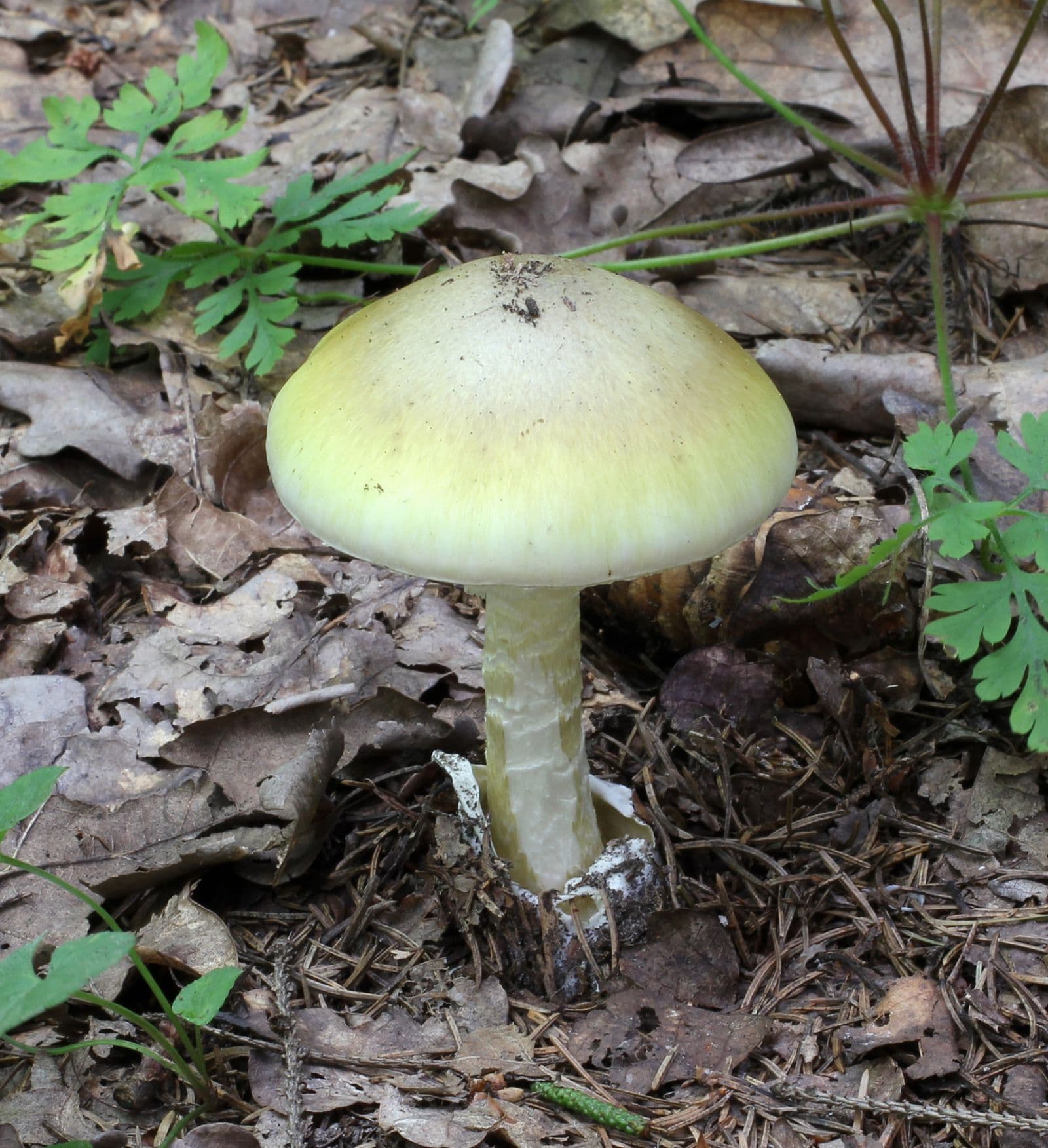
Both grow from a white cup. Caesar's mushroom has an orange cap and yellow gills; the death cap has a greenish cap and white gills. Their eggs differ.
Quick answer
Pear-shaped puffballs grow in dense clusters on rotting wood, joined by white cords, and are pure white inside when young; a death cap egg grows from soil and shows the outline of a cap, gills and stem when sliced. Because pear-shaped puffballs can grow from buried wood and look like they are on soil, the inside is the surer difference.
Deadly lookalike
Unlike the pear-shaped puffball, the death cap (Amanita phalloides) contains amatoxins, which halt protein production in cells by binding the enzyme RNA polymerase II. The CDC describes a delay of 6 to 24 hours before vomiting and diarrhea begin, an apparent recovery 24 to 36 hours after the meal, and liver and multiorgan failure typically 3 to 5 days after it. Amatoxins are heat stable and are not inactivated by cooking. In the 2016 northern California outbreak, three of 14 patients needed liver transplants.
If someone has eaten a wild mushroom and feels unwell, or may have eaten one of these, call poison control now: 1-800-222-1222 in the US. Do not wait for symptoms.
Side by side
The tellGreenish to yellow-olive cap, white gills, a skirt-like ring, and a white sac-like cup around the base of the stem.
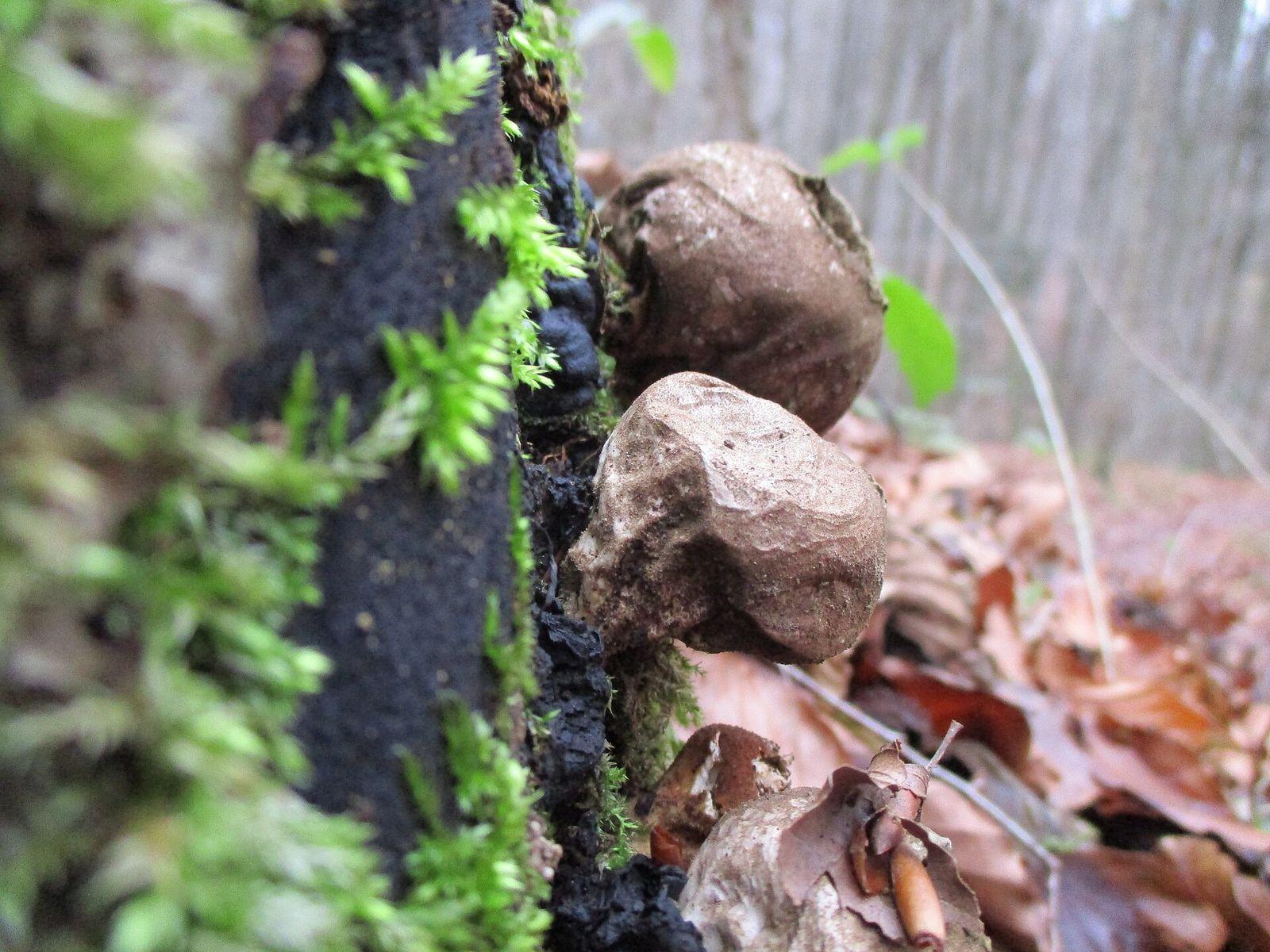
The tellSmall pear-shaped puffballs in dense clusters on rotting wood, joined at the base by white cords.
| Feature | Death Cap | Pear-Shaped Puffball |
|---|---|---|
| What it grows from | Death CapSoil. | Pear-Shaped PuffballRotting logs, stumps and buried wood. |
| Growth | Death CapSingle or scattered. | Pear-Shaped PuffballDense clusters joined at the base by white cords. |
| Sliced top to bottom | Death CapThe outline of a cap, gills and stem. | Pear-Shaped PuffballUniform pure white when young. |
| Surface | Death CapSmooth and white. | Pear-Shaped PuffballFine granules or tiny spines that wear off; soon yellow-brown to tan. |
| Base | Death CapA bulb in a white, sac-like cup. | Pear-Shaped PuffballA short, narrowed sterile base with white cords. |
FAQ
Yes. It grows on rotting logs, stumps and buried wood, usually in dense groups. Amanita buttons grow from soil.
Sliced top to bottom, a puffball is uniform white inside; an Amanita button shows a developing cap, gills and stem.
Sources
MushroomExpert.com
Beaty Biodiversity Museum, University of British Columbia
Beaty Biodiversity Museum, University of British Columbia
CDC, Morbidity and Mortality Weekly Report
Keep checking
This page states what field guides record. It is not advice to eat, taste or handle anything, and a photo cannot settle edibility. If someone has eaten a wild mushroom that may be toxic, call poison control (1-800-222-1222 in the US) right away, before symptoms start: the deadliest species act hours later.
More comparisons
Both grow from a white cup. Caesar's mushroom has an orange cap and yellow gills; the death cap has a greenish cap and white gills. Their eggs differ.
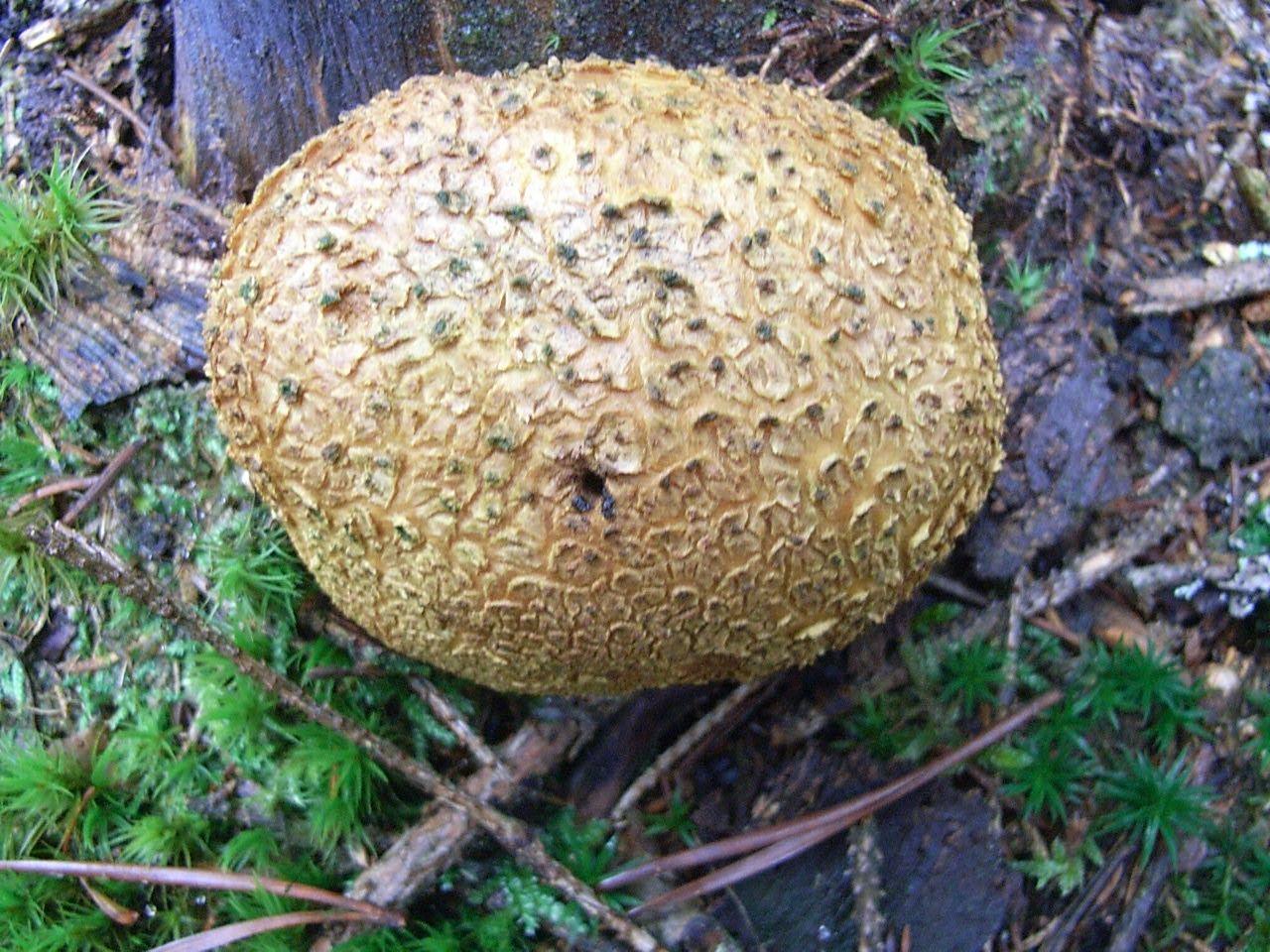
Split top to bottom, a death cap egg shows a cap, gills and stem. An earthball is solid purple-black inside a thick, scaly rind.
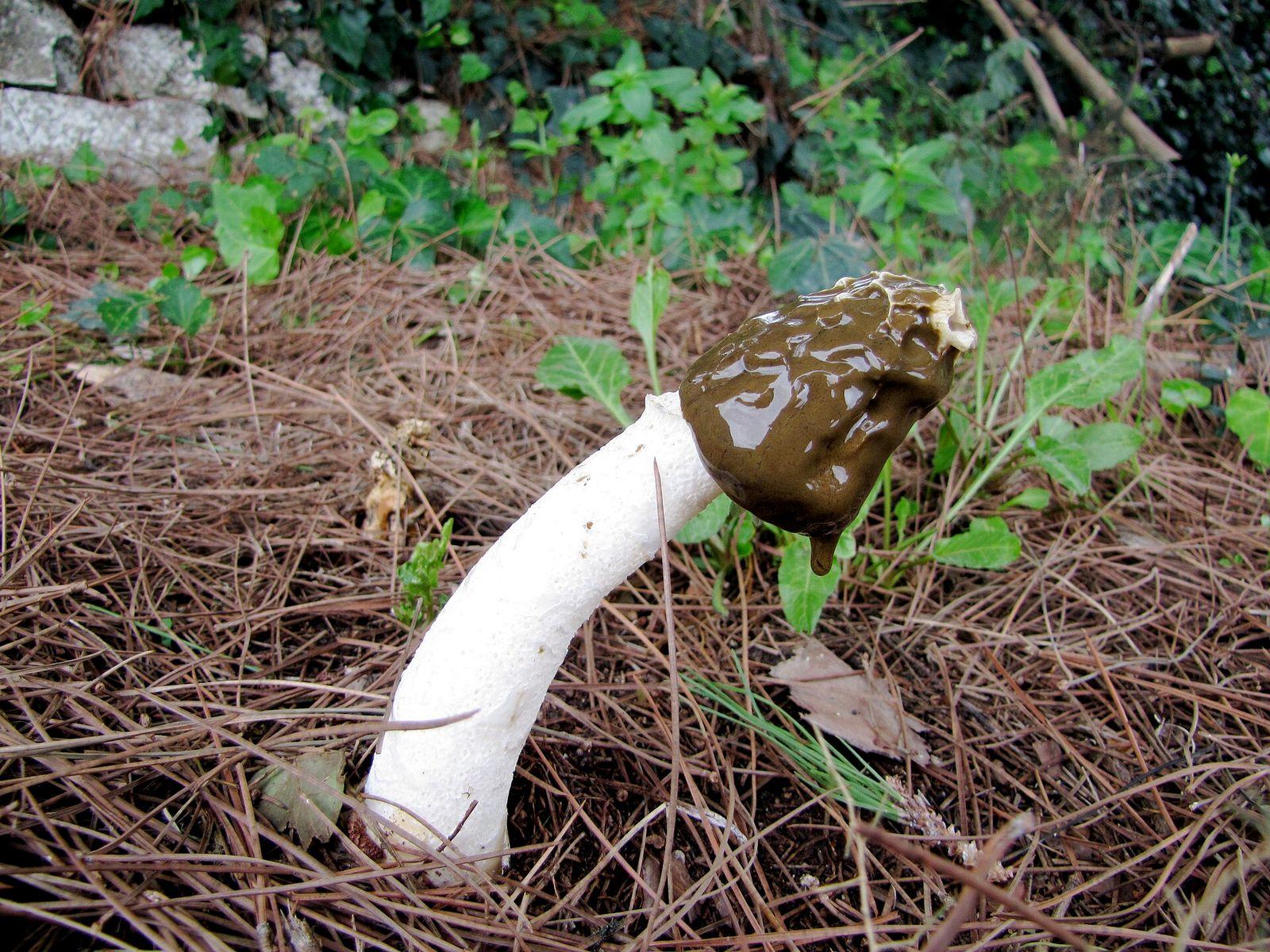
Sliced top to bottom, a stinkhorn egg shows jelly around a folded stalk. A death cap egg shows a cap, gills and stem. Both start as white eggs.
Waitlist
We will send one email when Mushrooms.id opens, and nothing else.
This opens your email app with the request written for you. Send it and we add you to the list. No email app? Write to hello@mushrooms.id with the subject “Add me to the Mushrooms.id waitlist”.