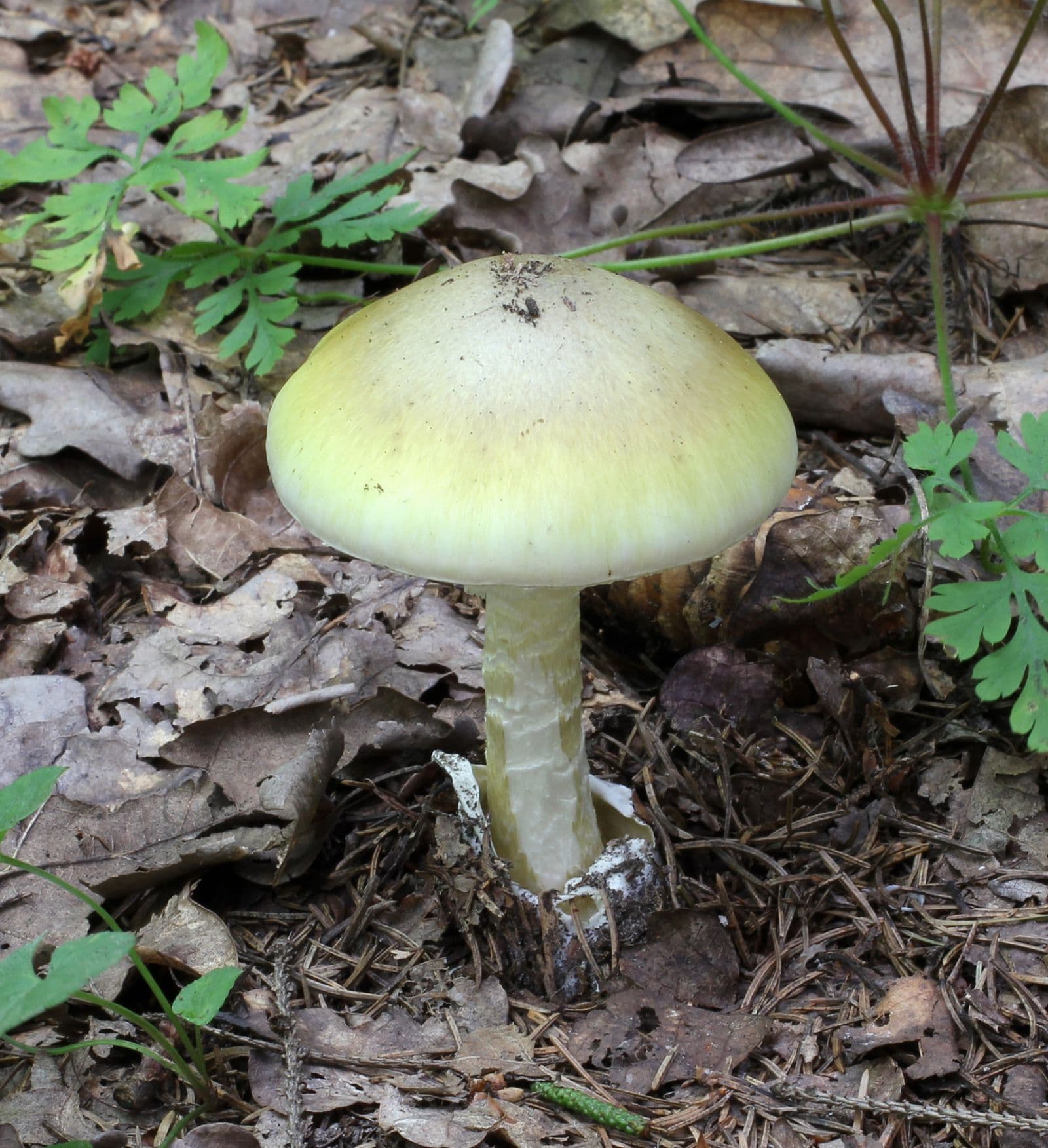
Deadly
Death Cap
Amanita phalloides
Amanita buttons grow from soil rather than wood and are smooth and egg-shaped. Cut top to bottom, they show the outline of a cap, gills and stem inside.
Apioperdon pyriforme
Also called stump puffball, lycoperdon pyriforme.
The pear-shaped puffball is a small brownish-white puffball that grows in crowded clusters on rotting logs and stumps. It is the common puffball found on wood rather than soil, and it fruits from summer into fall.
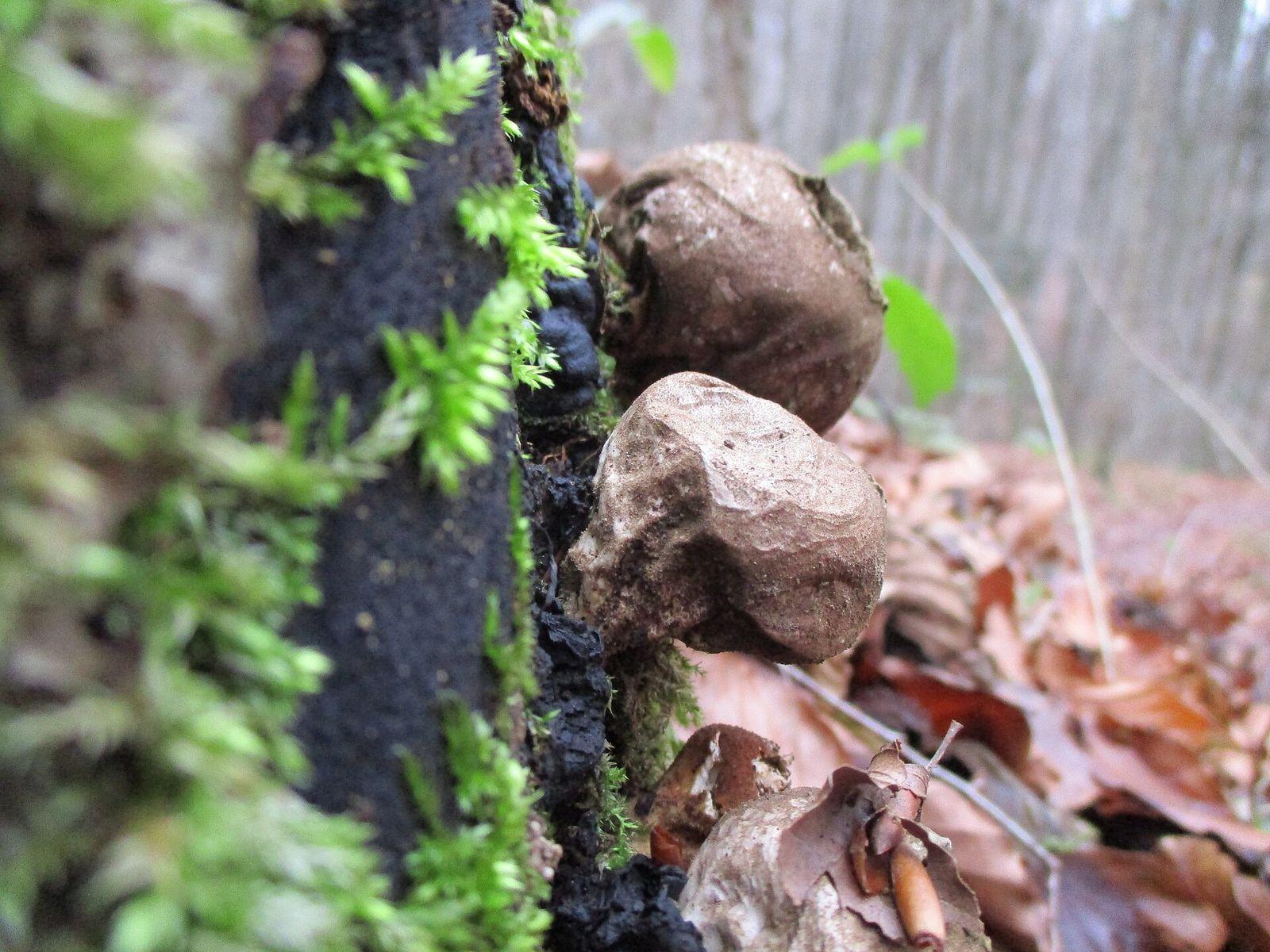
The tell
Small pear-shaped puffballs in dense clusters on rotting wood, joined at the base by white cords.
Field marks
Cap, underside and stem show in a photo. The spore print does not, and it is often the deciding check.
Where and when
Lookalikes
Each card says how to tell the two apart.
Amanita phalloides
Amanita buttons grow from soil rather than wood and are smooth and egg-shaped. Cut top to bottom, they show the outline of a cap, gills and stem inside.
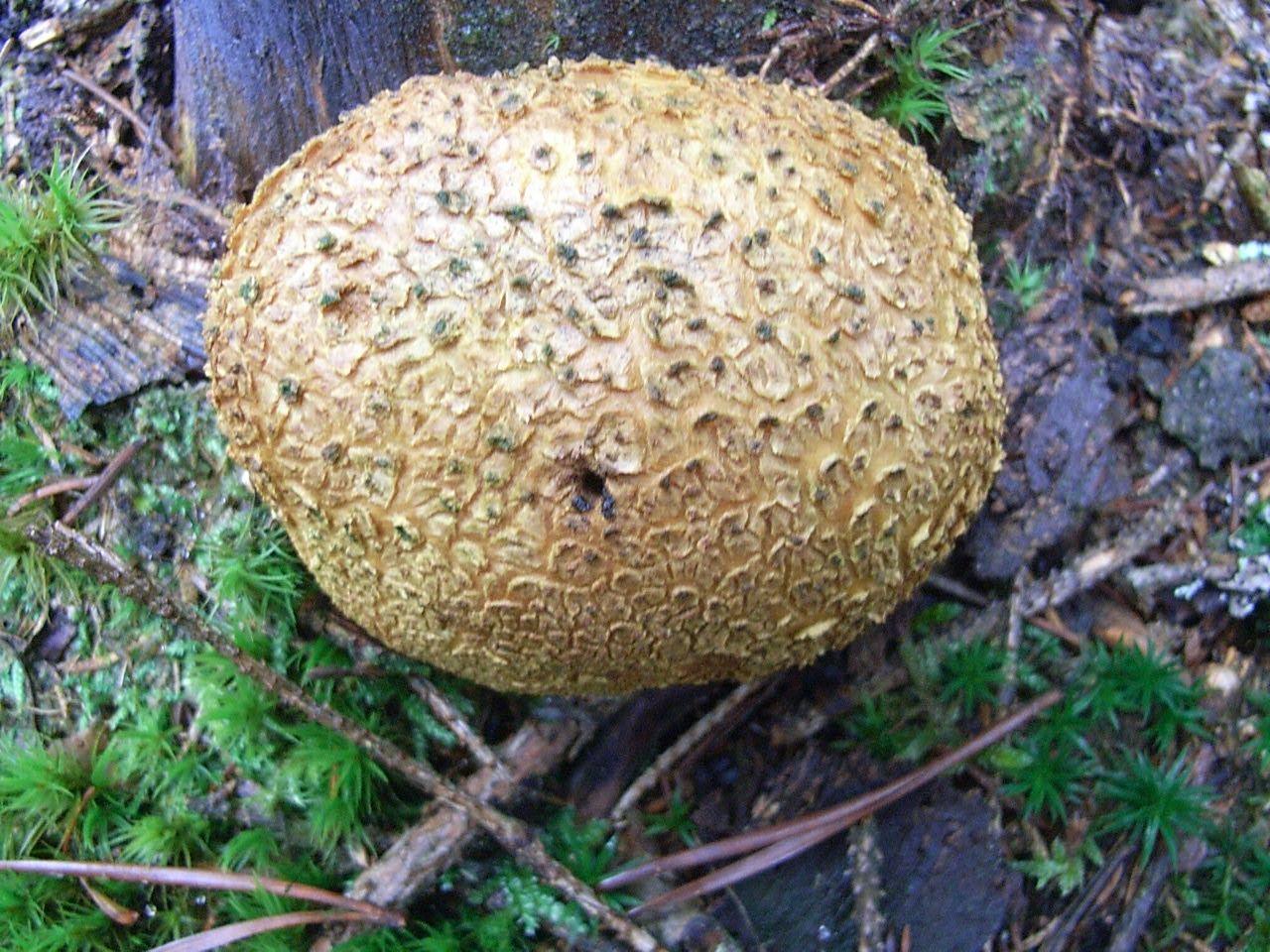
Scleroderma citrinum
Earthballs have a thick, hard, scaly rind, and the inside turns purple-black early instead of staying white. They are poisonous.
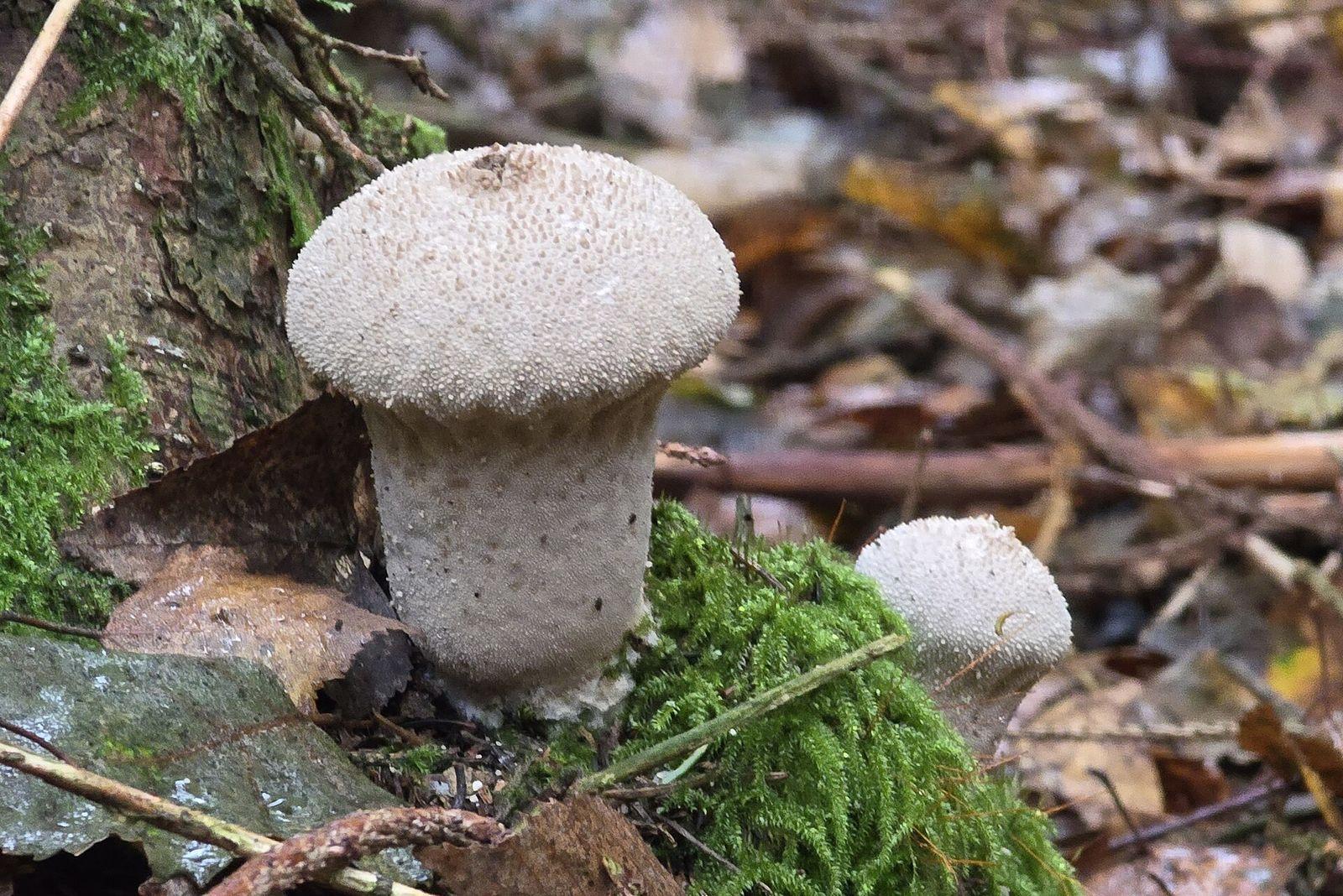
Lycoperdon perlatum
The gem-studded puffball usually grows on the ground and has distinct cone-shaped spines that leave scars when rubbed off.
Edibility
Field guides list the pear-shaped puffball as edible only while the interior is firm and pure white throughout. Once the flesh yellows or turns olive, guides record digestive upset. As with other puffballs, the confusions that matter are young Amanita buttons, which contain amatoxins, and earthballs, which are poisonous.
This page states what field guides record. It is not advice to eat, taste or handle anything, and a photo cannot settle edibility. If someone has eaten a wild mushroom that may be toxic, call poison control (1-800-222-1222 in the US) right away, before symptoms start: the deadliest species act hours later.
FAQ
The pear-shaped puffball, the common puffball on wood, is listed in field guides as edible while the inside is pure white. Older specimens that are yellow, olive or powdery inside are past that stage.
It is a small tan to whitish puffball shaped like a pear, growing in crowded clusters on logs and stumps. White cords attach the base to the wood, and a small hole opens at the top when the spores are ripe.
On rotting logs, stumps and buried wood in both hardwood and conifer forests across North America. They often cover a single log in dense groups from summer into fall.
Sources
MushroomExpert.com
Fungi Growing on Wood, Gary Emberger (MushroomExpert.com)
Missouri Department of Conservation
Index Fungorum
Waitlist
We will send one email when Mushrooms.id opens, and nothing else.
This opens your email app with the request written for you. Send it and we add you to the list. No email app? Write to hello@mushrooms.id with the subject “Add me to the Mushrooms.id waitlist”.