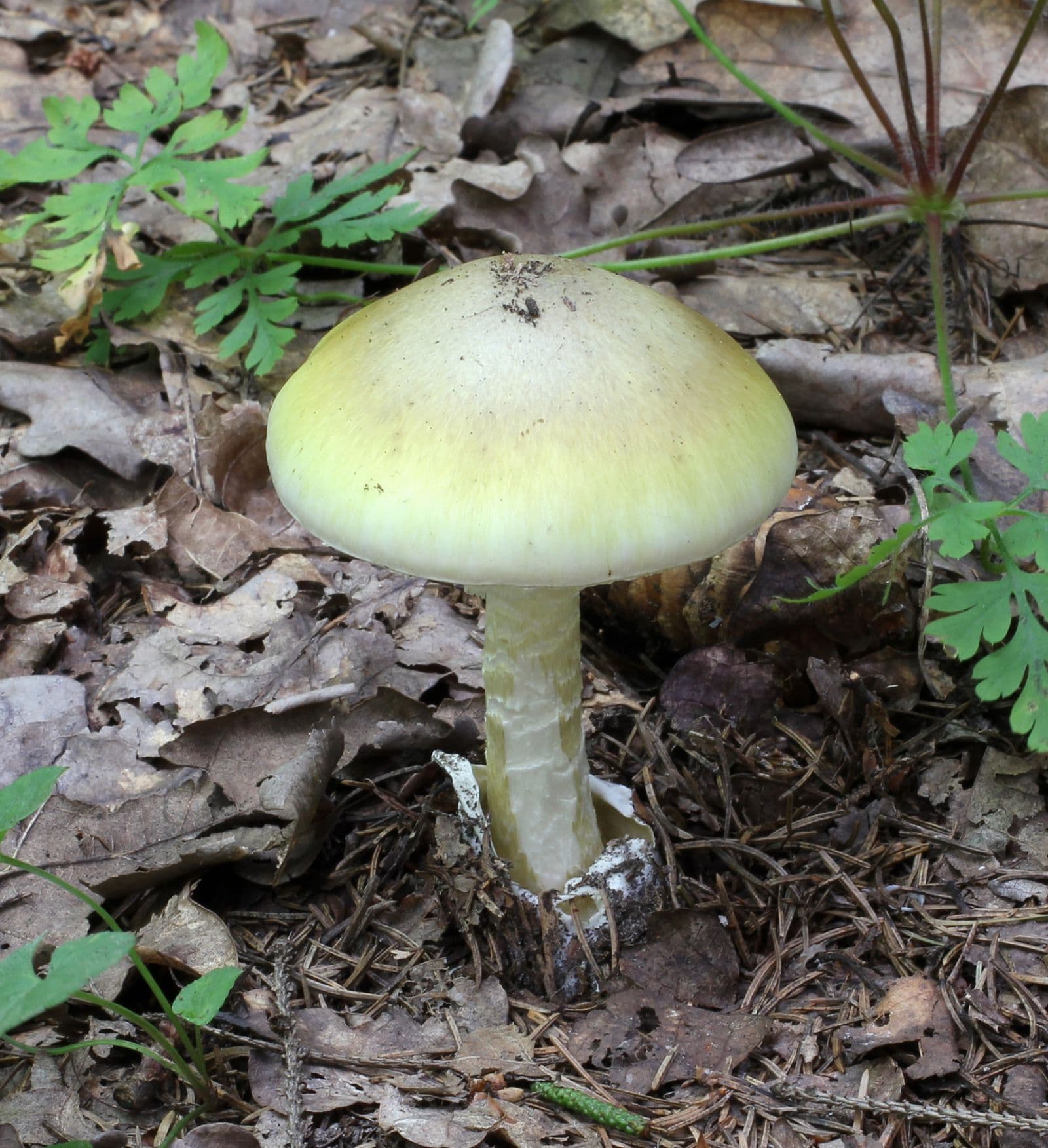
Deadly
Death Cap
Amanita phalloides
Amanita buttons are smooth and white rather than scaly yellow-brown. Cut top to bottom, they show the outline of a cap, gills and stem, not a solid dark interior.
Scleroderma citrinum
Also called pigskin poison puffball, common earth ball.
The common earthball is a hard, puffball-like fungus with a thick, scaly yellow-brown rind and a firm purple-black interior. It grows on the ground in woods from summer into fall and is the poisonous species most often mistaken for an edible puffball.
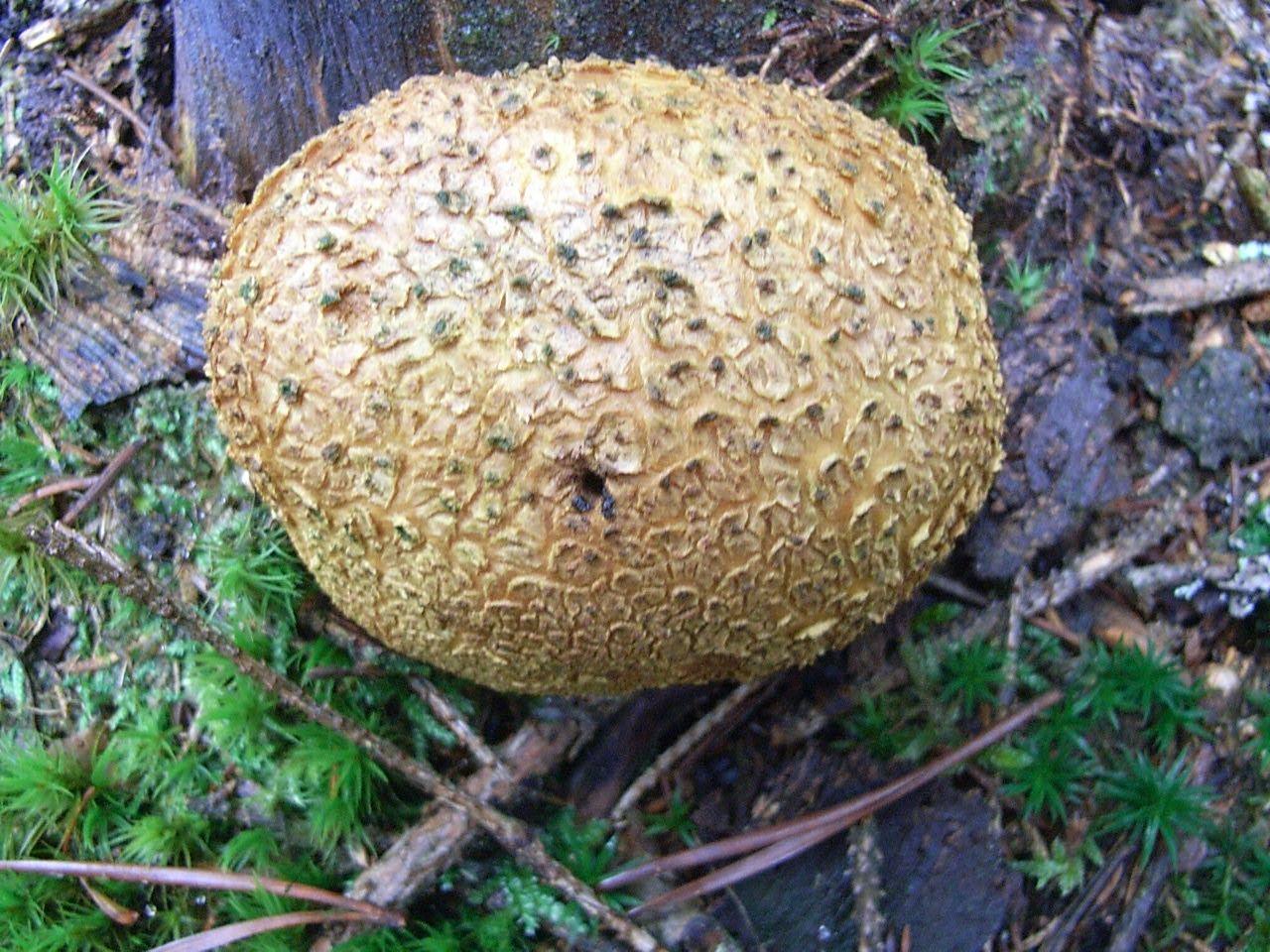
The tell
A hard, thick-skinned ball with a scaly yellow-brown surface that is purple-black inside, not white.
Field marks
Cap, underside and stem show in a photo. The spore print does not, and it is often the deciding check.
Where and when
Lookalikes
Each card says how to tell the two apart.
Amanita phalloides
Amanita buttons are smooth and white rather than scaly yellow-brown. Cut top to bottom, they show the outline of a cap, gills and stem, not a solid dark interior.
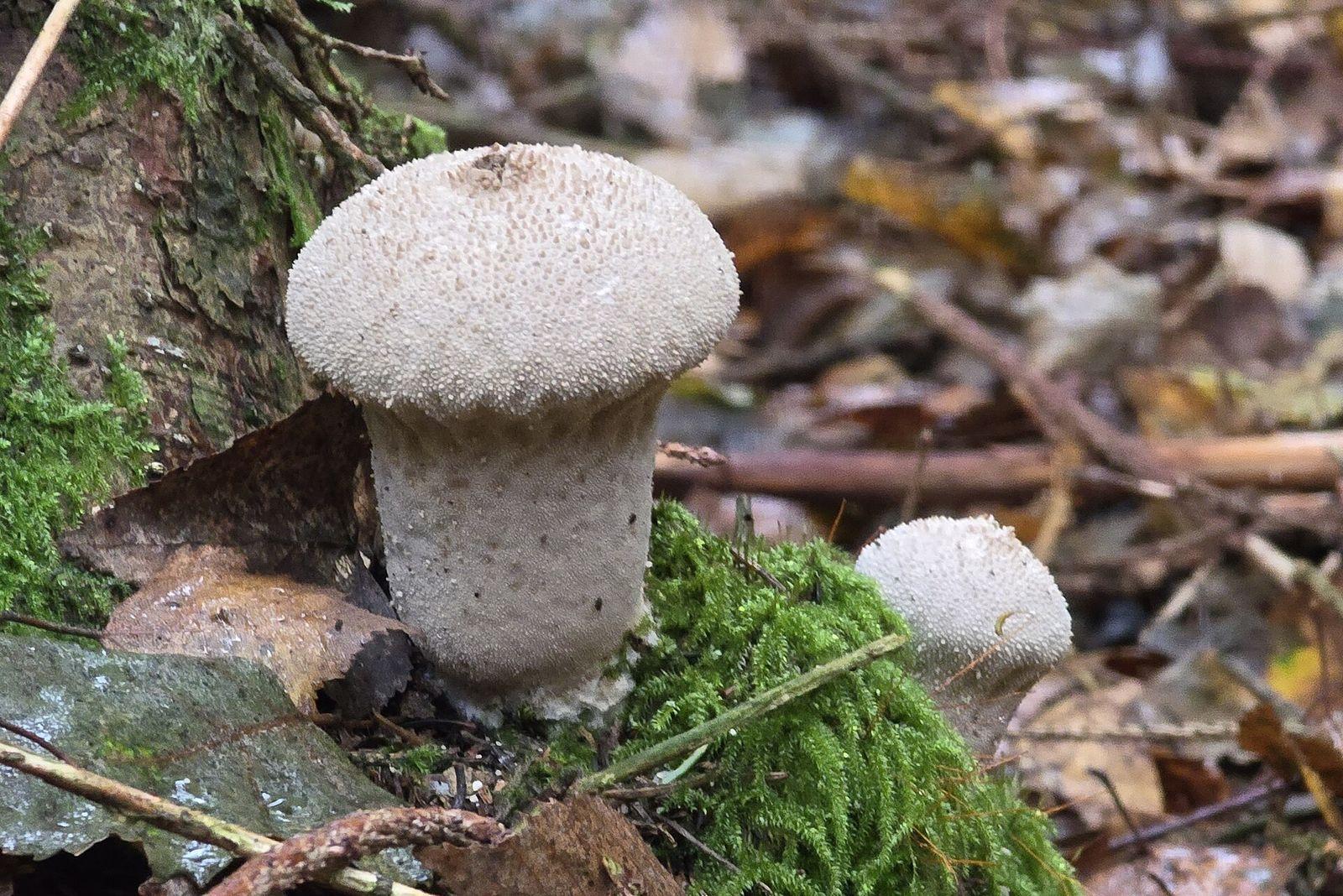
Lycoperdon perlatum
The gem-studded puffball has a thin, white skin covered in small cone-shaped spines and is pure white inside when young.
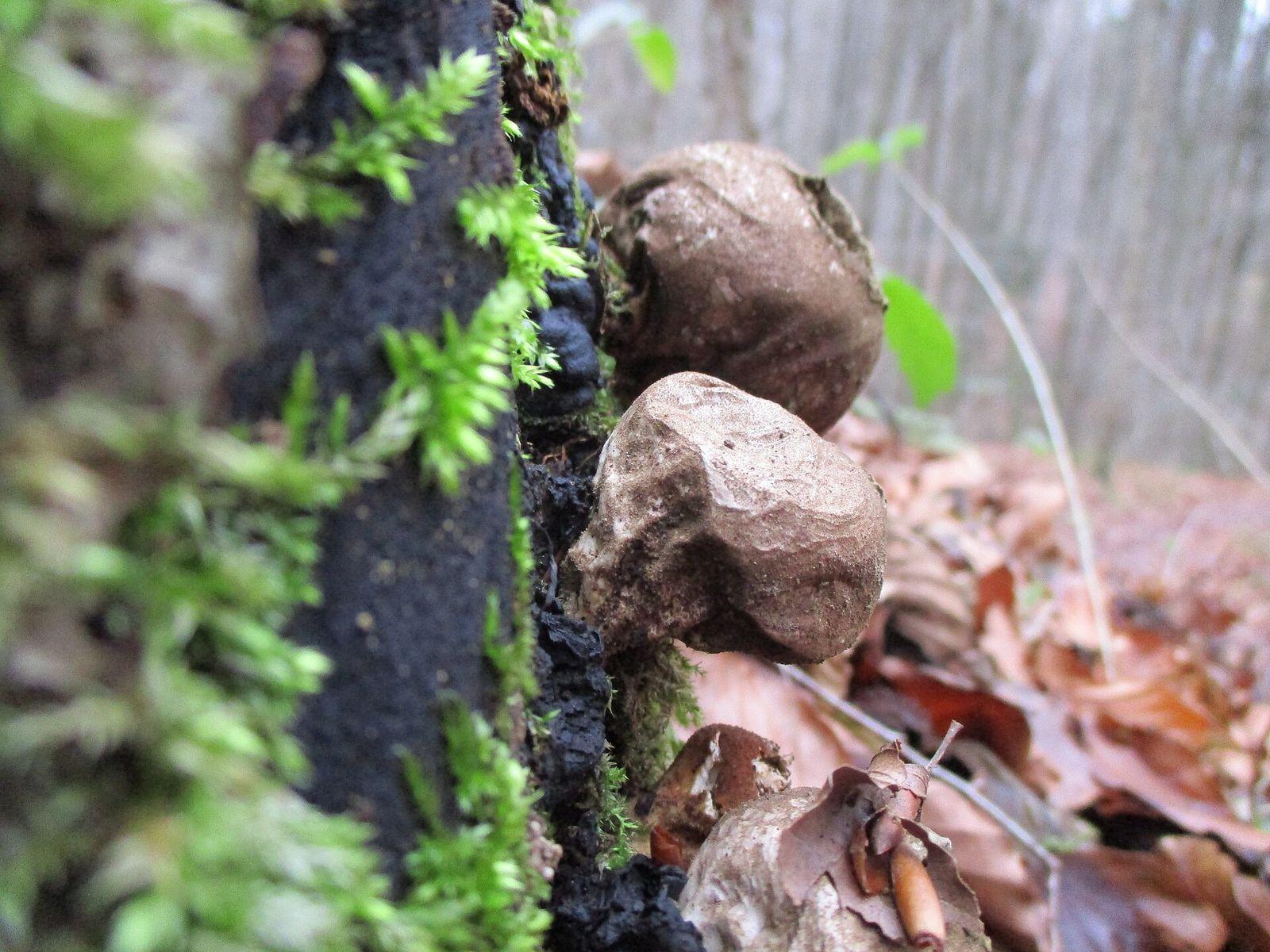
Apioperdon pyriforme
The pear-shaped puffball grows in clusters on rotting wood, has a thin skin, and is pure white inside when young.
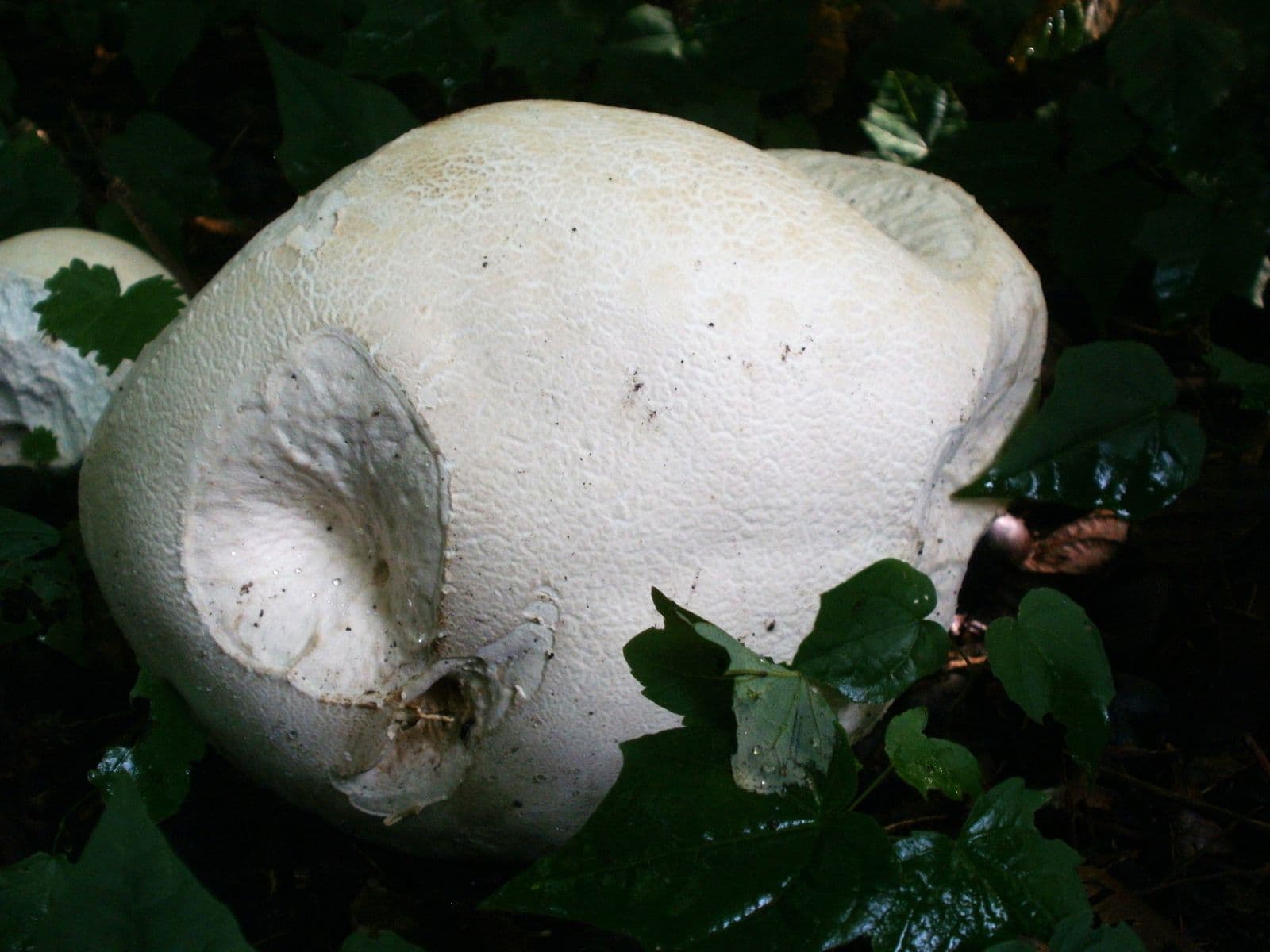
Calvatia gigantea
Giant puffballs are far larger, with a smooth, thin white skin and a uniform white interior.
Edibility
Field guides list the common earthball as poisonous. Recorded symptoms are gastrointestinal, including nausea, vomiting and stomach pain, and usually begin within a few hours. A specific toxin has not been well characterized. It is the mushroom most often confused with true puffballs; the dark interior is the clearest difference.
This page states what field guides record. It is not advice to eat, taste or handle anything, and a photo cannot settle edibility. If someone has eaten a wild mushroom that may be toxic, call poison control (1-800-222-1222 in the US) right away, before symptoms start: the deadliest species act hours later.
FAQ
Yes. Field guides list it as poisonous, causing nausea, vomiting and stomach cramps within a few hours of being eaten. It is not related to the edible puffballs, although it looks similar from the outside.
Cut in half, an earthball is firm and purple-black inside with a thick white rind. A young puffball is soft and pure white throughout with a thin skin. Earthballs also have a coarse, scaly, yellow-brown surface.
On the ground in woods, along trails and on mossy banks, usually near oaks, birches or conifers. They grow mycorrhizal with tree roots and appear from summer into fall.
Sources
MushroomExpert.com
Fungi Growing on Wood, Gary Emberger (MushroomExpert.com)
Missouri Department of Conservation
Index Fungorum
Waitlist
We will send one email when Mushrooms.id opens, and nothing else.
This opens your email app with the request written for you. Send it and we add you to the list. No email app? Write to hello@mushrooms.id with the subject “Add me to the Mushrooms.id waitlist”.