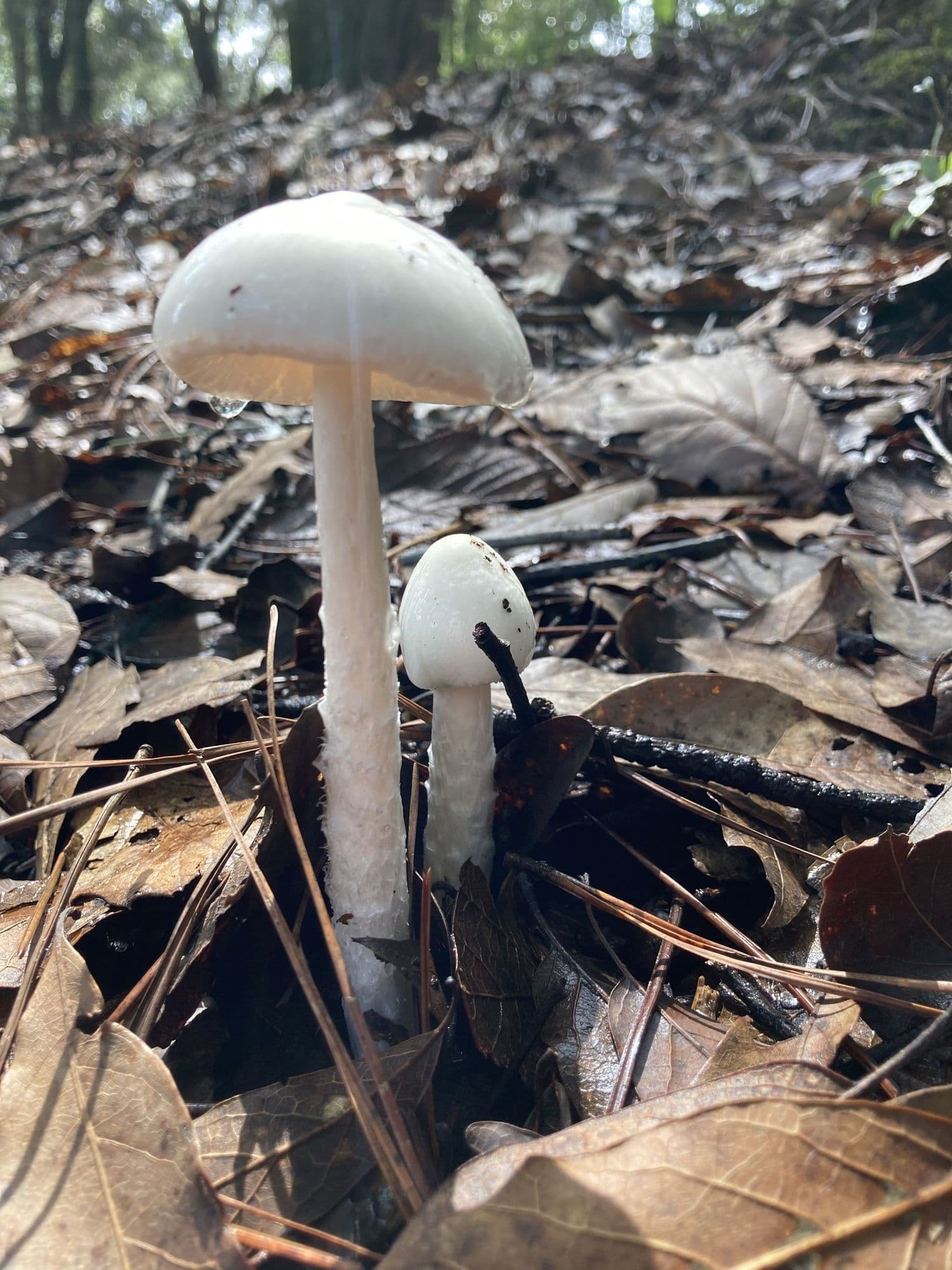
Deadly
Destroying Angel
Amanita bisporigera
Unopened Amanita buttons are white, smooth and egg-shaped rather than spiny. Cut top to bottom, an Amanita egg shows the outline of a cap, gills and stem. A puffball is uniform white inside.
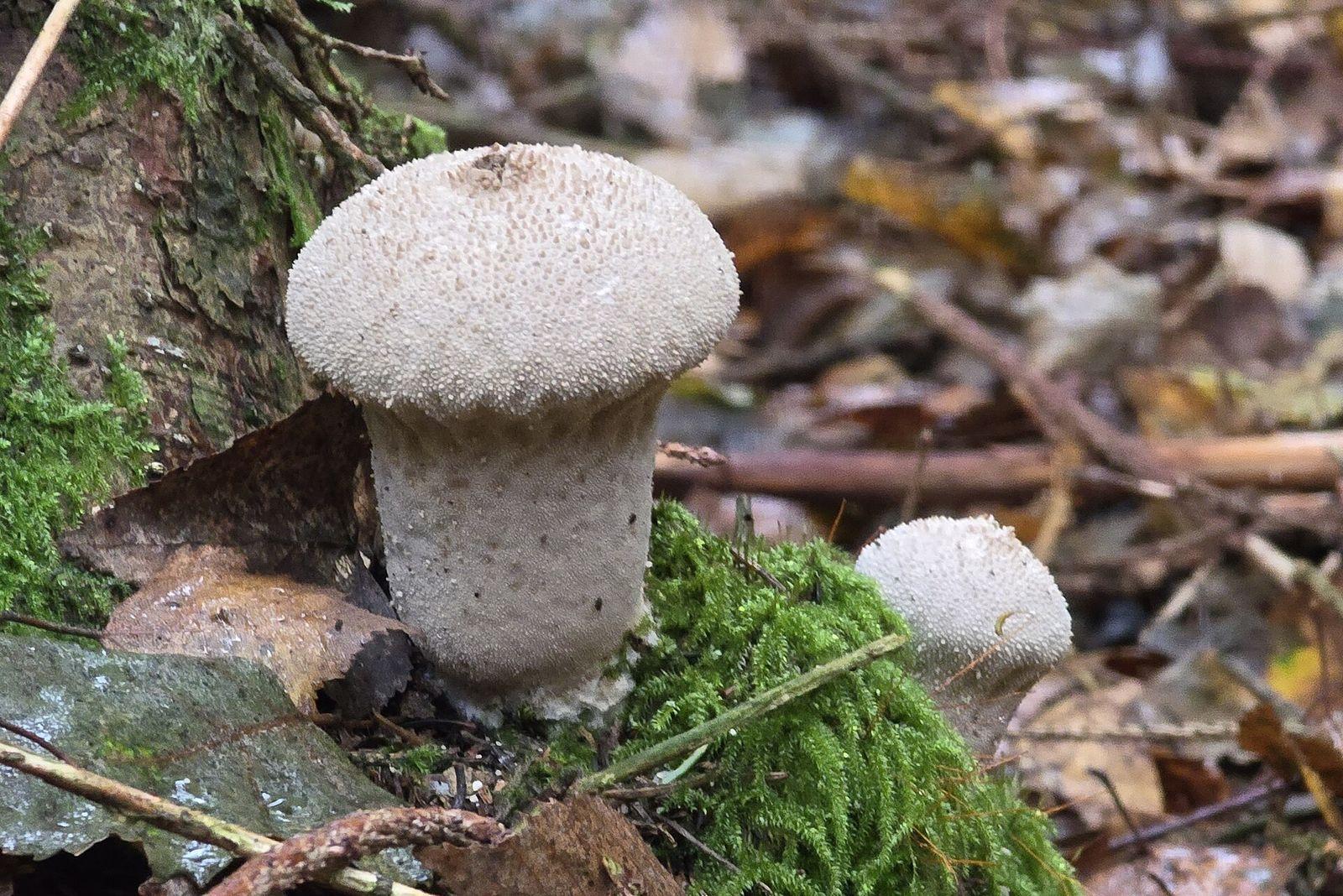
Lycoperdon perlatum
Also called common puffball, warted puffball, devil's snuffbox.
The gem-studded puffball is a small white puffball shaped like an upside-down pear, studded with tiny cone-shaped spines. It grows on the ground in woods and along trails from summer through fall, and puffs out brown spores through a hole in the top when mature.
The tell
A small white, top-shaped puffball covered in cone-shaped spines that rub off and leave a net of tiny scars.
Field marks
Cap, underside and stem show in a photo. The spore print does not, and it is often the deciding check.
Where and when
Lookalikes
Each card says how to tell the two apart.
Amanita bisporigera
Unopened Amanita buttons are white, smooth and egg-shaped rather than spiny. Cut top to bottom, an Amanita egg shows the outline of a cap, gills and stem. A puffball is uniform white inside.
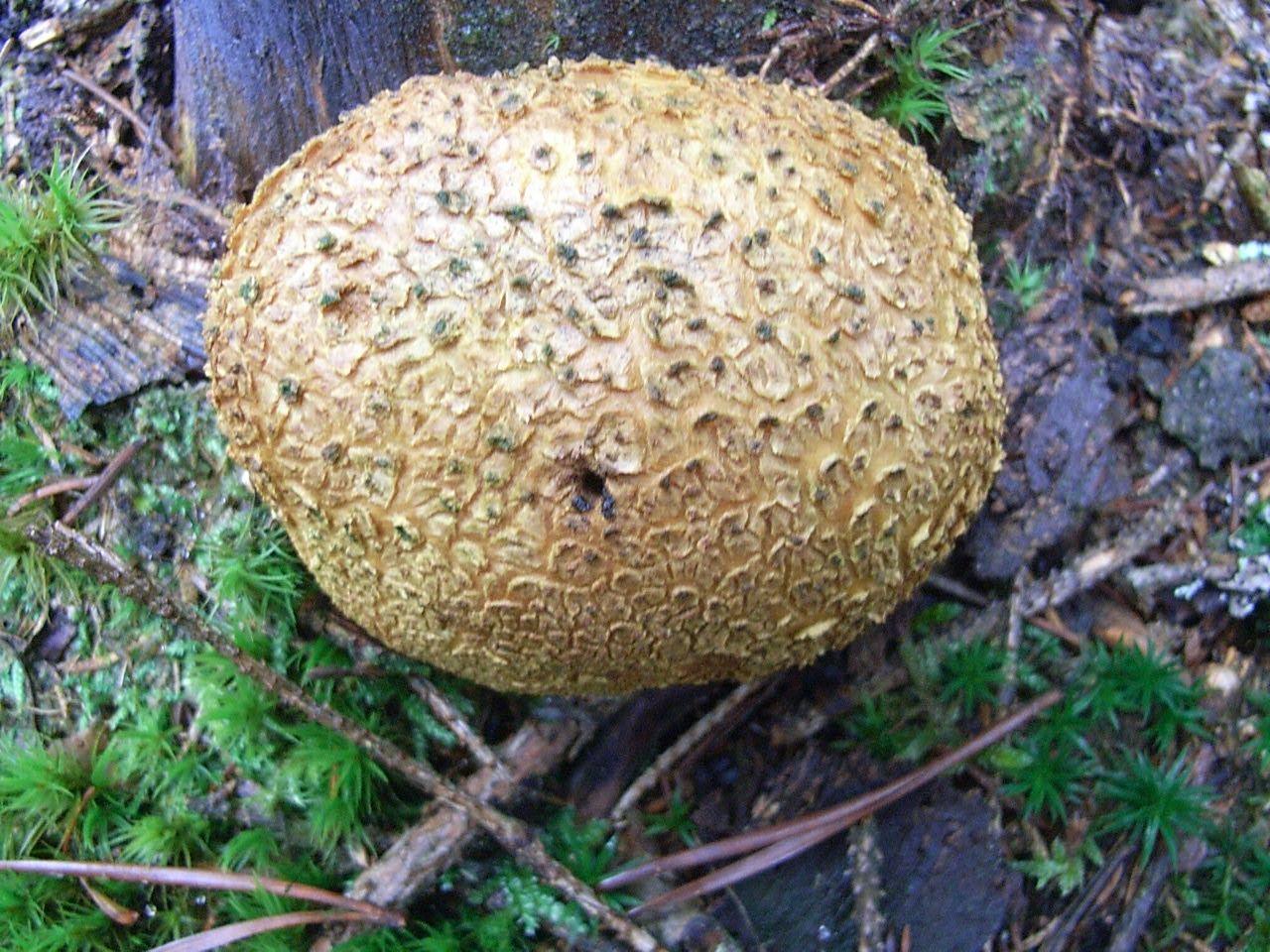
Scleroderma citrinum
Earthballs have a thick, hard, scaly yellow-brown rind with no spines, and the inside turns purple-black early. They are poisonous.
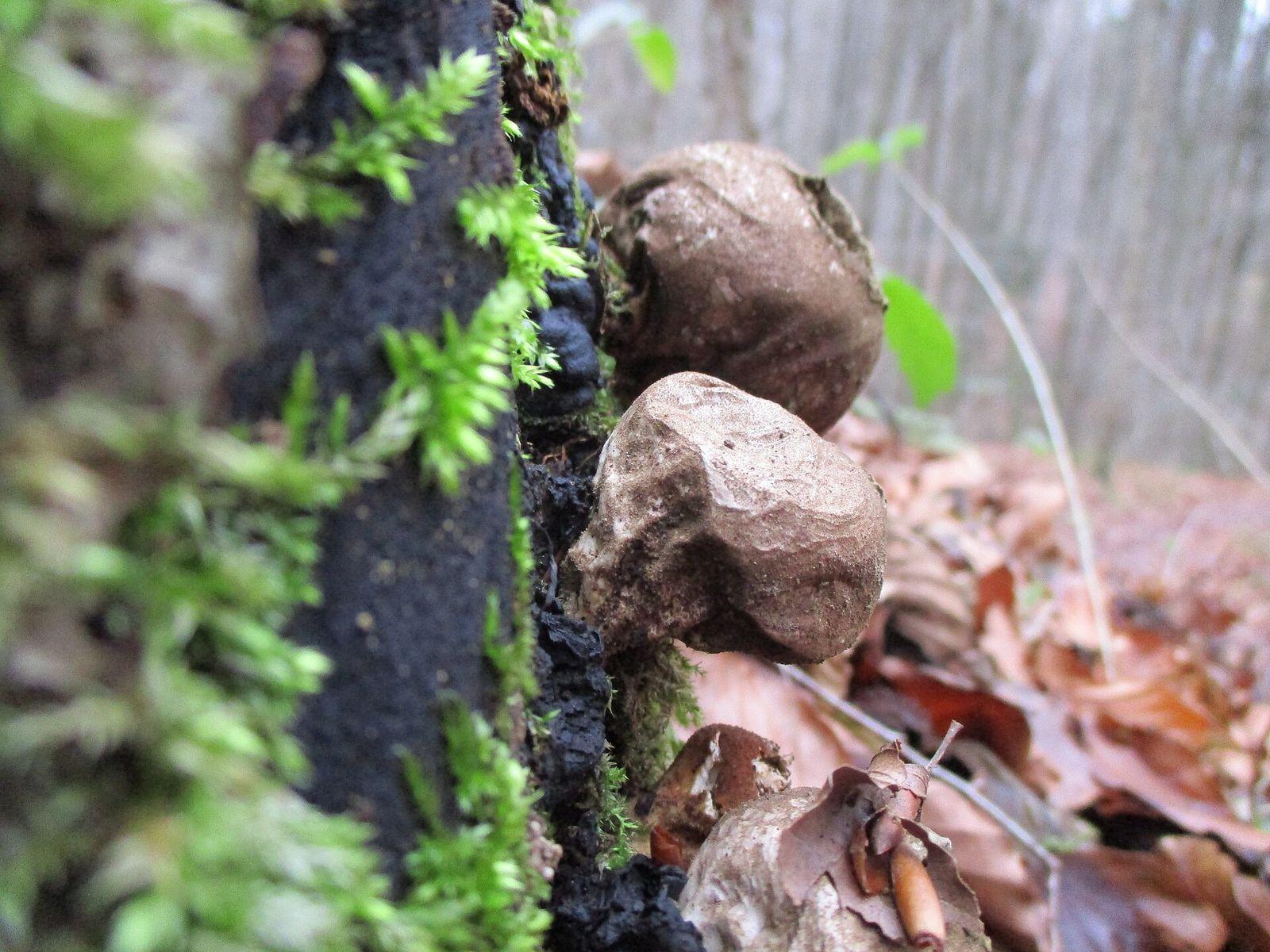
Apioperdon pyriforme
The pear-shaped puffball grows in dense clusters on rotting wood, and its surface has fine granules rather than distinct spines.
More side-by-side comparisons
Edibility
Field guides list the gem-studded puffball as edible only while the interior is firm and pure white. Once the flesh yellows or browns, guides record digestive upset. The main danger is confusion with young Amanita buttons, which contain amatoxins, and with earthballs, which are poisonous; cutting each in half from top to bottom shows the differences.
This page states what field guides record. It is not advice to eat, taste or handle anything, and a photo cannot settle edibility. If someone has eaten a wild mushroom that may be toxic, call poison control (1-800-222-1222 in the US) right away, before symptoms start: the deadliest species act hours later.
FAQ
Field guides list them as edible while the inside is solid and pure white. Older puffballs that have turned yellow or brown inside are past that stage. The confusions that matter are with young Amanita eggs and with earthballs.
The gem-studded puffball is covered in tiny cone-shaped spines with smaller granules between them. They rub off easily and leave a pattern of round scars like a net on the surface.
When mature, the inside of the puffball turns into a mass of olive-brown spores, and a hole opens at the top. Raindrops or a touch press the skin and push out a cloud of spores.
Sources
MushroomExpert.com
Fungi Growing on Wood, Gary Emberger (MushroomExpert.com)
Missouri Department of Conservation
Index Fungorum
Also on Mushrooms.id
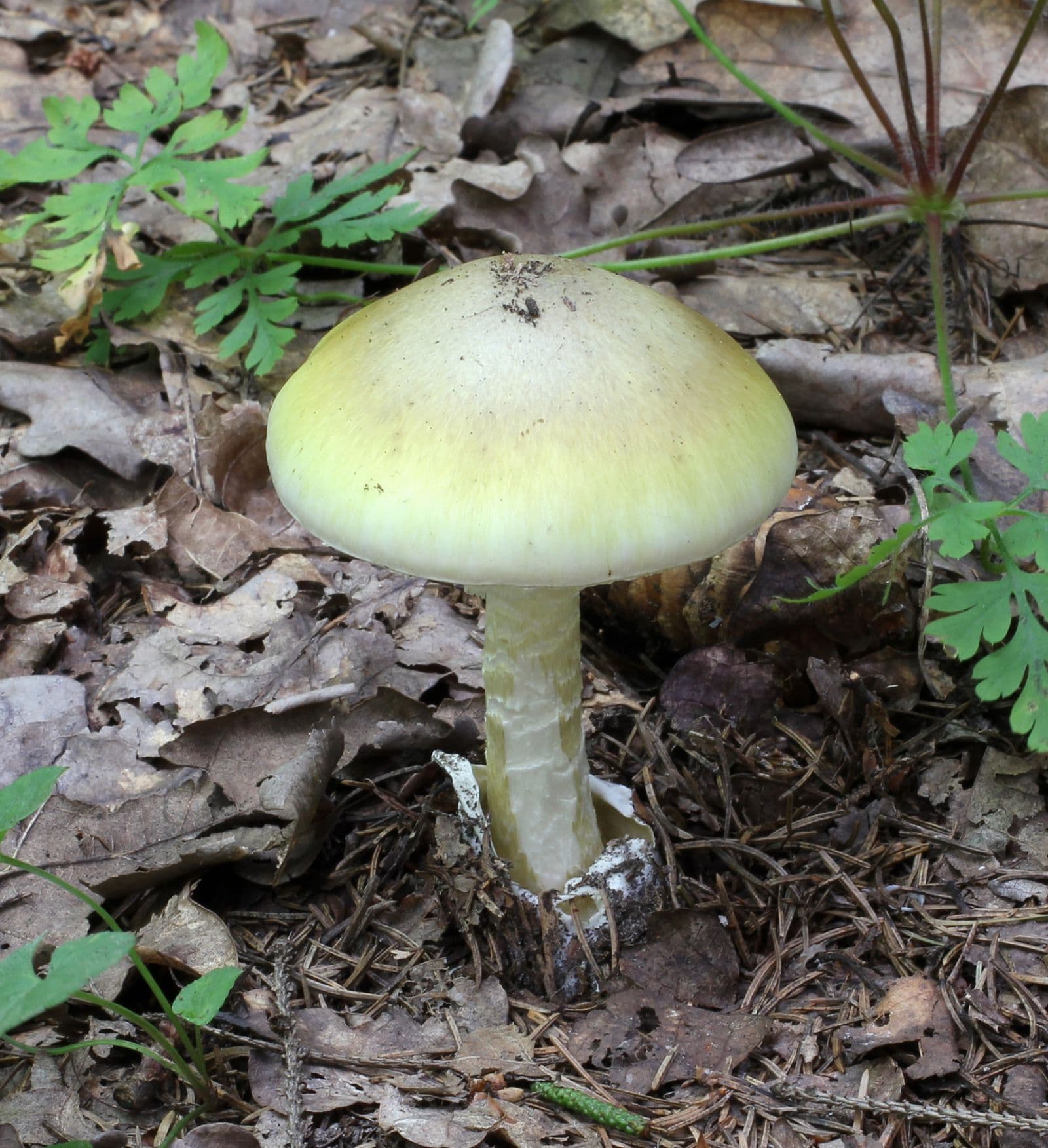
Amanita phalloides
Greenish to yellow-olive cap, white gills, a skirt-like ring, and a white sac-like cup around the base of the stem.
Entoloma abortivum
Photo coming
Entoloma abortivum
Whitish, lumpy, irregular balls with marbled pinkish insides, growing near honey mushrooms.
Amanita ocreata
Photo coming
Amanita ocreata
Large white to pale tan cap, white gills, a thin ring, and a thin, white, sac-like cup at the base, fruiting under oaks in late winter and spring.
Waitlist
We will send one email when Mushrooms.id opens, and nothing else.
This opens your email app with the request written for you. Send it and we add you to the list. No email app? Write to hello@mushrooms.id with the subject “Add me to the Mushrooms.id waitlist”.