Edible
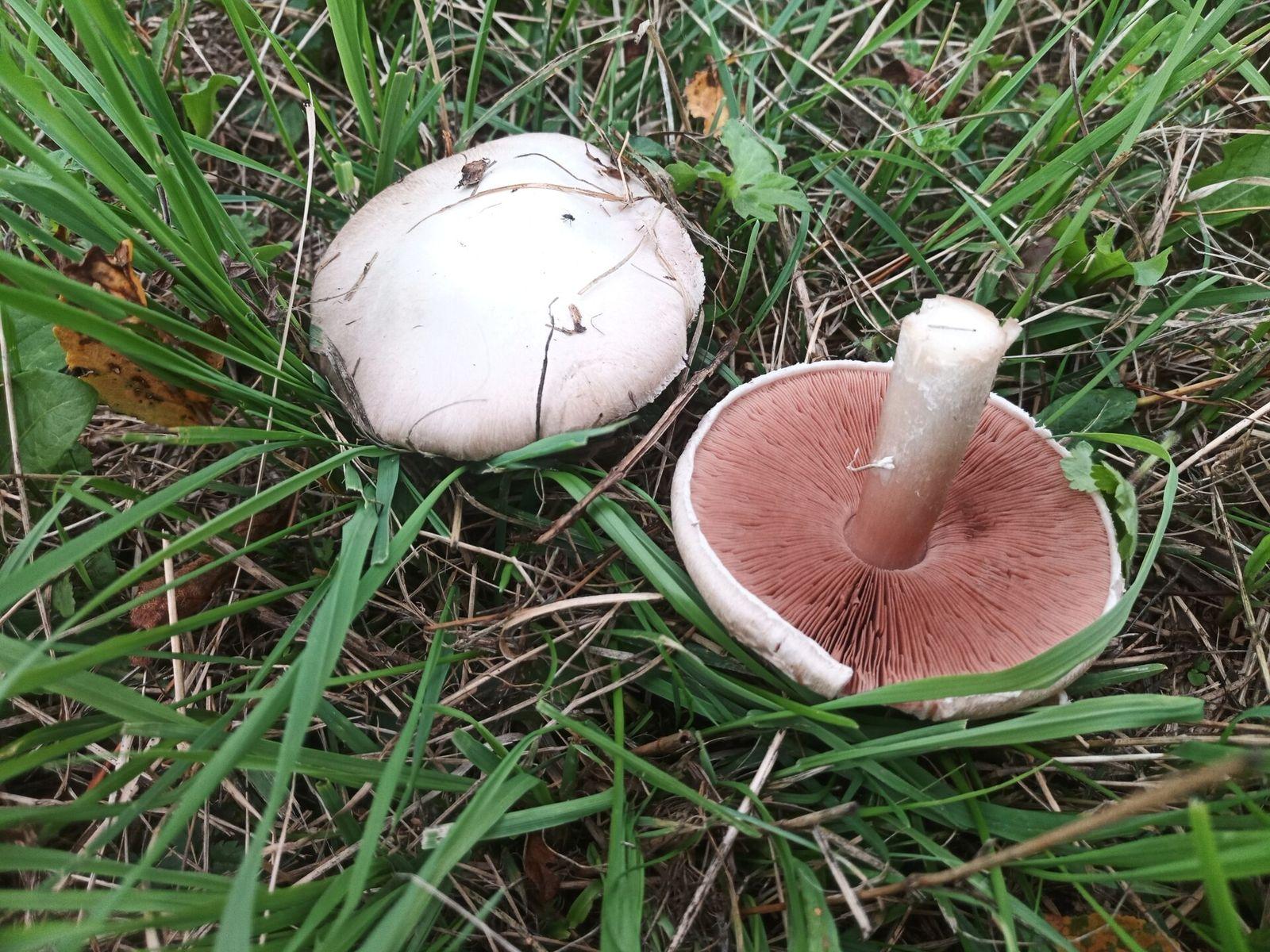
Meadow Mushroom
Agaricus campestris
Agaricus gills are pink when young and chocolate brown when mature, the spore print is dark brown, and there is no cup at the base.
Amanita ocreata
Also called destroying angel, death angel.
The western destroying angel is a large white amanita of California and the Pacific coast that fruits under oaks in late winter and spring. It contains amatoxins, the same toxins as the death cap, and is one of the deadliest mushrooms in western North America.
Amanita ocreata
Photo coming
The tell
Large white to pale tan cap, white gills, a thin ring, and a thin, white, sac-like cup at the base, fruiting under oaks in late winter and spring.
Field marks
Cap, underside and stem show in a photo. The spore print does not, and it is often the deciding check.
Where and when
Lookalikes
Each card says how to tell the two apart.
Agaricus campestris
Agaricus gills are pink when young and chocolate brown when mature, the spore print is dark brown, and there is no cup at the base.
Amanita velosa fruits under the same oaks in the same season. It has a pinkish tan to salmon cap, usually with a patch of white veil tissue, a lined edge and no ring. Field guides note the two can be hard to separate in pale specimens.
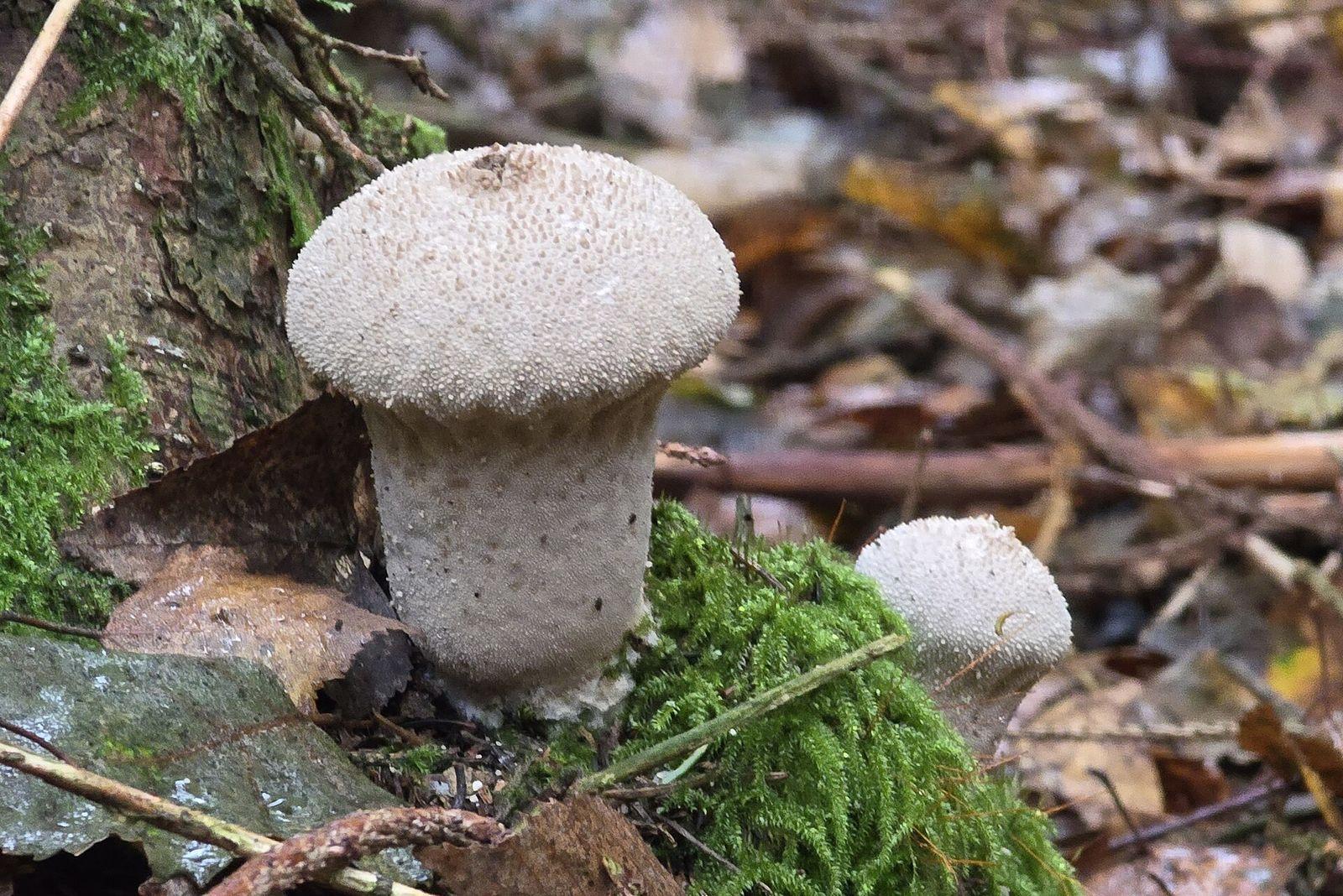
Lycoperdon perlatum
An unopened egg looks like a white puffball. Split top to bottom, the egg shows the outline of a cap, gills and stem, while a puffball is uniform white inside.
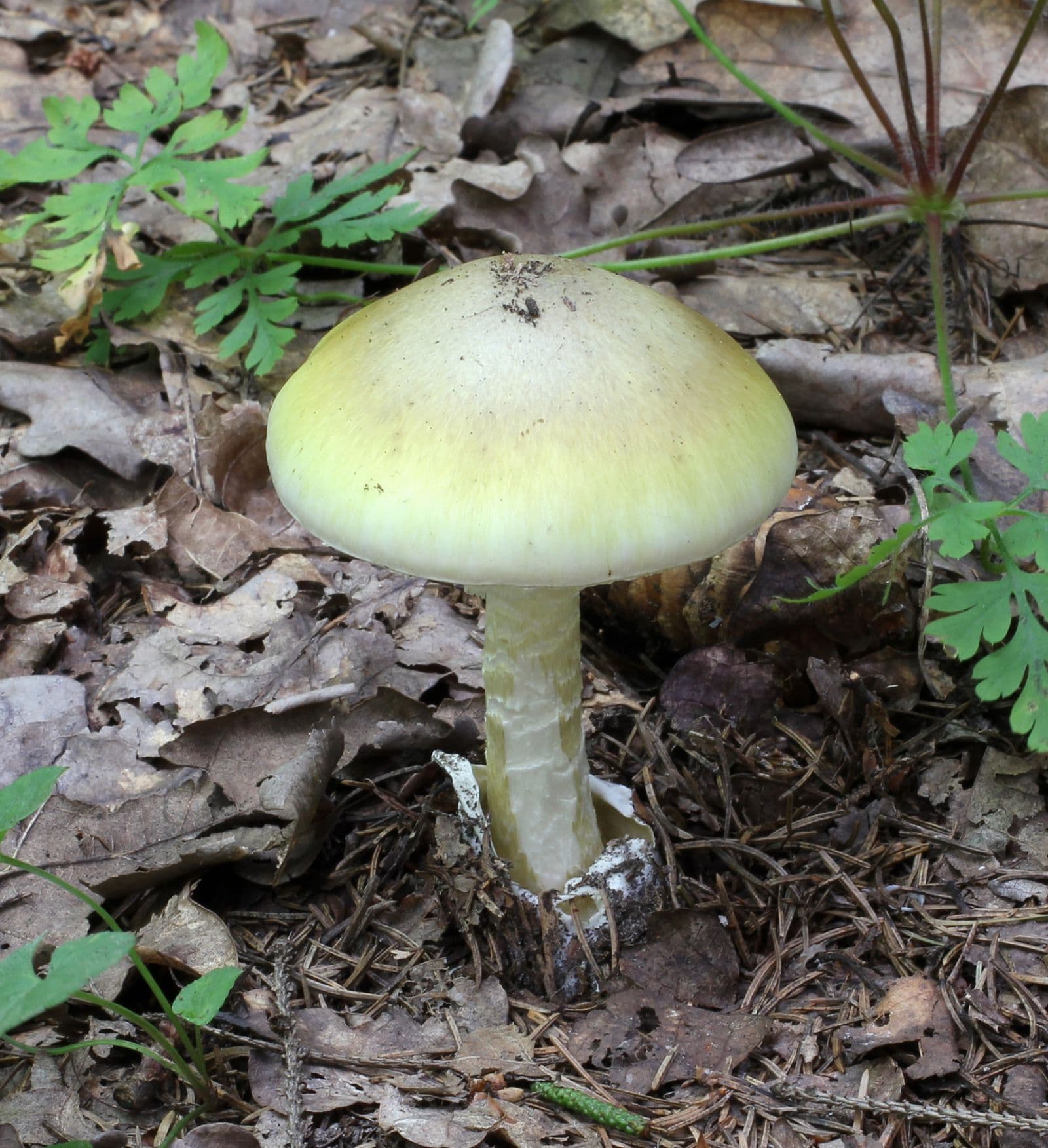
Amanita phalloides
Also deadly, and also under California oaks. The death cap usually has a greenish to olive cap and fruits mainly in fall and winter.
More side-by-side comparisons
Edibility
The western destroying angel contains amatoxins, which shut down protein production in liver and kidney cells. Symptoms usually begin 6 to 24 hours after the meal with severe vomiting and diarrhea, often followed by a brief apparent recovery and then liver and kidney failure. Cooking, freezing and drying do not destroy amatoxins. Field guides list it as deadly.
This page states what field guides record. It is not advice to eat, taste or handle anything, and a photo cannot settle edibility. If someone has eaten a wild mushroom that may be toxic, call poison control (1-800-222-1222 in the US) right away, before symptoms start: the deadliest species act hours later.
FAQ
Yes, it is deadly. It contains amatoxins, the same toxins as the death cap, which destroy liver and kidney cells. Symptoms are delayed by 6 to 24 hours after eating.
In late winter and spring, roughly January through April. That is later than the main death cap season in California, and it overlaps with the springtime amanita and spring Agaricus.
Mainly in California under oaks, especially coast live oak, with records north into Washington and south into Baja California.
Sources
MykoWeb, California Fungi
Index Fungorum
Also on Mushrooms.id
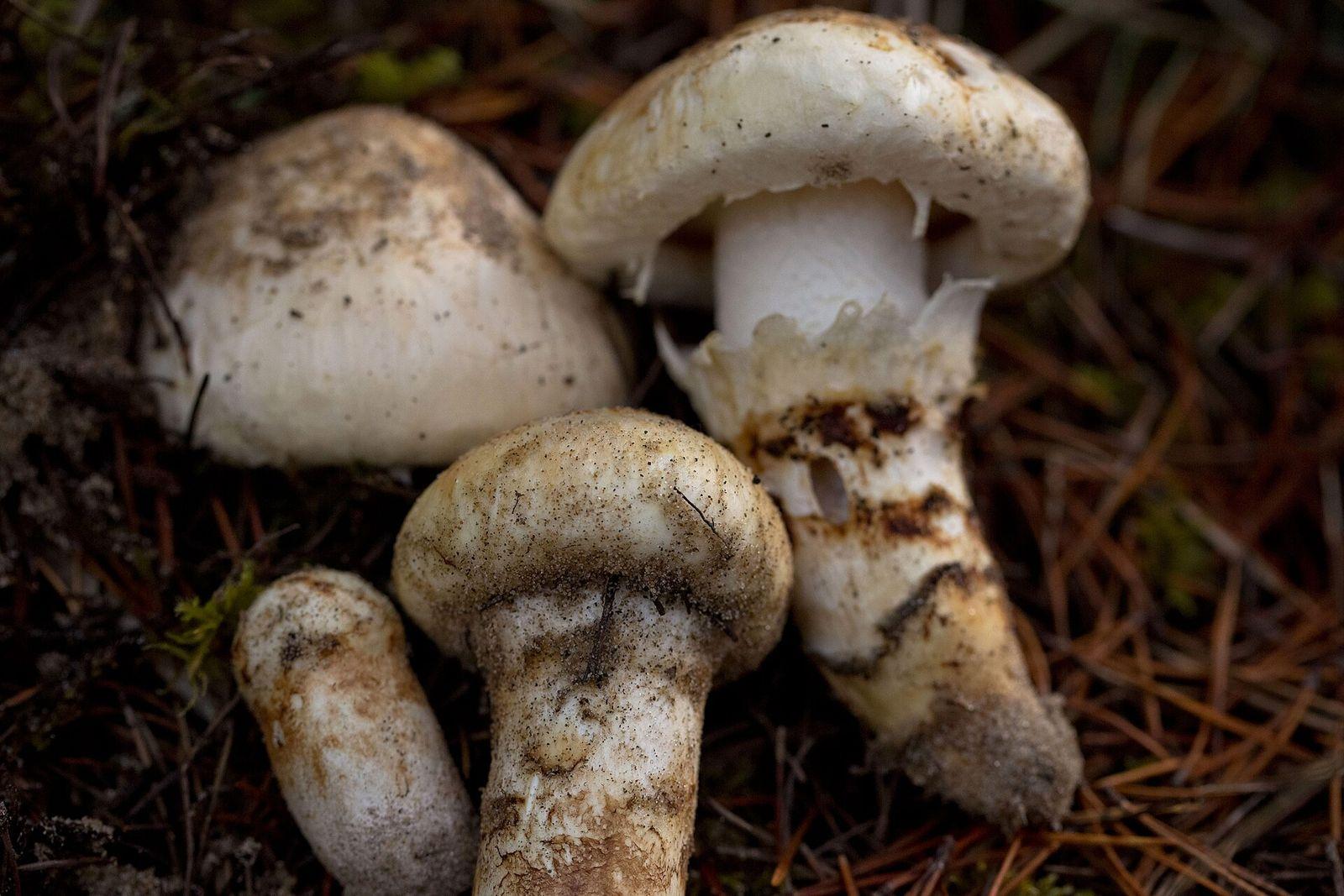
Tricholoma murrillianum
A firm white mushroom with a sheathing ring on the stem and a strong, spicy, cinnamon-like smell.
Amanita smithiana
Photo coming
Amanita smithiana
Large white amanita with soft, cottony patches on the cap, a ragged ring, and a shaggy, tapering root-like base, under Pacific Northwest conifers.
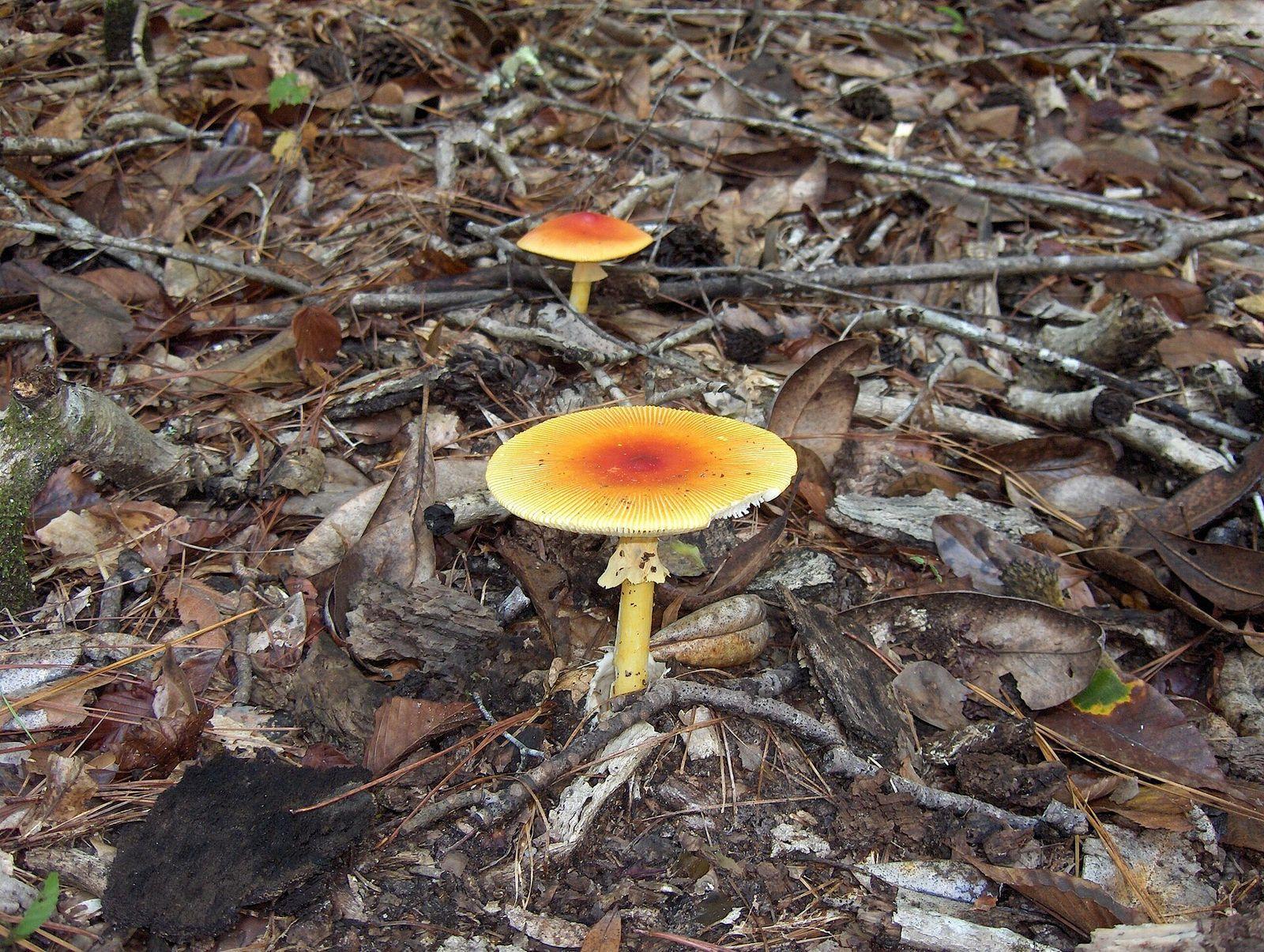
Amanita jacksonii
Bright red to orange cap with a lined edge, yellow gills, a yellow stem and ring, and a thick white sac-like cup at the base.
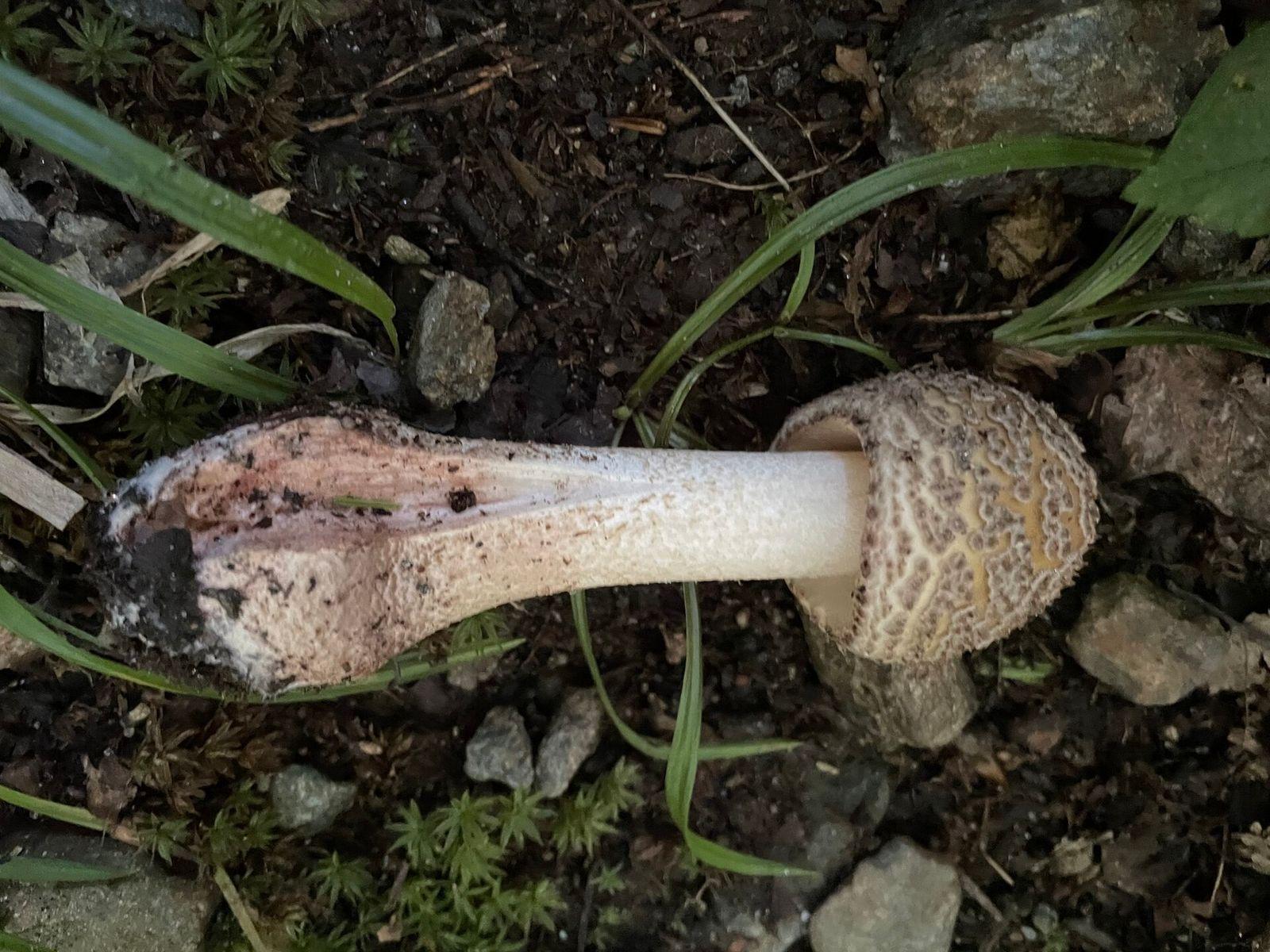
Amanita rubescens
Dull reddish brown cap with grayish to pinkish warts, and flesh that slowly turns pinkish red where it is cut, bruised or eaten by insects.
Waitlist
We will send one email when Mushrooms.id opens, and nothing else.
This opens your email app with the request written for you. Send it and we add you to the list. No email app? Write to hello@mushrooms.id with the subject “Add me to the Mushrooms.id waitlist”.