Matsutake vs western destroying angel: white mushrooms of Pacific forests

Quick answer

Matsutake has a strong, spicy smell, often compared to cinnamon, and its stem tapers into the soil inside a sheath of white tissue below the ring, with no cup; the western destroying angel has no spicy smell and its bulbous base sits in a white, membranous cup. Matsutake caps and gills develop brown to orange-brown stains with age, while the destroying angel stays white.

Deadly lookalike

The western destroying angel is deadly.

Unlike matsutake, the western destroying angel (Amanita ocreata) is deadly poisonous and contains amatoxins, according to MykoWeb's California Fungi. In the CDC's report on the 2025 to 2026 northern California outbreak, people who ate it developed abdominal pain, nausea, vomiting and diarrhea 8 to 12 hours after the meal; across the 39 Amanita cases in that report, three people needed liver transplants and four died. Amatoxins are not destroyed by cooking.

If someone has eaten a wild mushroom and feels unwell, or may have eaten one of these, call poison control now: 1-800-222-1222 in the US. Do not wait for symptoms.

Side by side

The tell for each

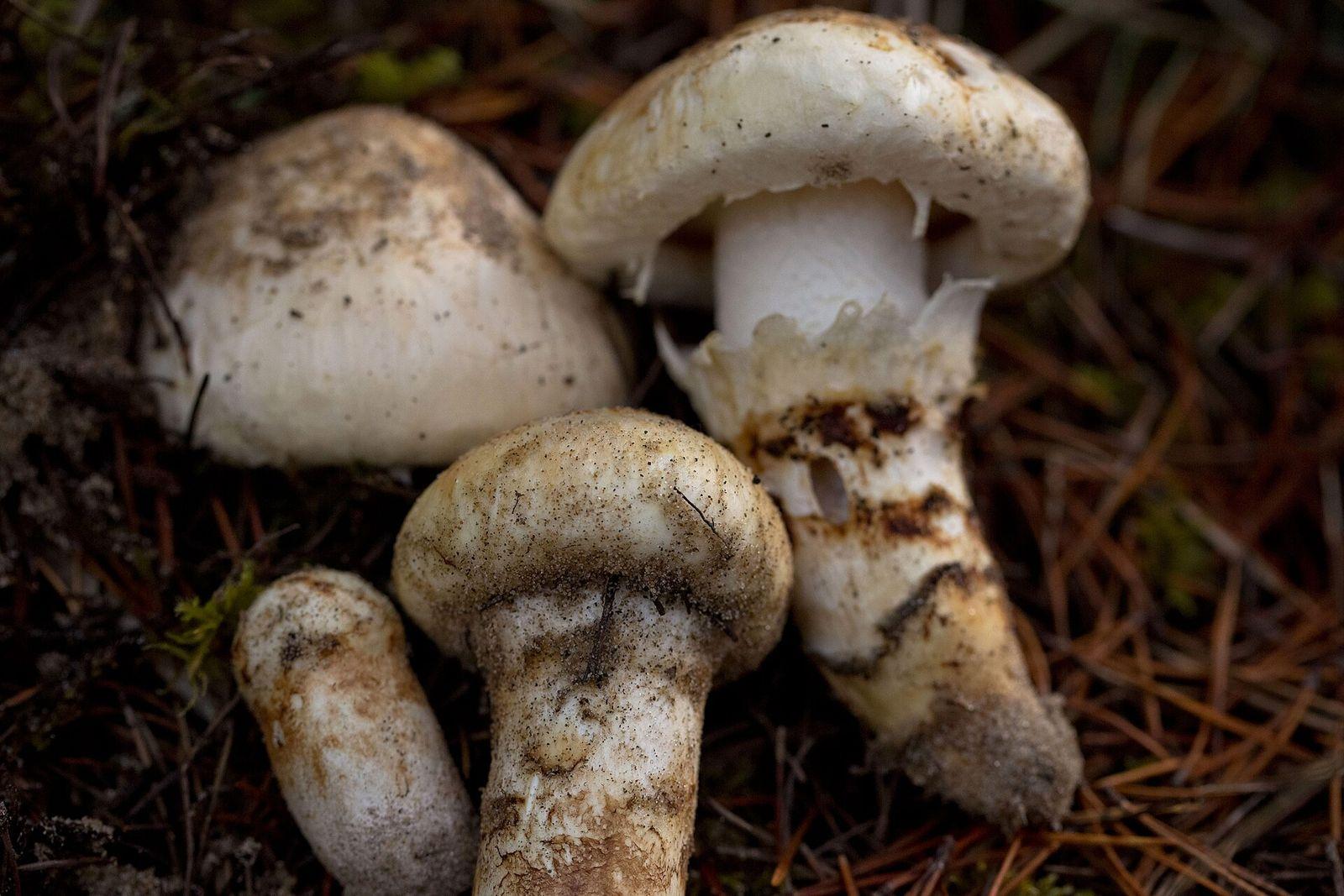
Four stout white matsutake mushrooms with shaggy stems, one showing a ragged ring, on the forest floor
Edible
MatsutakeTricholoma murrillianum

The tellA firm white mushroom with a sheathing ring on the stem and a strong, spicy, cinnamon-like smell.

Amanita ocreata

Photo coming

Deadly
Western Destroying AngelAmanita ocreata

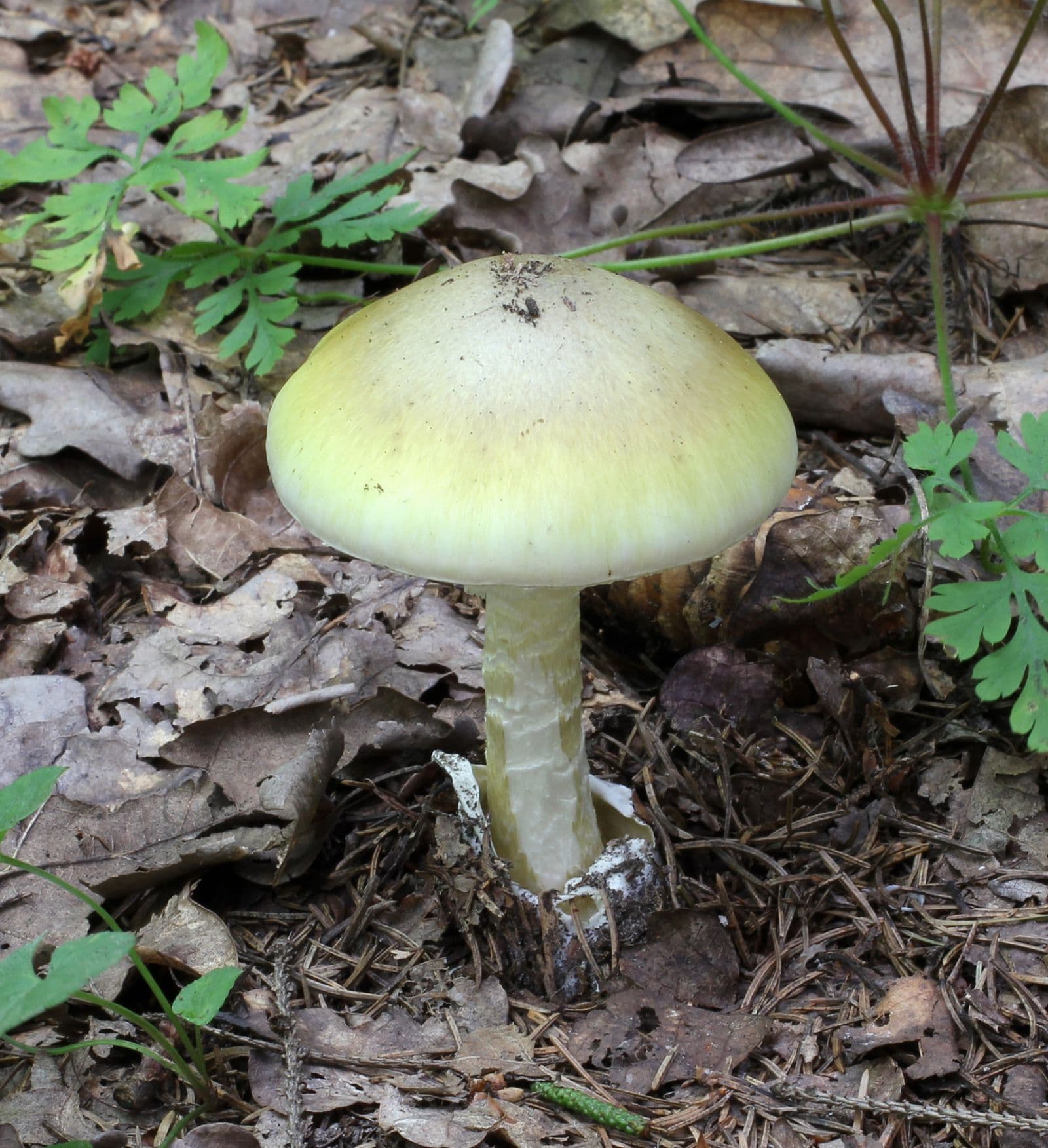
The tellLarge white to pale tan cap, white gills, a thin ring, and a thin, white, sac-like cup at the base, fruiting under oaks in late winter and spring.

How they differ

Differences between the matsutake and the western destroying angel
FeatureMatsutakeWestern Destroying Angel
SmellMatsutakeStrong and spicy, like cinnamon and pine.Western Destroying AngelMild at first, fishy with age; not spicy.
Stem baseMatsutakeTapering, sheathed in white tissue that develops brownish scales; no cup.Western Destroying AngelA bulbous base in a thin, white, membranous cup.
RingMatsutakeA cottony to membranous flaring ring above the sheath.Western Destroying AngelA thin, fragile white ring, often missing.
StainingMatsutakeCap and gills develop brown to orange-brown stains with age; flesh stays white.Western Destroying AngelWhite, unchanging.
GillsMatsutakeAttached or notched at the stem, crowded.Western Destroying AngelNarrowly attached, white to cream.
Habitat and seasonMatsutakeConifer and tanoak forests in fall.Western Destroying AngelUnder coast live oak in late winter and spring.

FAQ

Common questions

What does a matsutake smell like?

Spicy and fragrant, often described as cinnamon and pine. MykoWeb lists the spicy odor among the features that identify the western matsutake.

What is the main matsutake lookalike?

In the Pacific Northwest, Smith's amanita, which causes kidney failure. In California oak woods, white amanitas such as the western destroying angel have a cup at the base and no spicy smell.

Waitlist

Hear when it opens

We will send one email when Mushrooms.id opens, and nothing else.

Email us to join

This opens your email app with the request written for you. Send it and we add you to the list. No email app? Write to hello@mushrooms.id with the subject “Add me to the Mushrooms.id waitlist”.