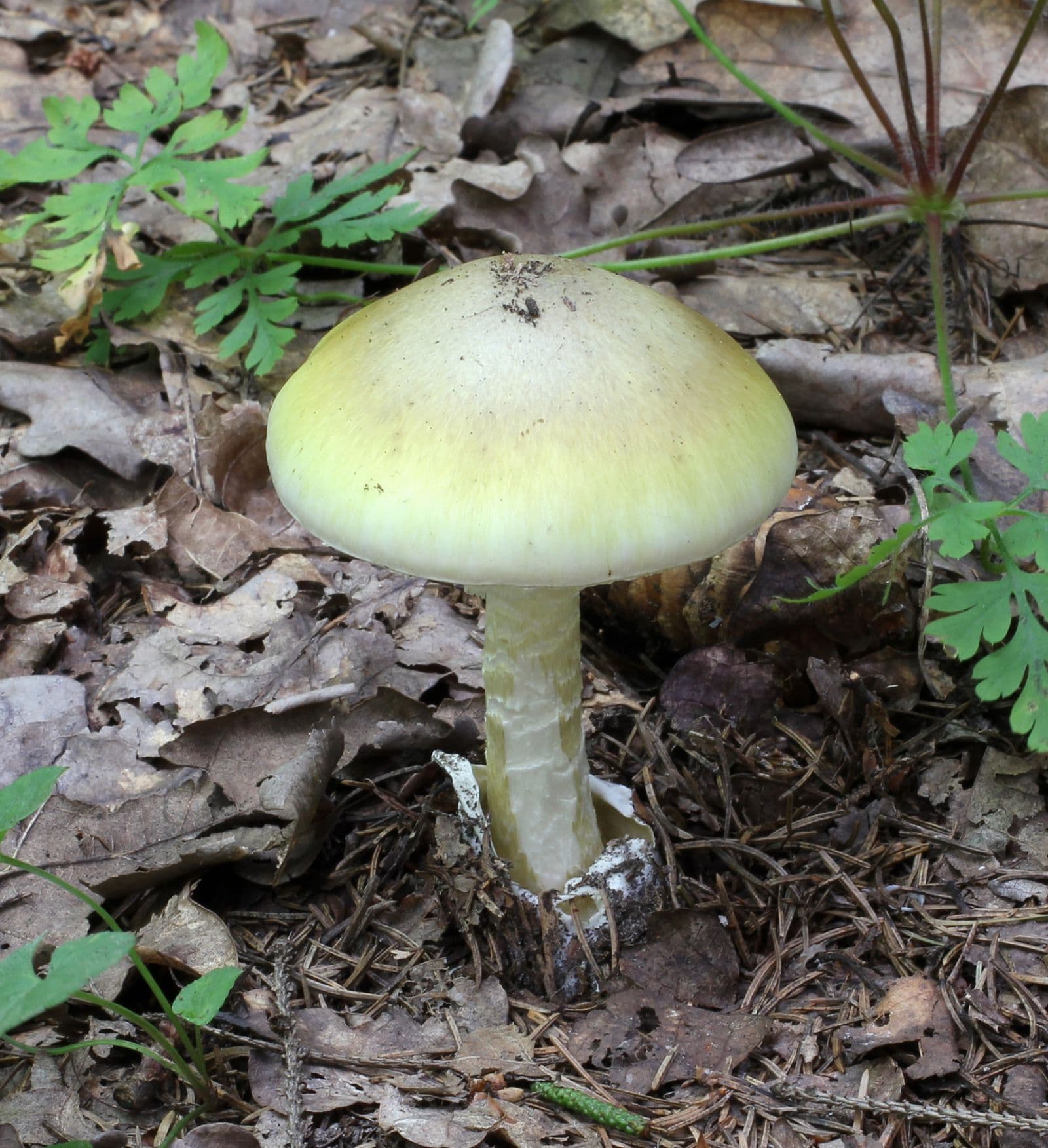
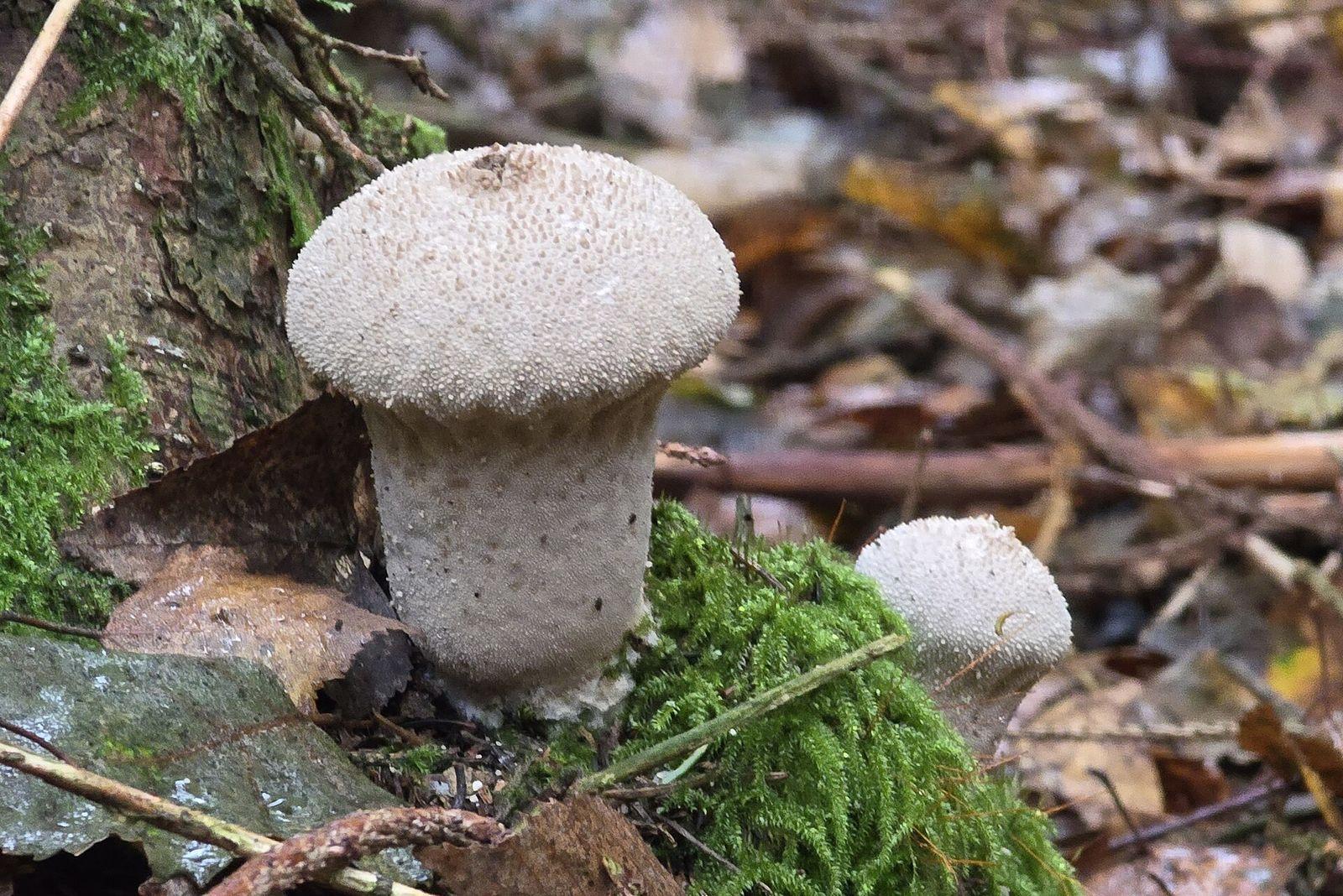
Death cap vs gem-studded puffball
- Deadly: Death Cap
Sliced top to bottom, a puffball is pure white with no structure. A death cap egg shows a cap, gills and stem.
Quick answer
A gem-studded puffball is uniform pure white inside, with no structure; an unopened western destroying angel egg shows the outline of a cap, gills and stem. The puffball's skin is covered in short cone-shaped spines that rub off and leave a net of scars, while the Amanita egg is smooth and white.
Deadly lookalike
Unlike the gem-studded puffball, the western destroying angel (Amanita ocreata) is deadly poisonous and contains amatoxins, according to MykoWeb's California Fungi. In the CDC's report on the 2025 to 2026 northern California outbreak, people who ate it developed abdominal pain, nausea, vomiting and diarrhea 8 to 12 hours after the meal; across the 39 Amanita cases in that report, three people needed liver transplants and four died. Amatoxins are not destroyed by cooking.
If someone has eaten a wild mushroom and feels unwell, or may have eaten one of these, call poison control now: 1-800-222-1222 in the US. Do not wait for symptoms.
Side by side
The tellA small white, top-shaped puffball covered in cone-shaped spines that rub off and leave a net of tiny scars.
Amanita ocreata
Photo coming
The tellLarge white to pale tan cap, white gills, a thin ring, and a thin, white, sac-like cup at the base, fruiting under oaks in late winter and spring.
| Feature | Gem-Studded Puffball | Western Destroying Angel |
|---|---|---|
| Sliced top to bottom | Gem-Studded PuffballUniform pure white flesh with no internal structure. | Western Destroying AngelThe outline of a cap, gills and stem inside a white skin. |
| Surface | Gem-Studded PuffballShort cone-shaped spines that rub off, leaving a net of scars. | Western Destroying AngelSmooth and white. |
| Shape | Gem-Studded PuffballTop-shaped: round on top, narrowing to a thick stem-like base. | Western Destroying AngelEgg-shaped, the base in a white sac. |
| Base | Gem-Studded PuffballA spongy sterile base that is part of the puffball; no cup. | Western Destroying AngelA bulbous base in a thin, white, membranous cup, often buried. |
| Mature form | Gem-Studded PuffballStays a ball; a pore opens at the top and the inside turns olive-brown. | Western Destroying AngelOpens into a large white to cream mushroom with white gills and a fragile ring. |
FAQ
Under coast live oak and other oaks in California and along the Pacific coast, fruiting from late winter to spring.
Not reliably. Spines on the surface suggest a gem-studded puffball, but the inside is what separates them.
Sources
MushroomExpert.com
CDC, Morbidity and Mortality Weekly Report
Keep checking
This page states what field guides record. It is not advice to eat, taste or handle anything, and a photo cannot settle edibility. If someone has eaten a wild mushroom that may be toxic, call poison control (1-800-222-1222 in the US) right away, before symptoms start: the deadliest species act hours later.
More comparisons
Sliced top to bottom, a puffball is pure white with no structure. A death cap egg shows a cap, gills and stem.
Amanita ocreata
Photo coming
Both are deadly amanitas with white gills and a cup. Death caps are greenish and fruit fall to winter; western destroying angels are white, in spring.
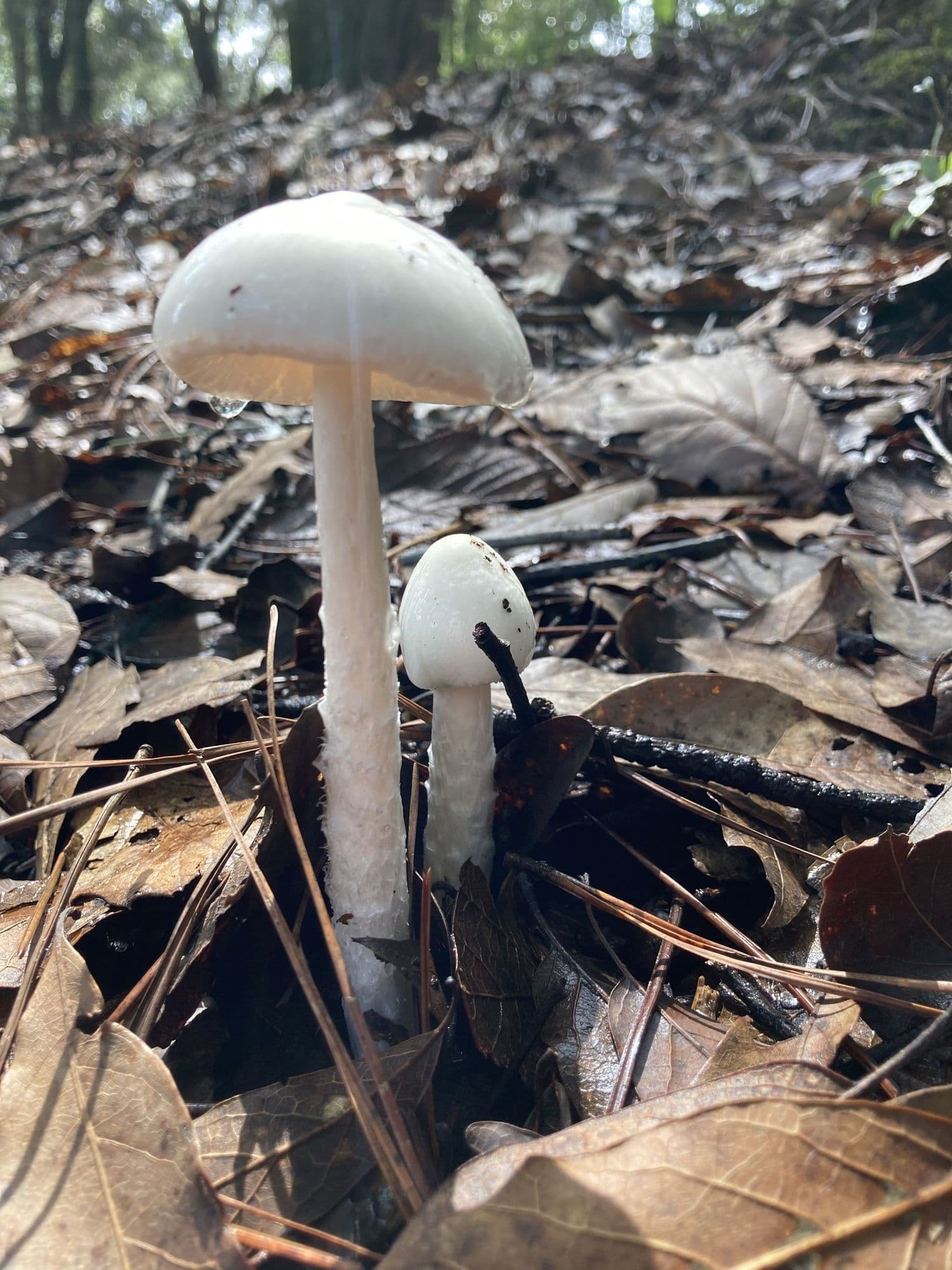
Sliced top to bottom, a gem-studded puffball is pure white with no structure. A destroying angel egg shows a cap, gills and stem.
Waitlist
We will send one email when Mushrooms.id opens, and nothing else.
This opens your email app with the request written for you. Send it and we add you to the list. No email app? Write to hello@mushrooms.id with the subject “Add me to the Mushrooms.id waitlist”.