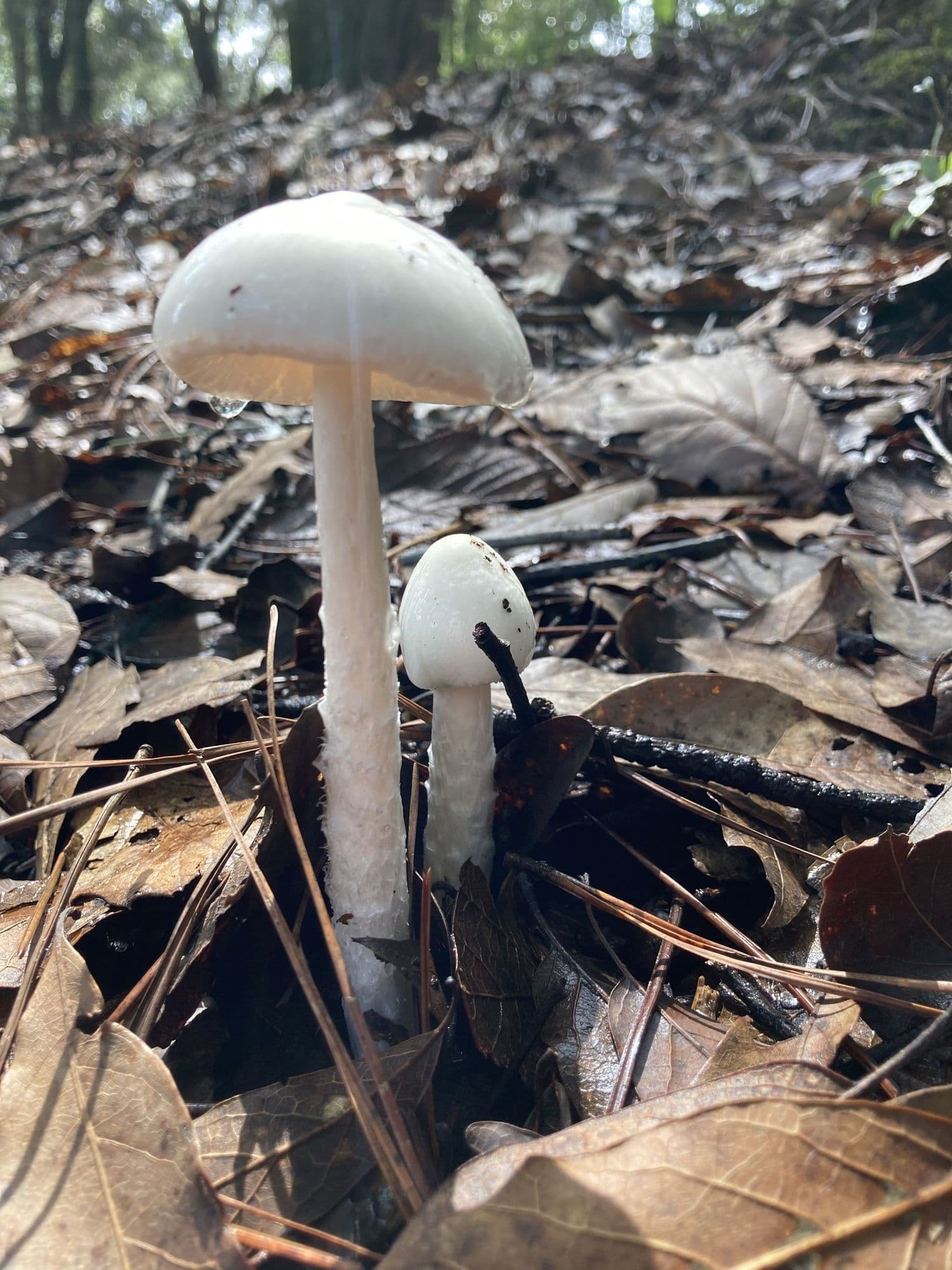
Deadly
Destroying Angel
Amanita bisporigera
Destroying angels have white gills at all ages, a white spore print, and a white sac-like cup at the stem base, which can be hidden in soil. They contain amatoxins.
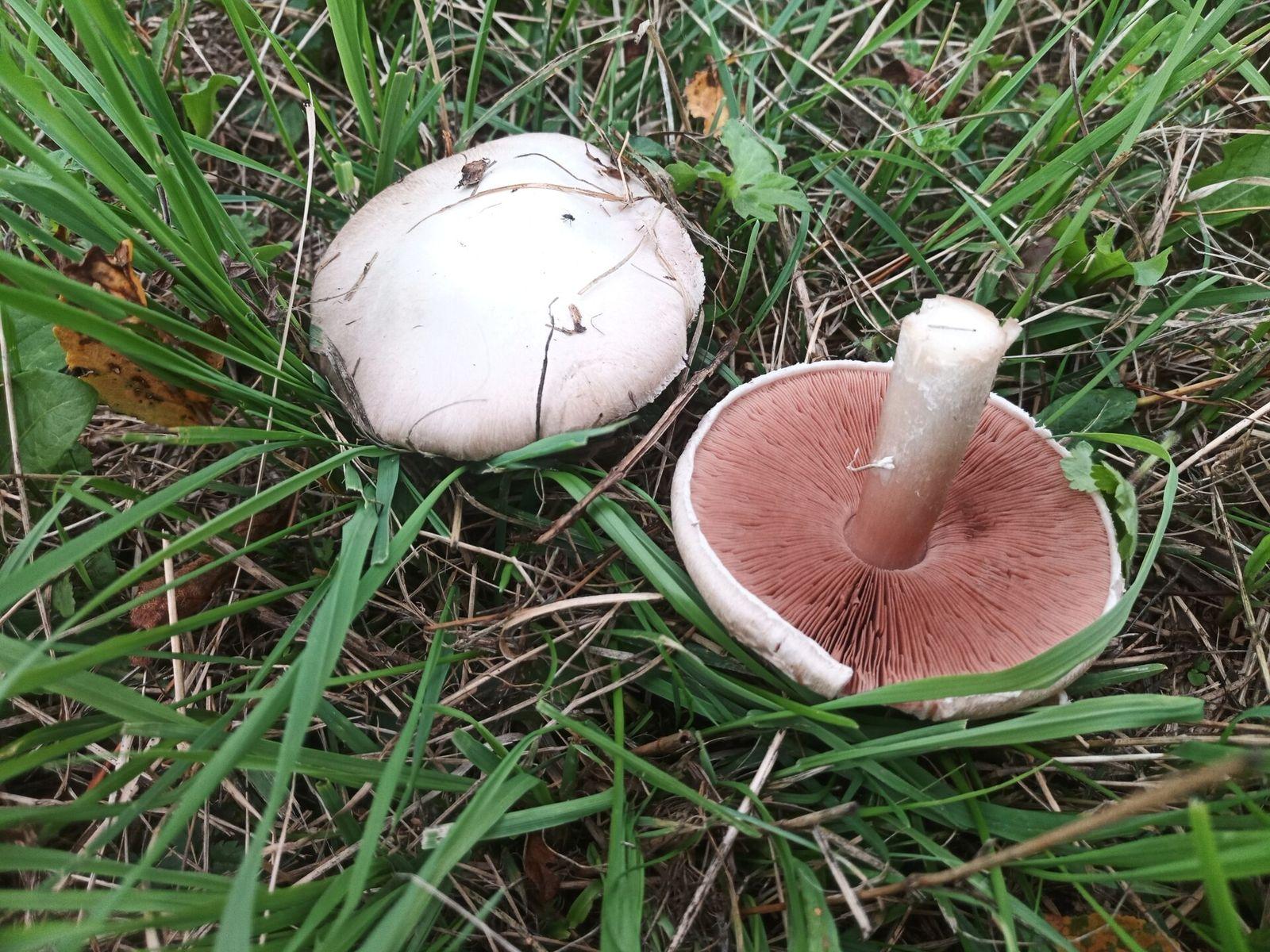
Agaricus campestris
Also called field mushroom, pink bottom.
The meadow mushroom is the wild relative of the supermarket button mushroom: a white cap with pink gills that age to chocolate brown, on a short stem with a thin ring. It grows in lawns and pastures, and its deadliest lookalikes are the white amanitas.
The tell
White cap on a short stem, with bright pink gills that turn chocolate brown, growing in grass.
Field marks
Cap, underside and stem show in a photo. The spore print does not, and it is often the deciding check.
Where and when
Lookalikes
Each card says how to tell the two apart.
Amanita bisporigera
Destroying angels have white gills at all ages, a white spore print, and a white sac-like cup at the stem base, which can be hidden in soil. They contain amatoxins.
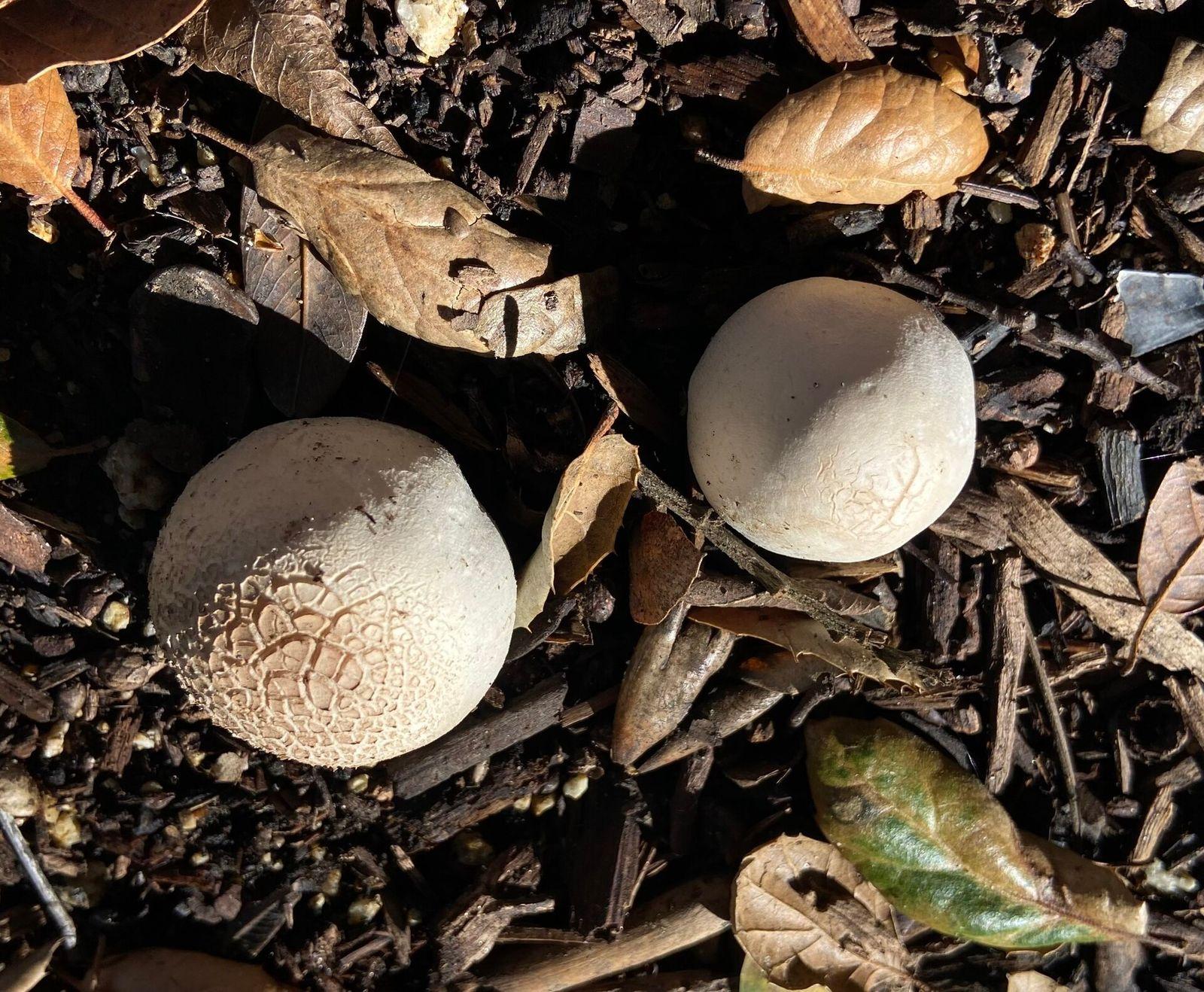
Agaricus xanthodermus
The yellow stainer turns bright chrome yellow when its cap is scratched or the stem base is cut, and smells of ink or phenol. It causes gastrointestinal poisoning.
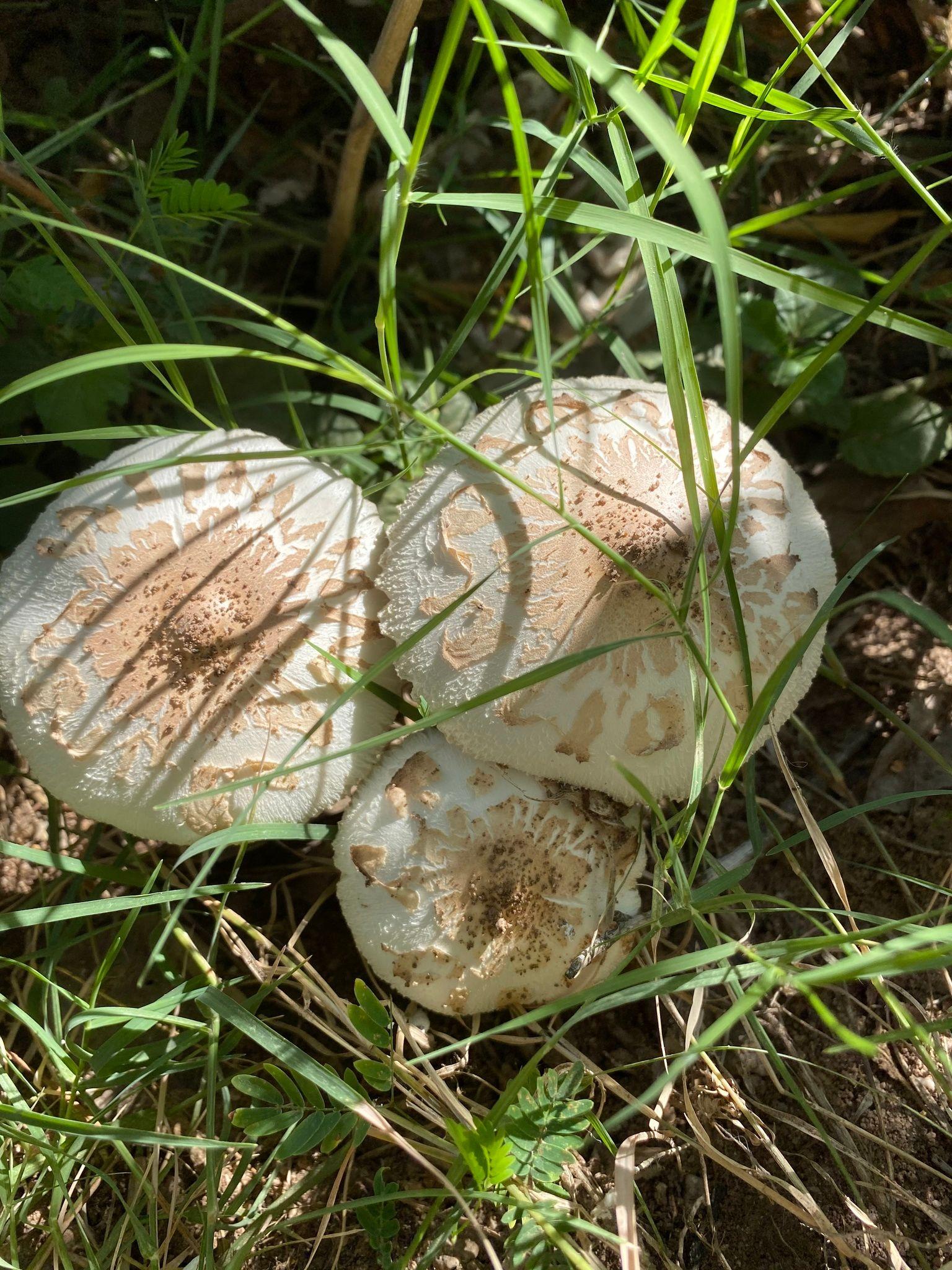
Chlorophyllum molybdites
The green-spored parasol is larger, with brown scales on the cap, white gills that turn gray-green, and a green spore print.
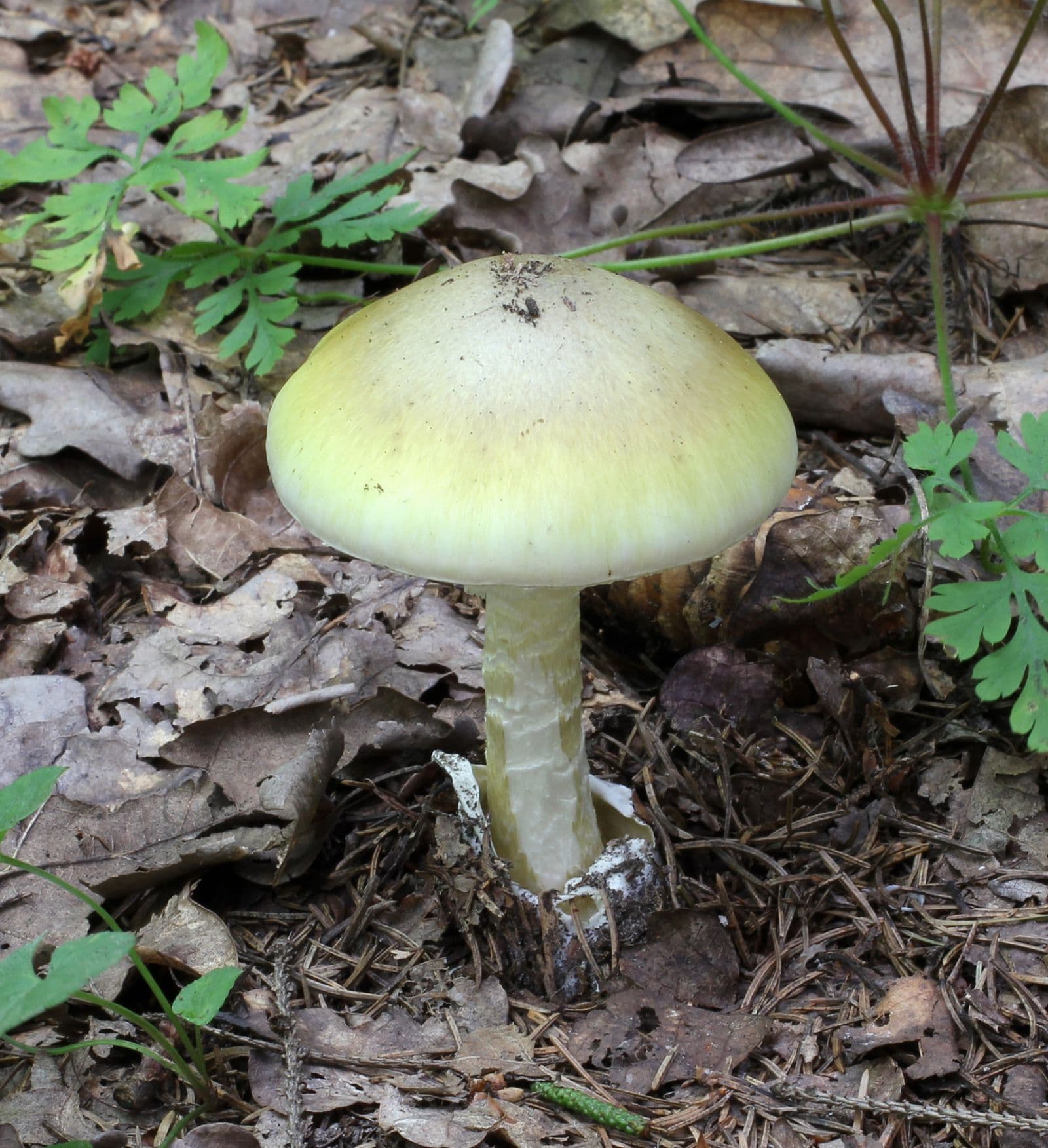
Amanita phalloides
Death caps have a greenish to olive cap, white gills, a white spore print and a sac-like cup at the base. They grow under trees rather than in open grass.
More side-by-side comparisons
Edibility
Field guides list the meadow mushroom as edible. The same guides record its dangerous lookalikes: white Amanita species such as the destroying angel, which contain amatoxins and have white gills and a cup at the base, and the yellow stainer, which causes gastrointestinal upset. Pink to brown gills and a chocolate brown spore print separate the meadow mushroom from the amanitas.
This page states what field guides record. It is not advice to eat, taste or handle anything, and a photo cannot settle edibility. If someone has eaten a wild mushroom that may be toxic, call poison control (1-800-222-1222 in the US) right away, before symptoms start: the deadliest species act hours later.
FAQ
Field guides list Agaricus campestris as edible. Its deadly lookalikes are white amanitas, which have white gills and a cup at the base, and its toxic lookalike is the yellow stainer, which bruises bright yellow.
Meadow mushrooms have pink gills that turn chocolate brown and leave a dark brown spore print. Destroying angels have white gills, a white spore print and a sac-like cup at the stem base, often buried in soil.
In open grass: lawns, pastures, meadows, parks and golf courses. They appear after rain in late summer and fall, and in fall and winter in California.
Sources
MushroomExpert.com
Missouri Department of Conservation
MykoWeb, California Fungi
Index Fungorum
Also on Mushrooms.id
Agaricus bisporus
Photo coming
Agaricus bisporus
Free gills that turn from pink to chocolate brown, a ring on the stem, and no cup at the base.
Clitocybe rivulosa
Photo coming
Clitocybe rivulosa
Small white to buff caps in grass, with crowded gills that run down a short stem.
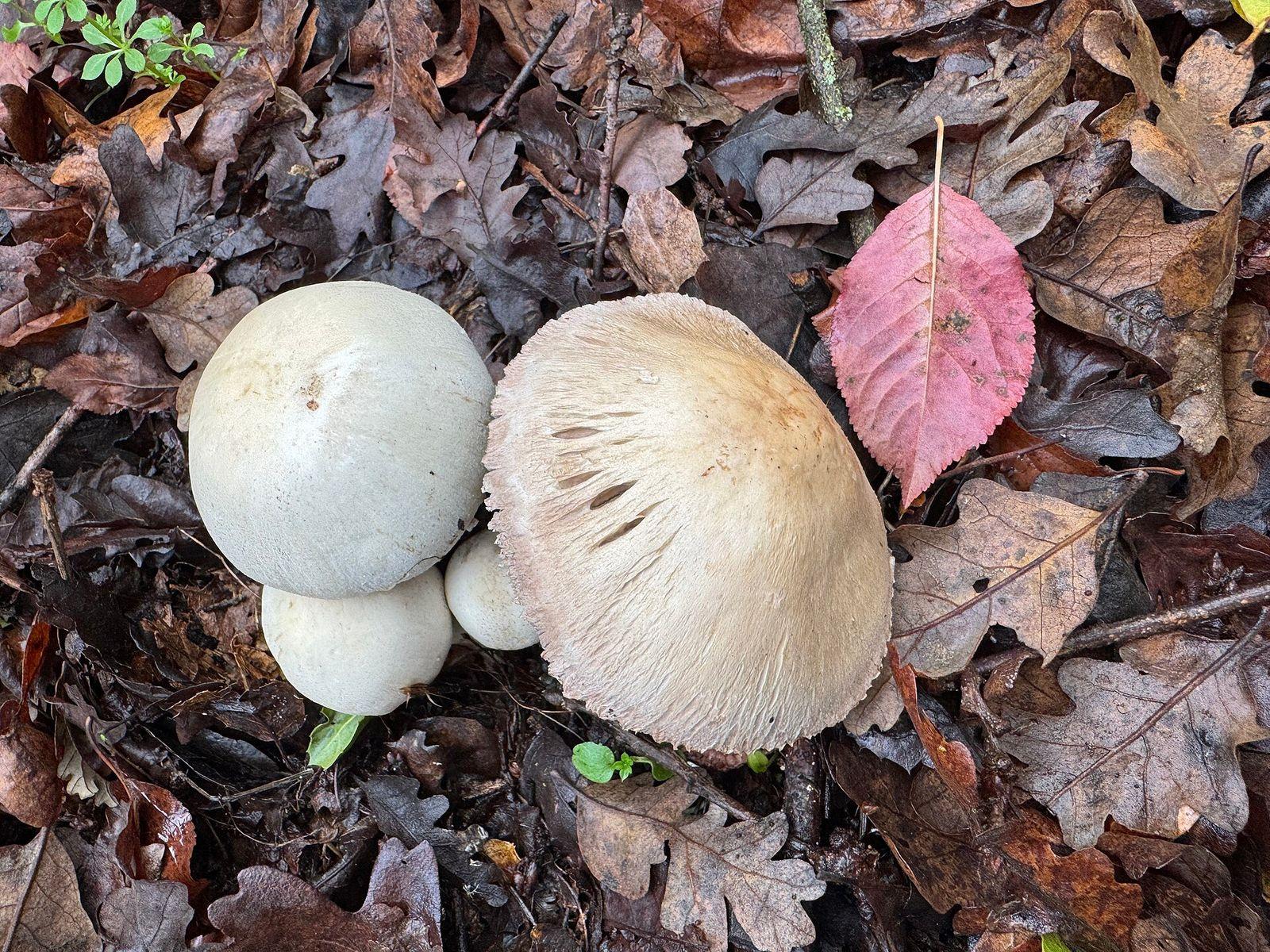
Agaricus fissuratus
Large white cap that slowly bruises yellowish, grayish pink to brown gills, a large ring with a cogwheel pattern beneath, and an anise smell.
Entoloma sinuatum
Photo coming
Entoloma sinuatum
A large gray cap with yellowish gills that turn pink, a pink spore print and a mealy smell.
Waitlist
We will send one email when Mushrooms.id opens, and nothing else.
This opens your email app with the request written for you. Send it and we add you to the list. No email app? Write to hello@mushrooms.id with the subject “Add me to the Mushrooms.id waitlist”.