Edible
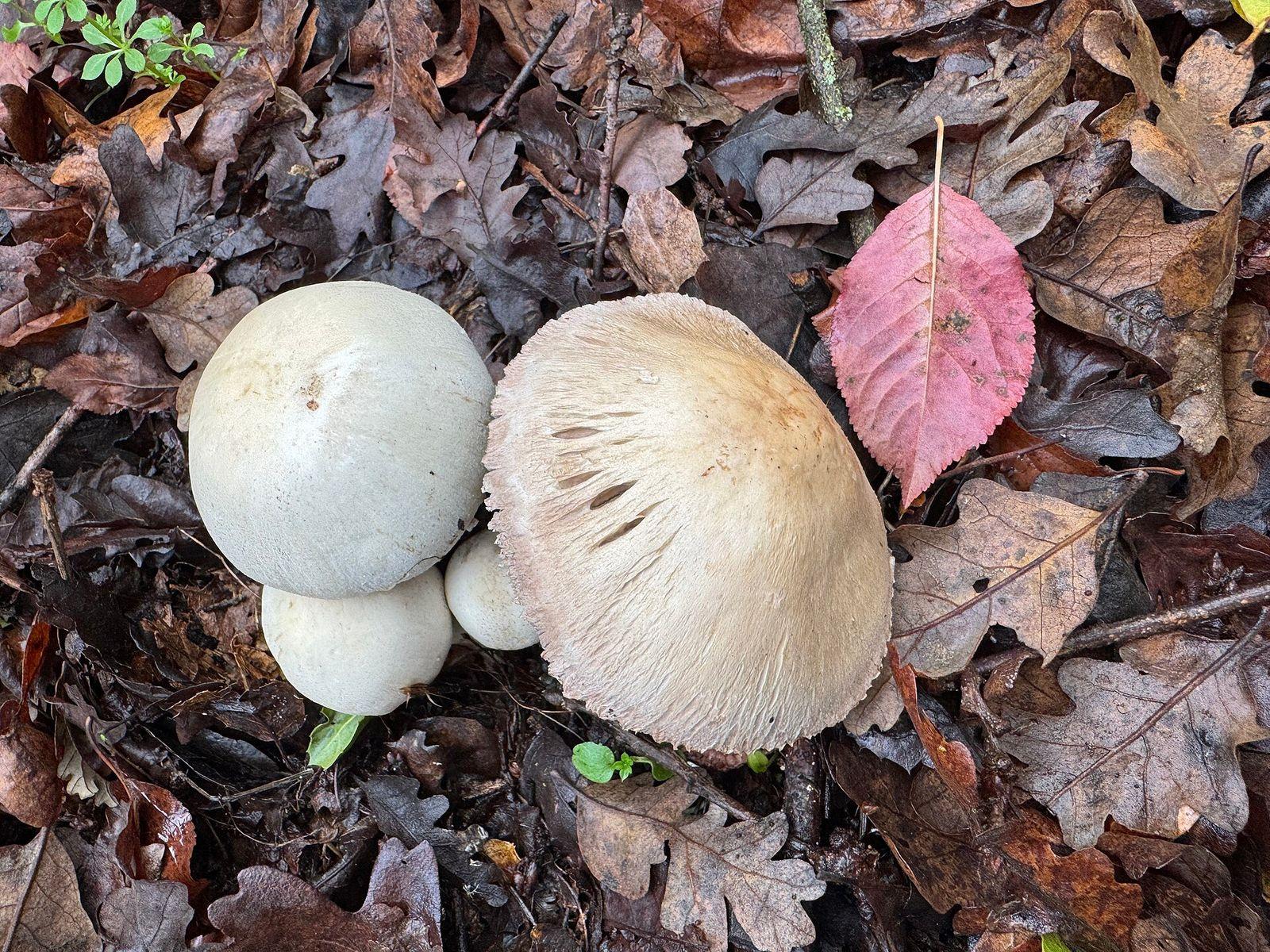
Horse Mushroom
Agaricus fissuratus
The horse mushroom yellows slowly and mildly, not chrome yellow, its stem base does not turn yellow when cut, and it smells of anise or almond.
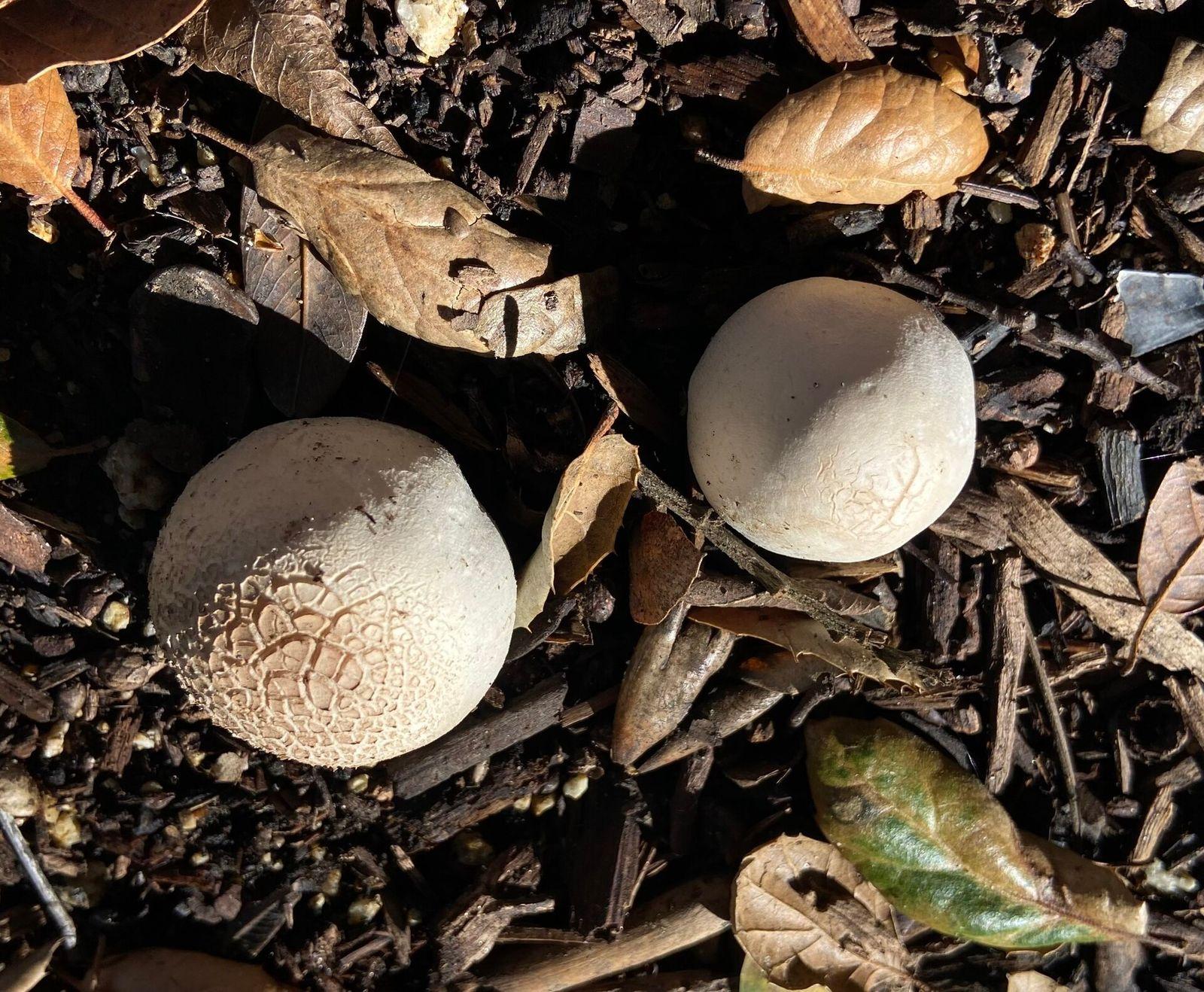
Agaricus xanthodermus
Also called yellow-staining mushroom, yellow-staining agaricus.
The yellow stainer is a white Agaricus that looks like a field or button mushroom but turns bright chrome yellow when bruised and smells of ink or phenol. It grows in lawns, gardens and parks and causes gastrointestinal upset in many people who eat it.
The tell
White Agaricus whose cap edge and stem base turn bright chrome yellow within seconds of being scratched or cut, with an ink or phenol smell.
Field marks
Cap, underside and stem show in a photo. The spore print does not, and it is often the deciding check.
Where and when
Lookalikes
Each card says how to tell the two apart.
Agaricus fissuratus
The horse mushroom yellows slowly and mildly, not chrome yellow, its stem base does not turn yellow when cut, and it smells of anise or almond.
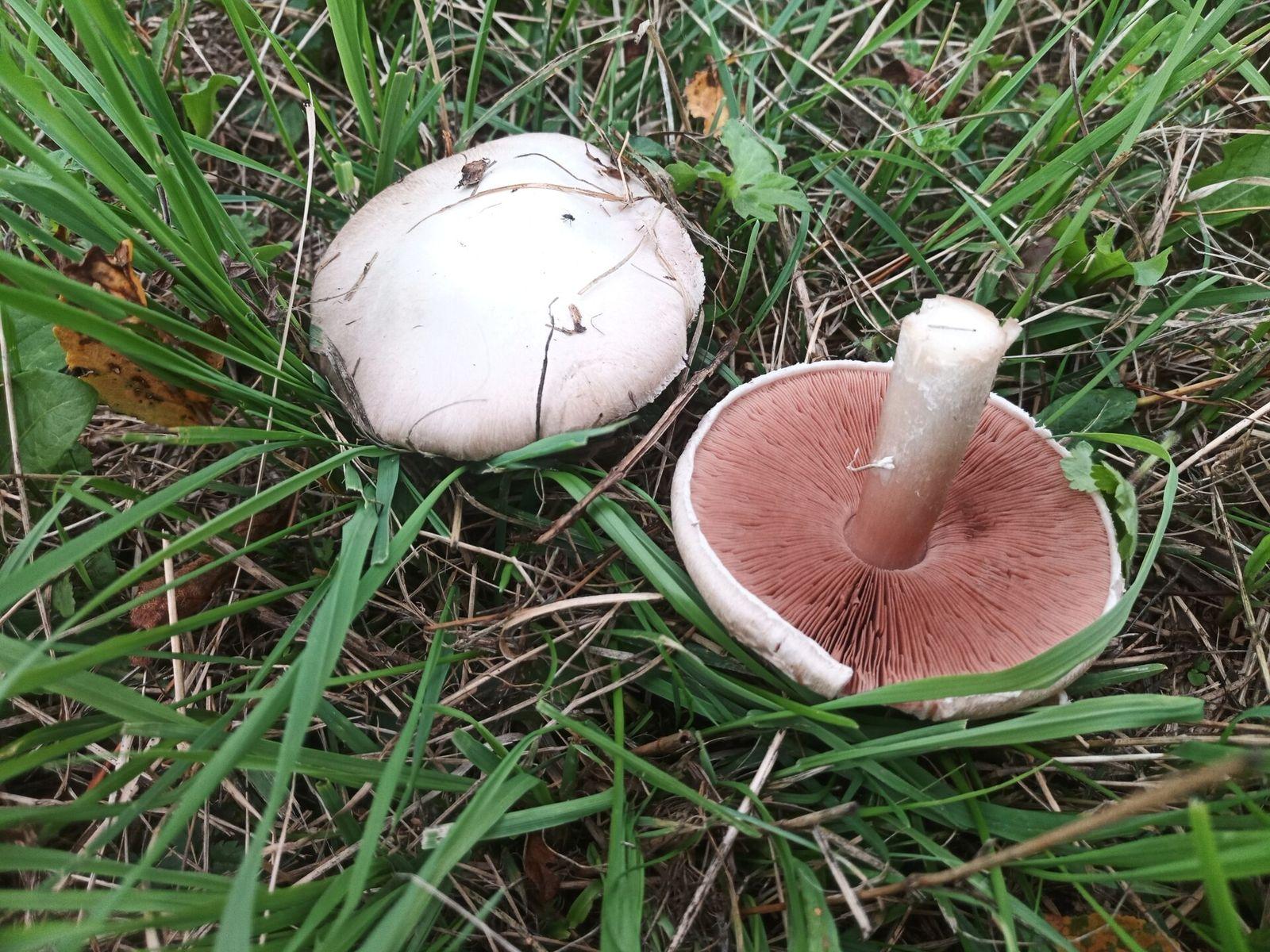
Agaricus campestris
The meadow mushroom is smaller, with bright pink young gills and a thin, fragile ring. It does not stain yellow and smells pleasant.
Agaricus bisporus
Photo coming
Agaricus bisporus
Wild button mushrooms bruise brownish to reddish rather than yellow and have a pleasant smell.
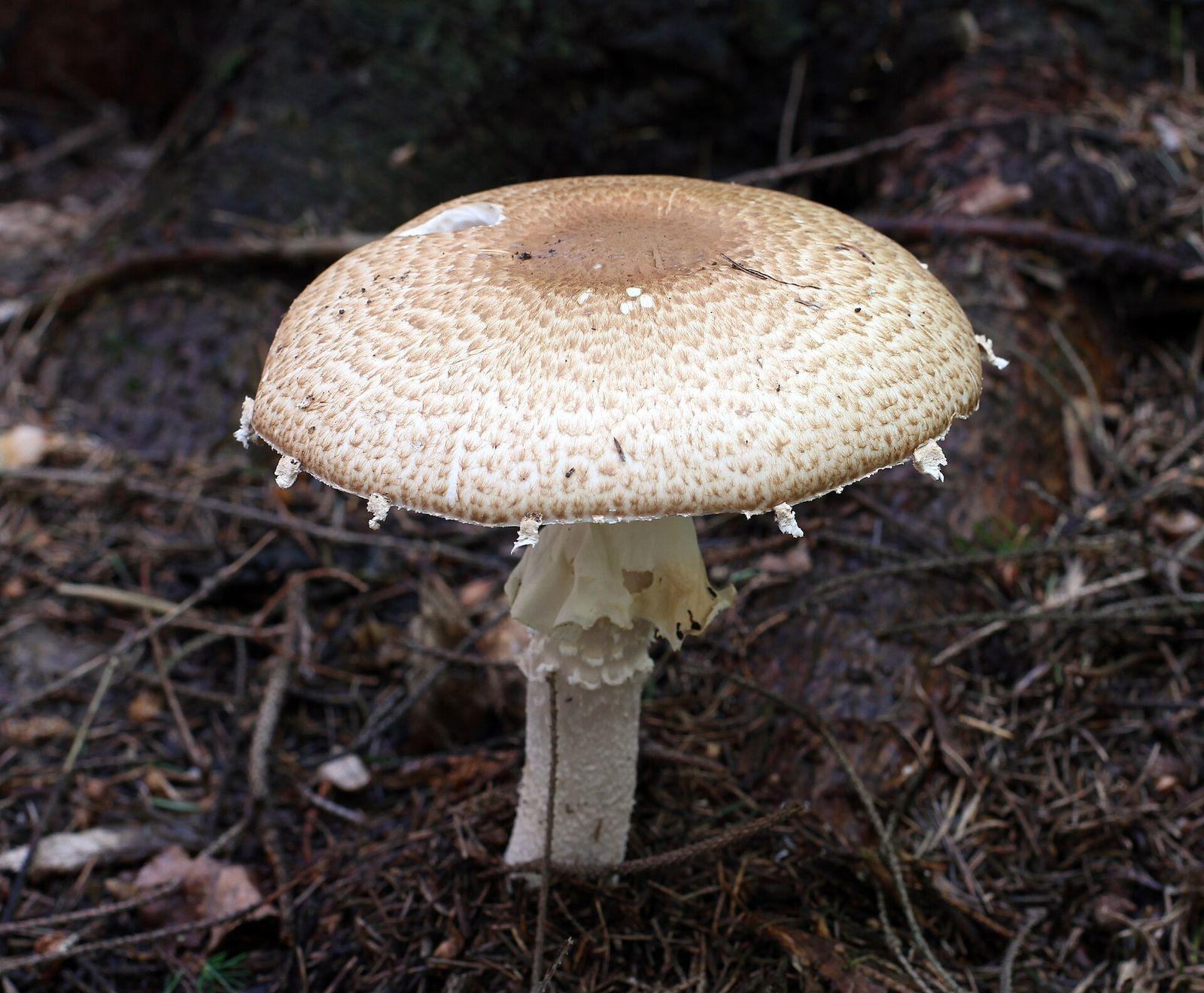
Agaricus augustus
The prince bruises yellow too, but its cap is covered in golden brown fibrous scales and it smells strongly of almonds.
Edibility
Field guides list the yellow stainer as poisonous. Recorded symptoms are gastrointestinal, including nausea, vomiting, diarrhea and cramps, usually within a few hours of the meal. Not everyone who eats it is affected. The cause is usually attributed to phenolic compounds, which also produce its ink-like smell.
This page states what field guides record. It is not advice to eat, taste or handle anything, and a photo cannot settle edibility. If someone has eaten a wild mushroom that may be toxic, call poison control (1-800-222-1222 in the US) right away, before symptoms start: the deadliest species act hours later.
FAQ
Yes. Field guides list it as poisonous, causing nausea, vomiting, diarrhea and cramps within a few hours. Some people are not affected, which has led to mixed reports, but it is consistently listed as toxic.
Scratching the cap edge or cutting the base of the stem turns the flesh bright chrome yellow within seconds. It also has an unpleasant smell of ink, phenol or creosote. Edible lookalikes either do not yellow or yellow only slowly and mildly.
In lawns, gardens, parks and along hedgerows, often in groups. In North America they are recorded mainly from California and the Pacific coast, where they fruit in fall and winter.
Sources
MushroomExpert.com
MykoWeb, California Fungi
Index Fungorum
Waitlist
We will send one email when Mushrooms.id opens, and nothing else.
This opens your email app with the request written for you. Send it and we add you to the list. No email app? Write to hello@mushrooms.id with the subject “Add me to the Mushrooms.id waitlist”.