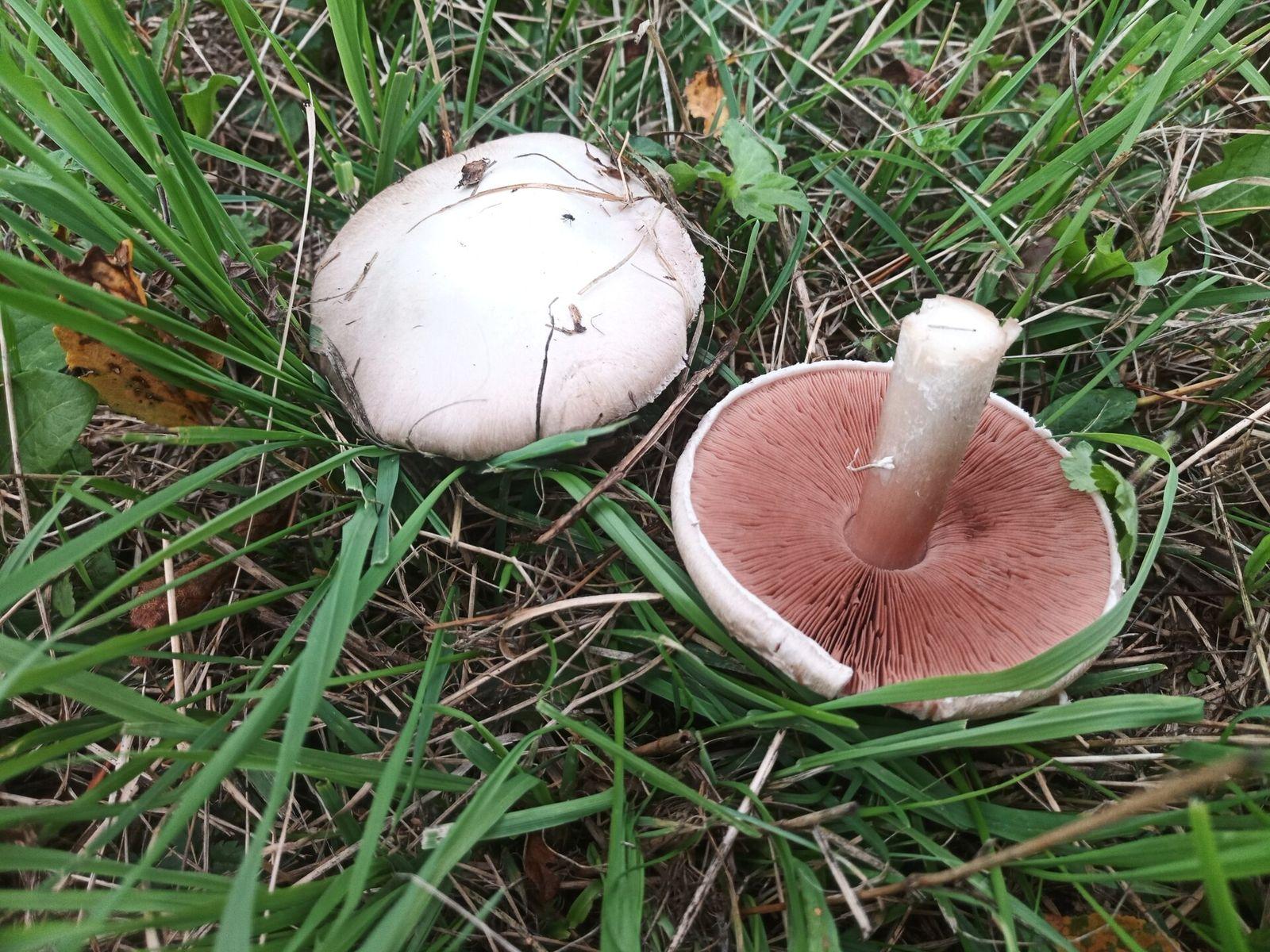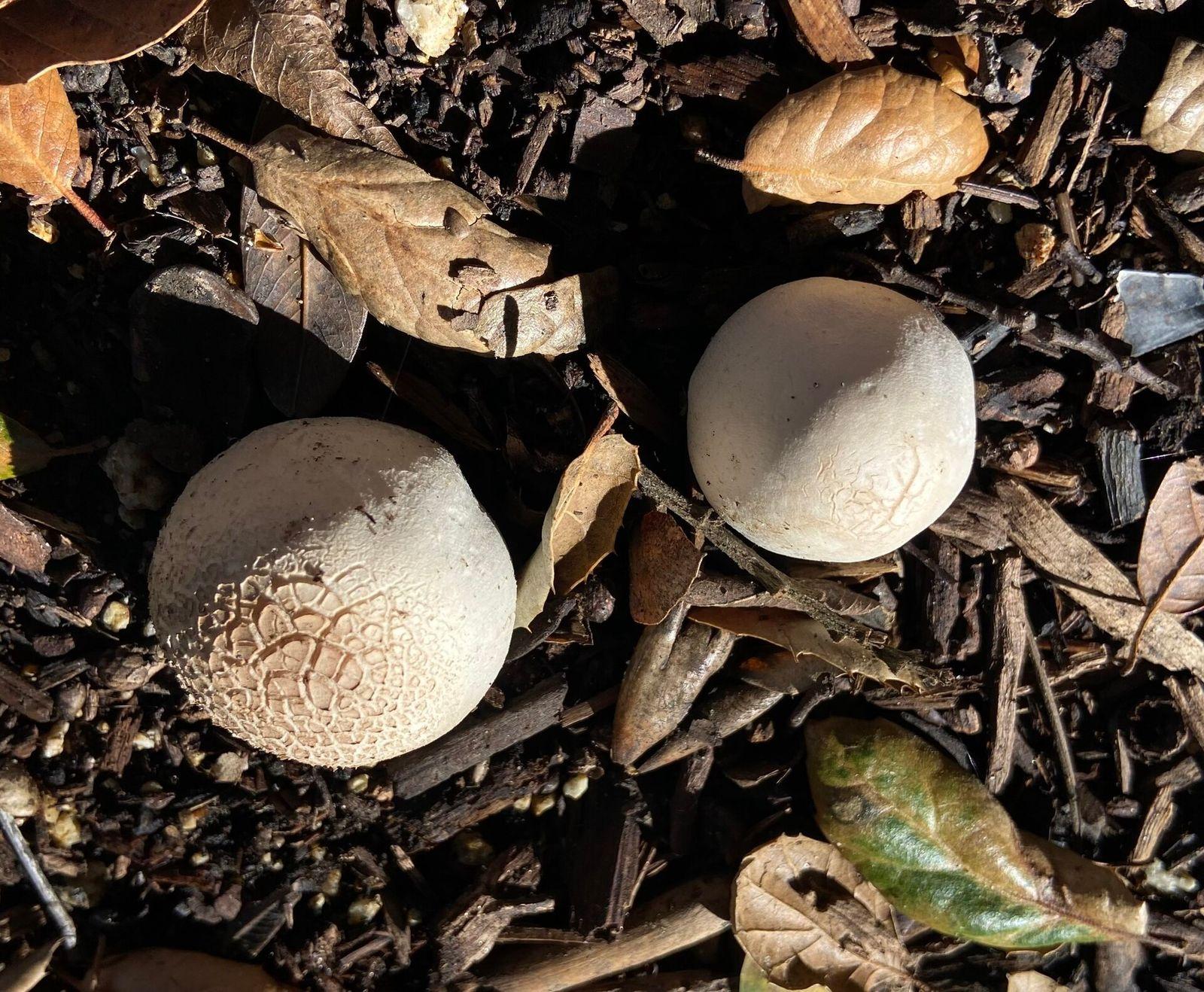
Toxic lookalike
Yellow Stainer
Agaricus xanthodermus
The yellow stainer has a smooth white to grayish cap without brown fibrous scales, turns chrome yellow at the stem base when cut, and smells of ink or phenol rather than almonds.
Agaricus augustus
Also called prince mushroom.
The prince is a large Agaricus with a cap covered in golden brown scales, a big ring, and a strong smell of almonds. It grows on disturbed ground and under conifers, mostly in the West. Its main toxic lookalikes are the yellow stainer and the scaly, ink-smelling flat-top agaricus.
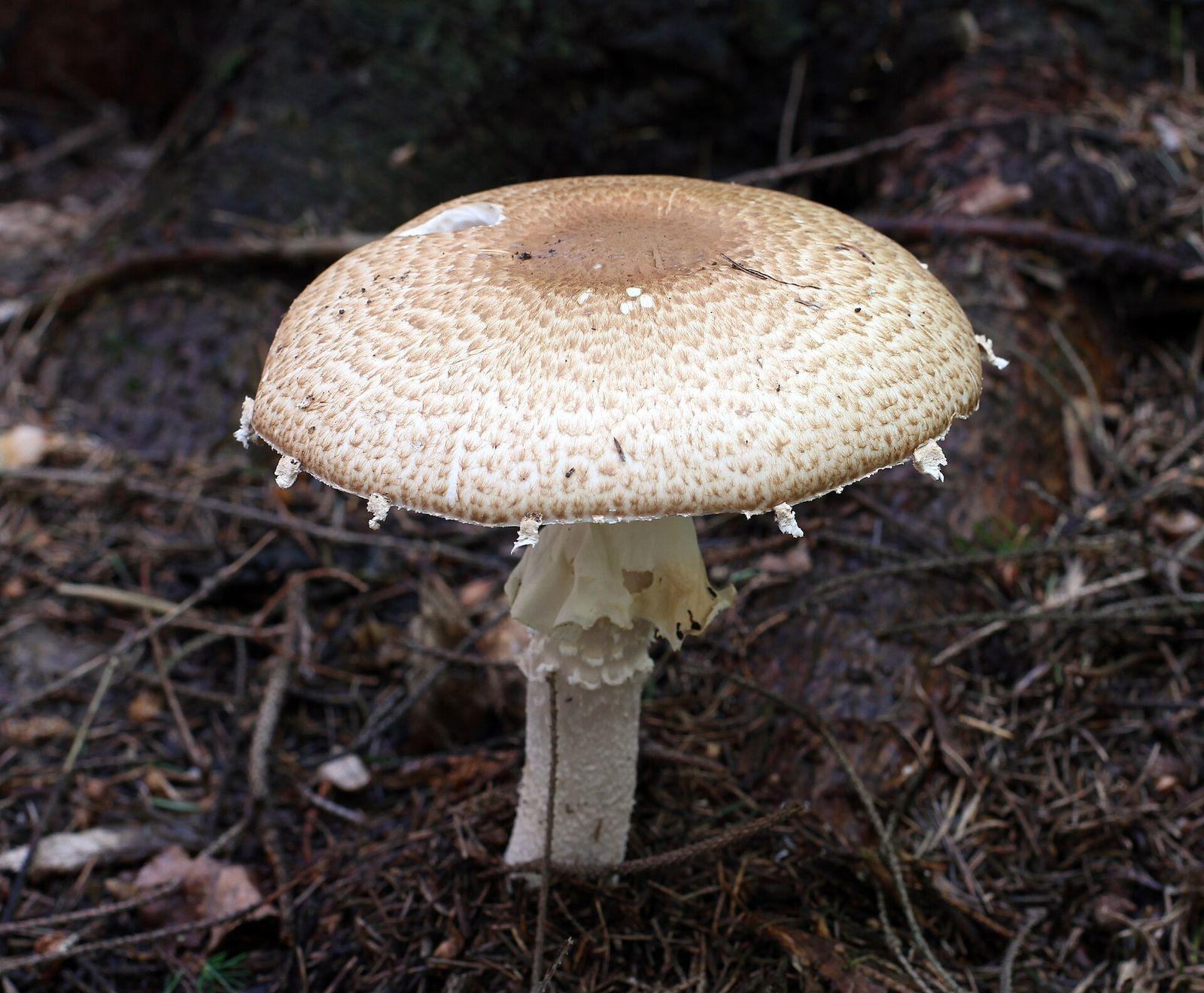
The tell
Large cap covered in golden brown fibrous scales, bruising yellow, with a big skirt-like ring and a strong almond smell.
Field marks
Cap, underside and stem show in a photo. The spore print does not, and it is often the deciding check.
Where and when
Lookalikes
Each card says how to tell the two apart.
Agaricus xanthodermus
The yellow stainer has a smooth white to grayish cap without brown fibrous scales, turns chrome yellow at the stem base when cut, and smells of ink or phenol rather than almonds.
Agaricus placomyces and its relatives have fine gray-brown to blackish scales on a flat-topped cap, flesh that turns yellow at the stem base, and an ink or phenol smell. They cause gastrointestinal upset.
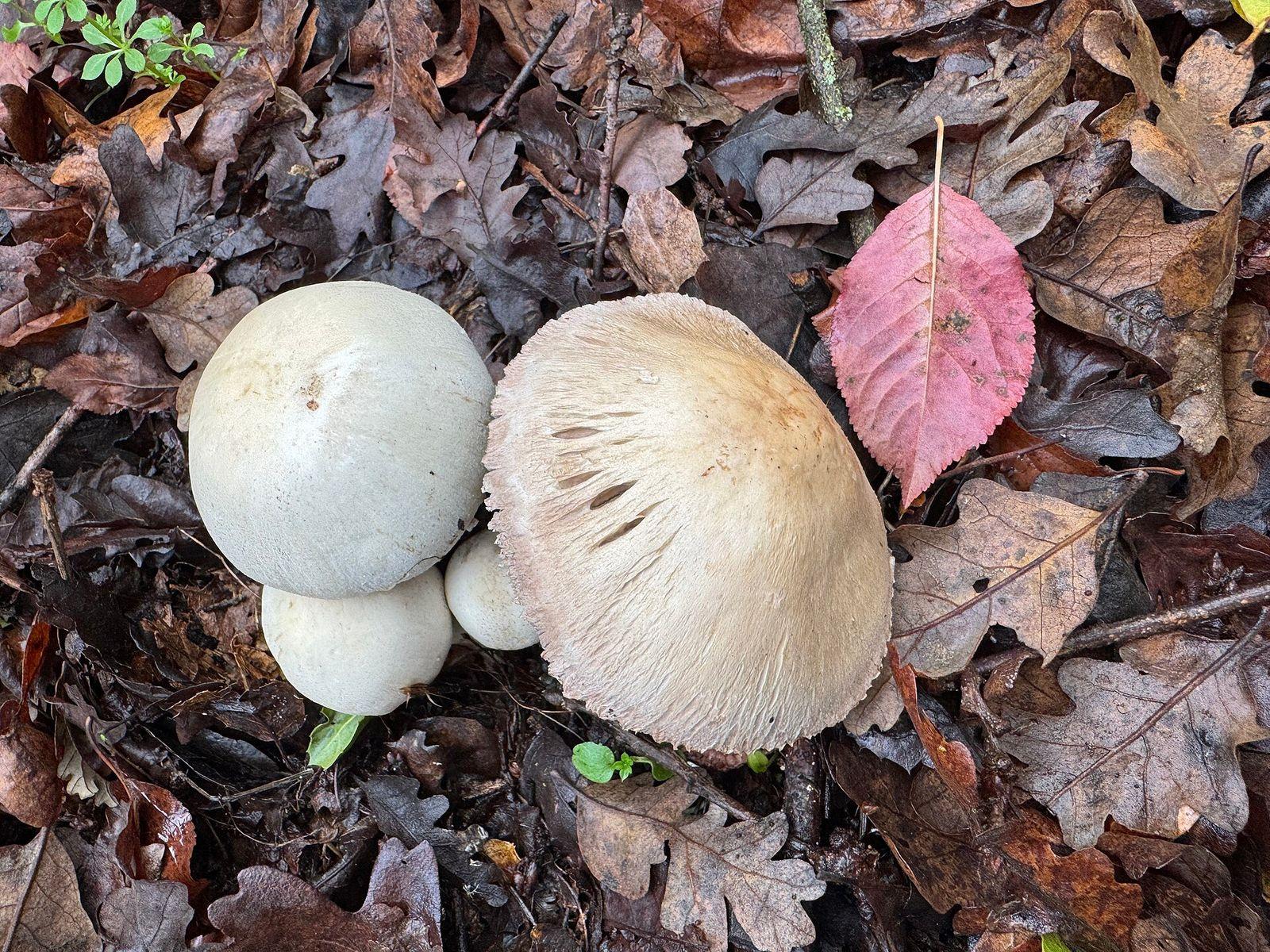
Agaricus fissuratus
The horse mushroom has a smooth white to cream cap without brown scales, smells of anise, and grows mostly in pastures and lawns.
Edibility
Field guides list the prince as edible and well regarded. The same guides note that Agaricus species which stain yellow and smell of ink or phenol, including the yellow stainer and the flat-top agaricus group, cause gastrointestinal upset. The almond smell of the prince separates it from those species.
This page states what field guides record. It is not advice to eat, taste or handle anything, and a photo cannot settle edibility. If someone has eaten a wild mushroom that may be toxic, call poison control (1-800-222-1222 in the US) right away, before symptoms start: the deadliest species act hours later.
FAQ
Field guides list the prince as edible. Its toxic lookalikes are yellow-staining Agaricus species that smell of ink or phenol, such as the yellow stainer, rather than of almonds.
It has a strong smell of almonds or marzipan. Toxic yellow-staining Agaricus species smell of ink, phenol or creosote instead.
On disturbed ground, along roadsides, in gardens and parks, and under conifers. It is most common in western North America, with scattered records in the East.
Sources
MushroomExpert.com
Beaty Biodiversity Museum, University of British Columbia
MykoWeb, California Fungi
Index Fungorum
Also on Mushrooms.id
Waitlist
We will send one email when Mushrooms.id opens, and nothing else.
This opens your email app with the request written for you. Send it and we add you to the list. No email app? Write to hello@mushrooms.id with the subject “Add me to the Mushrooms.id waitlist”.