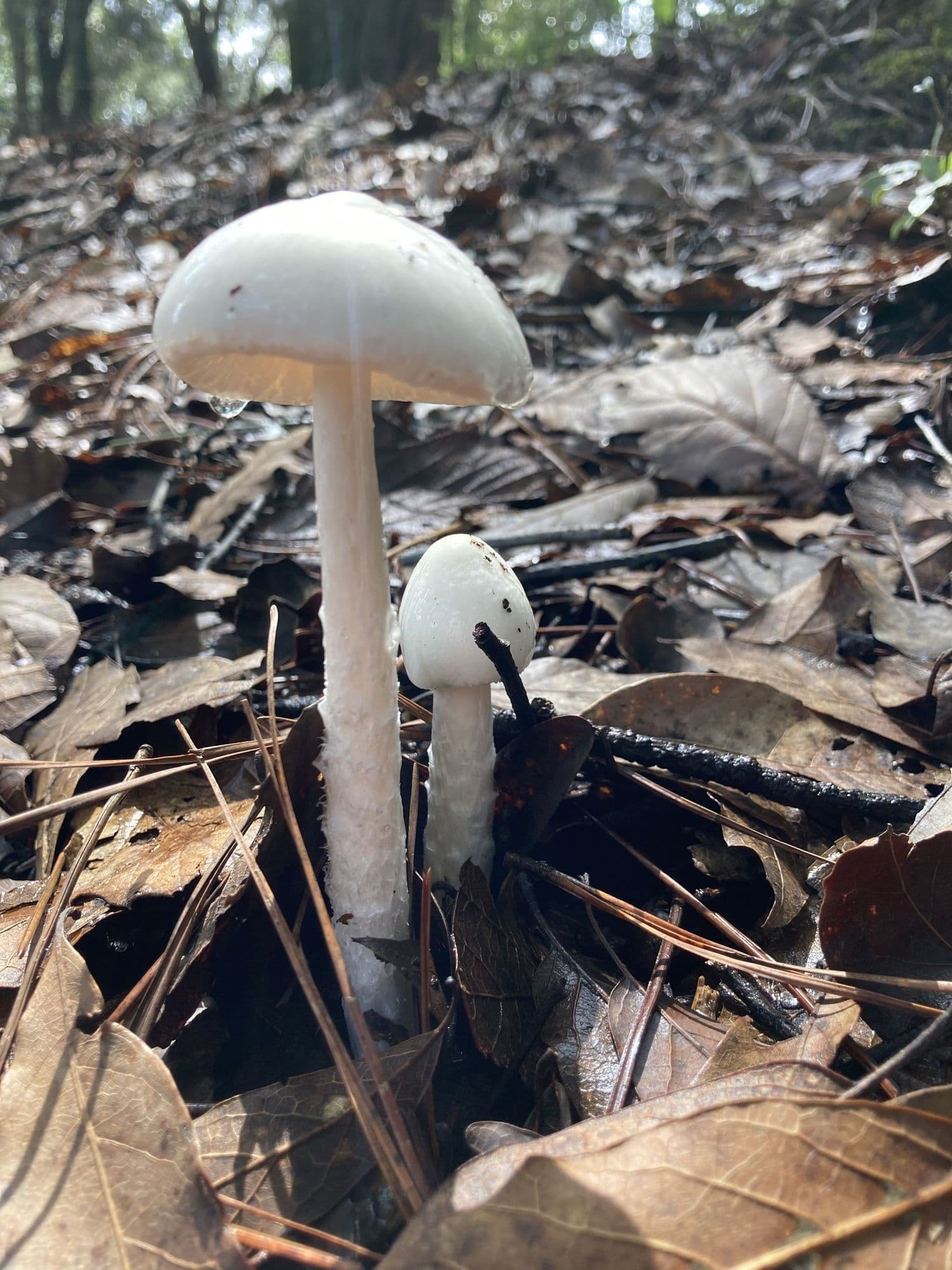
Deadly
Destroying Angel
Amanita bisporigera
Destroying angels have white gills at all ages, a white spore print and a sac-like cup at the stem base. They contain amatoxins.
Agaricus fissuratus
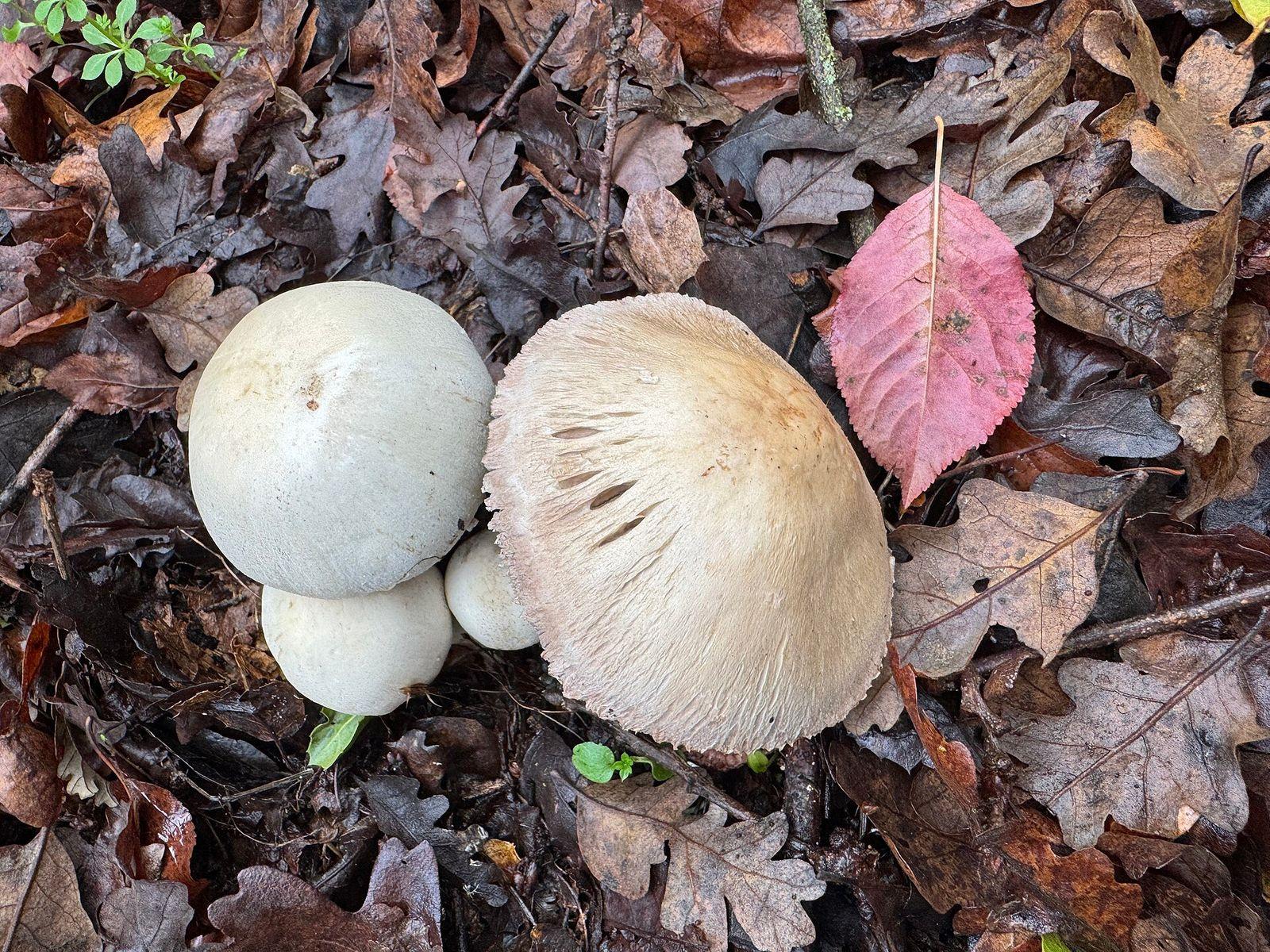
Also called horse agaricus, agaricus arvensis.
The horse mushroom, long called Agaricus arvensis, is a large white Agaricus of pastures and lawns that smells of anise or almond and slowly bruises yellowish. Its gills turn from grayish pink to chocolate brown. The yellow stainer and the white amanitas are the lookalikes field guides warn about.
The tell
Large white cap that slowly bruises yellowish, grayish pink to brown gills, a large ring with a cogwheel pattern beneath, and an anise smell.
Field marks
Cap, underside and stem show in a photo. The spore print does not, and it is often the deciding check.
Where and when
Lookalikes
Each card says how to tell the two apart.
Amanita bisporigera
Destroying angels have white gills at all ages, a white spore print and a sac-like cup at the stem base. They contain amatoxins.
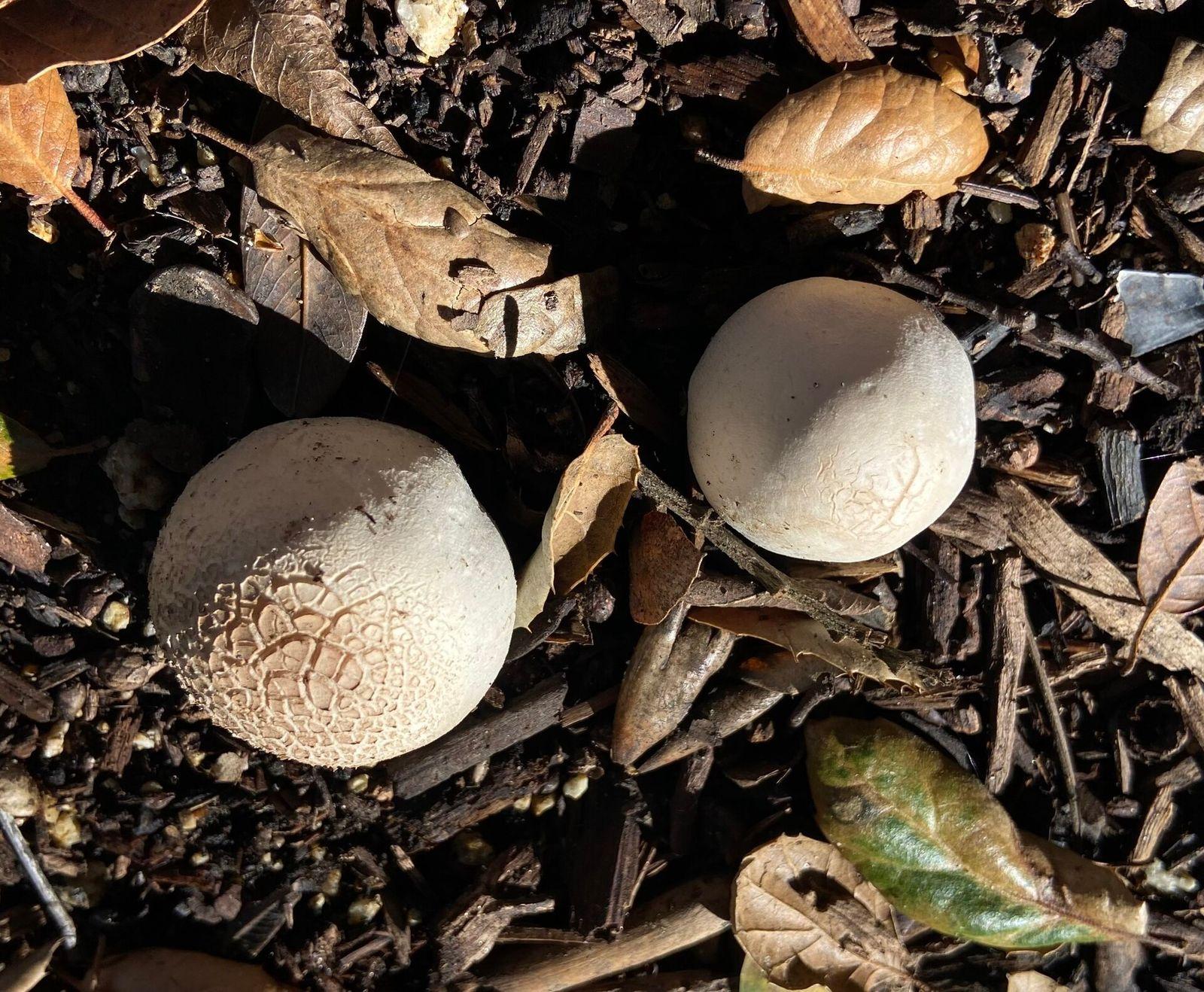
Agaricus xanthodermus
The yellow stainer turns bright chrome yellow quickly when scratched, and the flesh at the base of the stem turns yellow when cut. It smells of ink or phenol rather than anise.
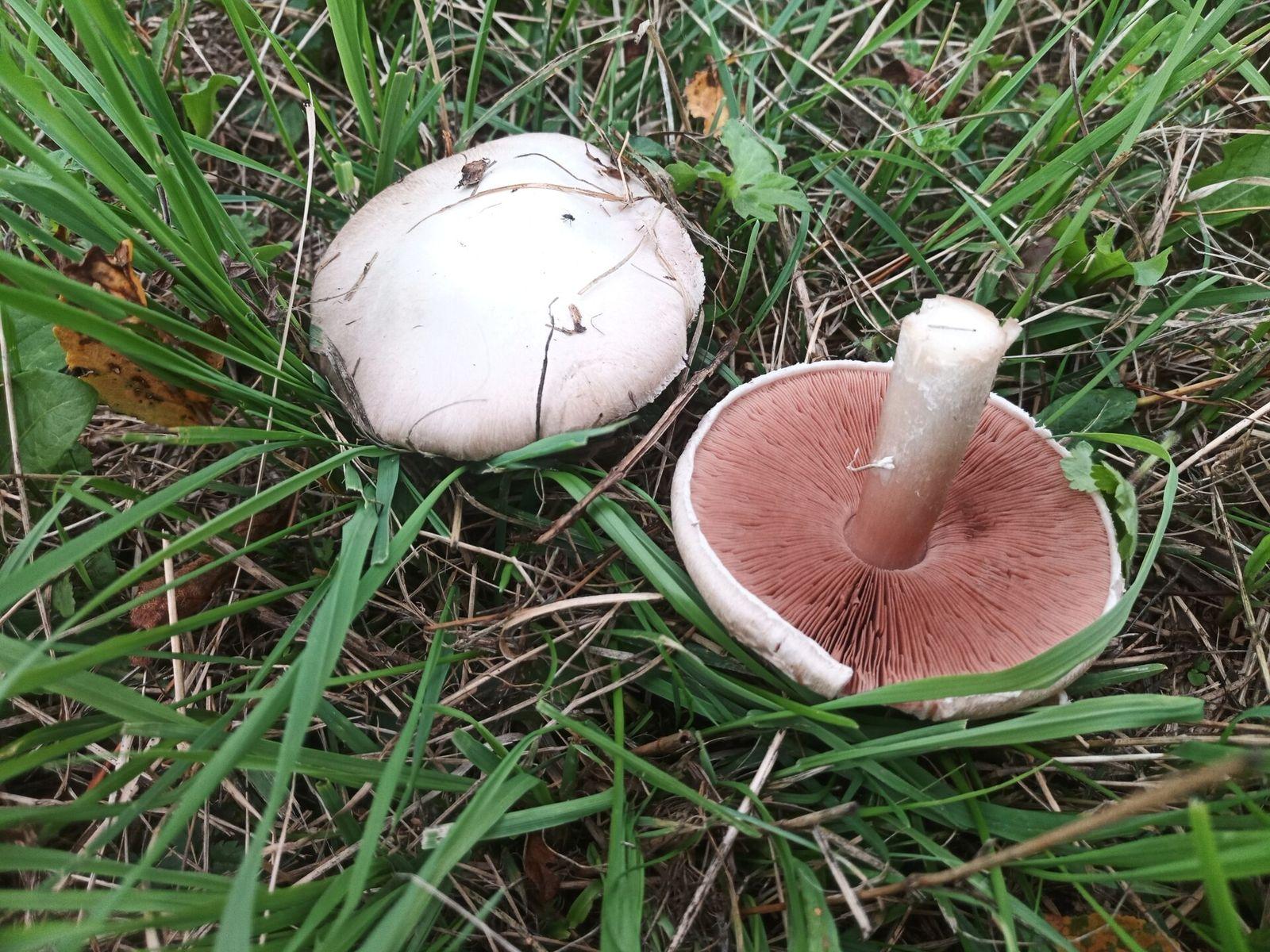
Agaricus campestris
The meadow mushroom is smaller, with bright pink young gills, a thin fragile ring and no anise smell.
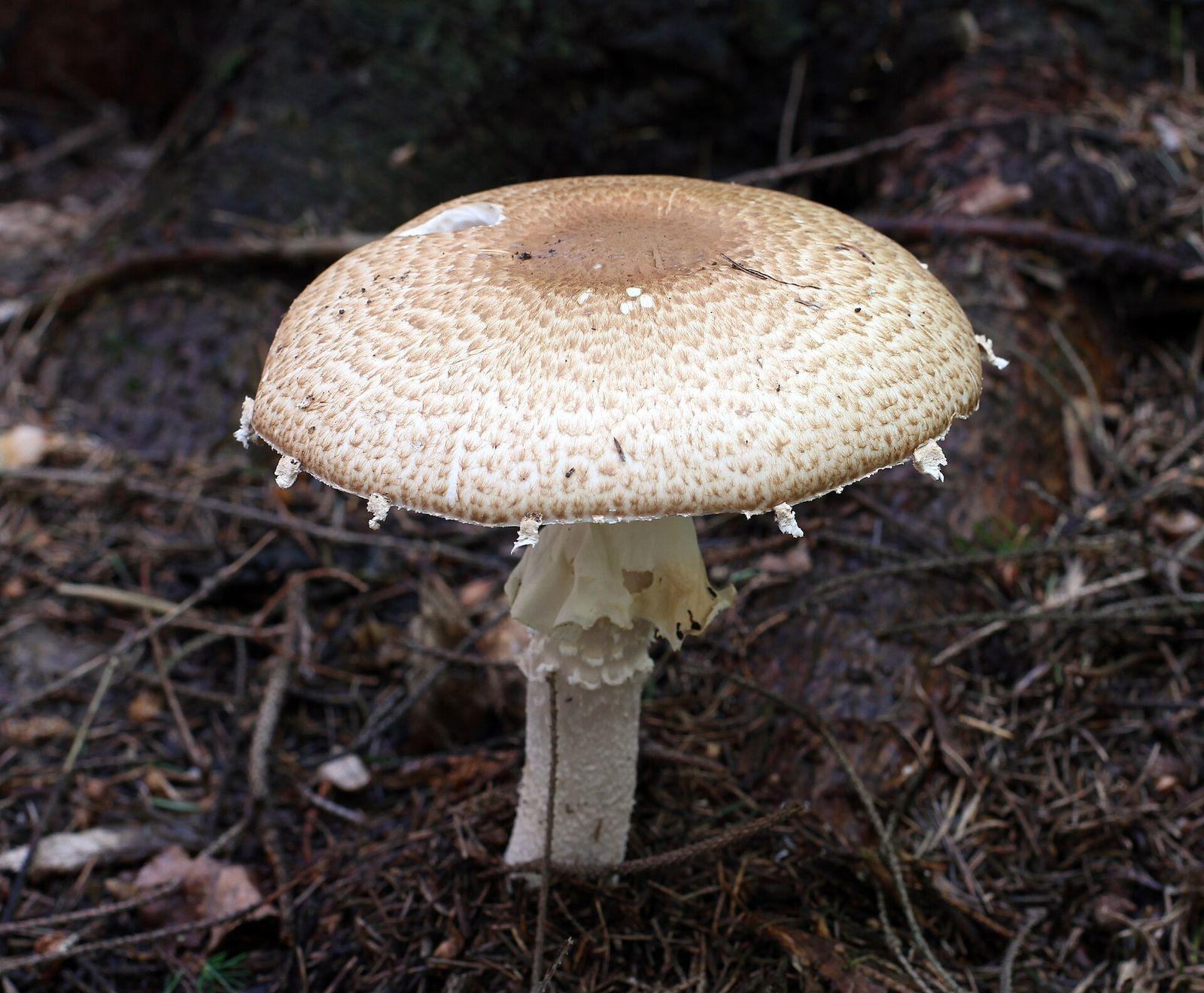
Agaricus augustus
The prince has a cap covered in brown fibrous scales and grows mostly near conifers and on disturbed ground.
Edibility
Field guides list the horse mushroom as edible. The same guides note that it overlaps with the yellow stainer, which causes gastrointestinal upset. The horse mushroom's anise smell and slow, mild yellowing contrast with the yellow stainer's chrome yellow staining and ink-like smell. White Amanita species, which contain amatoxins, are separated by white gills, a white spore print and a cup at the base.
This page states what field guides record. It is not advice to eat, taste or handle anything, and a photo cannot settle edibility. If someone has eaten a wild mushroom that may be toxic, call poison control (1-800-222-1222 in the US) right away, before symptoms start: the deadliest species act hours later.
FAQ
Field guides list it as edible. Its toxic lookalike is the yellow stainer, which stains bright yellow and smells of ink, and its deadly lookalikes are the white amanitas.
Both bruise yellow, but the horse mushroom yellows slowly and mildly and smells of anise. The yellow stainer turns bright chrome yellow within seconds, especially in the flesh at the stem base, and smells of ink or phenol.
It smells of anise or almond, most noticeably when the flesh is cut or crushed. That smell is one of the main differences from the yellow stainer, which smells of ink, phenol or creosote.
Sources
MushroomExpert.com
MykoWeb, California Fungi
Index Fungorum
Waitlist
We will send one email when Mushrooms.id opens, and nothing else.
This opens your email app with the request written for you. Send it and we add you to the list. No email app? Write to hello@mushrooms.id with the subject “Add me to the Mushrooms.id waitlist”.