Destroying angel vs meadow mushroom
- Deadly: Destroying Angel
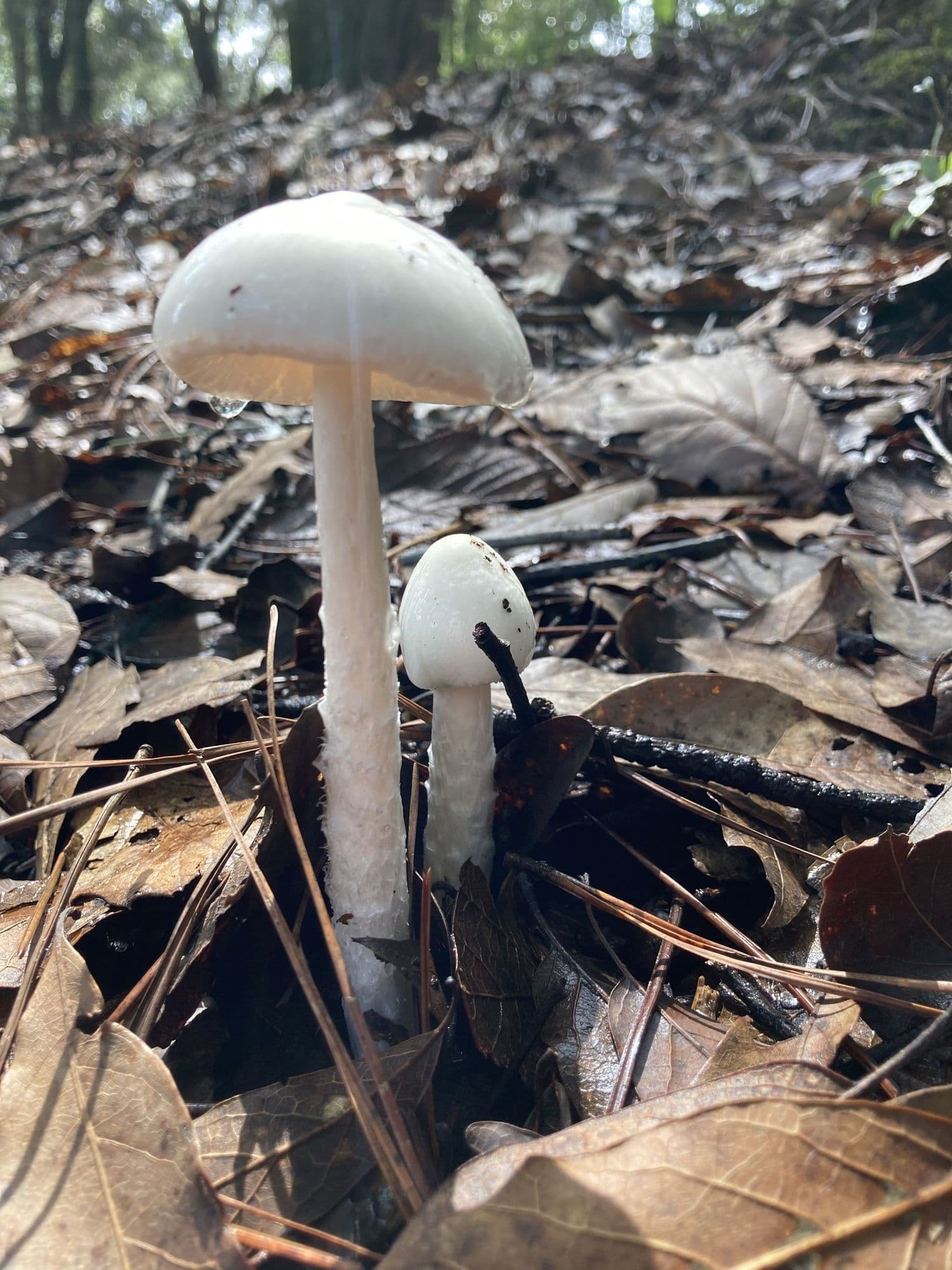
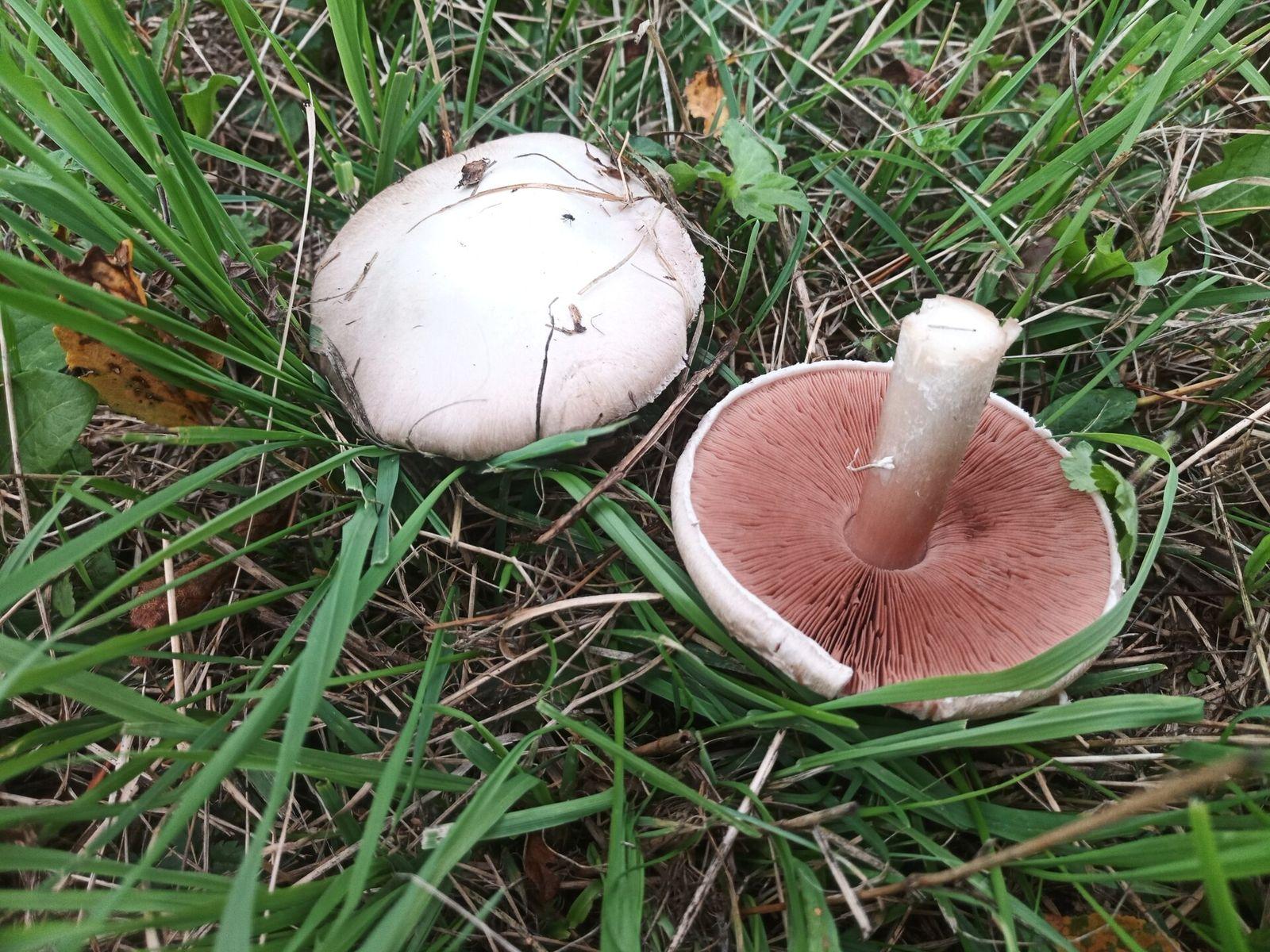
Destroying angels keep white gills, print white and hide a cup at the base. Meadow mushrooms have pink to brown gills and a brown print.
Quick answer
Gills that stay white, a white spore print and a white sac-like cup around a bulb at the stem base, often buried, mark the death cap; the meadow mushroom's gills are bright pink when young and chocolate brown later, its print is chocolate brown, and it has no cup. Pale death caps can be nearly white on top, so cap color alone does not rule one out.
Deadly lookalike
Unlike the meadow mushroom, the death cap (Amanita phalloides) contains amatoxins, which halt protein production in cells by binding the enzyme RNA polymerase II. The CDC describes a delay of 6 to 24 hours before vomiting and diarrhea begin, an apparent recovery 24 to 36 hours after the meal, and liver and multiorgan failure typically 3 to 5 days after it. Amatoxins are heat stable and are not inactivated by cooking. In the 2016 northern California outbreak, three of 14 patients needed liver transplants.
If someone has eaten a wild mushroom and feels unwell, or may have eaten one of these, call poison control now: 1-800-222-1222 in the US. Do not wait for symptoms.
Side by side
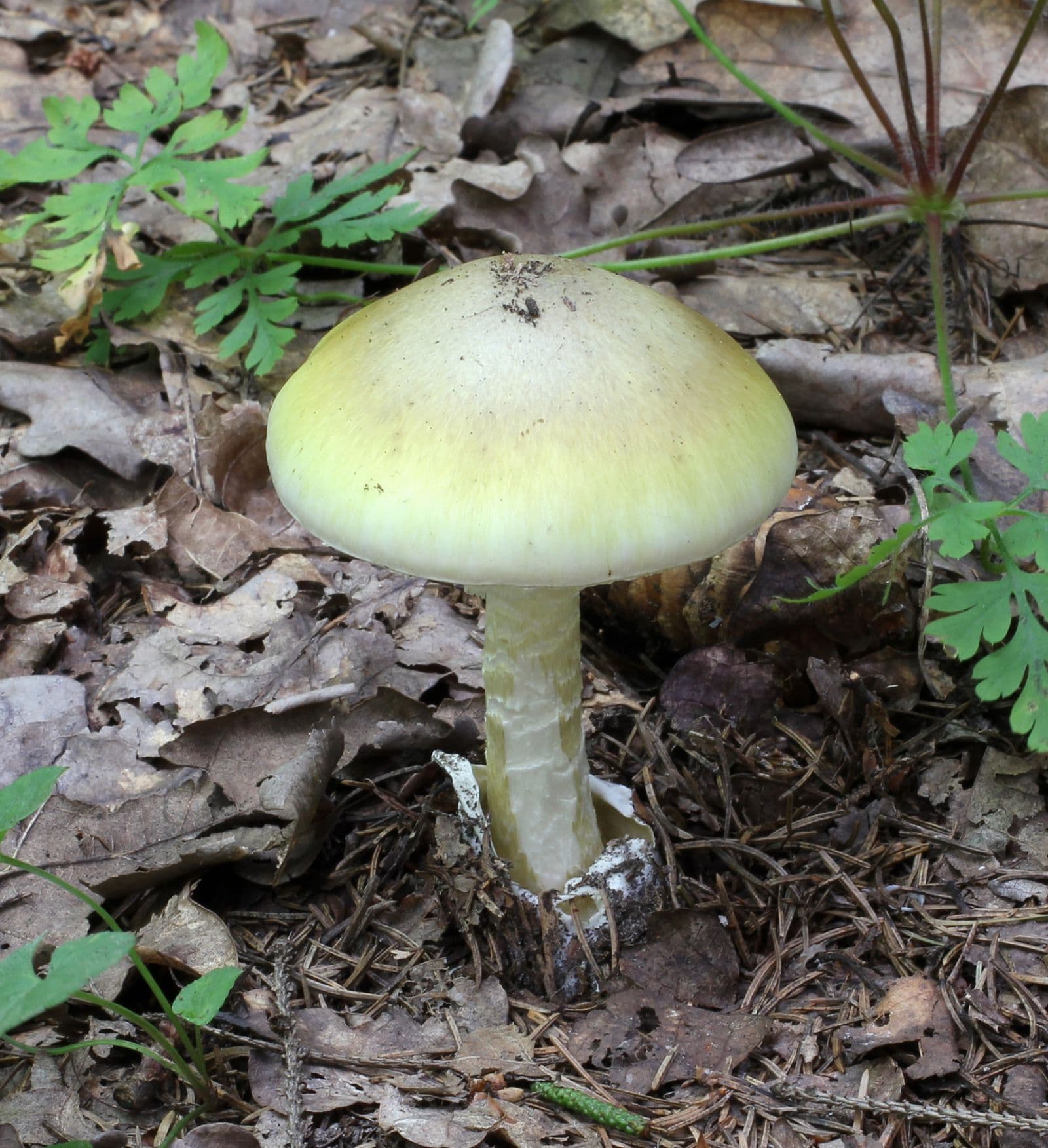
The tellGreenish to yellow-olive cap, white gills, a skirt-like ring, and a white sac-like cup around the base of the stem.
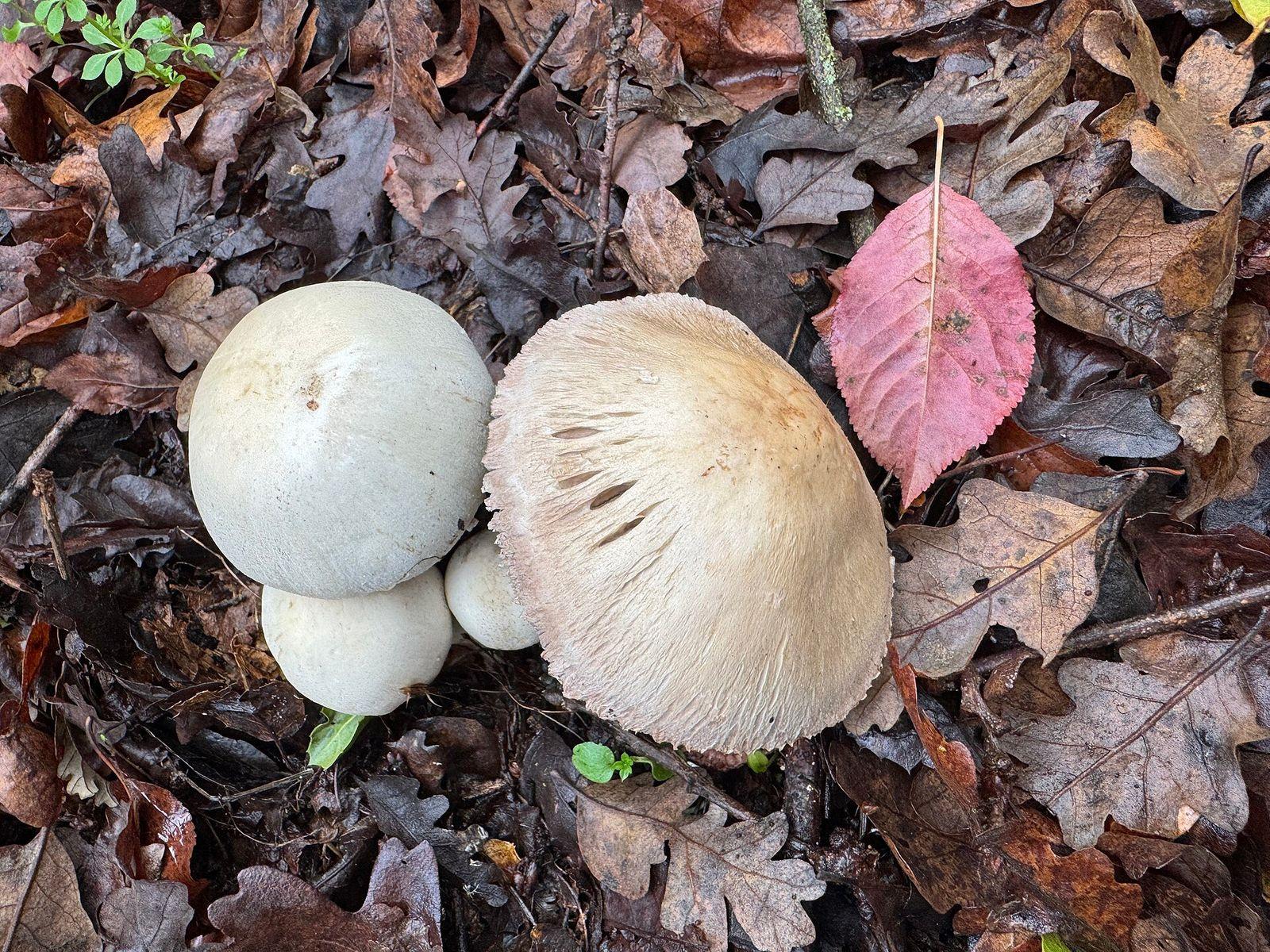
The tellWhite cap on a short stem, with bright pink gills that turn chocolate brown, growing in grass.
| Feature | Death Cap | Meadow Mushroom |
|---|---|---|
| Gills | Death CapWhite, staying white. | Meadow MushroomBright pink when young, then chocolate brown to blackish brown. |
| Spore print | Death CapWhite. | Meadow MushroomChocolate brown to blackish brown. |
| Stem base | Death CapA rounded bulb in a white, membranous sac-like cup. | Meadow MushroomNo bulb and no cup. |
| Cap color | Death CapYellow-green to olive or bronze, sometimes pale or nearly white. | Meadow MushroomWhite to grayish white. |
| Ring | Death CapA thin, white, skirt-like ring that can tear away. | Meadow MushroomA thin, fragile ring that often disappears. |
| Habitat | Death CapUnder oaks and planted trees; in cities, sometimes in irrigated lawns near host trees. | Meadow MushroomOpen lawns, pastures, meadows and golf courses. |
FAQ
Yes. They grow in irrigated lawns and grass strips near host trees, with the cup hidden below ground.
No. Caps are usually yellow-green to olive or bronze, but some are pale or nearly white. White gills, a white print and the cup are more reliable than cap color.
Sources
MushroomExpert.com
MushroomExpert.com
Beaty Biodiversity Museum, University of British Columbia
CDC, Morbidity and Mortality Weekly Report
Keep checking
This page states what field guides record. It is not advice to eat, taste or handle anything, and a photo cannot settle edibility. If someone has eaten a wild mushroom that may be toxic, call poison control (1-800-222-1222 in the US) right away, before symptoms start: the deadliest species act hours later.
More comparisons
Destroying angels keep white gills, print white and hide a cup at the base. Meadow mushrooms have pink to brown gills and a brown print.
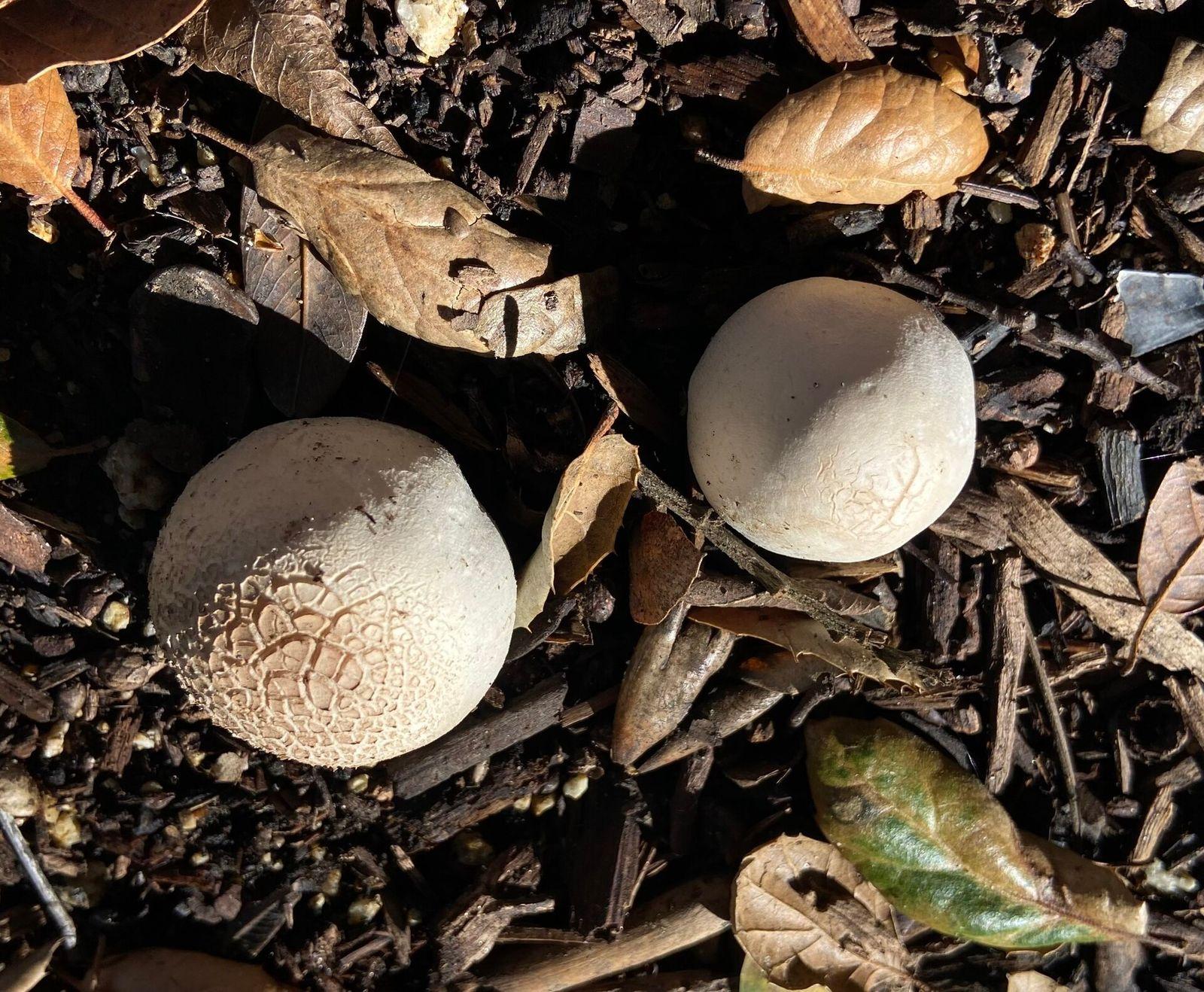
Scratched or cut, a yellow stainer's cap and stem base turn chrome yellow, and it smells of ink. A meadow mushroom does not yellow and smells pleasant.
Horse mushrooms are larger, smell of almond, and have a big ring with a cogwheel underside. Meadow mushrooms have bright pink gills and a thin ring.
Waitlist
We will send one email when Mushrooms.id opens, and nothing else.
This opens your email app with the request written for you. Send it and we add you to the list. No email app? Write to hello@mushrooms.id with the subject “Add me to the Mushrooms.id waitlist”.