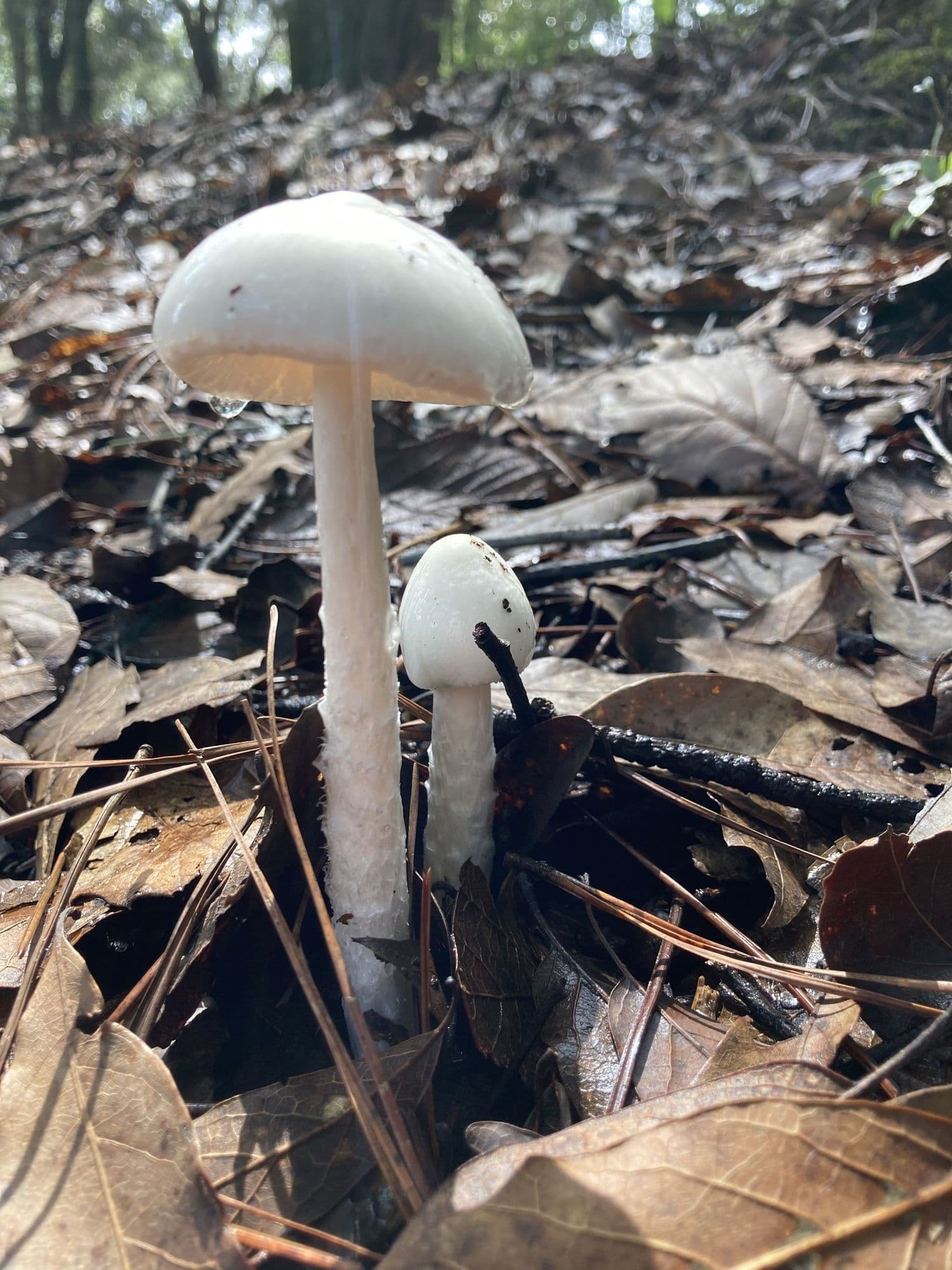
Deadly
Destroying Angel
Amanita bisporigera
Sliced lengthwise, a young Amanita shows the outline of a cap, gills and stem inside a white sac. An aborted Entoloma is solid and marbled pink inside with no mushroom outline.
Entoloma abortivum
Also called aborted entoloma, aborting entoloma, hunter's heart.
Shrimp of the woods is the name for the lumpy, whitish masses that form where Entoloma abortivum meets honey mushrooms. The same fungus also produces a gray, gilled mushroom with pink spores. Both forms appear in eastern hardwood forests in fall.
Entoloma abortivum
Photo coming
The tell
Whitish, lumpy, irregular balls with marbled pinkish insides, growing near honey mushrooms.
Field marks
Cap, underside and stem show in a photo. The spore print does not, and it is often the deciding check.
Where and when
Lookalikes
Each card says how to tell the two apart.
Amanita bisporigera
Sliced lengthwise, a young Amanita shows the outline of a cap, gills and stem inside a white sac. An aborted Entoloma is solid and marbled pink inside with no mushroom outline.
Entoloma sinuatum
Photo coming
Entoloma sinuatum
A larger, pink-spored Entoloma with a paler, often yellowish-gray cap. It is one reason the gilled form of shrimp of the woods is rarely collected.
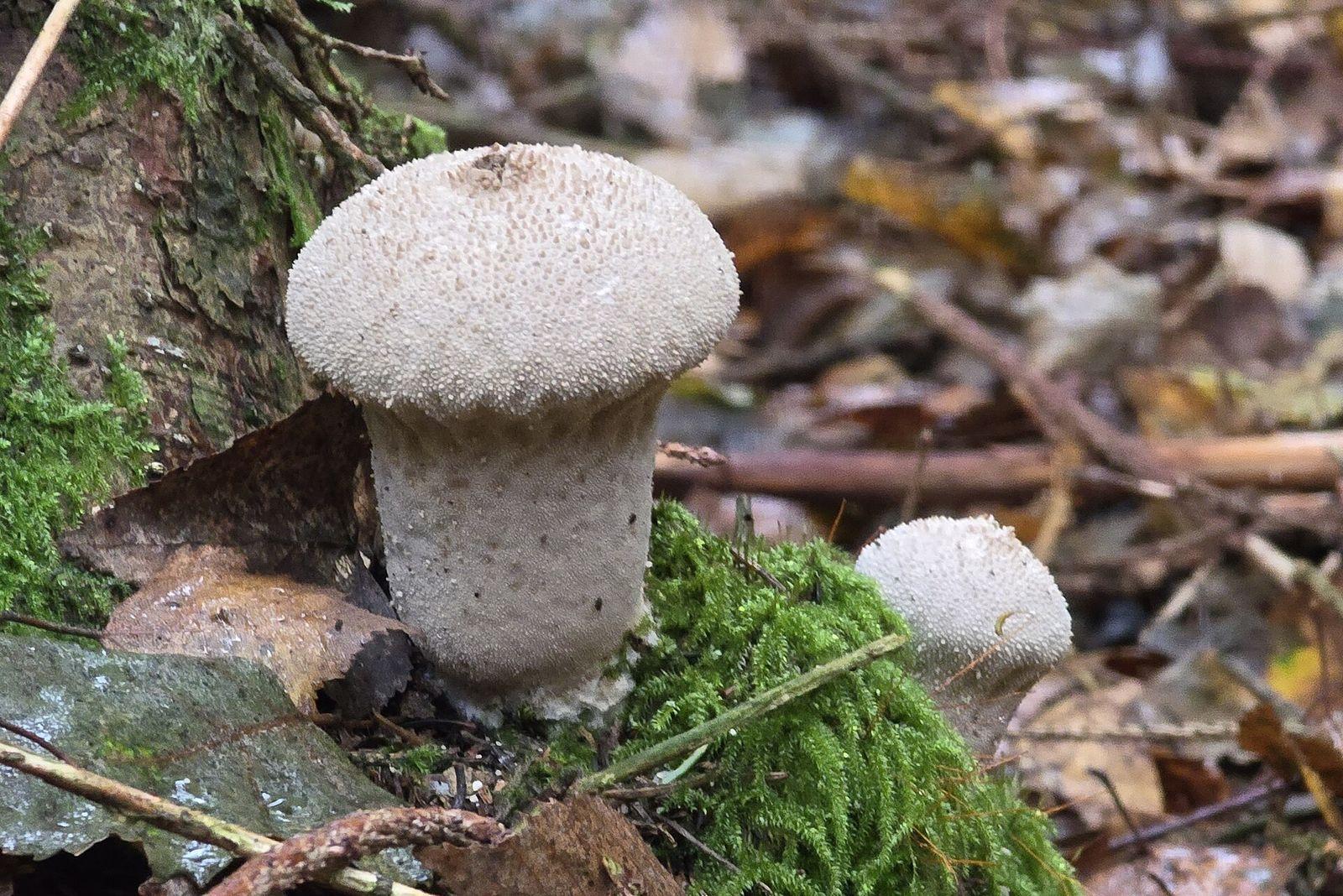
Lycoperdon perlatum
Rounder and covered in small spines or warts, with a stem-like base and a pure white, uniform interior that later turns to olive-brown spore dust.
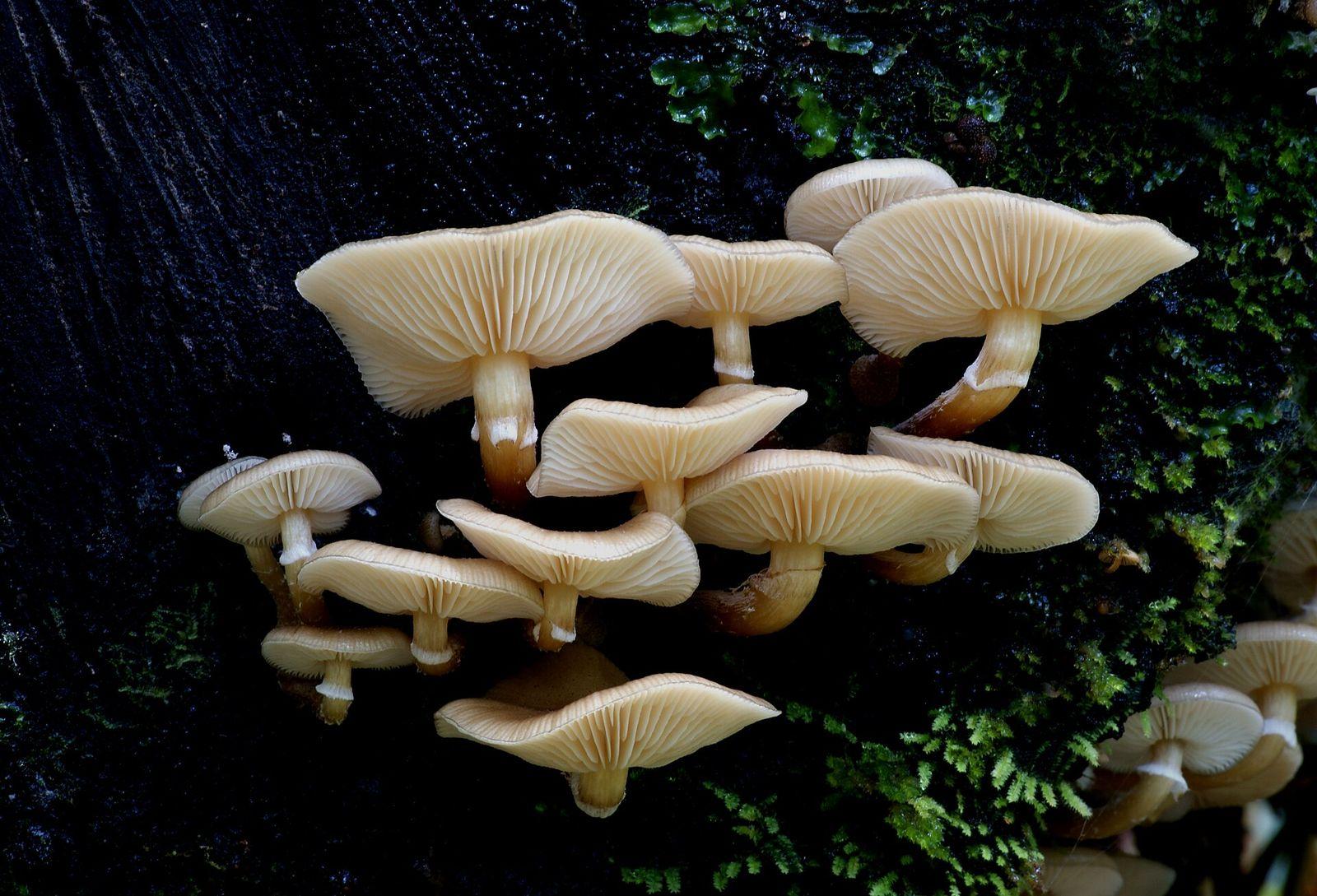
Armillaria mellea
Often growing right beside it. Honey mushrooms have honey-colored caps, white gills, a ring on most species and a white spore print.
Edibility
Field guides list the aborted form as edible. The gilled form is also reported edible, but toxic gray, pink-spored Entoloma species look like it. How the lumps form has been debated. Older guides say honey mushrooms attack the Entoloma; a 2001 study by Czederpiltz, Volk and Burdsall found the reverse.
This page states what field guides record. It is not advice to eat, taste or handle anything, and a photo cannot settle edibility. If someone has eaten a wild mushroom that may be toxic, call poison control (1-800-222-1222 in the US) right away, before symptoms start: the deadliest species act hours later.
FAQ
It is the aborted form of Entoloma abortivum: whitish, lumpy balls that form when the fungus interacts with honey mushrooms. The lumps have firm, pinkish-marbled flesh and a mealy smell.
Irregular white to pinkish-gray balls 1 to 4 inches across, often in clusters near rotting wood. Gray, gilled mushrooms of the same species and honey mushrooms often grow in the same patch.
In eastern North American hardwood forests, on the ground around stumps and logs where honey mushrooms grow. It appears in late summer and fall.
Sources
MushroomExpert.com
Fungi Growing on Wood, Gary Emberger (MushroomExpert.com)
Index Fungorum
Waitlist
We will send one email when Mushrooms.id opens, and nothing else.
This opens your email app with the request written for you. Send it and we add you to the list. No email app? Write to hello@mushrooms.id with the subject “Add me to the Mushrooms.id waitlist”.