Deadly
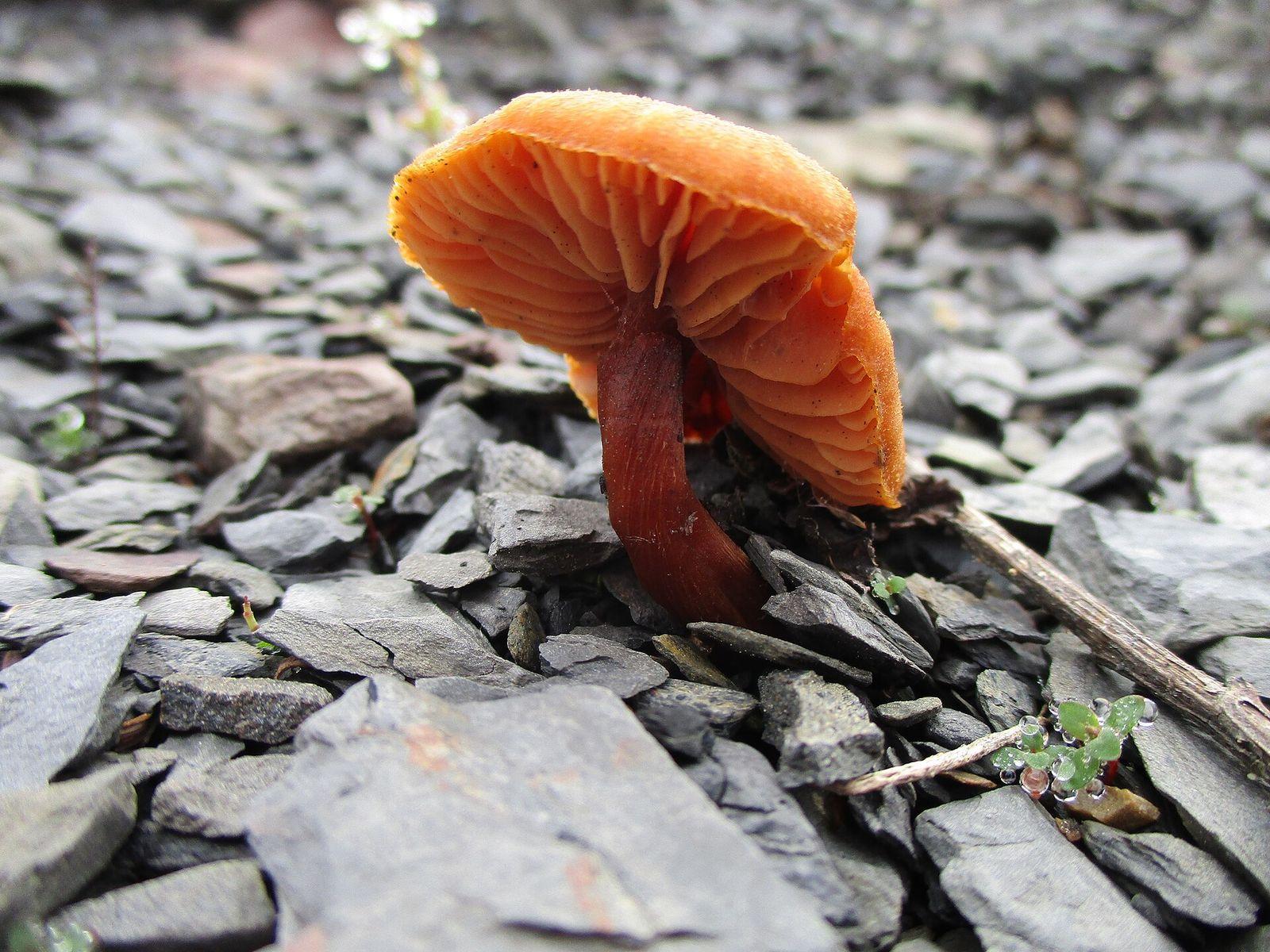
Deadly Galerina
Galerina marginata
Galerina is smaller, with a smooth brown cap, a thin ring, and a rusty brown spore print. The honey mushroom's spore print is white. Galerina contains amatoxins, the same liver toxins as the death cap.
Armillaria mellea
Also called honey fungus, bootlace fungus.
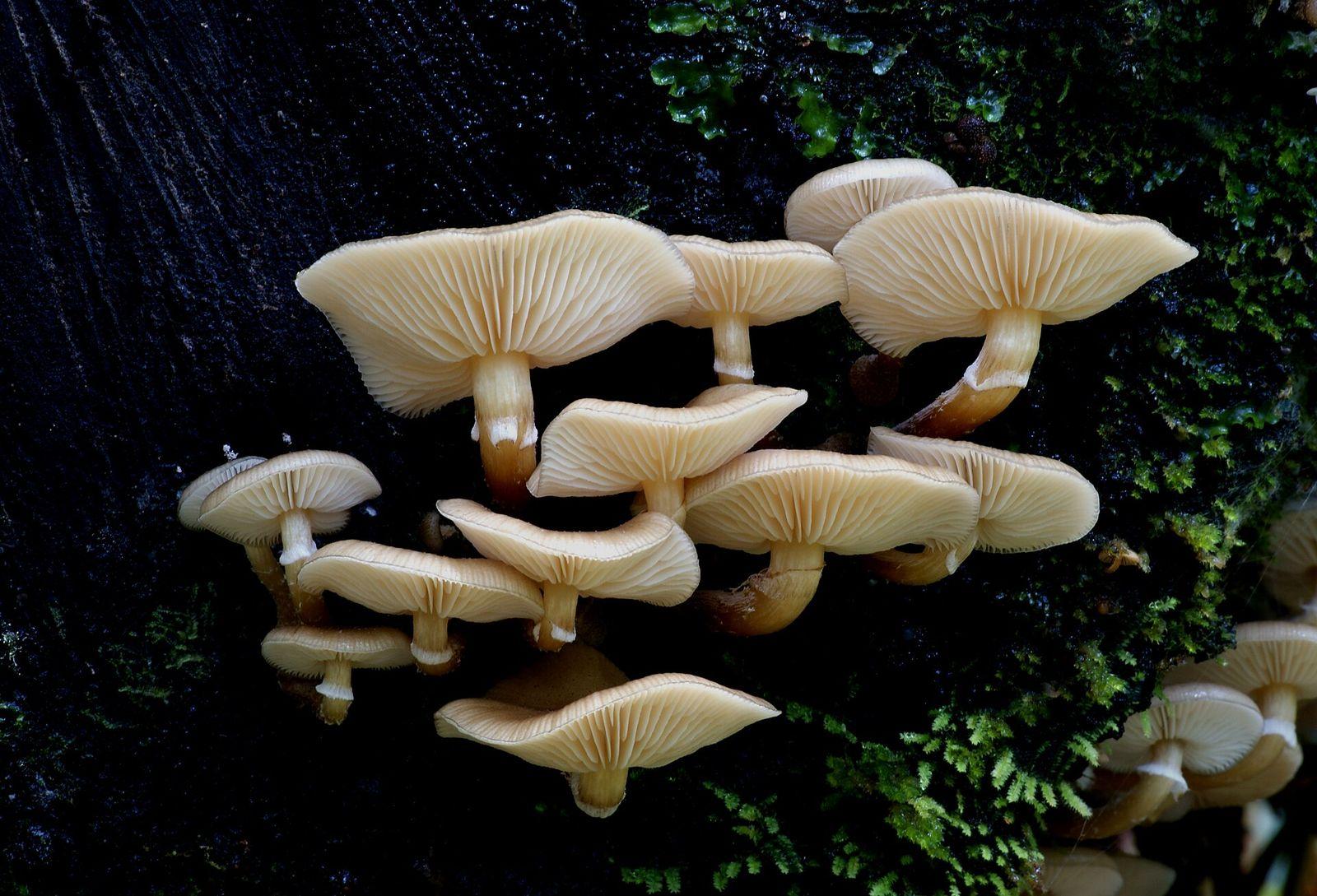
The honey mushroom fruits in large clusters on stumps, roots and the bases of hardwood trees in fall. It is a tree parasite that spreads by black, bootlace-like strands, and it is often confused with the deadly galerina, which grows in the same places.
The tell
Dense clusters of honey-colored caps on wood, with a ring on the stem and a white spore print.
Field marks
Cap, underside and stem show in a photo. The spore print does not, and it is often the deciding check.
Where and when
Lookalikes
Each card says how to tell the two apart.
Galerina marginata
Galerina is smaller, with a smooth brown cap, a thin ring, and a rusty brown spore print. The honey mushroom's spore print is white. Galerina contains amatoxins, the same liver toxins as the death cap.
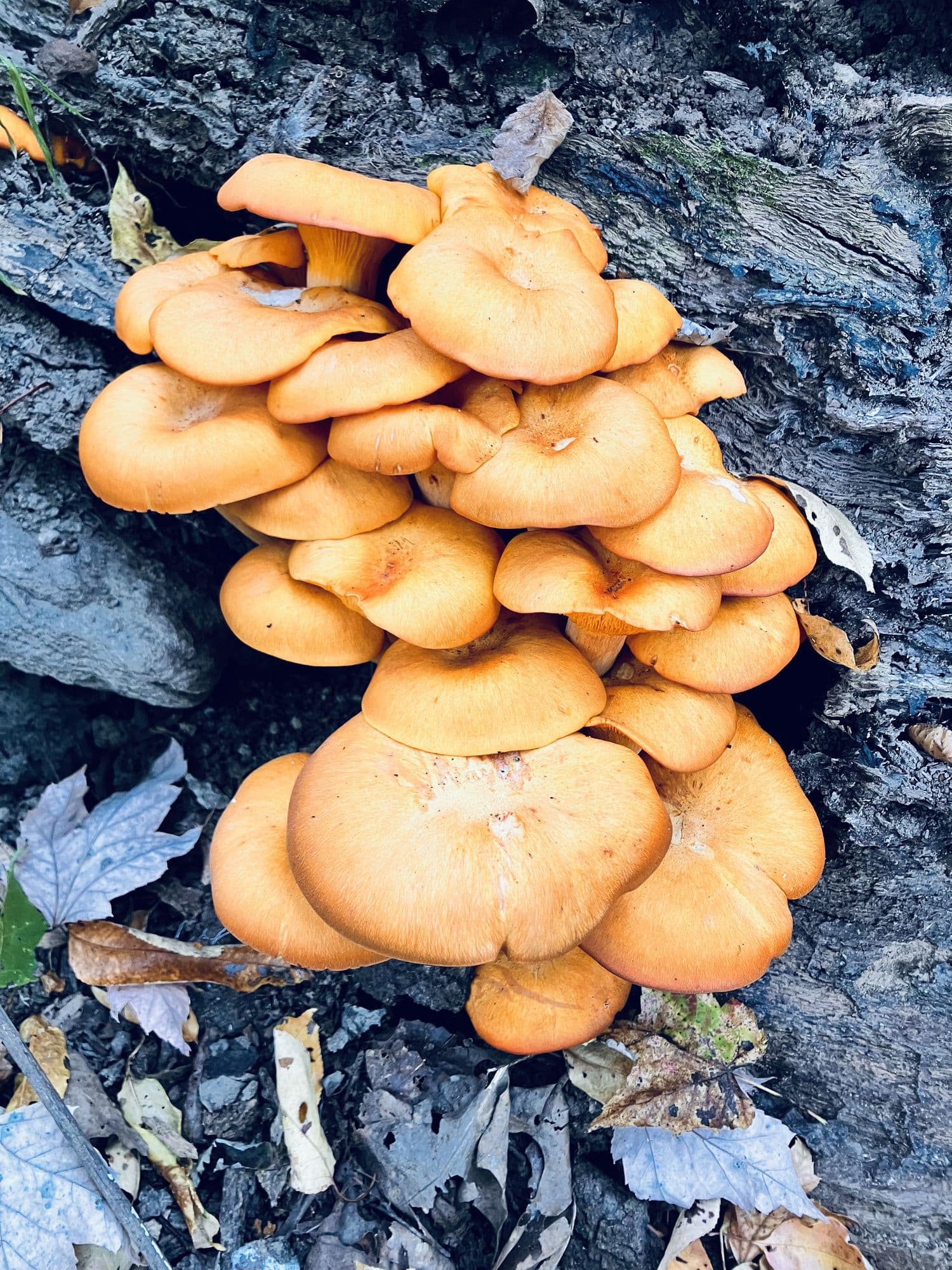
Omphalotus illudens
The jack-o'-lantern is bright orange throughout, including the flesh, has sharp-edged gills that run down the stem, and has no ring. It causes severe vomiting and diarrhea.
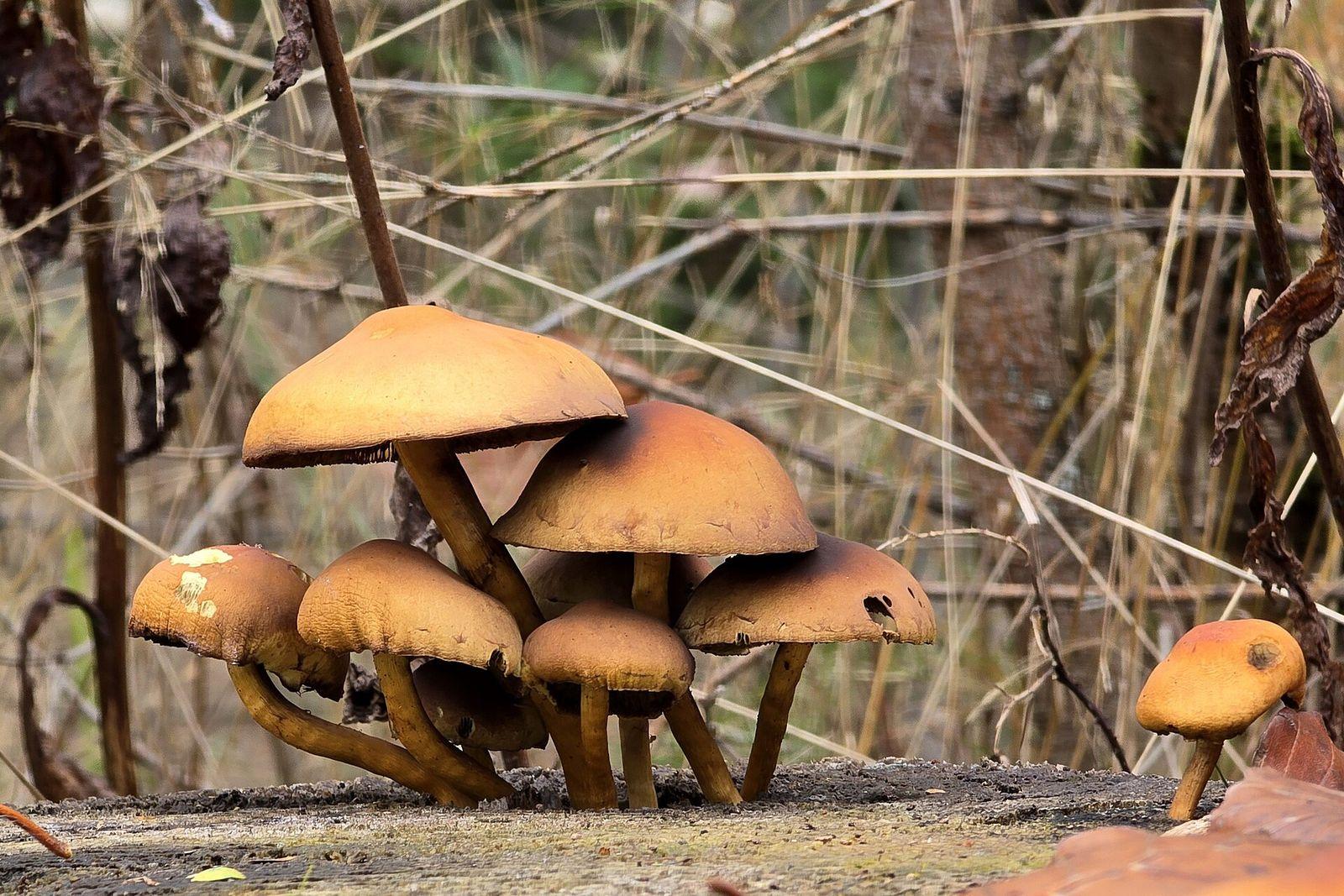
Hypholoma fasciculare
Sulphur tuft has sulfur-yellow caps and greenish-yellow gills that darken to purple-brown, leaving a purple-brown spore print. Its flesh is bitter.
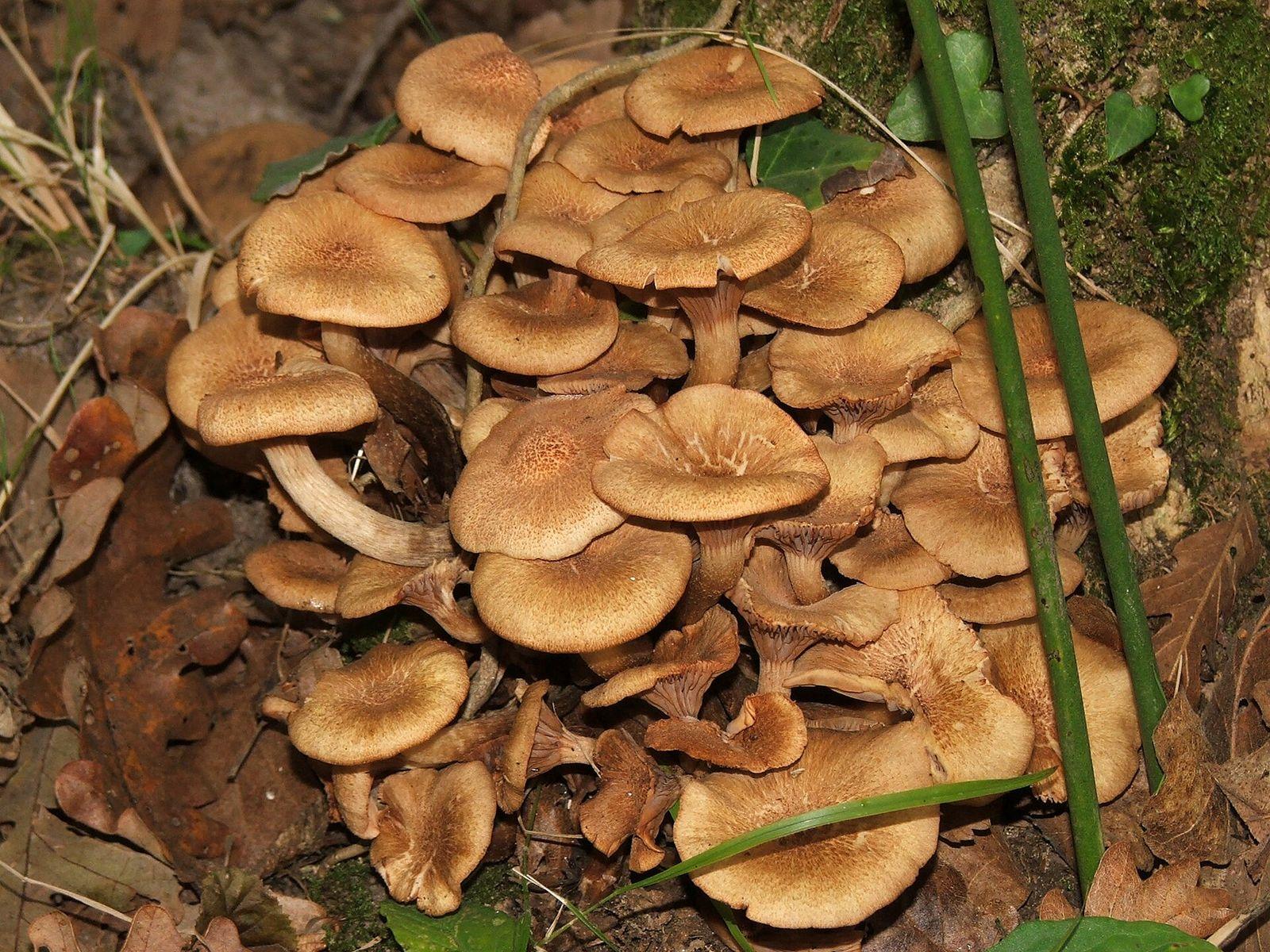
Desarmillaria caespitosa
A close relative with a similar look and the same white spore print, but its stem has no ring at any age. It is most common in the Southeast.
Edibility
Field guides list the honey mushroom as edible when thoroughly cooked. The same guides record gastrointestinal upset when it is eaten raw or undercooked, and in some people even when well cooked. Its most dangerous lookalike, the deadly galerina, contains amatoxins and grows on the same kinds of wood, which is why guides stress the white spore print.
This page states what field guides record. It is not advice to eat, taste or handle anything, and a photo cannot settle edibility. If someone has eaten a wild mushroom that may be toxic, call poison control (1-800-222-1222 in the US) right away, before symptoms start: the deadliest species act hours later.
FAQ
Field guides list it as edible when thoroughly cooked, but it causes stomach upset when eaten raw or undercooked, and some people react to it even when cooked. The bigger risk is confusion with the deadly galerina.
By spore print. Honey mushrooms print white; deadly galerina prints rusty brown. Galerina is also smaller, with a smooth brown cap and a thin, fragile ring.
Yes. Armillaria species cause Armillaria root rot, which weakens and kills hardwoods and some conifers. The fungus spreads underground and under bark by black, bootlace-like rhizomorphs and keeps feeding on the wood after the tree dies.
Sources
MushroomExpert.com
Fungi Growing on Wood, Gary Emberger (MushroomExpert.com)
Missouri Department of Conservation
Index Fungorum
Also on Mushrooms.id
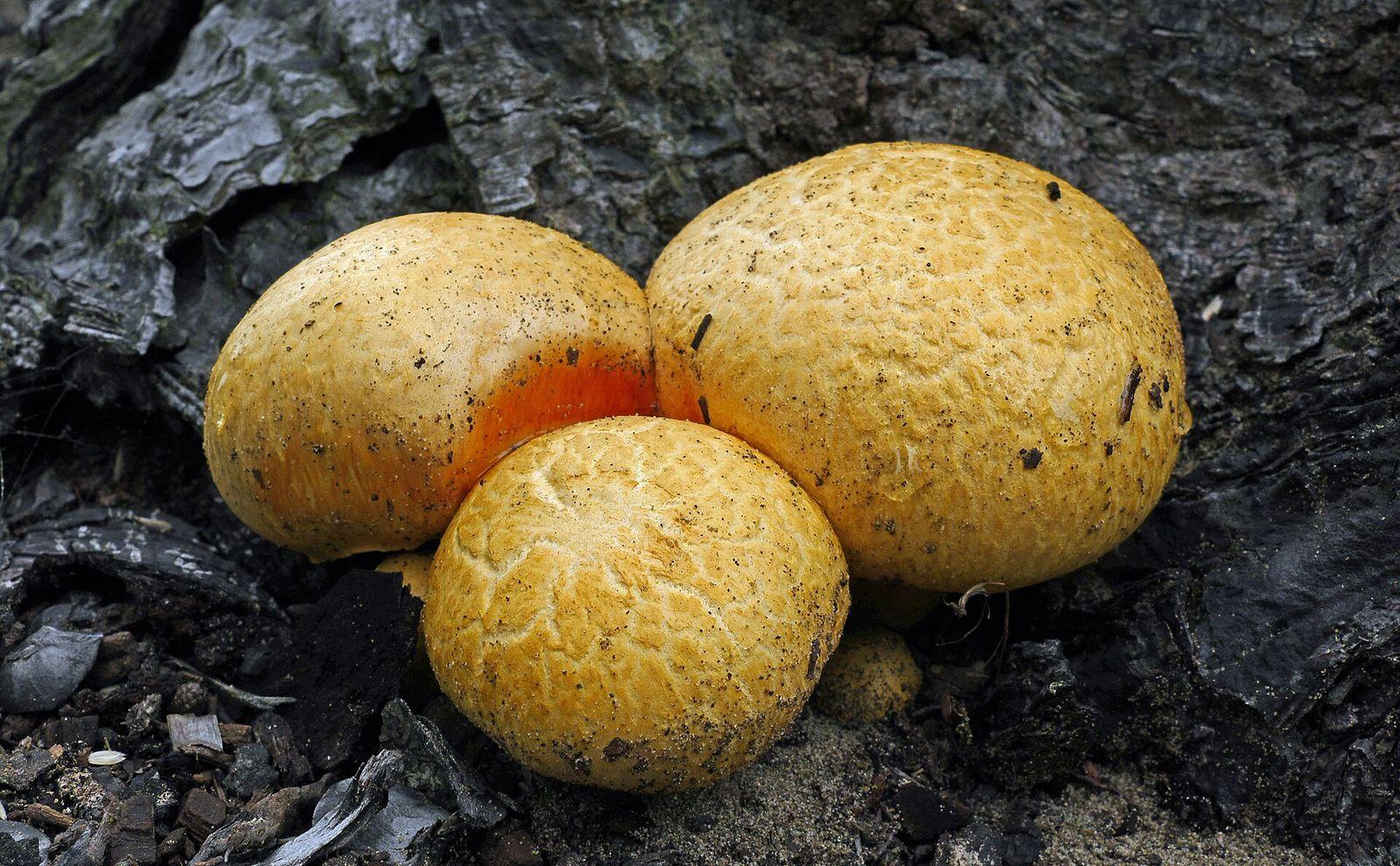
Gymnopilus junonius
A large, orange-yellow cluster on wood with a ring on a thick stem and a rusty orange spore print.
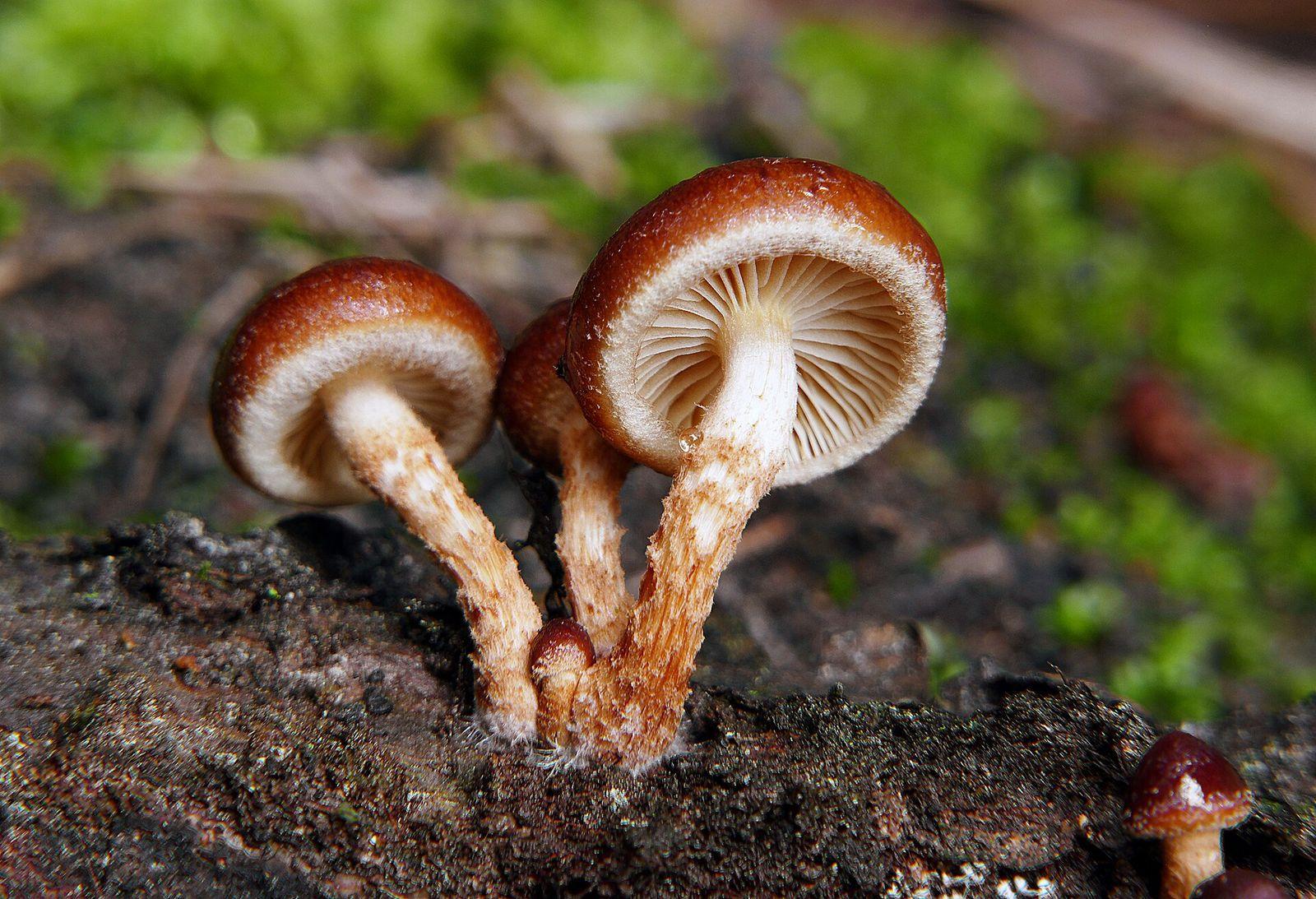
Hypholoma lateritium
Clusters of brick-red caps with a paler edge on hardwood stumps late in the fall, with grayish gills and a purple-brown spore print.
Entoloma abortivum
Photo coming
Entoloma abortivum
Whitish, lumpy, irregular balls with marbled pinkish insides, growing near honey mushrooms.
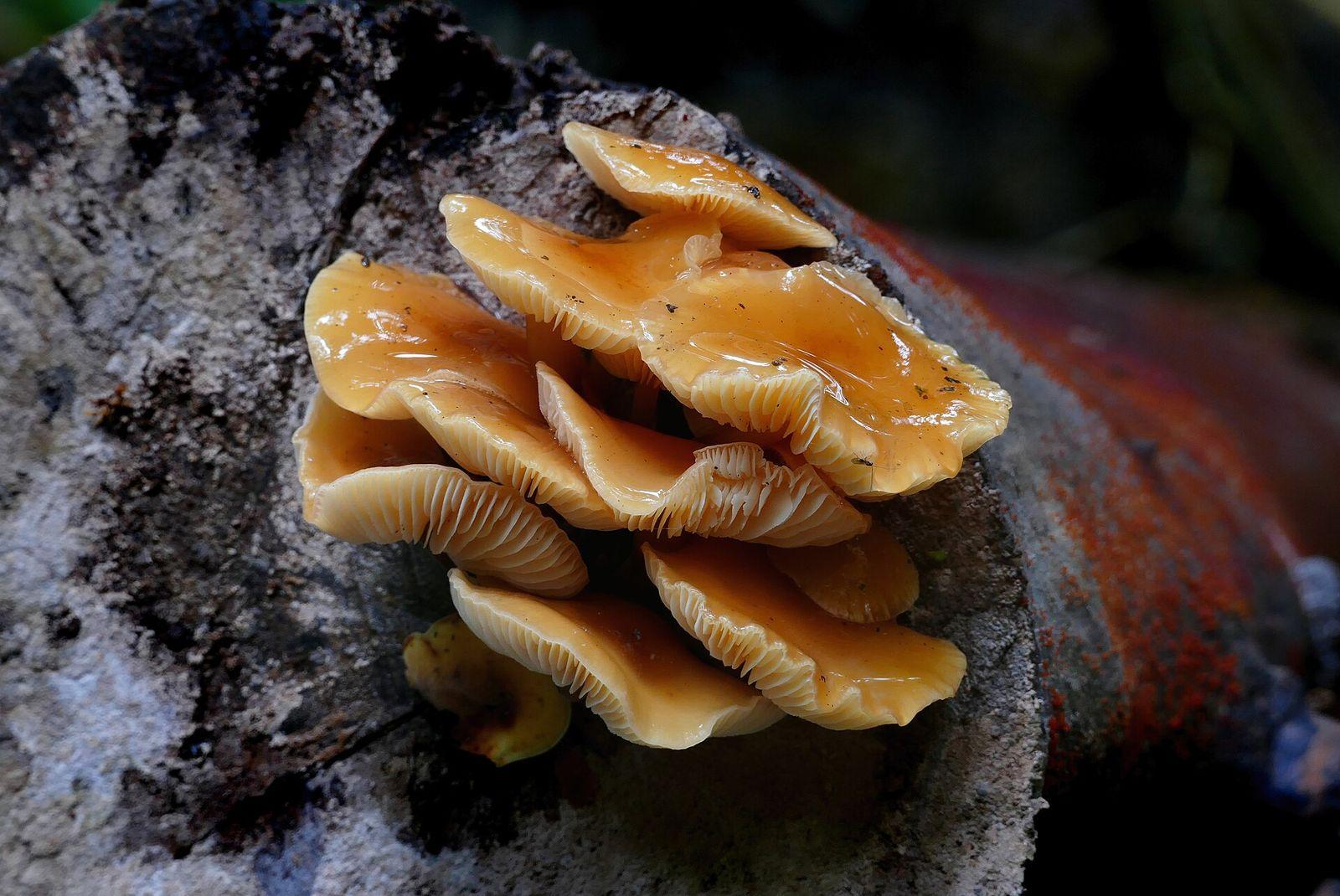
Flammulina velutipes
Sticky orange-brown caps on dead hardwood in cold weather, on stems that turn dark brown and velvety from the base up.
Waitlist
We will send one email when Mushrooms.id opens, and nothing else.
This opens your email app with the request written for you. Send it and we add you to the list. No email app? Write to hello@mushrooms.id with the subject “Add me to the Mushrooms.id waitlist”.