Deadly
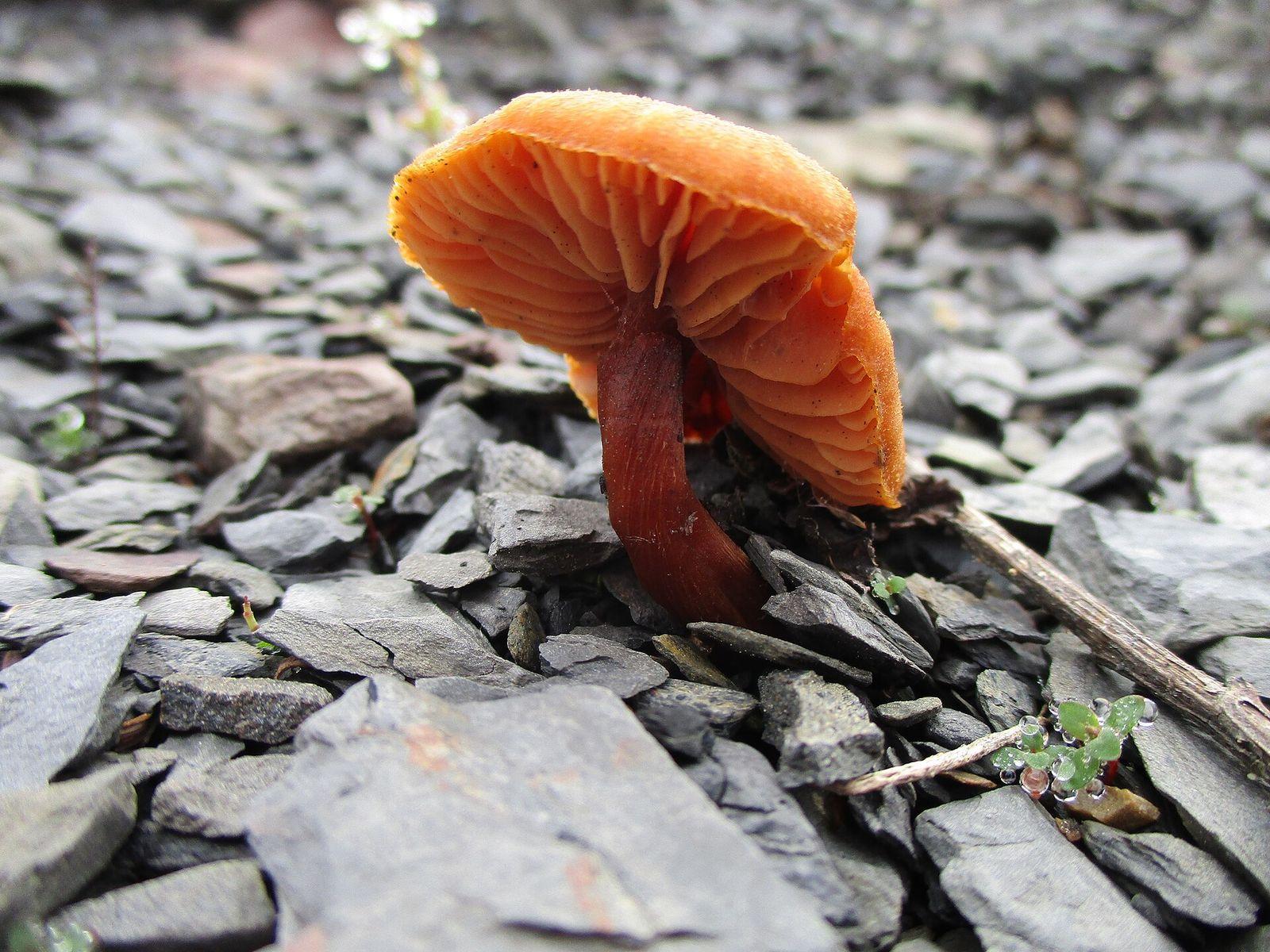
Deadly Galerina
Galerina marginata
Galerina shares a rusty brown spore print and grows on wood, but it is far smaller, with a thin stem and a smooth brown cap rarely over 1.5 inches across. It contains amatoxins.
Gymnopilus junonius
Also called spectacular rustgill, gymnopilus spectabilis.
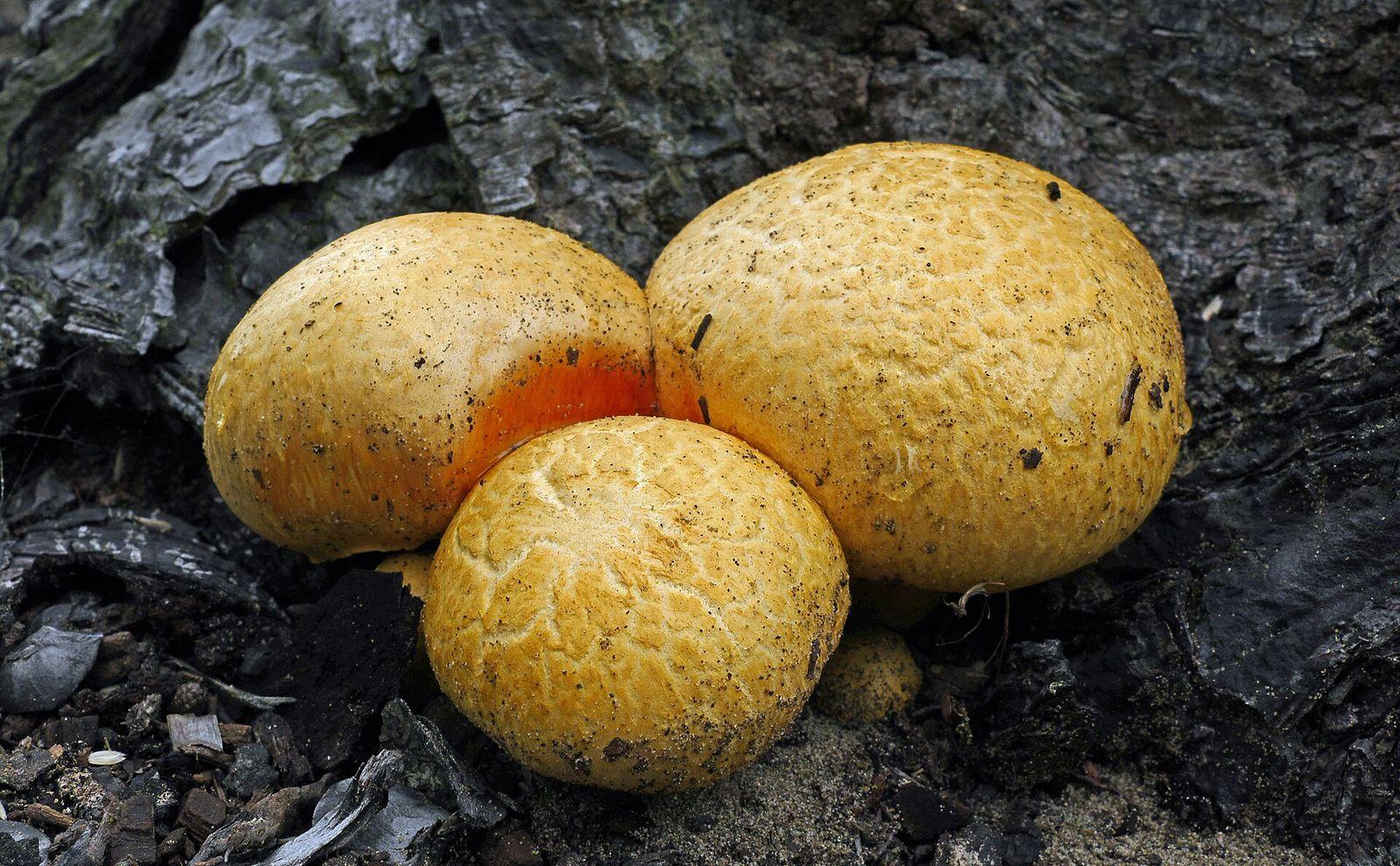
The big laughing gym is a large, golden-orange mushroom that grows in clusters on stumps, logs and tree bases. Its bright color and size lead people to mistake it for honey mushrooms or chanterelles. Field guides list it as poisonous, and its flesh is very bitter.
The tell
A large, orange-yellow cluster on wood with a ring on a thick stem and a rusty orange spore print.
Field marks
Cap, underside and stem show in a photo. The spore print does not, and it is often the deciding check.
Where and when
Lookalikes
Each card says how to tell the two apart.
Galerina marginata
Galerina shares a rusty brown spore print and grows on wood, but it is far smaller, with a thin stem and a smooth brown cap rarely over 1.5 inches across. It contains amatoxins.
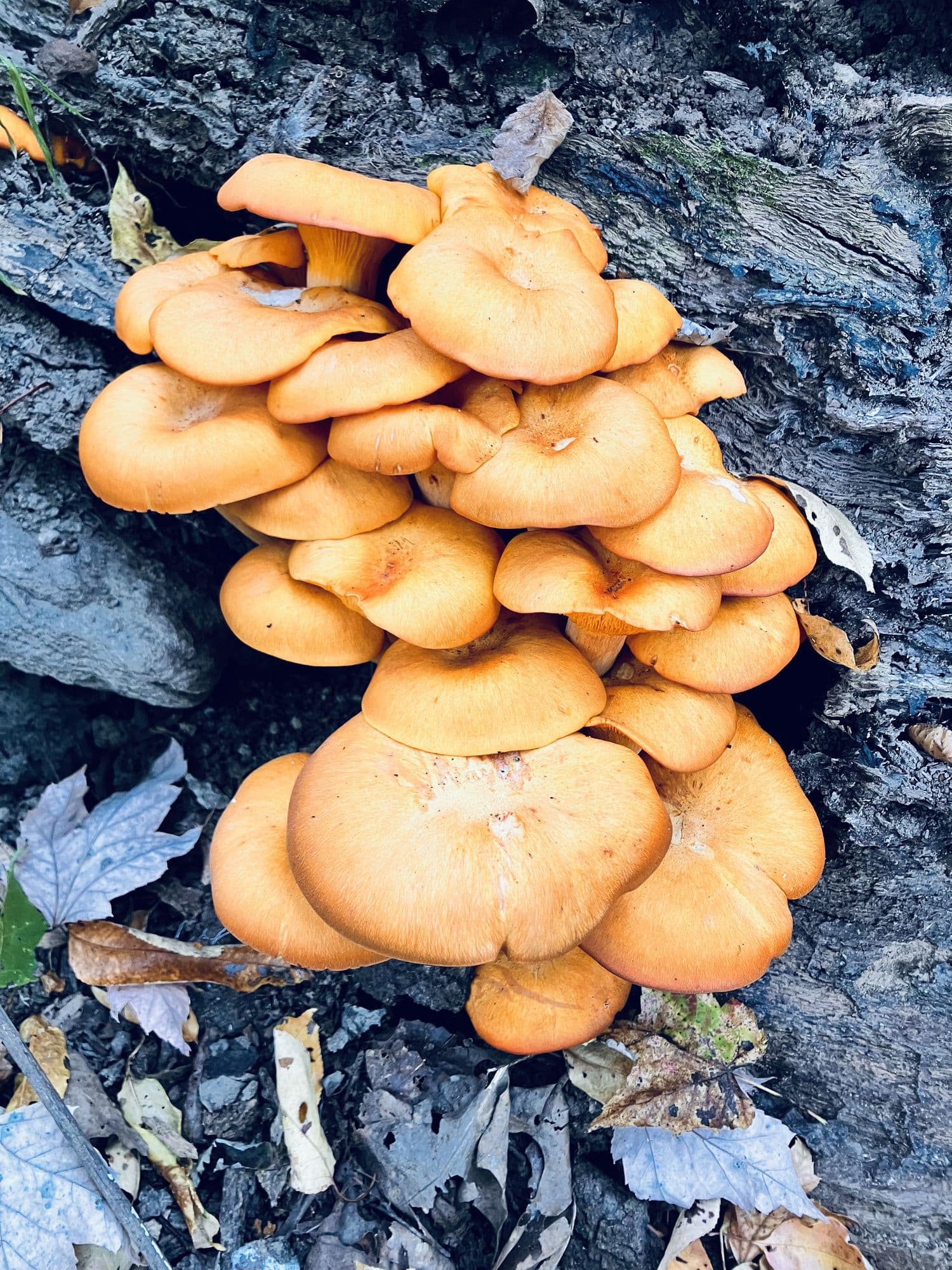
Omphalotus illudens
The jack-o'-lantern is bright orange with gills that run down the stem, has no ring, and leaves a whitish to pale cream spore print rather than rusty orange.
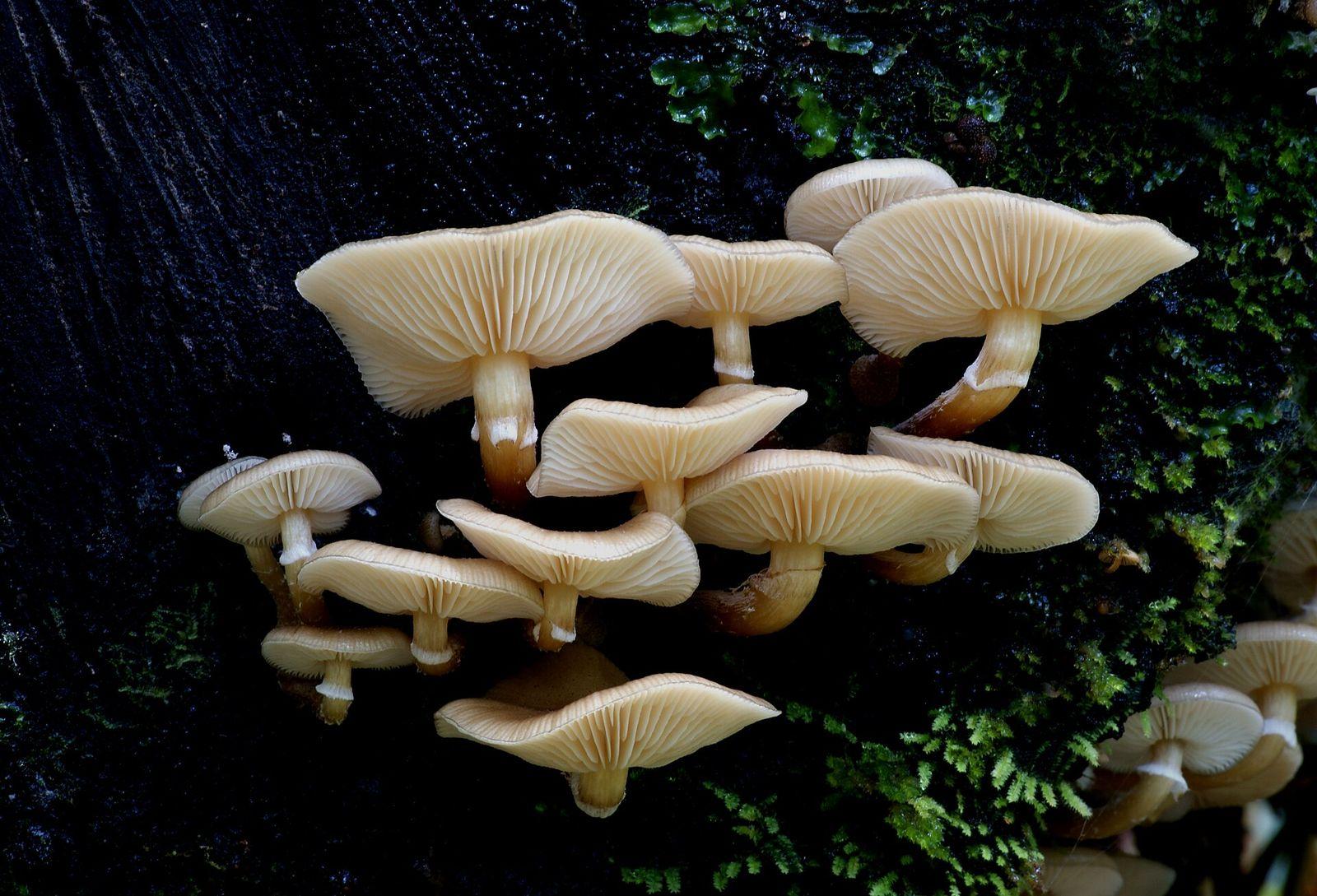
Armillaria mellea
Honey mushrooms are smaller and duller honey-brown, with white gills and a white spore print.
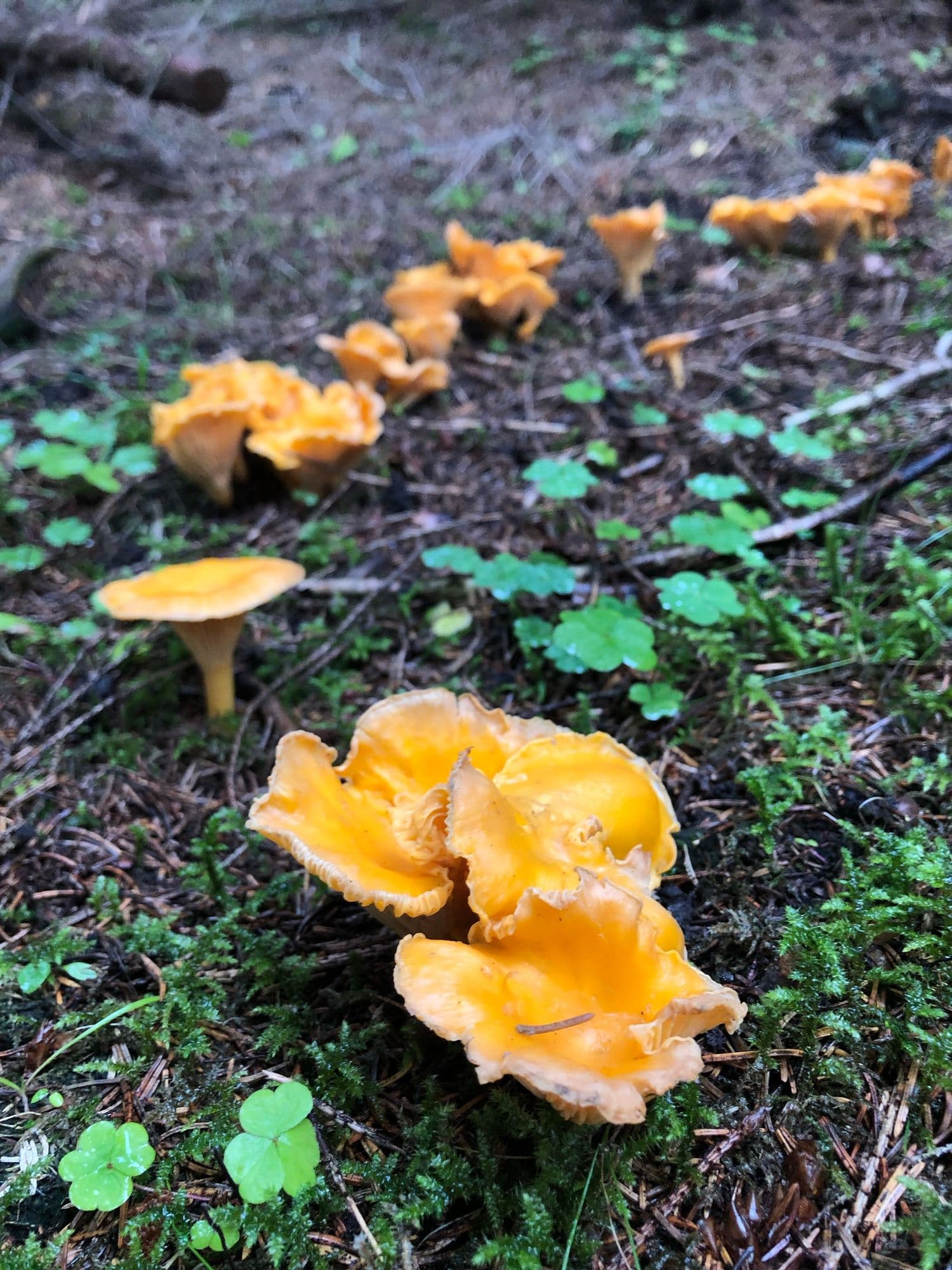
Cantharellus cibarius
Chanterelles grow singly from soil, not in clusters on wood, and have blunt, forked ridges under the cap instead of true gills. They have no ring.
Edibility
Field guides list the big laughing gym as poisonous or inedible, and its flesh is intensely bitter. Its common name refers to reports of hallucinogenic effects. Psilocybin has been reported in some collections but not others, and guides disagree on how consistent its effects are.
This page states what field guides record. It is not advice to eat, taste or handle anything, and a photo cannot settle edibility. If someone has eaten a wild mushroom that may be toxic, call poison control (1-800-222-1222 in the US) right away, before symptoms start: the deadliest species act hours later.
FAQ
Field guides list it as poisonous or inedible. Its flesh is very bitter, and reports of its effects vary between collections and regions.
The name refers to reports of people laughing or hallucinating after eating it. Gym is short for the genus name, Gymnopilus.
By spore print and color. The big laughing gym is a brighter golden orange, larger and thicker-stemmed, and leaves a rusty orange spore print. Honey mushrooms are honey-brown with white gills and a white spore print.
Sources
MushroomExpert.com
Missouri Department of Conservation
Index Fungorum
Waitlist
We will send one email when Mushrooms.id opens, and nothing else.
This opens your email app with the request written for you. Send it and we add you to the list. No email app? Write to hello@mushrooms.id with the subject “Add me to the Mushrooms.id waitlist”.