Edible
Velvet Foot
Flammulina velutipes
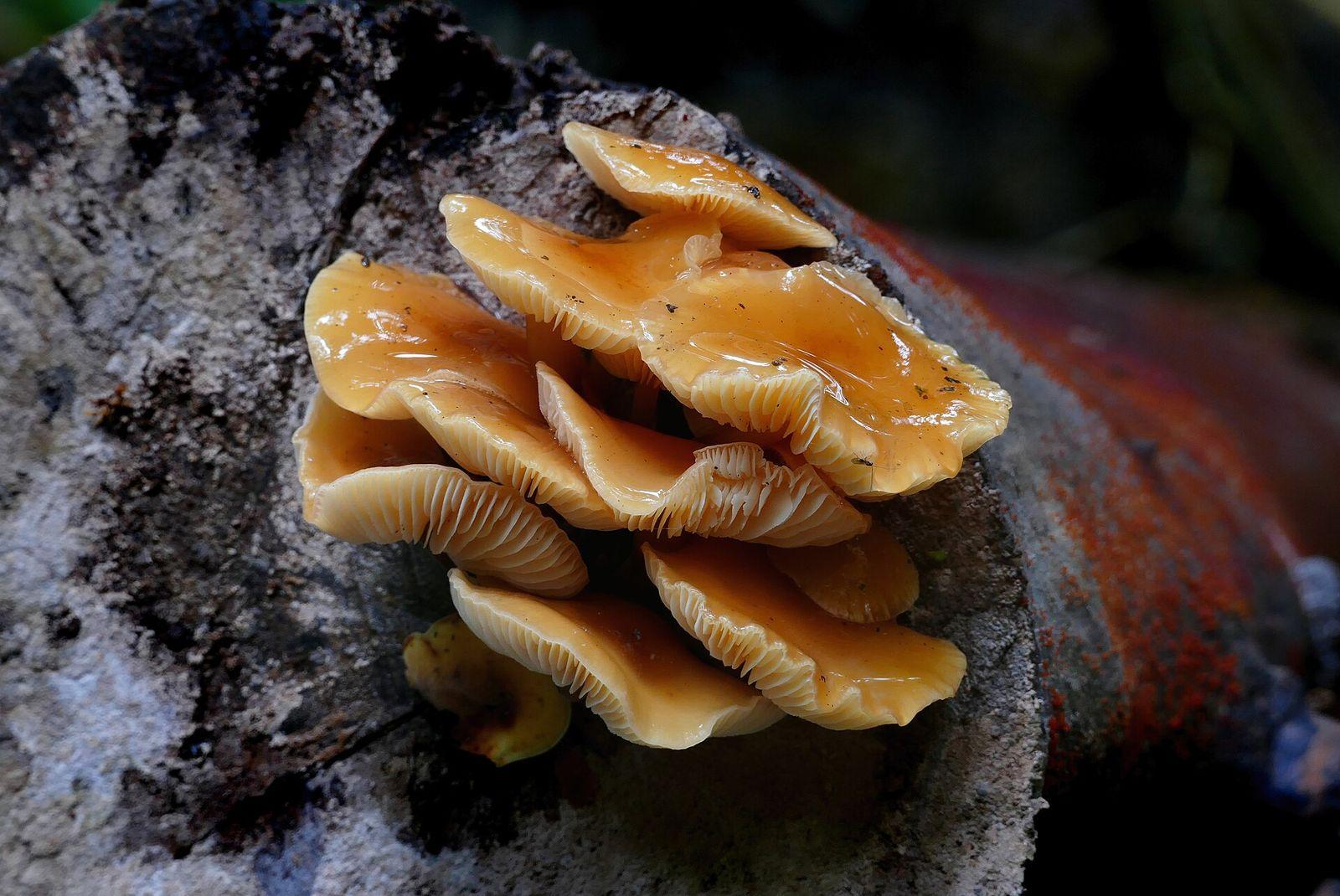
Velvet foot has a white spore print, no ring, and a stem that turns dark brown and velvety toward the base. It also grows in clusters on wood in cold weather.
Galerina marginata
Also called funeral bell, autumn skullcap, deadly skullcap.
The deadly galerina is a small brown mushroom that grows in clusters on rotting logs and stumps. It contains amatoxins, the same toxins as the death cap. It is often mistaken for honey mushrooms, velvet foot and other small brown wood-loving species.
The tell
Small honey-brown caps in clusters on rotting wood, with rusty brown gills, a thin ring on the stem, and a rusty brown spore print.
Field marks
Cap, underside and stem show in a photo. The spore print does not, and it is often the deciding check.
Where and when
Lookalikes
Each card says how to tell the two apart.
Flammulina velutipes
Velvet foot has a white spore print, no ring, and a stem that turns dark brown and velvety toward the base. It also grows in clusters on wood in cold weather.
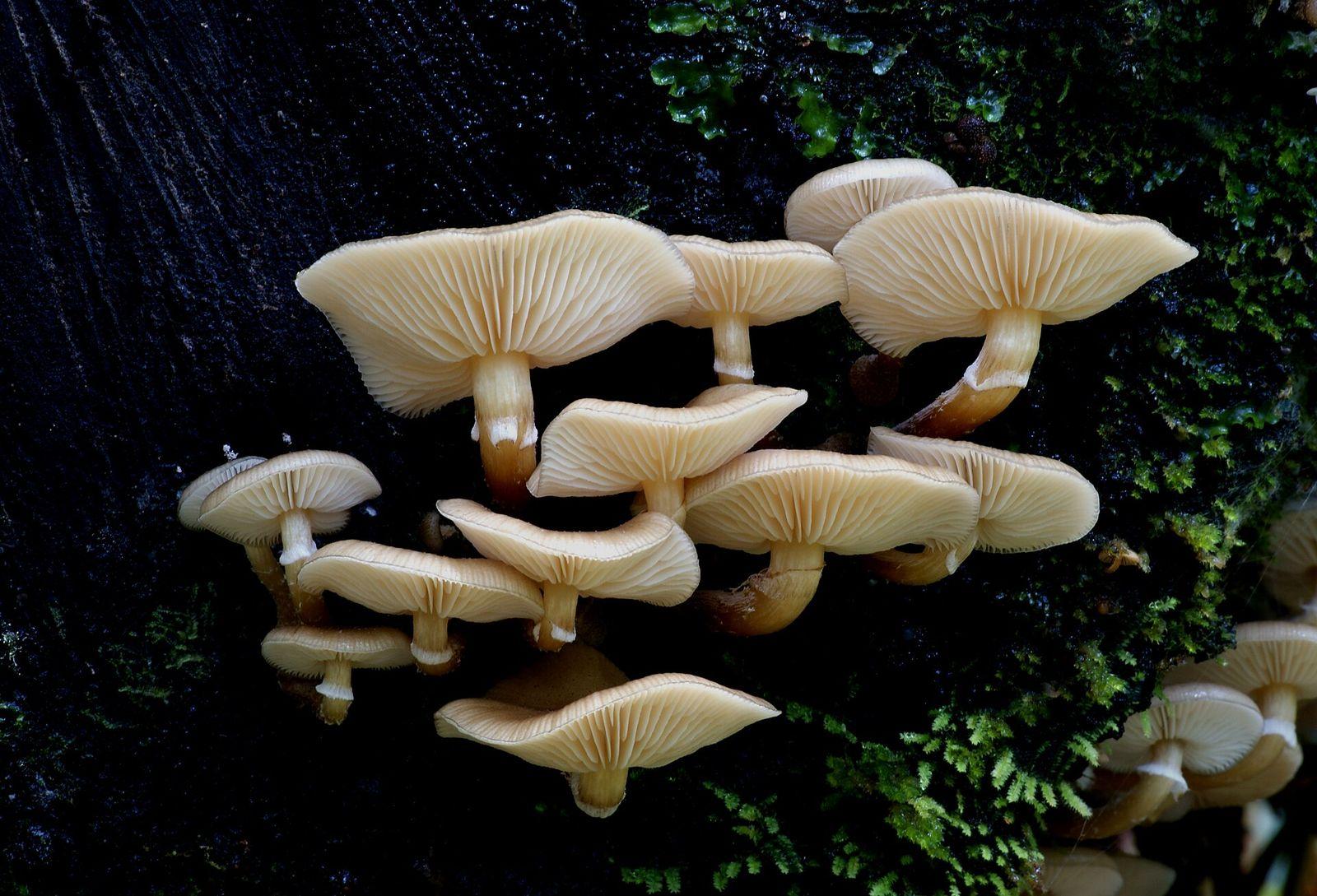
Armillaria mellea
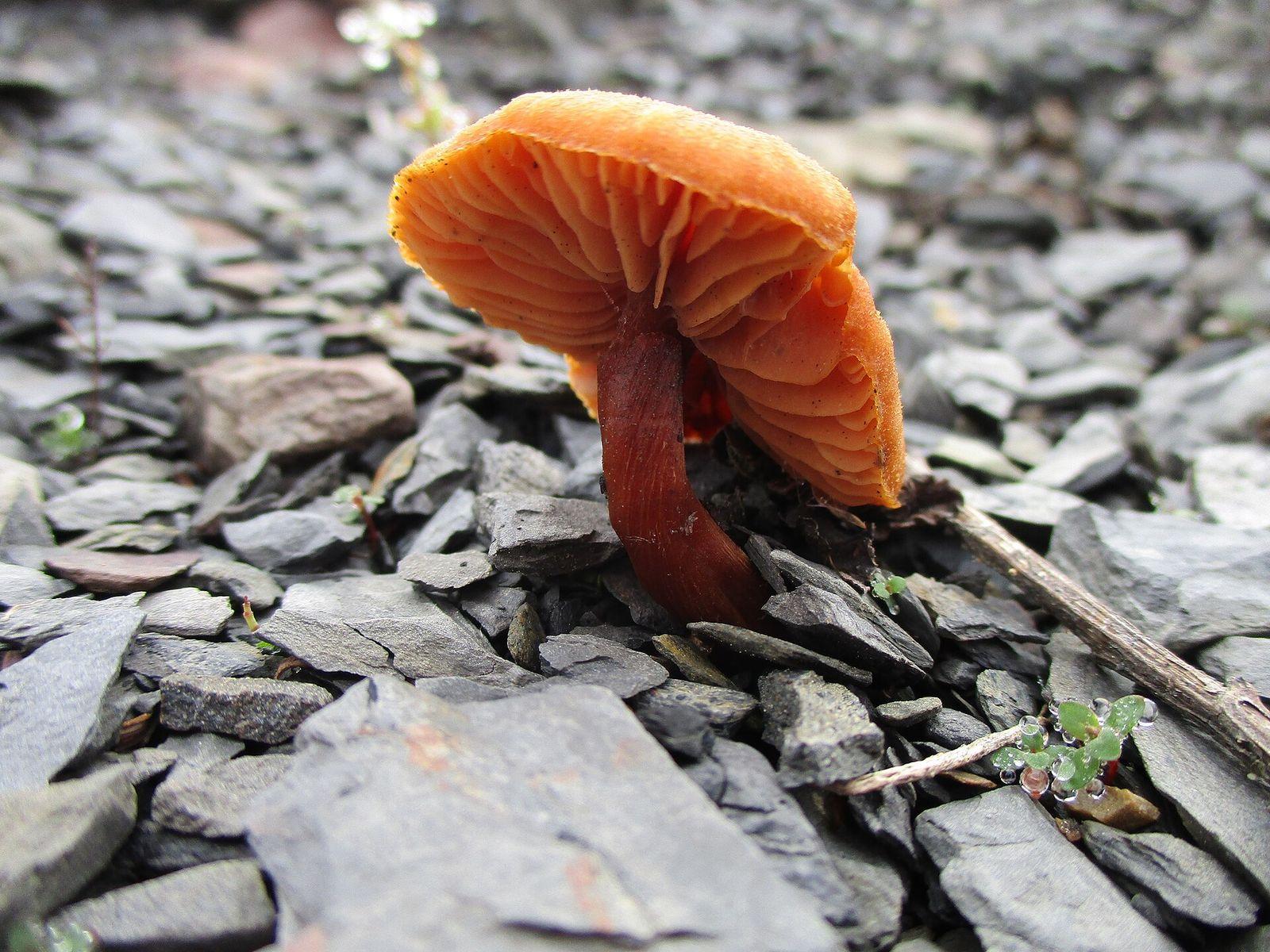
Honey mushrooms are larger, with a white spore print, fine dark scales at the cap center and a thicker ring. Galerina spore prints are rusty brown.
Psilocybe mushrooms leave a dark purple-brown spore print, and many bruise blue. Galerina spore prints are rusty brown, and it does not bruise blue.
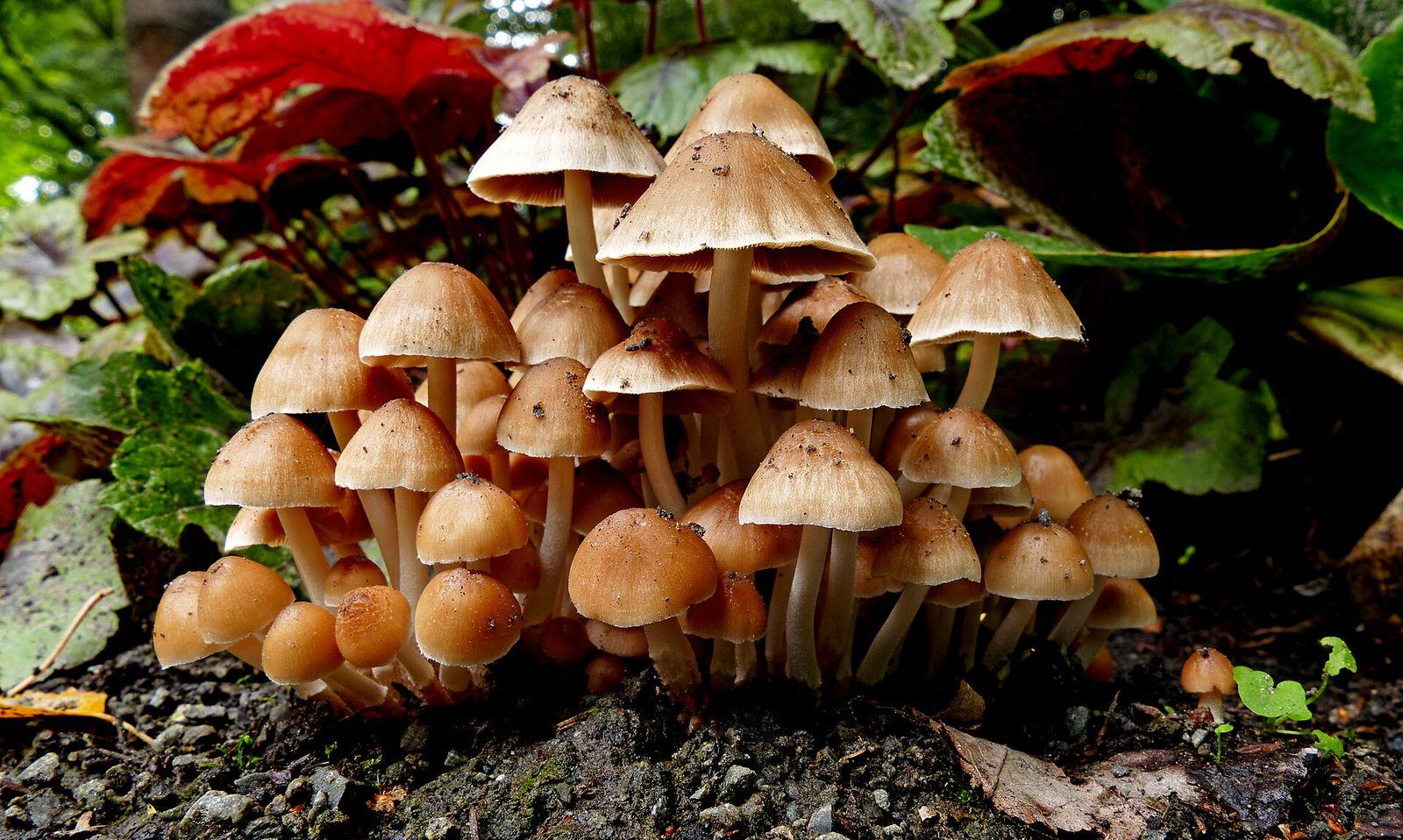
Coprinellus micaceus
Mica caps have grooved, glistening caps, no ring, and gills that turn black. Their spore print is dark brown to black.
More side-by-side comparisons
Edibility
The deadly galerina contains amatoxins, the same toxins found in the death cap and destroying angels. They shut down protein production in liver and kidney cells. Symptoms usually begin 6 to 24 hours after the meal with severe vomiting and diarrhea, often followed by a brief apparent recovery and then liver and kidney failure. Cooking, freezing and drying do not destroy amatoxins.
This page states what field guides record. It is not advice to eat, taste or handle anything, and a photo cannot settle edibility. If someone has eaten a wild mushroom that may be toxic, call poison control (1-800-222-1222 in the US) right away, before symptoms start: the deadliest species act hours later.
FAQ
Yes. It contains amatoxins, the same toxins as the death cap, which destroy liver and kidney cells. Symptoms are delayed by 6 to 24 hours after eating.
The spore print is the clearest difference: rusty brown for the galerina, white for the honey mushroom. Honey mushrooms are also larger, with a thicker ring and small dark scales at the center of the cap.
On rotting logs and stumps of both conifers and hardwoods across North America, usually in clusters. It fruits mostly in fall but also in spring and in mild winter weather.
Sources
MushroomExpert.com
Missouri Department of Conservation
Beaty Biodiversity Museum, University of British Columbia
Index Fungorum
Also on Mushrooms.id
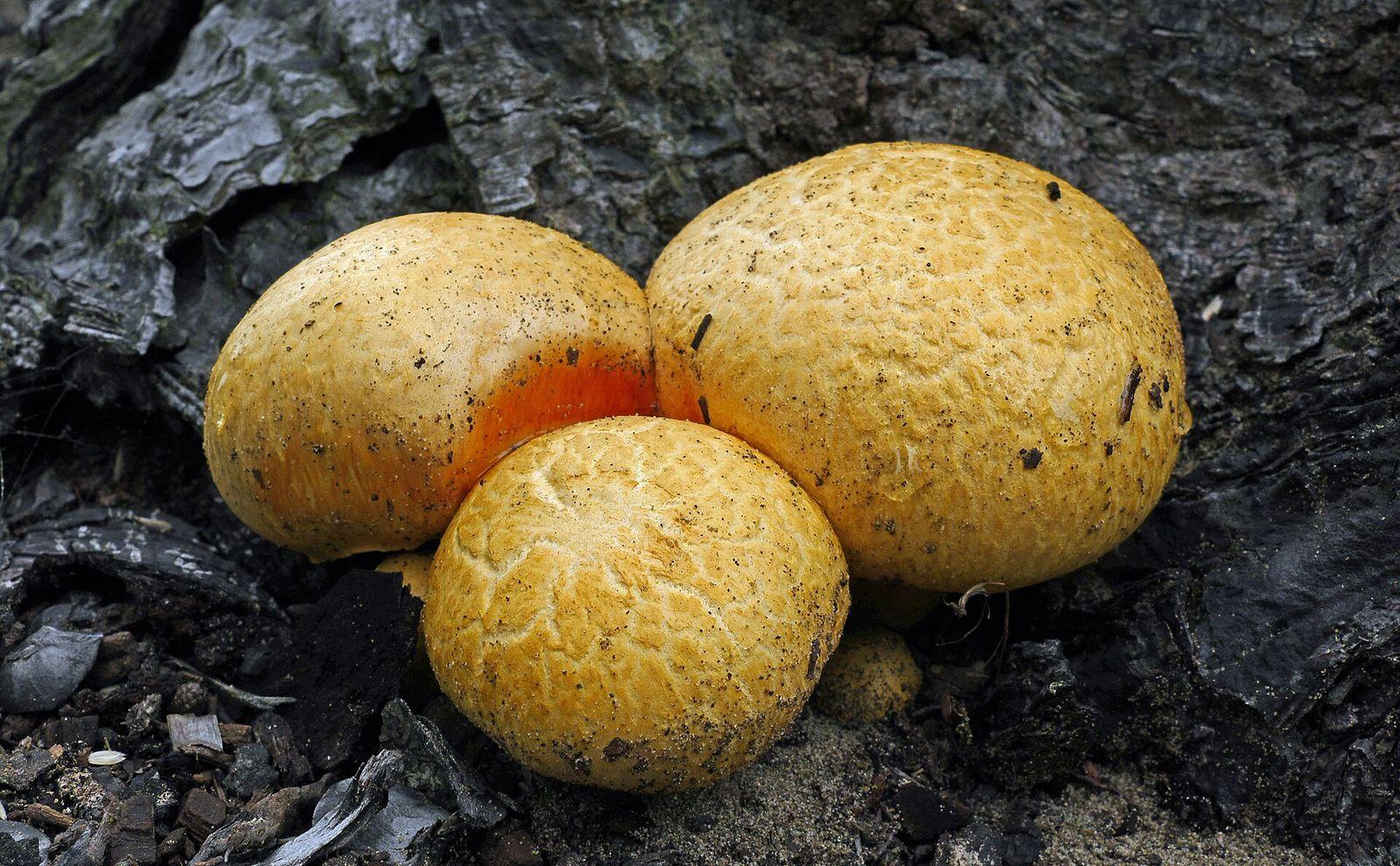
Gymnopilus junonius
A large, orange-yellow cluster on wood with a ring on a thick stem and a rusty orange spore print.
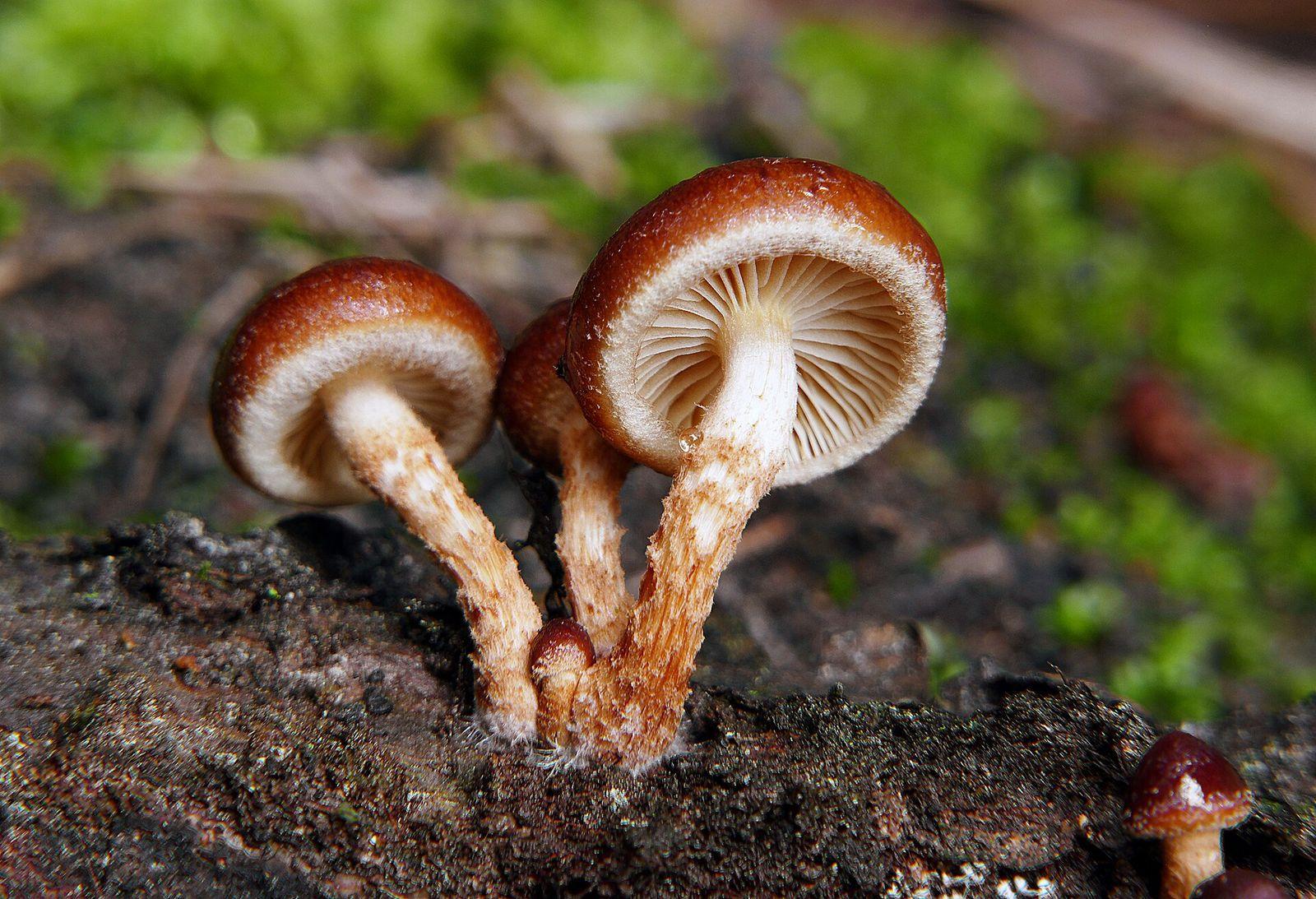
Hypholoma lateritium
Clusters of brick-red caps with a paler edge on hardwood stumps late in the fall, with grayish gills and a purple-brown spore print.
Lactarius rubidus
Photo coming
Lactarius rubidus
Small orange-brown milk cap with thin, watery latex that smells strongly of maple syrup once dried.
Cortinarius rubellus
Photo coming
Cortinarius rubellus
Orange-brown, pointed cap, rusty brown gills, and yellowish bands of veil on the stem, in mossy conifer woods.
Waitlist
We will send one email when Mushrooms.id opens, and nothing else.
This opens your email app with the request written for you. Send it and we add you to the list. No email app? Write to hello@mushrooms.id with the subject “Add me to the Mushrooms.id waitlist”.