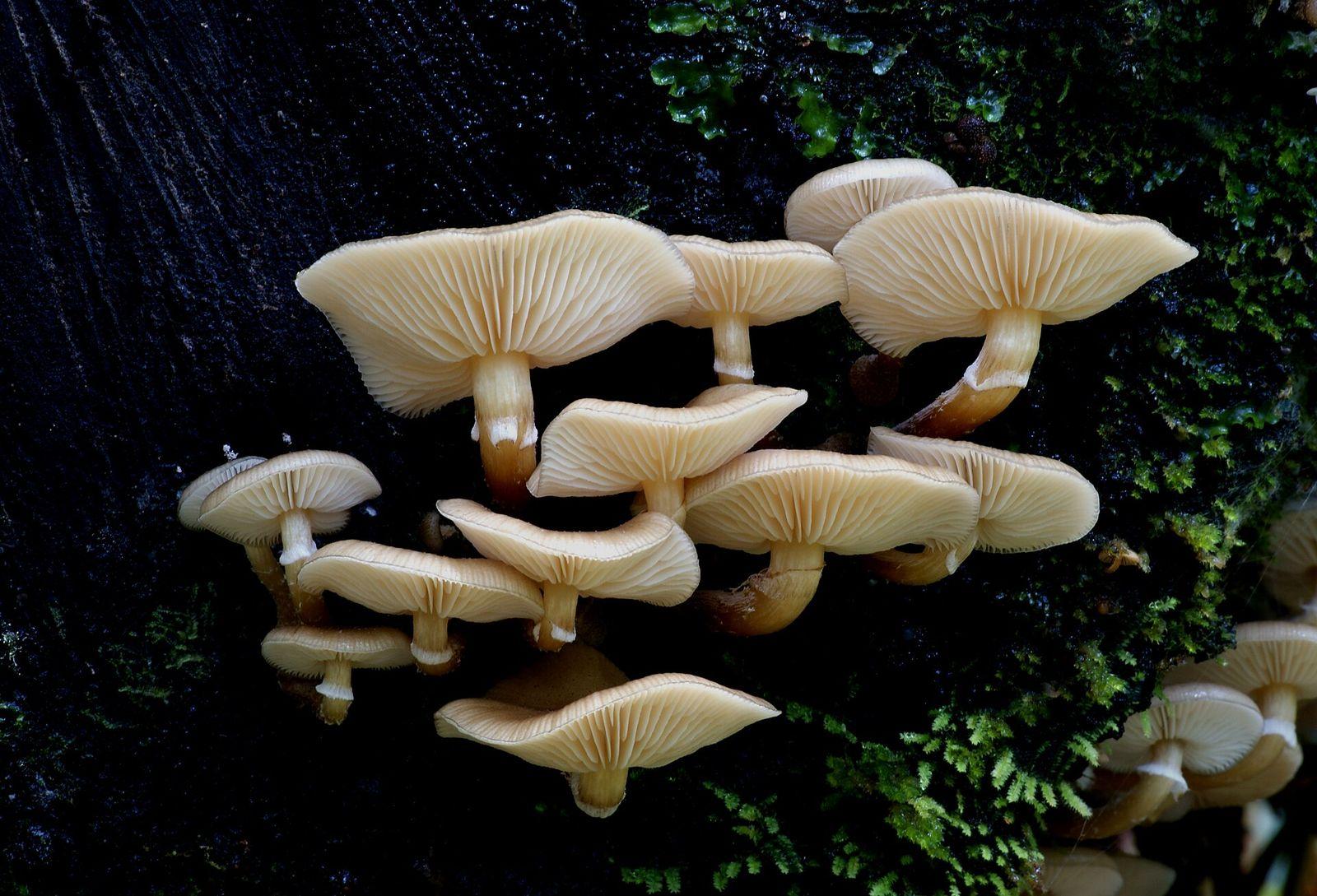
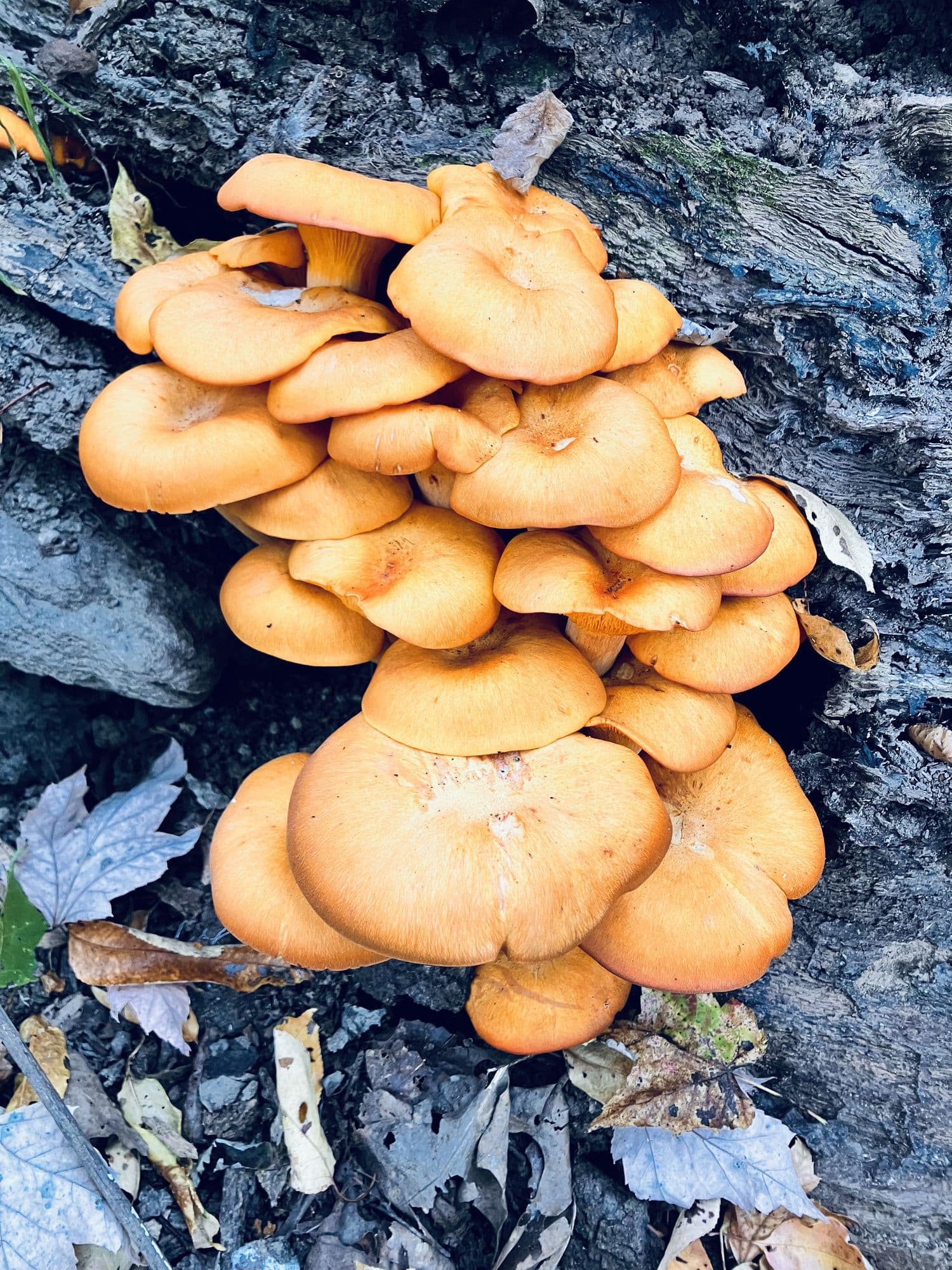
Honey mushroom vs jack-o'-lantern
- Toxic: Jack-o'-Lantern
Honey mushrooms have a ring, white gills and white flesh. Jack-o'-lanterns have no ring, sharp orange gills and orange flesh.
Quick answer
A honey mushroom's spore print is white, often visible as white dust on the lower caps of a cluster; the deadly galerina's is rusty brown. The galerina is also smaller: its stems are usually under a quarter inch (0.6 cm) thick and caps rarely pass 1.5 inches, while honey mushrooms are larger, with small dark hairs or scales at the cap center.
Deadly lookalike
Unlike the honey mushroom, the deadly galerina (Galerina marginata) contains amatoxins, the same toxins as the death cap, at similar concentrations, according to the University of British Columbia's Mushrooms Up! guide. Amatoxins stop cells from making proteins by blocking the enzyme RNA polymerase II. The Bay Area Mycological Society records that symptoms usually begin 6 to 24 hours after eating, followed by an apparent recovery and then liver damage from about 72 hours. Cooking does not destroy amatoxins.
If someone has eaten a wild mushroom and feels unwell, or may have eaten one of these, call poison control now: 1-800-222-1222 in the US. Do not wait for symptoms.
Side by side
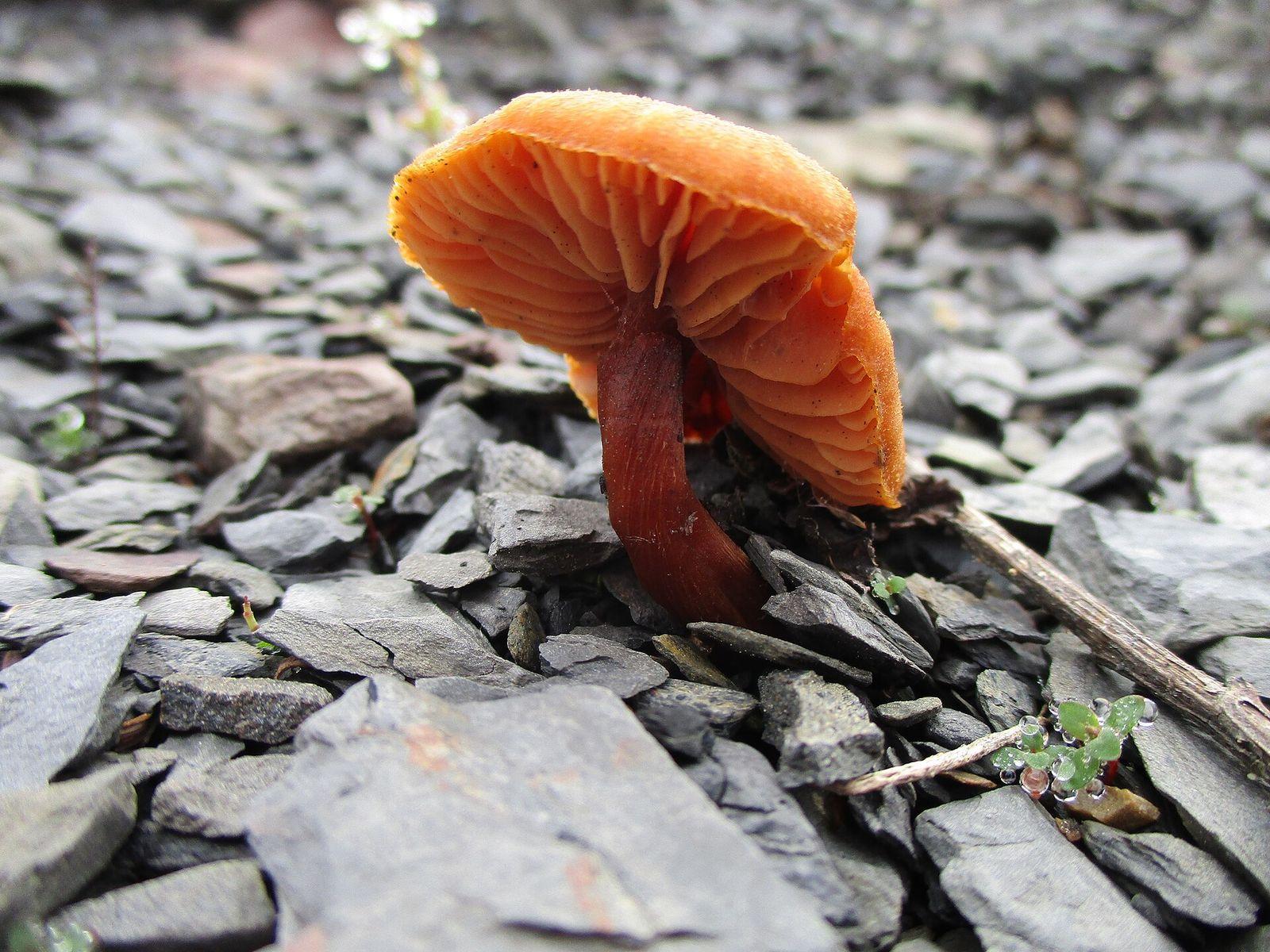
The tellSmall honey-brown caps in clusters on rotting wood, with rusty brown gills, a thin ring on the stem, and a rusty brown spore print.
The tellDense clusters of honey-colored caps on wood, with a ring on the stem and a white spore print.
| Feature | Deadly Galerina | Honey Mushroom |
|---|---|---|
| Spore print | Deadly GalerinaRusty brown. | Honey MushroomWhite. |
| Cap surface | Deadly GalerinaSmooth and slightly sticky, honey-brown drying to tan, often two-toned. | Honey MushroomHoney-yellow to yellow-brown, with small dark hairs or scales toward the center. |
| Gills | Deadly GalerinaYellowish at first, then rusty brown. | Honey MushroomWhite to cream, often spotted pinkish or brown with age. |
| Size | Deadly GalerinaCap 0.5 to 1.5 inches (1 to 4 cm); stem usually under 1/4 inch (0.6 cm) thick. | Honey MushroomCap 1 to 4 inches (3 to 10 cm); stem usually over 1/4 inch (0.8 cm) thick. |
| Ring | Deadly GalerinaA thin ring or ring zone, often dusted rusty brown by spores, that can disappear. | Honey MushroomA white, cottony to membranous ring near the top, sometimes with a yellowish edge. |
| Under the bark | Deadly GalerinaNothing distinctive. | Honey MushroomBlack, root-like strands (rhizomorphs) are often found under the bark of the host. |
FAQ
The spore print: white for the honey mushroom, rusty brown for the galerina. Galerina is also smaller and thinner-stemmed, with a smooth cap instead of dark central scales.
They grow in clusters on the same kinds of rotting wood, in overlapping fall seasons. A cluster on a stump can be either one.
Not with confidence. Color and size vary with age and weather, and a photo cannot show the spore print. White spore dust on the lower caps of a cluster is a useful sign when it shows.
Sources
MushroomExpert.com
MushroomExpert.com
Beaty Biodiversity Museum, University of British Columbia
Bay Area Mycological Society
Keep checking
This page states what field guides record. It is not advice to eat, taste or handle anything, and a photo cannot settle edibility. If someone has eaten a wild mushroom that may be toxic, call poison control (1-800-222-1222 in the US) right away, before symptoms start: the deadliest species act hours later.
More comparisons
Honey mushrooms have a ring, white gills and white flesh. Jack-o'-lanterns have no ring, sharp orange gills and orange flesh.
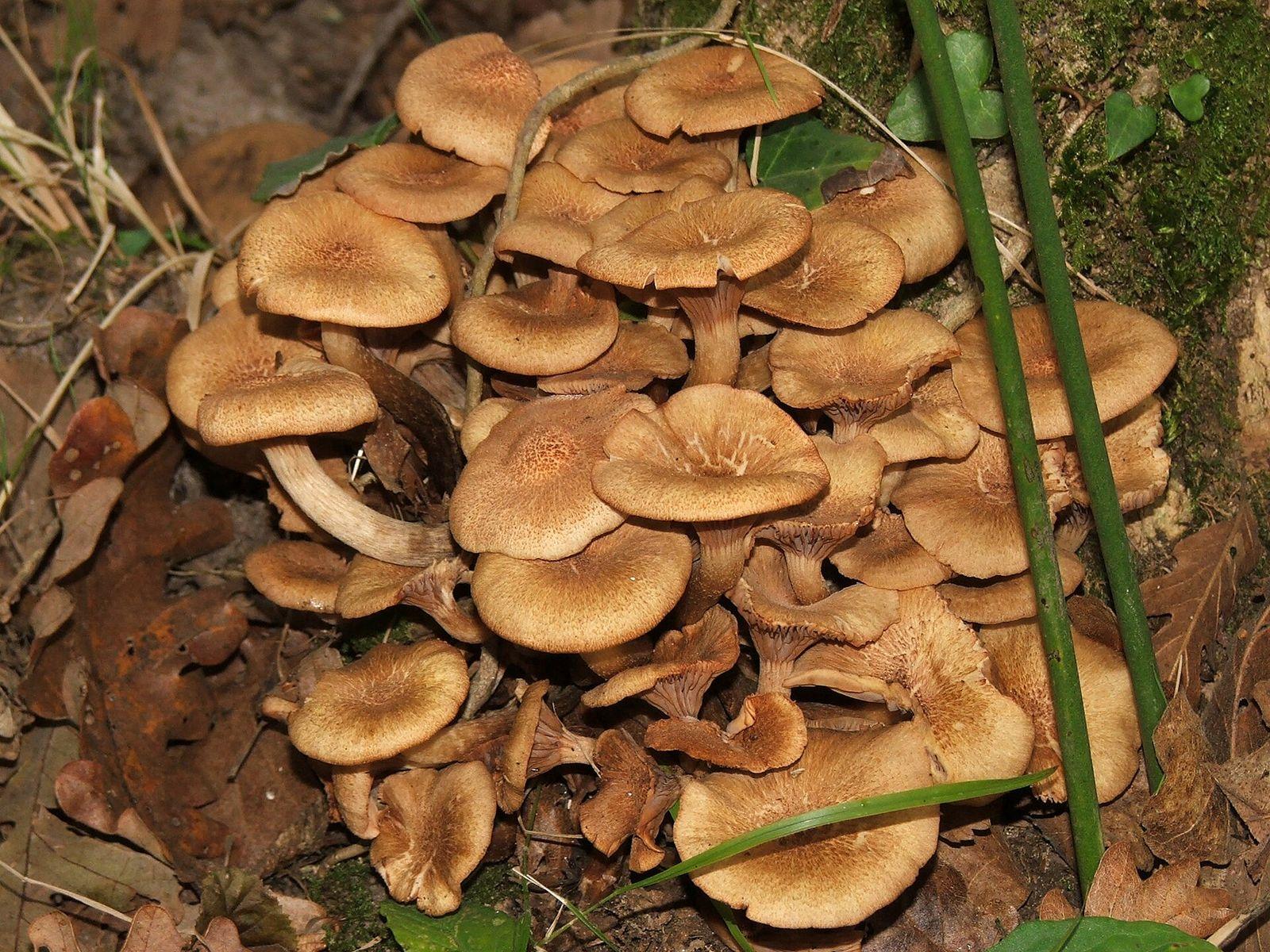
The honey mushroom has a ring on its stem and a slightly sticky cap. The ringless honey mushroom has no ring at any age and a dry cap.
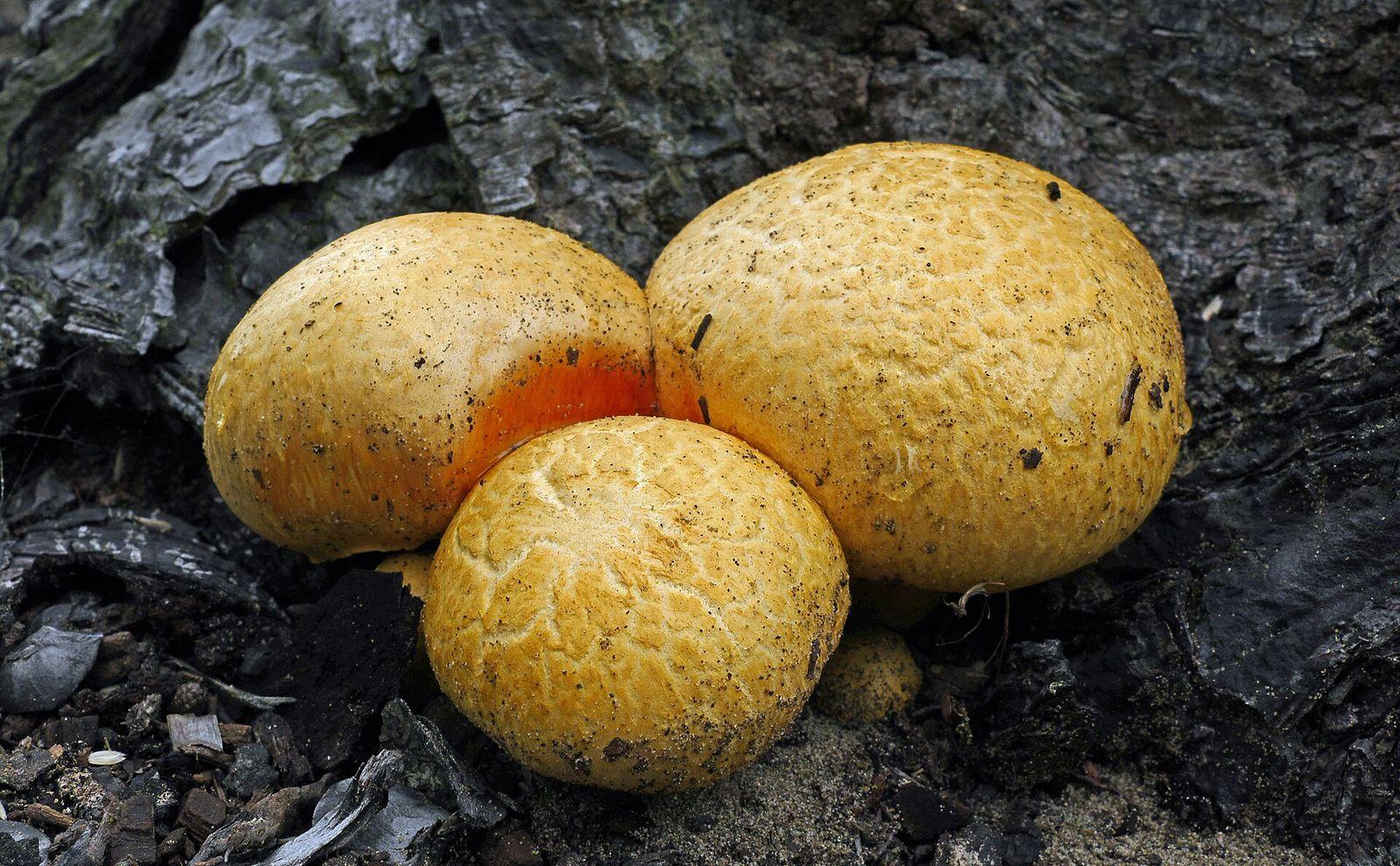
Both are rusty-spored clusters on wood. The big laughing gym is large and orange-yellow; the deadly galerina is small and honey-brown, with amatoxins.
Waitlist
We will send one email when Mushrooms.id opens, and nothing else.
This opens your email app with the request written for you. Send it and we add you to the list. No email app? Write to hello@mushrooms.id with the subject “Add me to the Mushrooms.id waitlist”.