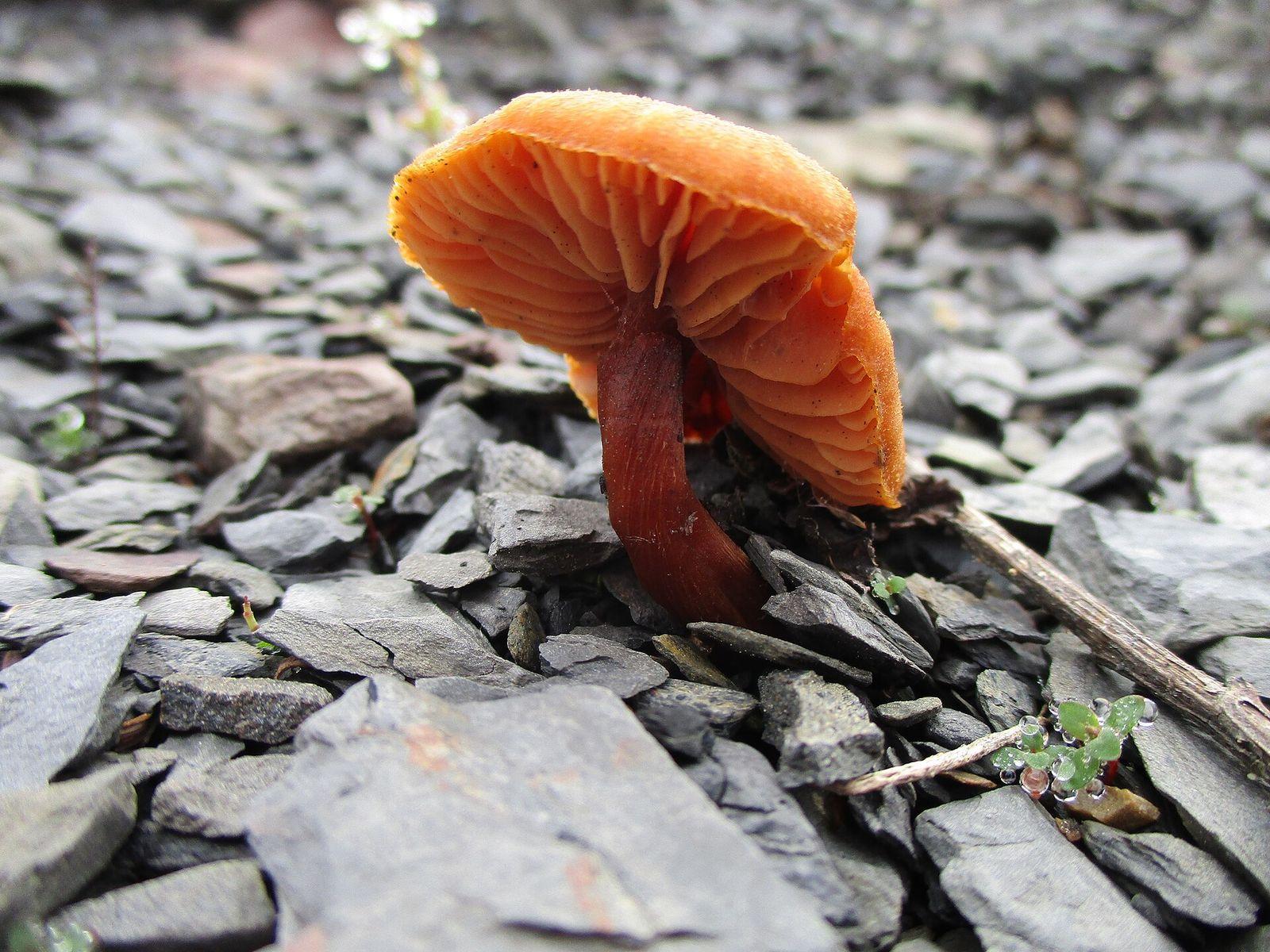
Mica Cap

Coprinellus micaceus

Edible when fresh

Also called glistening inky cap, shiny cap.

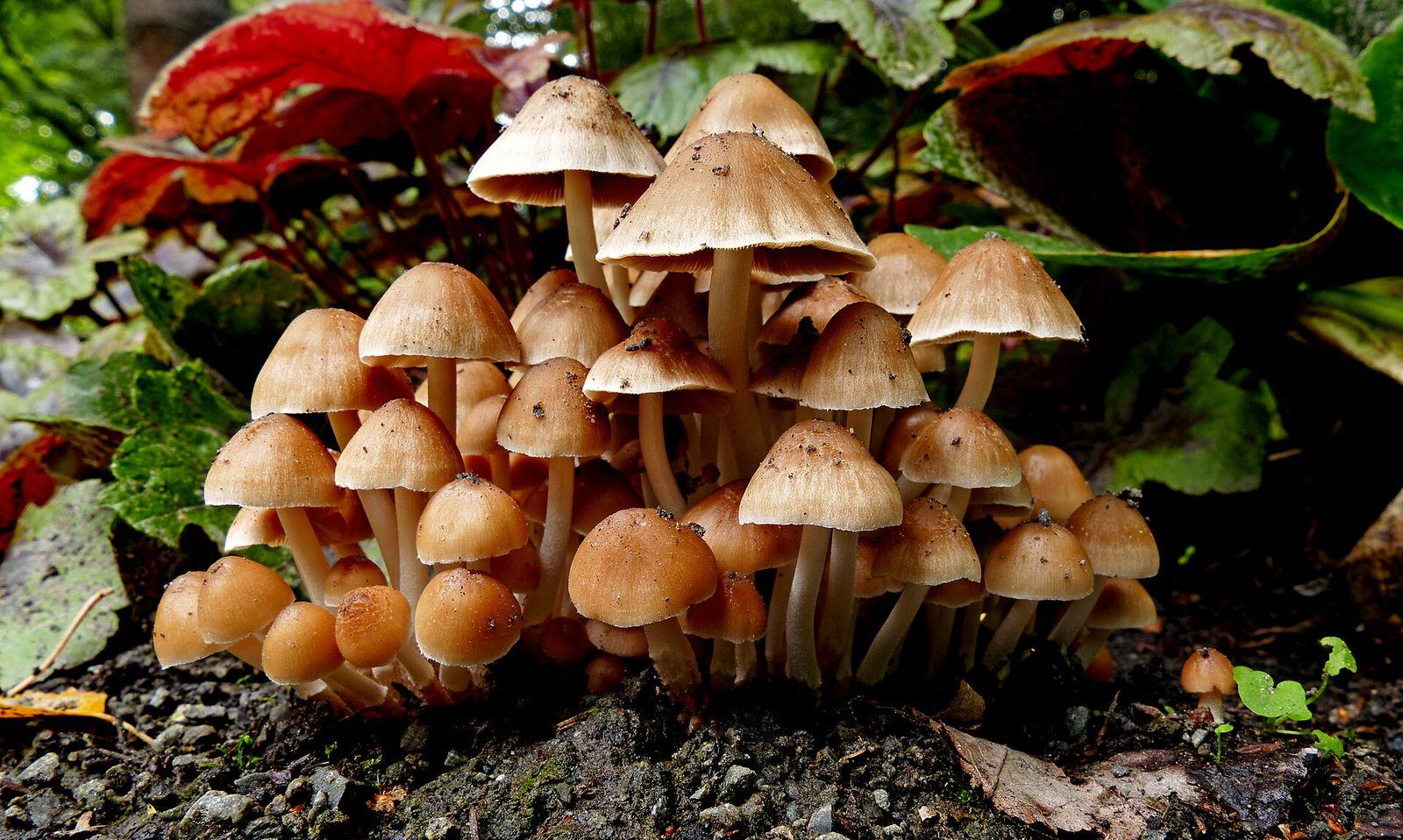
The mica cap is a small honey-brown mushroom that grows in dense clusters on stumps, buried roots and lawns near trees. Young caps sparkle with tiny mica-like granules. It is one of the first mushrooms to appear after spring rains in towns.

A crowded cluster of small tawny mica caps with bell-shaped, finely grooved caps on thin pale stems

The tell

Small honey-brown, finely grooved caps dusted with glittering granules, in clusters on or near rotting wood.

Field marks

What to look at

Cap, underside and stem show in a photo. The spore print does not, and it is often the deciding check.

Cap
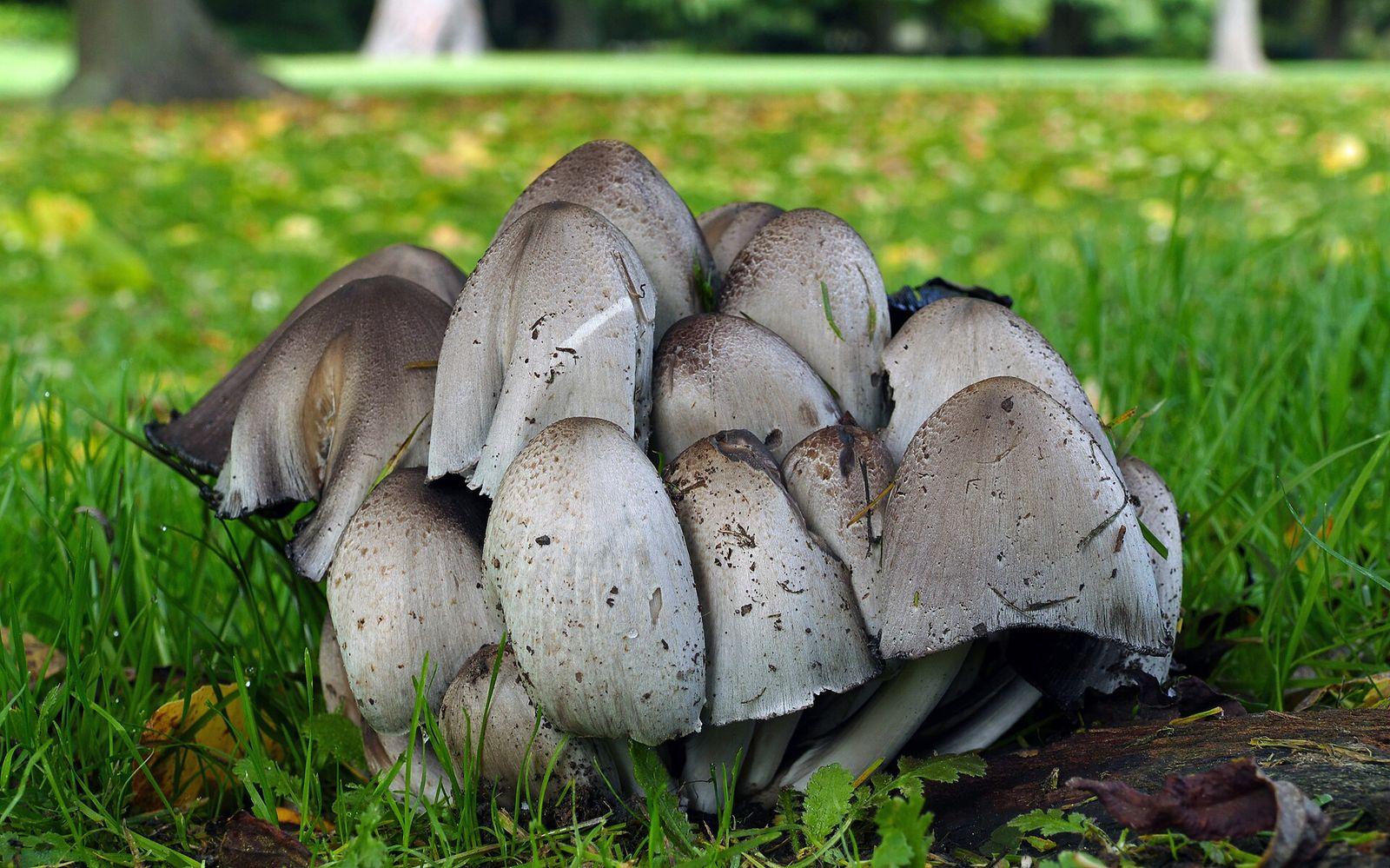
Oval at first, opening to bell-shaped, honey-brown to tawny with a darker center. Lined or grooved from the edge almost to the center, and covered in fine glistening granules that wash off in rain.
Underside
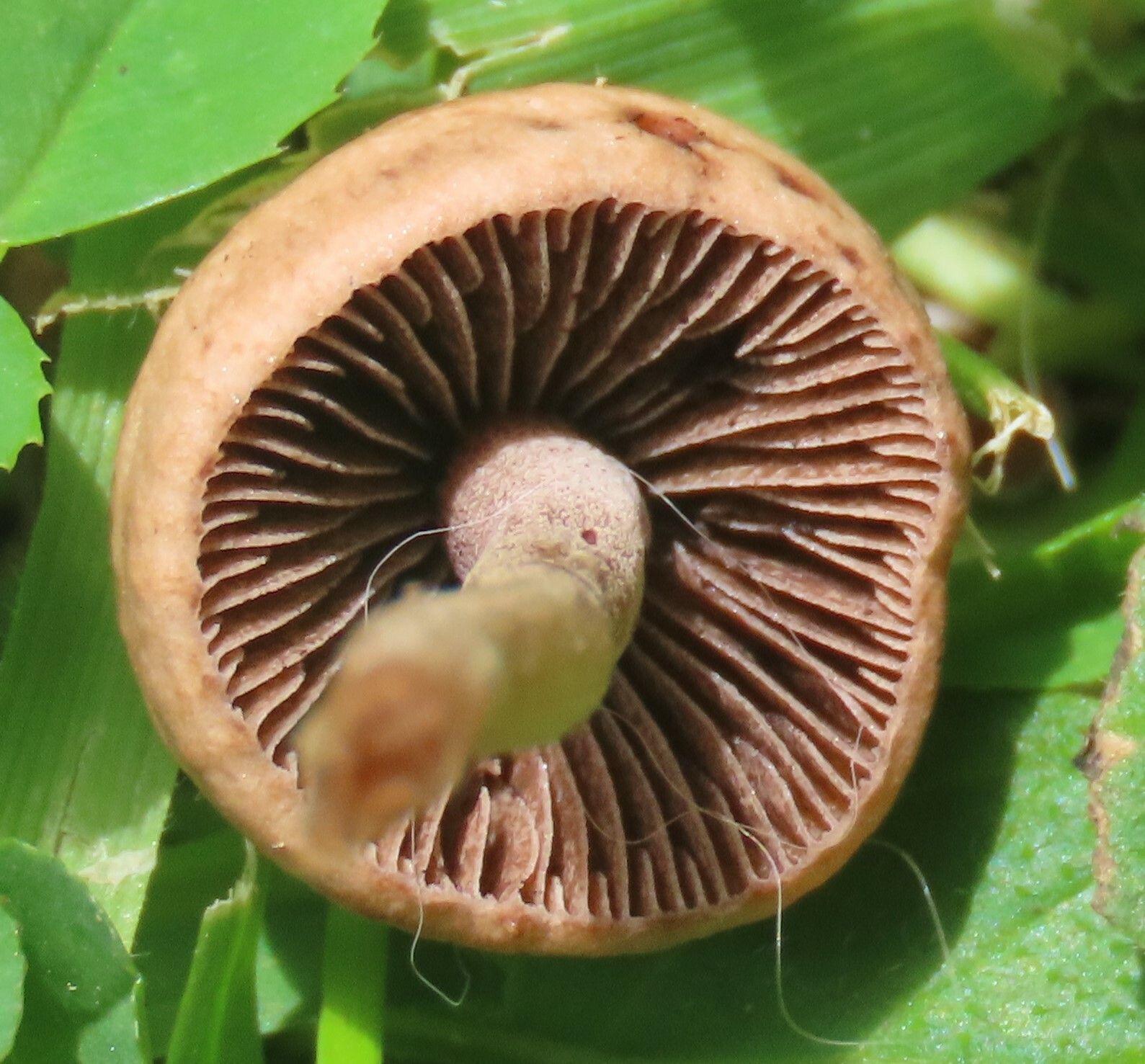
Gills attached to the stem, crowded, whitish at first, then brown, then black. They partly liquefy with age, more slowly than in other inky caps.
Stem
White, smooth, thin and hollow, with no ring.
Flesh
Thin, fragile and whitish to pale brown. Smell mild.
Spore print
Dark brown to black.
Size
Cap 0.75 to 2 inches wide (2 to 5 cm); stem 1 to 3 inches tall (2.5 to 8 cm).

Where and when

Where and when it grows

Habitat
Around stumps, at the base of living or dead hardwood trees, and in lawns and gardens over buried roots. Common in towns and parks.
Grows on
Decaying hardwood, including buried roots.
Season
Spring through fall, often in repeated flushes after rain.
Range
Widespread across North America.

Edibility

What the field guides say

Edible when fresh

Field guides list the mica cap as edible when fresh, noting that it is thin-fleshed and begins to break down within hours of picking. Its main danger is confusion with small brown mushrooms that grow in the same places, including the deadly galerina, which contains amatoxins. The spore print separates them: dark brown to black for the mica cap, rusty brown for the galerina.

This page states what field guides record. It is not advice to eat, taste or handle anything, and a photo cannot settle edibility. If someone has eaten a wild mushroom that may be toxic, call poison control (1-800-222-1222 in the US) right away, before symptoms start: the deadliest species act hours later.

FAQ

Questions about the mica cap

Are mica cap mushrooms edible?

Field guides list them as edible when fresh. They are small and thin, and the caps begin to darken and break down within hours. The deadly galerina, which can grow on the same stumps, is the confusion field guides warn about.

Why are they called mica caps?

Young caps are covered in tiny glistening granules that look like flakes of the mineral mica. The granules are fragments of the veil and wash off in rain, so older caps are often bare.

Where do mica caps grow?

In clusters on hardwood stumps, at the base of trees, and in lawns or gardens over buried roots. They are common in towns and often fruit several times a year after rain.

Sources

Where these facts come from

  1. Coprinellus micaceus

    MushroomExpert.com

  2. Coprinellus micaceus

    Fungi Growing on Wood, Gary Emberger (MushroomExpert.com)

  3. Mica Cap

    Missouri Department of Conservation

  4. Coprinellus micaceus

    Index Fungorum

Waitlist

Hear when it opens

We will send one email when Mushrooms.id opens, and nothing else.

Email us to join

This opens your email app with the request written for you. Send it and we add you to the list. No email app? Write to hello@mushrooms.id with the subject “Add me to the Mushrooms.id waitlist”.