Edible when fresh
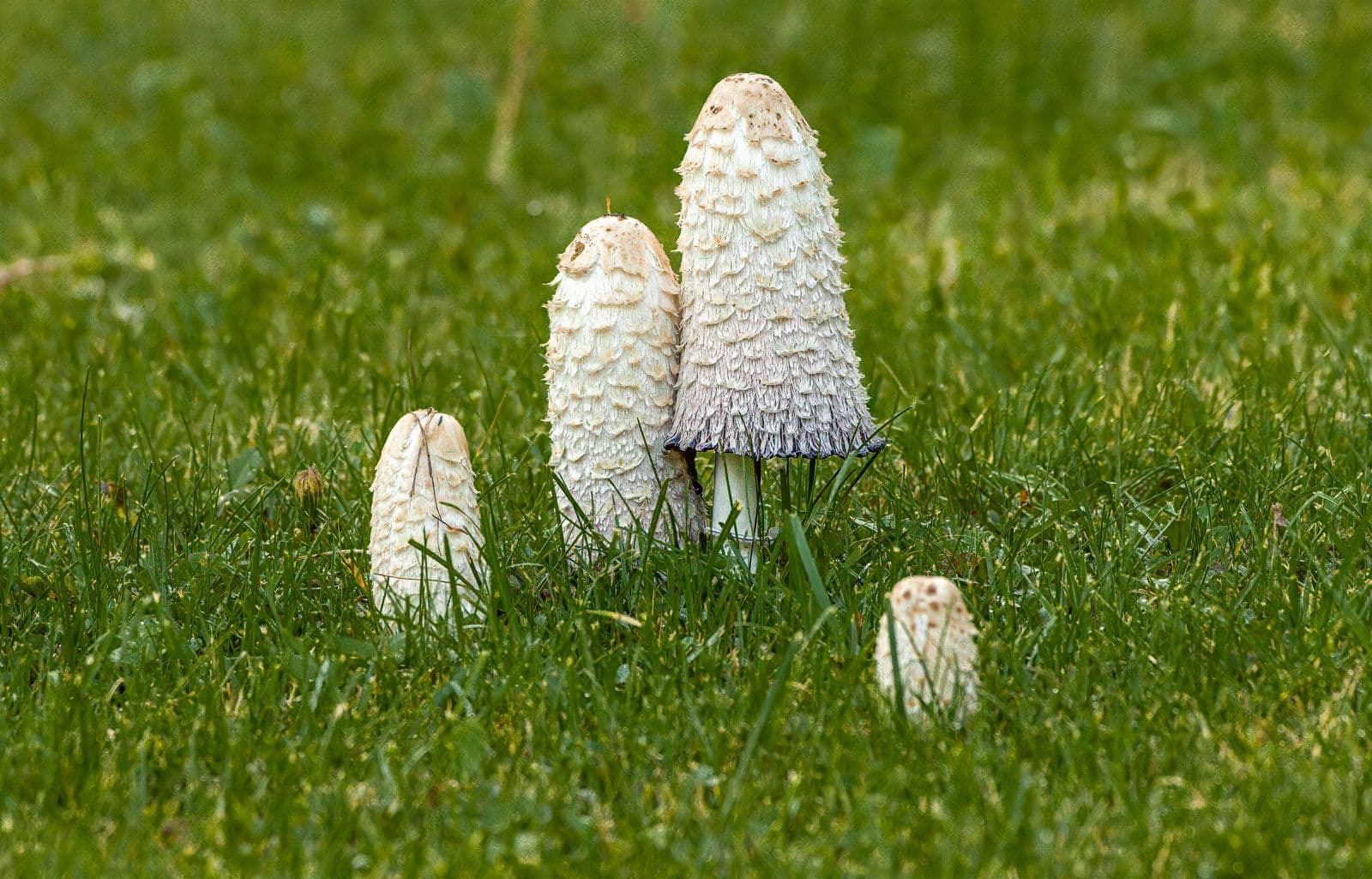
Shaggy Mane
Coprinus comatus
The shaggy mane is taller and white, with a cylindrical cap covered in shaggy scales. It is not recorded as containing coprine.
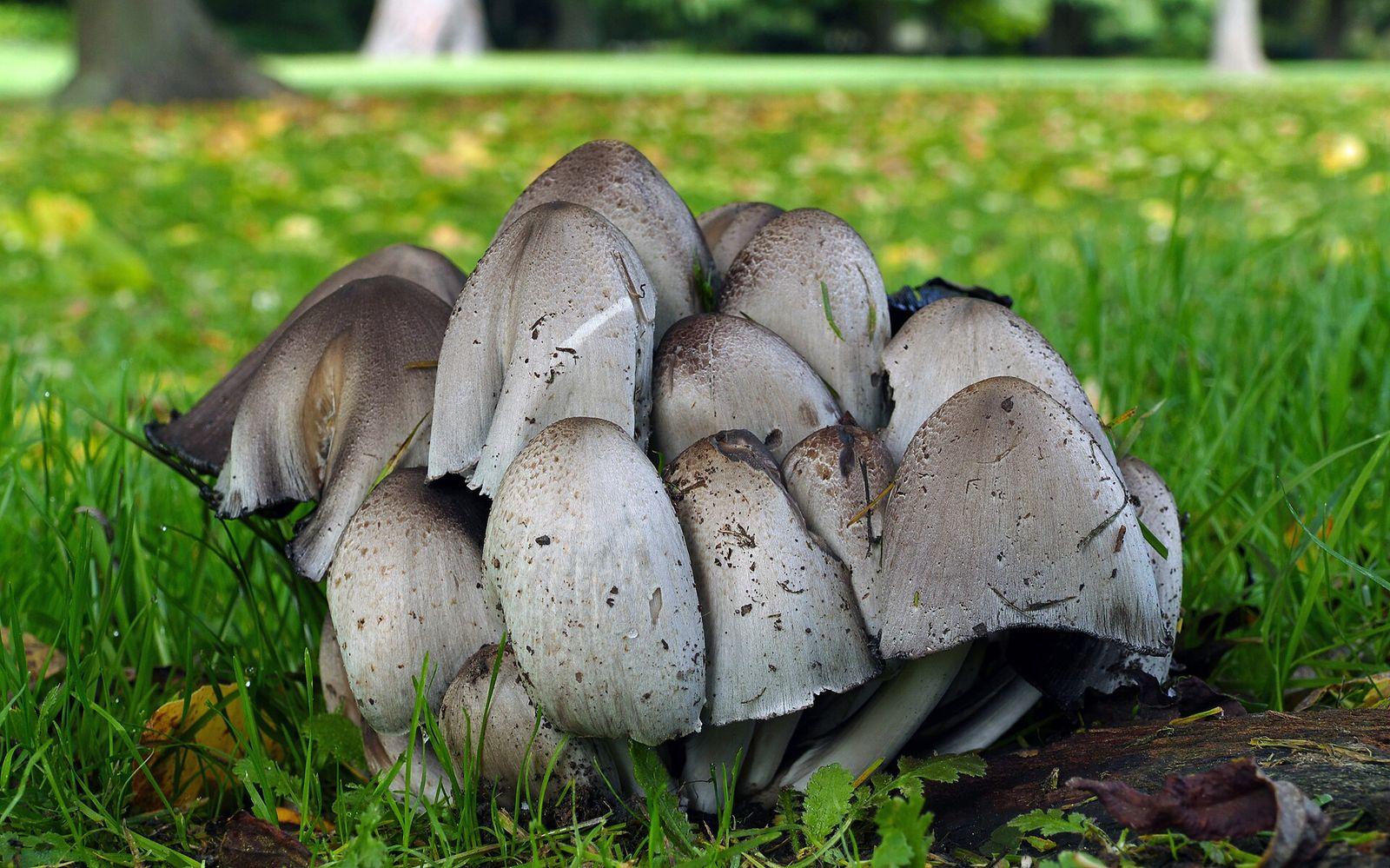
Coprinopsis atramentaria
Also called alcohol inky, tippler's bane, inky cap.
The common inkcap is a gray-brown mushroom that grows in dense clusters on lawns and around stumps, with gills that dissolve into black ink. It contains coprine, which causes a sharp illness when alcohol is drunk in the days around eating it.
The tell
Gray-brown, finely lined, bell-shaped caps in tight clusters whose gills melt into black ink.
Field marks
Cap, underside and stem show in a photo. The spore print does not, and it is often the deciding check.
Where and when
Lookalikes
Each card says how to tell the two apart.
Coprinus comatus
The shaggy mane is taller and white, with a cylindrical cap covered in shaggy scales. It is not recorded as containing coprine.
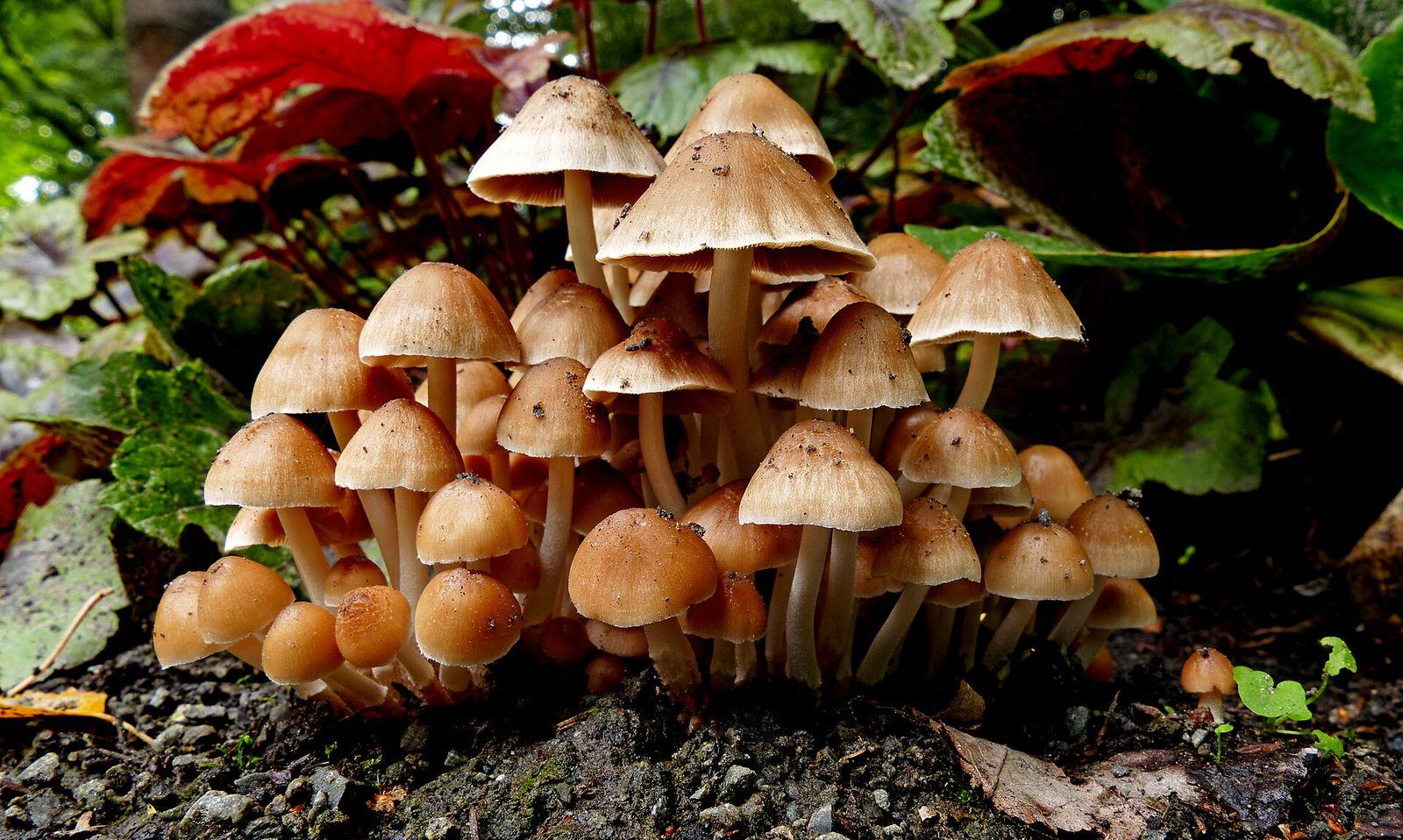
Coprinellus micaceus
Mica caps are smaller and honey-brown rather than gray, with glistening granules on young caps, and their gills only partly liquefy.
Edibility
The common inkcap contains coprine, a compound that blocks the body's breakdown of alcohol in a similar way to the drug disulfiram. Field guides record flushing of the face and neck, a racing heart, nausea, vomiting and tingling in the hands when alcohol is drunk within about three days of eating it. Without alcohol, guides record no symptoms, which is why it is classed as toxic with alcohol rather than poisonous on its own.
This page states what field guides record. It is not advice to eat, taste or handle anything, and a photo cannot settle edibility. If someone has eaten a wild mushroom that may be toxic, call poison control (1-800-222-1222 in the US) right away, before symptoms start: the deadliest species act hours later.
FAQ
It contains coprine, which stops the body from breaking down alcohol properly. Drinking alcohol within about three days of eating it causes flushing, a pounding heart, nausea and vomiting. The name refers to that reaction.
Field guides class it as toxic in combination with alcohol. The coprine it contains causes a disulfiram-like reaction when alcohol is consumed in the following days. Guides record no symptoms without alcohol.
It has a gray to gray-brown, bell-shaped cap with fine lines from the edge inward, on a white hollow stem. It grows in dense clusters, and the gills turn black and drip ink as the caps age.
Sources
MushroomExpert.com
Missouri Department of Conservation
MykoWeb, California Fungi
Index Fungorum
Waitlist
We will send one email when Mushrooms.id opens, and nothing else.
This opens your email app with the request written for you. Send it and we add you to the list. No email app? Write to hello@mushrooms.id with the subject “Add me to the Mushrooms.id waitlist”.