Shaggy Mane

Coprinus comatus

Edible when fresh

Also called lawyer's wig, shaggy ink cap.

The shaggy mane is a tall white mushroom with a scaly, cylindrical cap that turns to black ink as it ages. It comes up on lawns, roadsides and disturbed ground in late summer and fall, often in rows or clusters, and lasts only a day or two.

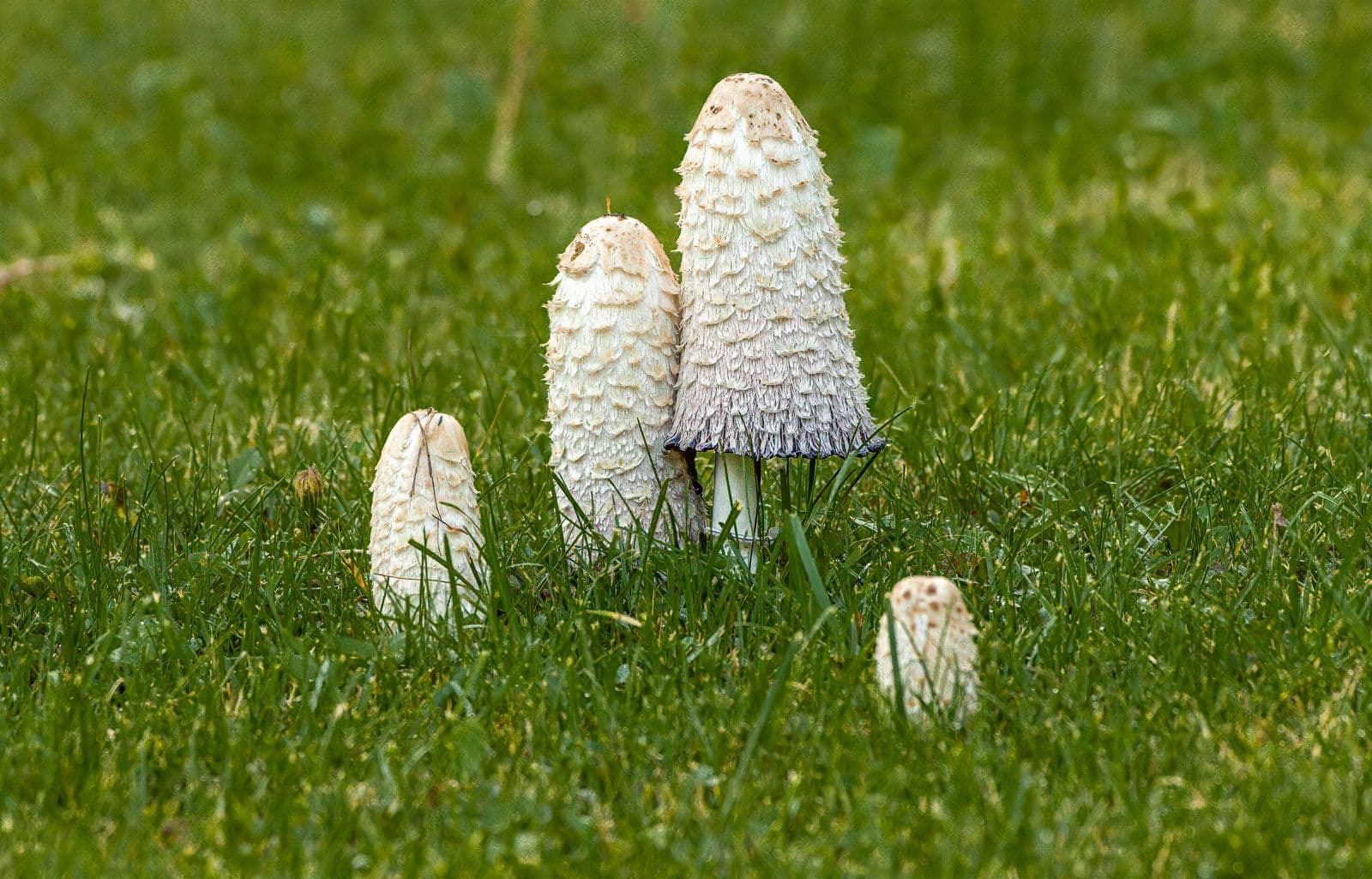
A group of tall white shaggy manes with scaly caps standing in a green lawn

The tell

Tall white cylindrical cap covered in shaggy scales, with gills that dissolve into black ink from the bottom edge up.

Field marks

What to look at

Cap, underside and stem show in a photo. The spore print does not, and it is often the deciding check.

Cap
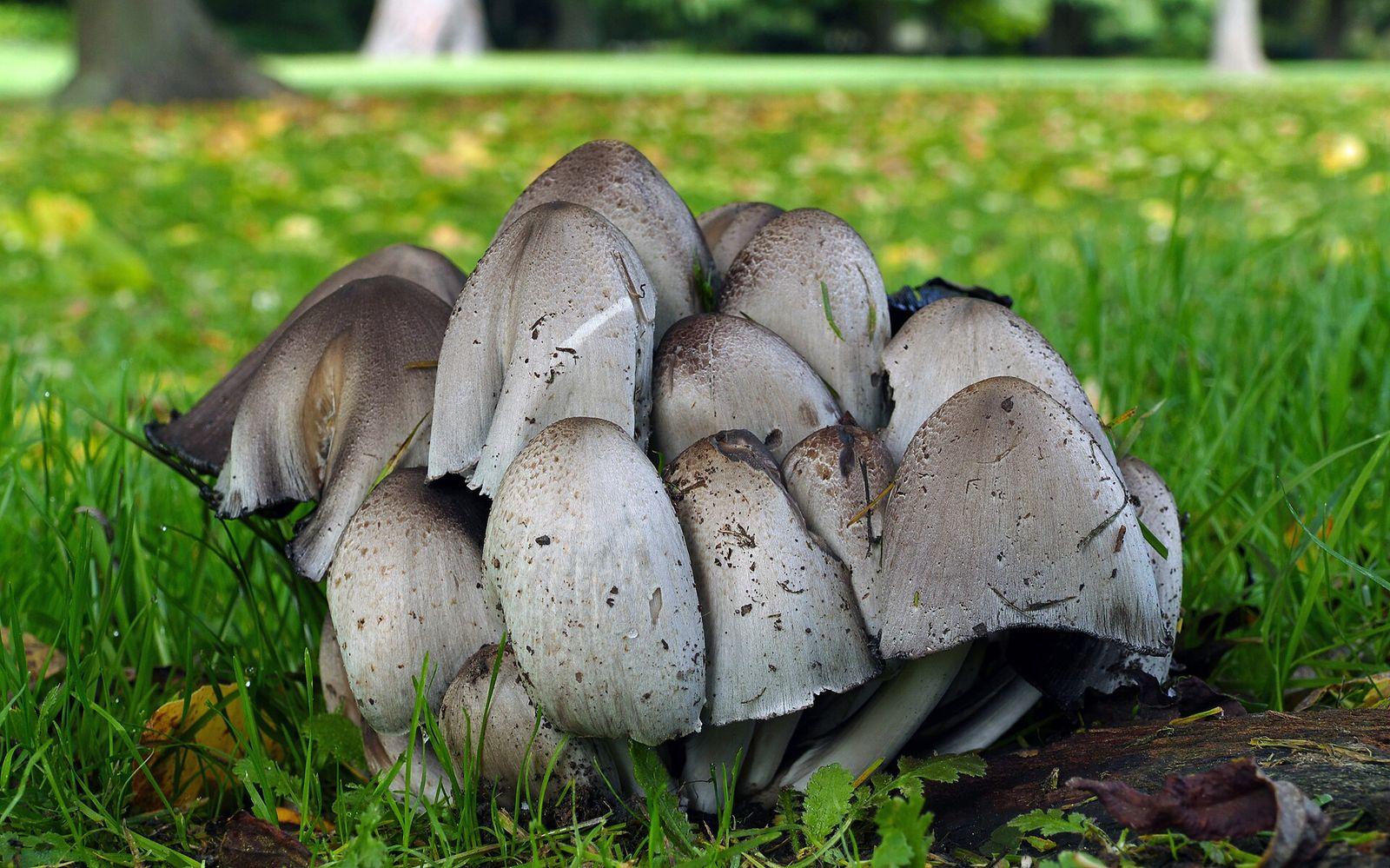
Cylindrical to narrowly egg-shaped, much taller than wide, white with a brownish tip and covered in shaggy, upturned whitish to pale brown scales. The edge turns pink, then black, and liquefies upward until little of the cap is left.
Underside
Gills free from the stem and packed tightly together. White at first, then pink, then black as they dissolve into an inky fluid.
Stem
White, smooth, hollow, with a thin fibrous strand running down the center. A small movable ring sits low on the stem and often slides down or falls off.
Flesh
White and soft, quickly turning black from the edge of the cap. Smell mild.
Spore print
Black.
Size
Cap 1.5 to 6 inches tall (4 to 15 cm) and 1 to 2 inches wide (2.5 to 5 cm); stem 2 to 8 inches tall (5 to 20 cm).

Where and when

Where and when it grows

Habitat
Lawns, parks, roadsides, gravel paths, wood chips and other disturbed or packed ground, usually in the open rather than deep woods.
Grows on
Soil rich in buried organic matter.
Season
Late summer through fall across most of the continent, with a spring flush in some areas and winter fruiting in California.
Range
Widespread across North America.

Edibility

What the field guides say

Edible when fresh

Field guides list the shaggy mane as edible when young, before the gills begin to darken. The cap digests itself within hours of being picked, so older specimens turn to black liquid. Unlike the common inkcap, it is not recorded as containing coprine, the compound that causes illness when inkcaps are combined with alcohol.

This page states what field guides record. It is not advice to eat, taste or handle anything, and a photo cannot settle edibility. If someone has eaten a wild mushroom that may be toxic, call poison control (1-800-222-1222 in the US) right away, before symptoms start: the deadliest species act hours later.

FAQ

Questions about the shaggy mane

Is shaggy mane mushroom edible?

Field guides list it as edible while the cap is still white and firm. Once the gills turn black and start to liquefy, it is past that stage. It breaks down within hours of picking.

Why does a shaggy mane turn to black ink?

The cap digests itself from the bottom edge upward, a process called deliquescence. The gills release their black spores as they dissolve, which turns the liquid black. The ink was once used for writing.

Where do shaggy mane mushrooms grow?

In lawns, along roadsides and trails, in parks and on disturbed or compacted ground. They often appear in lines or clusters after fall rains and come back in the same spots year after year.

Sources

Where these facts come from

  1. Coprinus comatus

    MushroomExpert.com

  2. Coprinus comatus

    Fungi Growing on Wood, Gary Emberger (MushroomExpert.com)

  3. Shaggy Mane

    Missouri Department of Conservation

  4. Coprinus comatus

    Index Fungorum

Waitlist

Hear when it opens

We will send one email when Mushrooms.id opens, and nothing else.

Email us to join

This opens your email app with the request written for you. Send it and we add you to the list. No email app? Write to hello@mushrooms.id with the subject “Add me to the Mushrooms.id waitlist”.