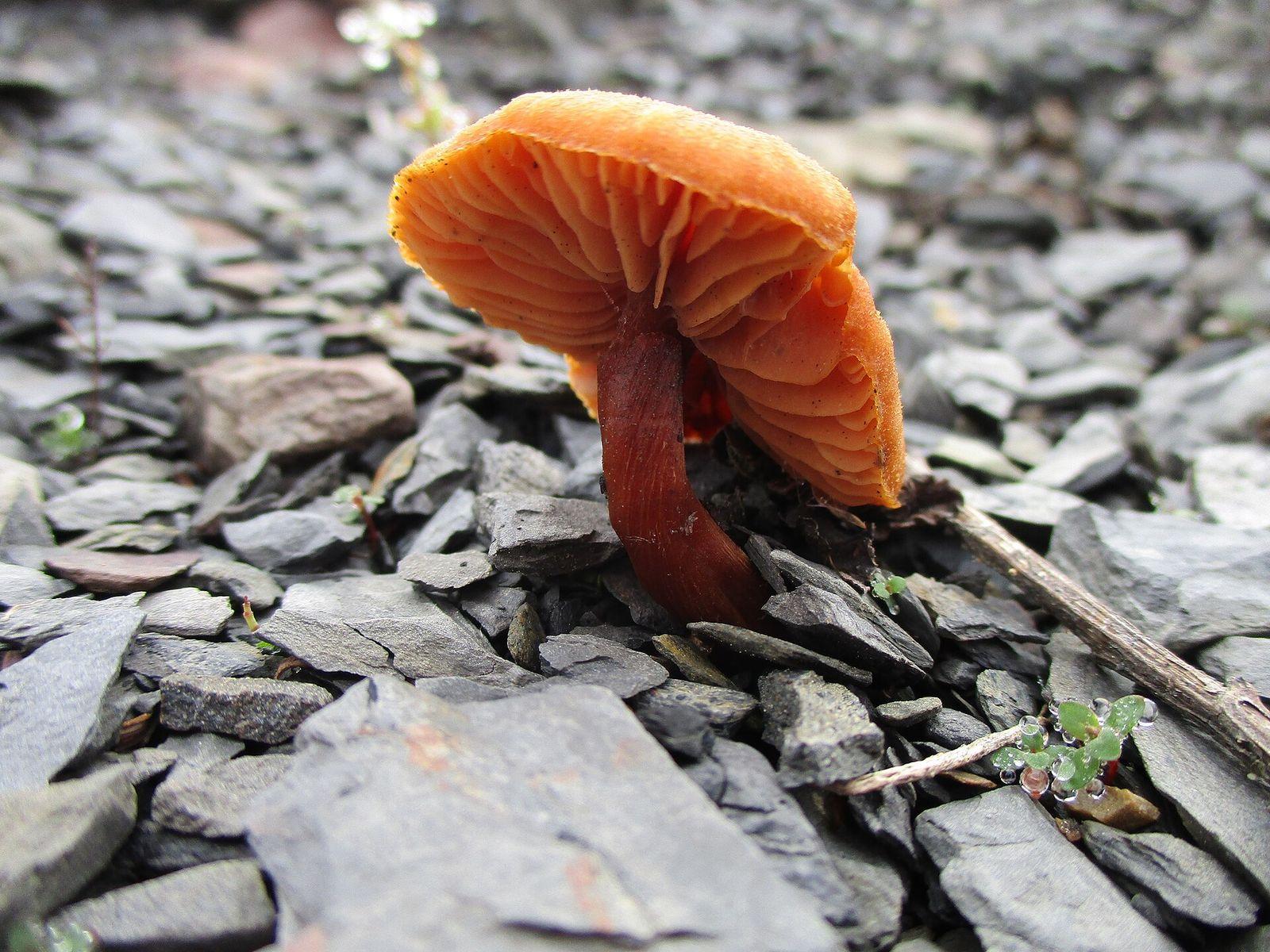
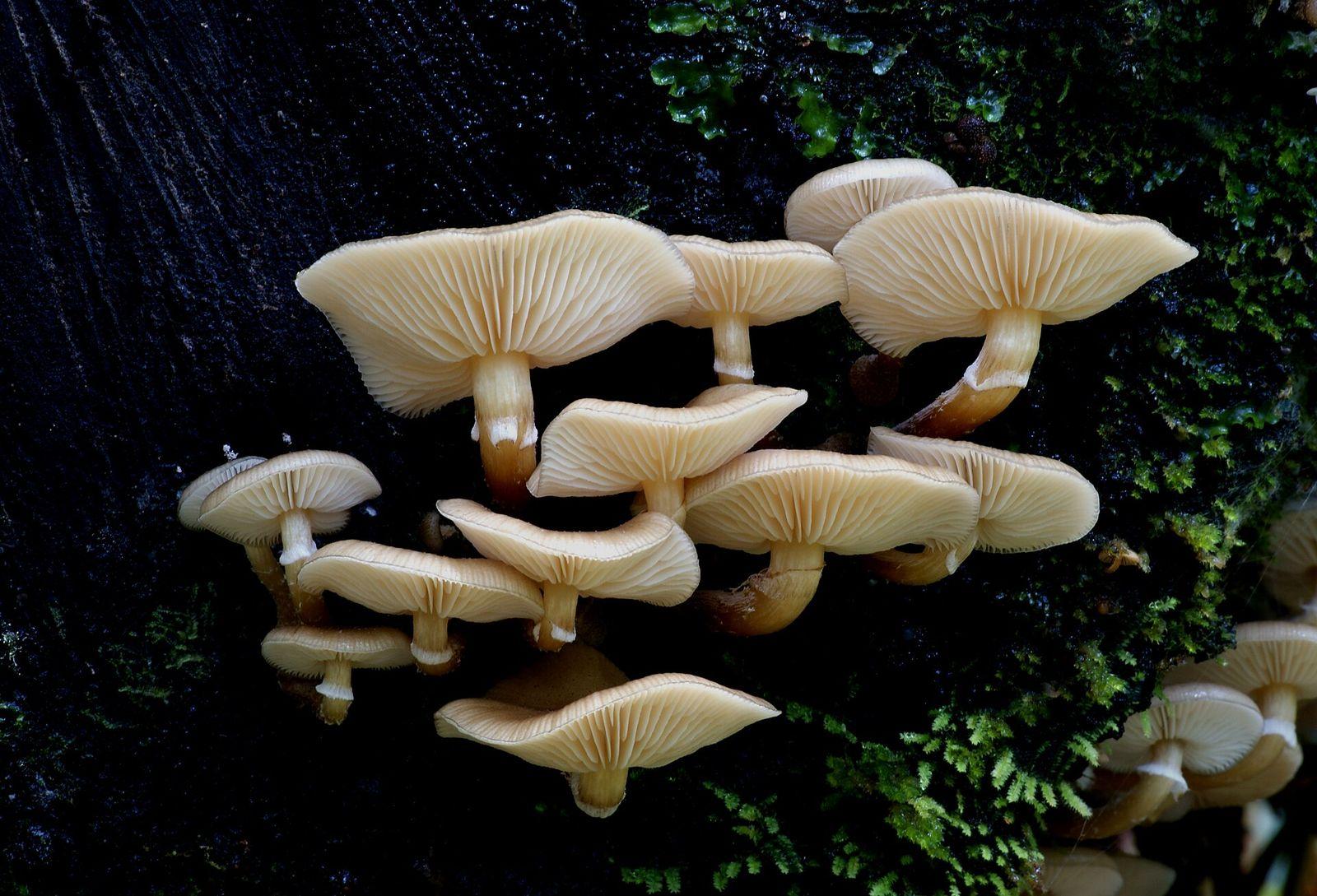
Deadly galerina vs honey mushroom
- Deadly Galerina
Spore prints differ: honey mushrooms print white, the deadly galerina prints rusty brown. Galerina is also smaller, with a smooth brown cap.
Quick answer
The mica cap drops a dark brown to black spore print, and its gills turn black and partly liquefy with age; the deadly galerina prints rusty brown, and its gills never turn black. The mica cap also has a grooved cap with glittering granules, though rain can wash them off, and a ringless white stem.
Deadly lookalike
Unlike the mica cap, the deadly galerina (Galerina marginata) contains amatoxins, the same toxins as the death cap, at similar concentrations, according to the University of British Columbia's Mushrooms Up! guide. Amatoxins stop cells from making proteins by blocking the enzyme RNA polymerase II. The Bay Area Mycological Society records that symptoms usually begin 6 to 24 hours after eating, followed by an apparent recovery and then liver damage from about 72 hours. Cooking does not destroy amatoxins.
If someone has eaten a wild mushroom and feels unwell, or may have eaten one of these, call poison control now: 1-800-222-1222 in the US. Do not wait for symptoms.
Side by side
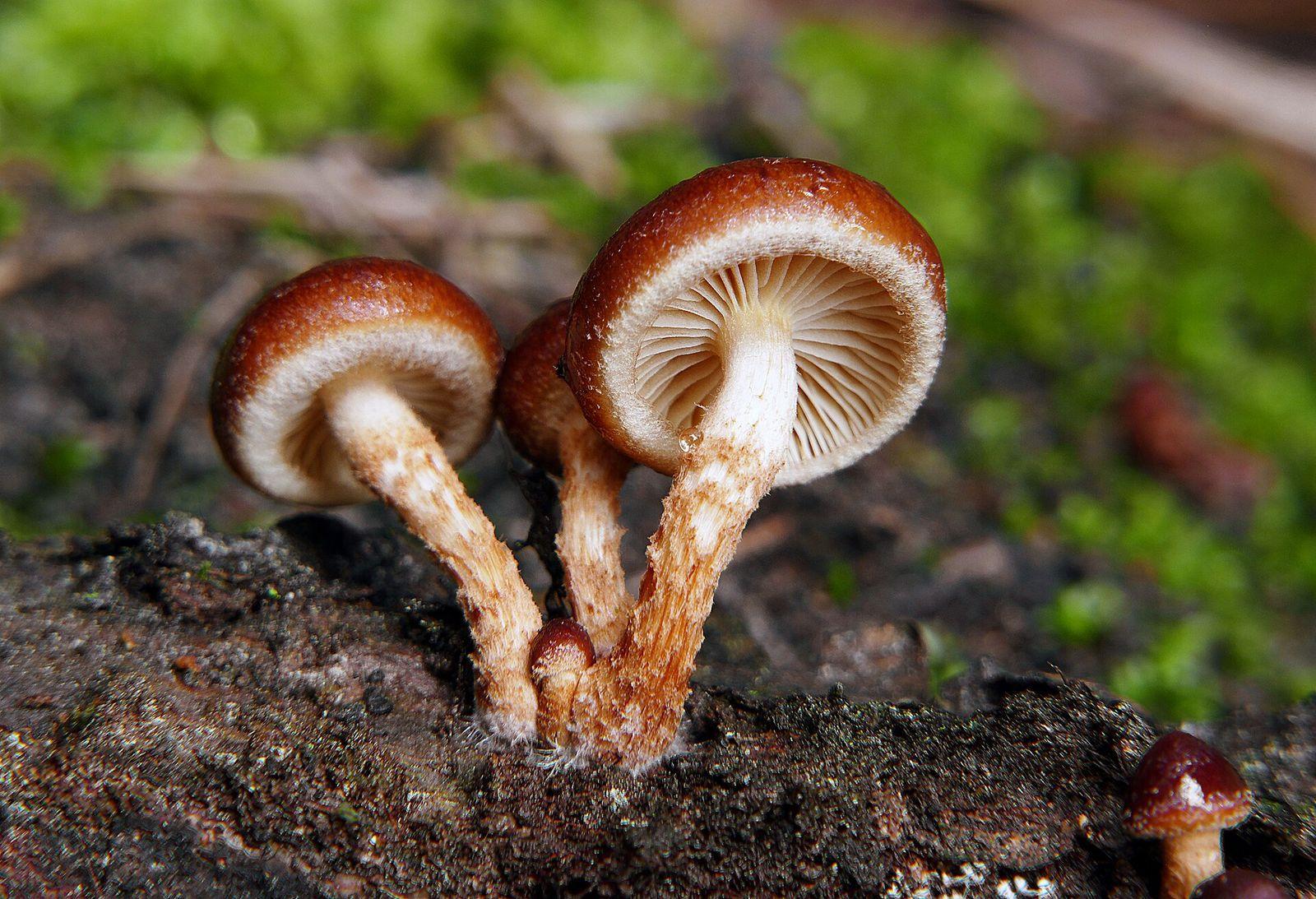
The tellSmall honey-brown caps in clusters on rotting wood, with rusty brown gills, a thin ring on the stem, and a rusty brown spore print.
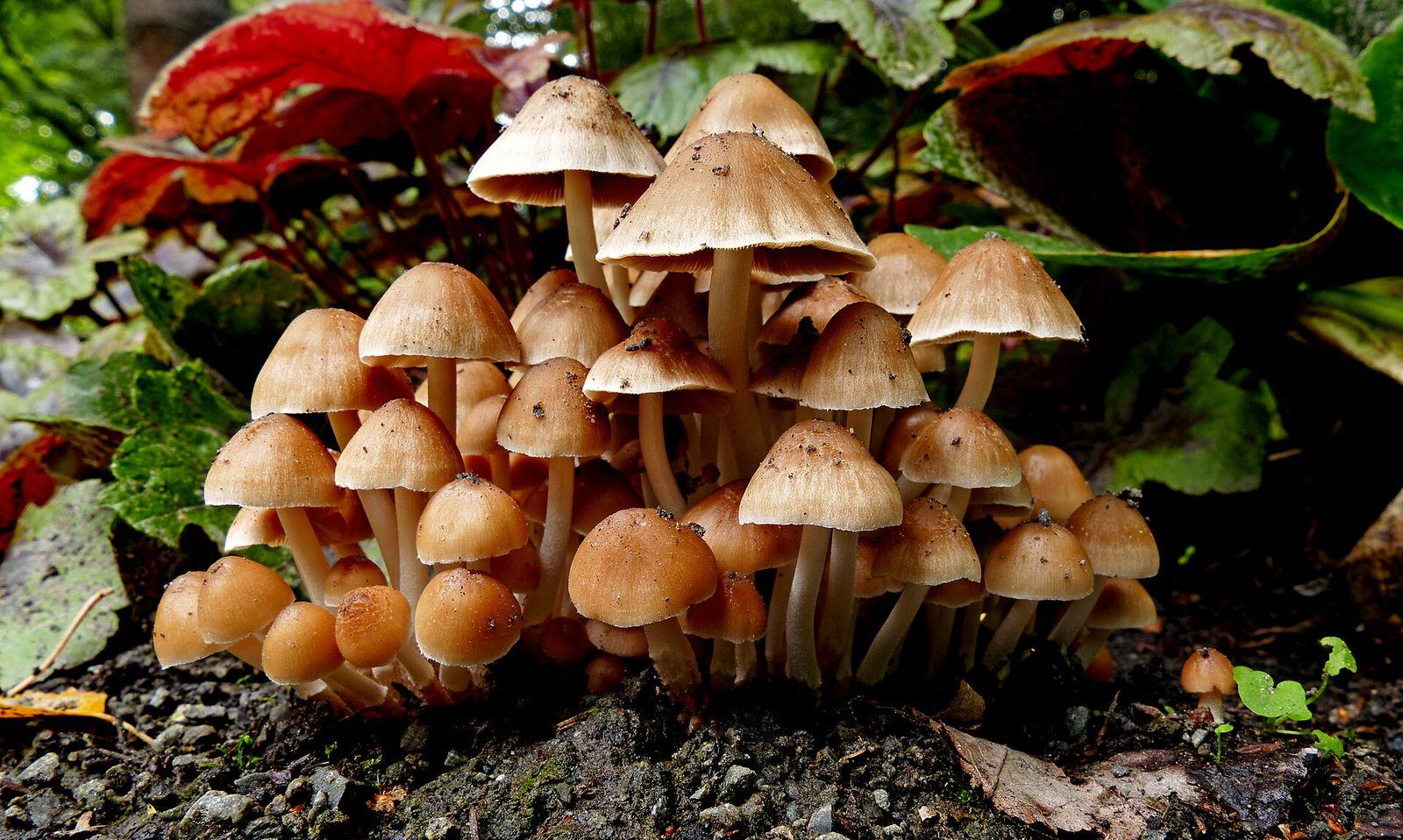
The tellSmall honey-brown, finely grooved caps dusted with glittering granules, in clusters on or near rotting wood.
| Feature | Deadly Galerina | Mica Cap |
|---|---|---|
| Spore print | Deadly GalerinaRusty brown. | Mica CapDark brown to black. |
| Gills | Deadly GalerinaYellowish, then rusty brown; never black or liquefying. | Mica CapWhitish, then brown, then black, partly liquefying with age. |
| Cap surface | Deadly GalerinaSmooth, slightly sticky, faintly lined at the edge. | Mica CapGrooved from the edge almost to the center, dusted with glittering granules that rain can wash off. |
| Ring | Deadly GalerinaA thin ring or ring zone. | Mica CapNone. |
| Stem | Deadly GalerinaBrownish, darker toward the base, with fine whitish fibers. | Mica CapWhite, smooth, thin and hollow. |
| Where it grows | Deadly GalerinaRotting conifer and hardwood logs and stumps, sometimes wood chips or moss over buried wood. | Mica CapAround stumps and tree bases, and in lawns over buried roots; common in towns. |
FAQ
The spore print: dark brown to black for the mica cap, rusty brown for the galerina. Mica caps also have grooved, glittering caps, no ring and gills that turn black.
No. The mica cap's stem is white, smooth, thin and hollow, with no ring. The deadly galerina has a thin ring or ring zone on a brownish stem with fine whitish fibers.
Sources
MushroomExpert.com
MushroomExpert.com
Beaty Biodiversity Museum, University of British Columbia
Bay Area Mycological Society
Keep checking
This page states what field guides record. It is not advice to eat, taste or handle anything, and a photo cannot settle edibility. If someone has eaten a wild mushroom that may be toxic, call poison control (1-800-222-1222 in the US) right away, before symptoms start: the deadliest species act hours later.
More comparisons
Spore prints differ: honey mushrooms print white, the deadly galerina prints rusty brown. Galerina is also smaller, with a smooth brown cap.
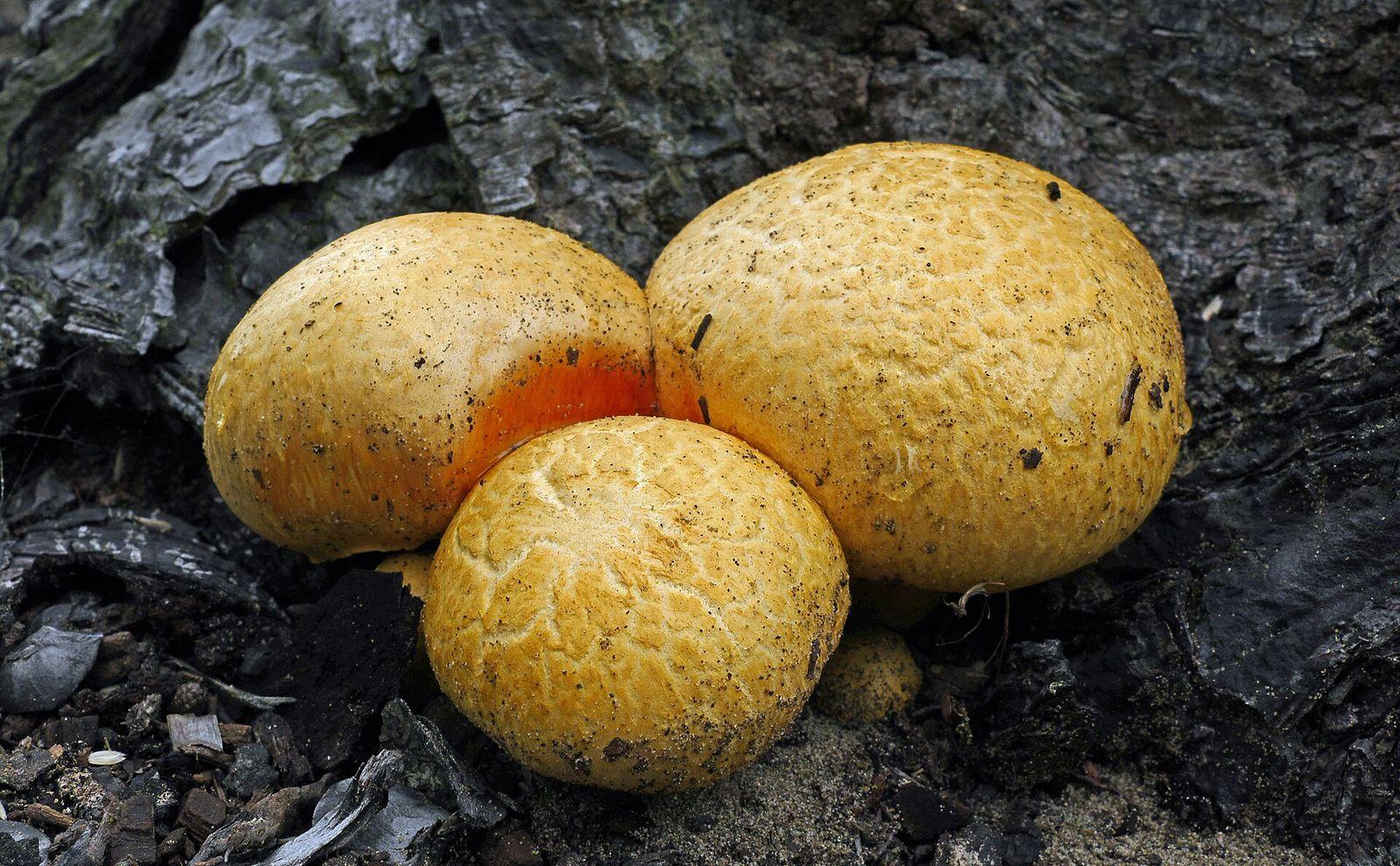
Both are rusty-spored clusters on wood. The big laughing gym is large and orange-yellow; the deadly galerina is small and honey-brown, with amatoxins.
Brick caps print purple-brown and have brick-red caps; the deadly galerina prints rusty brown and is smaller and honey-brown. Both cluster on wood.
Waitlist
We will send one email when Mushrooms.id opens, and nothing else.
This opens your email app with the request written for you. Send it and we add you to the list. No email app? Write to hello@mushrooms.id with the subject “Add me to the Mushrooms.id waitlist”.