Pholiotina rugosa
Photo coming
Deadly
Fool's Conecap
Pholiotina rugosa
The fool's conecap has a ring on its stem and leaves a dull rusty brown spore print, lighter than the haymaker's dark brown. It contains amatoxins.
Panaeolus foenisecii
Also called lawn mower's mushroom, mower's mushroom, panaeolina foenisecii.
The haymaker's mushroom is one of the most common mushrooms in North American lawns, appearing in mown grass after rain. It is small, brown and fragile. It is the usual suspect when children or pets eat a lawn mushroom, and old reports call it hallucinogenic.
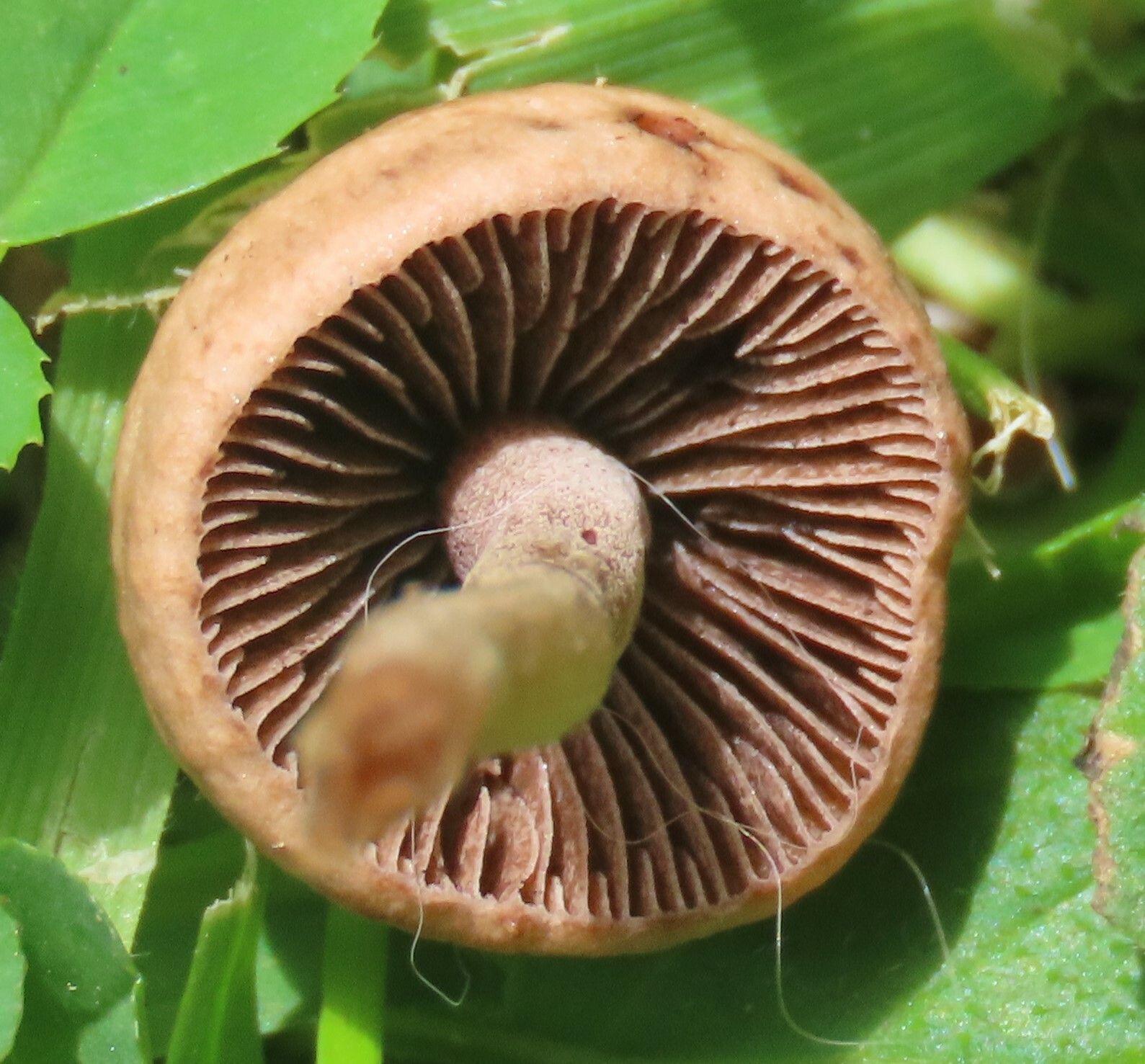
The tell
A small brown bell-shaped cap in lawns that dries paler in bands, with mottled brown gills and a dark brown spore print.
Field marks
Cap, underside and stem show in a photo. The spore print does not, and it is often the deciding check.
Where and when
Lookalikes
Each card says how to tell the two apart.
Pholiotina rugosa
Photo coming
Pholiotina rugosa
The fool's conecap has a ring on its stem and leaves a dull rusty brown spore print, lighter than the haymaker's dark brown. It contains amatoxins.
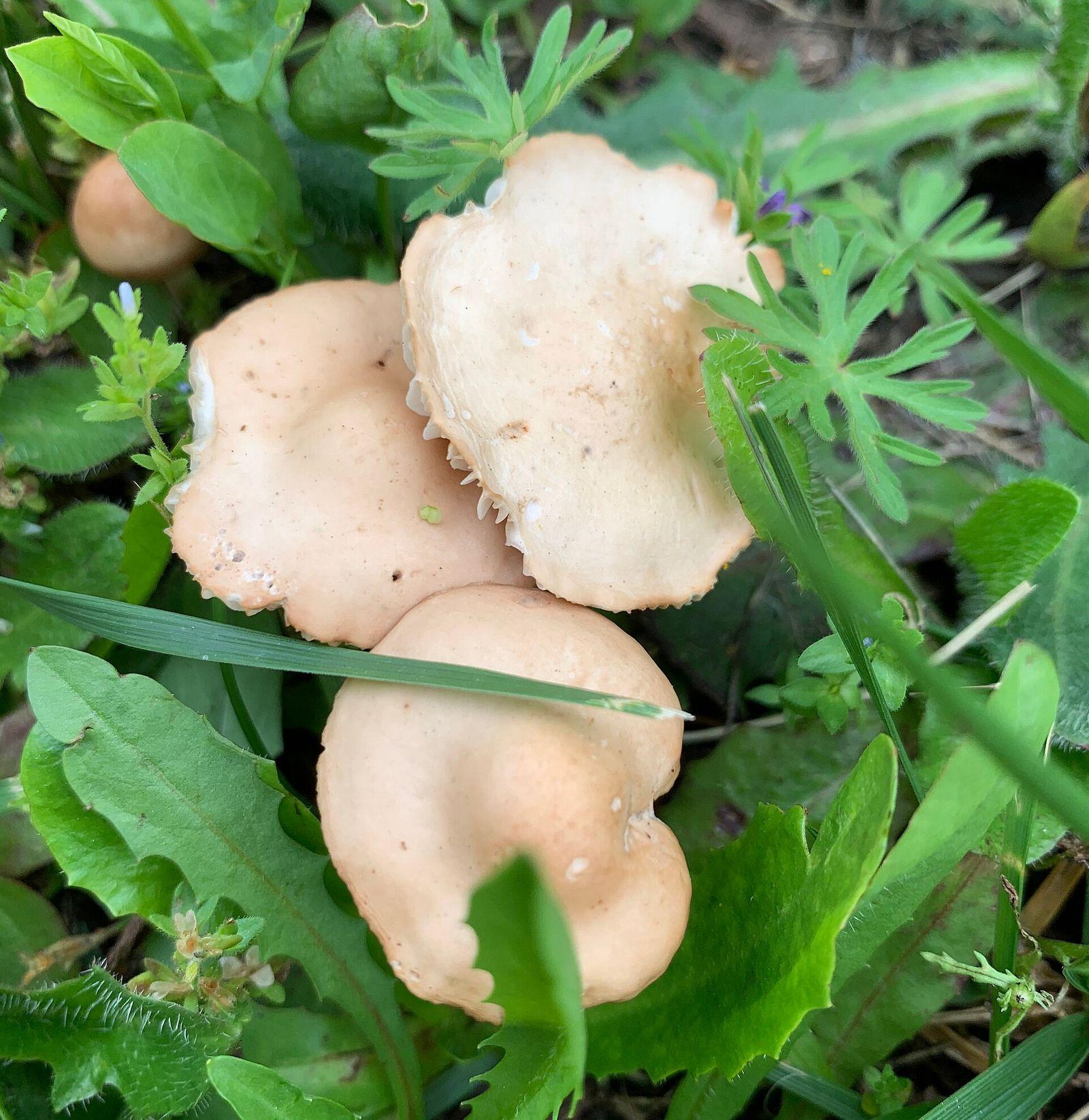
Marasmius oreades
The fairy ring mushroom has widely spaced pale gills, a tough stem that twists without breaking, and a white spore print. It grows in rings.
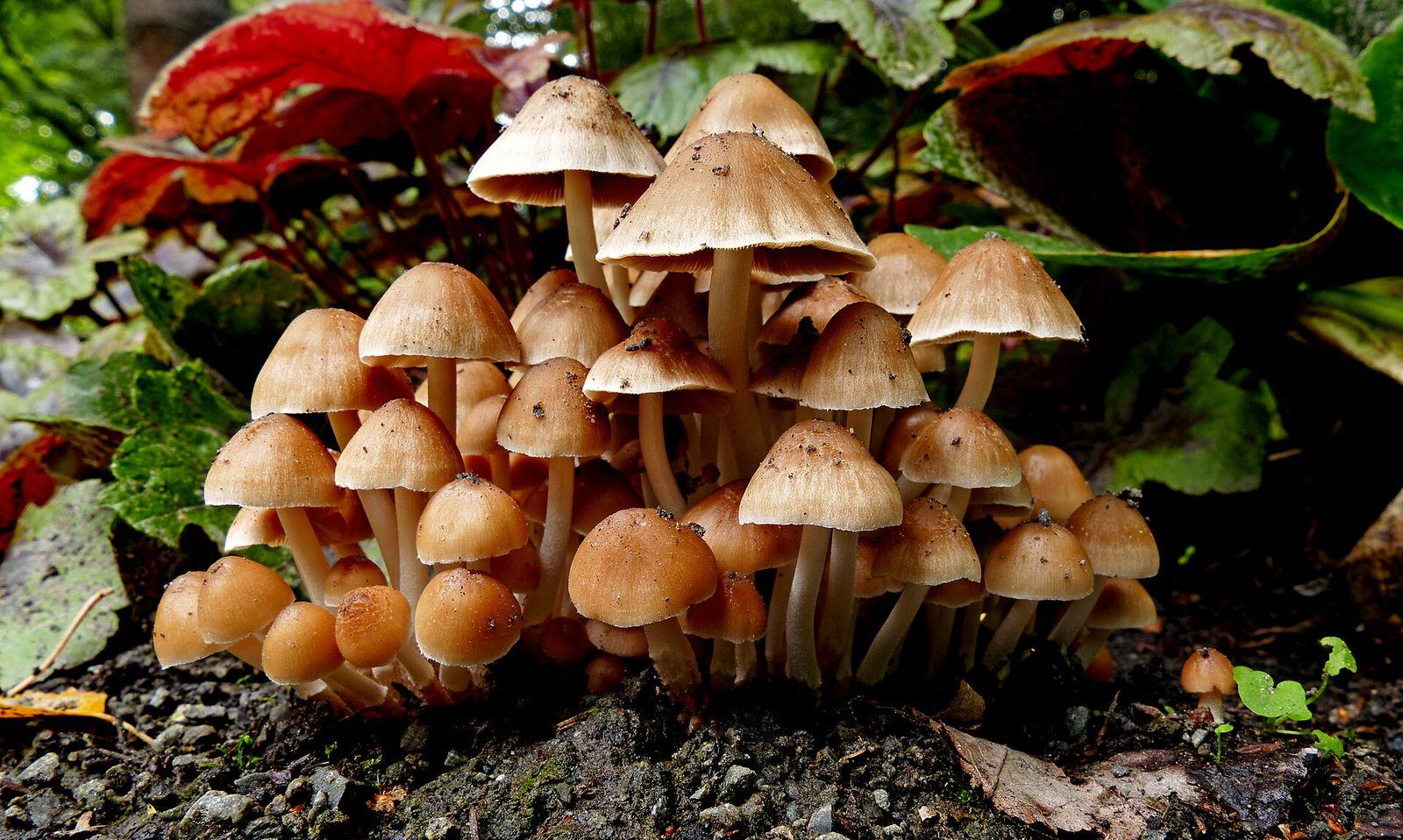
Coprinellus micaceus
Mica caps grow in clusters on wood or buried roots, have glistening granules on the cap, and leave a black spore print. Their gills slowly turn inky.
Edibility
Field guides list the haymaker's mushroom as inedible to mildly toxic. Older reports of psilocybin in this species have not been confirmed by most later analyses, and guides differ on whether it has any psychoactive effect. It shares lawns with the fool's conecap, which contains amatoxins.
This page states what field guides record. It is not advice to eat, taste or handle anything, and a photo cannot settle edibility. If someone has eaten a wild mushroom that may be toxic, call poison control (1-800-222-1222 in the US) right away, before symptoms start: the deadliest species act hours later.
FAQ
Field guides list it as inedible to mildly toxic. It is not known to cause serious poisoning, but it grows alongside lawn mushrooms that do, including the fool's conecap, which contains amatoxins.
Old reports said it contained psilocybin, but most later analyses have not found it. Field guides differ on whether it has any psychoactive effect.
One of the most common across North America is the haymaker's mushroom, a small brown mushroom with a bell-shaped cap that dries paler, mottled brown gills and a dark brown spore print. Lawns also produce other small brown species, some of them toxic.
Sources
MushroomExpert.com
Index Fungorum
Waitlist
We will send one email when Mushrooms.id opens, and nothing else.
This opens your email app with the request written for you. Send it and we add you to the list. No email app? Write to hello@mushrooms.id with the subject “Add me to the Mushrooms.id waitlist”.