Mildly toxic
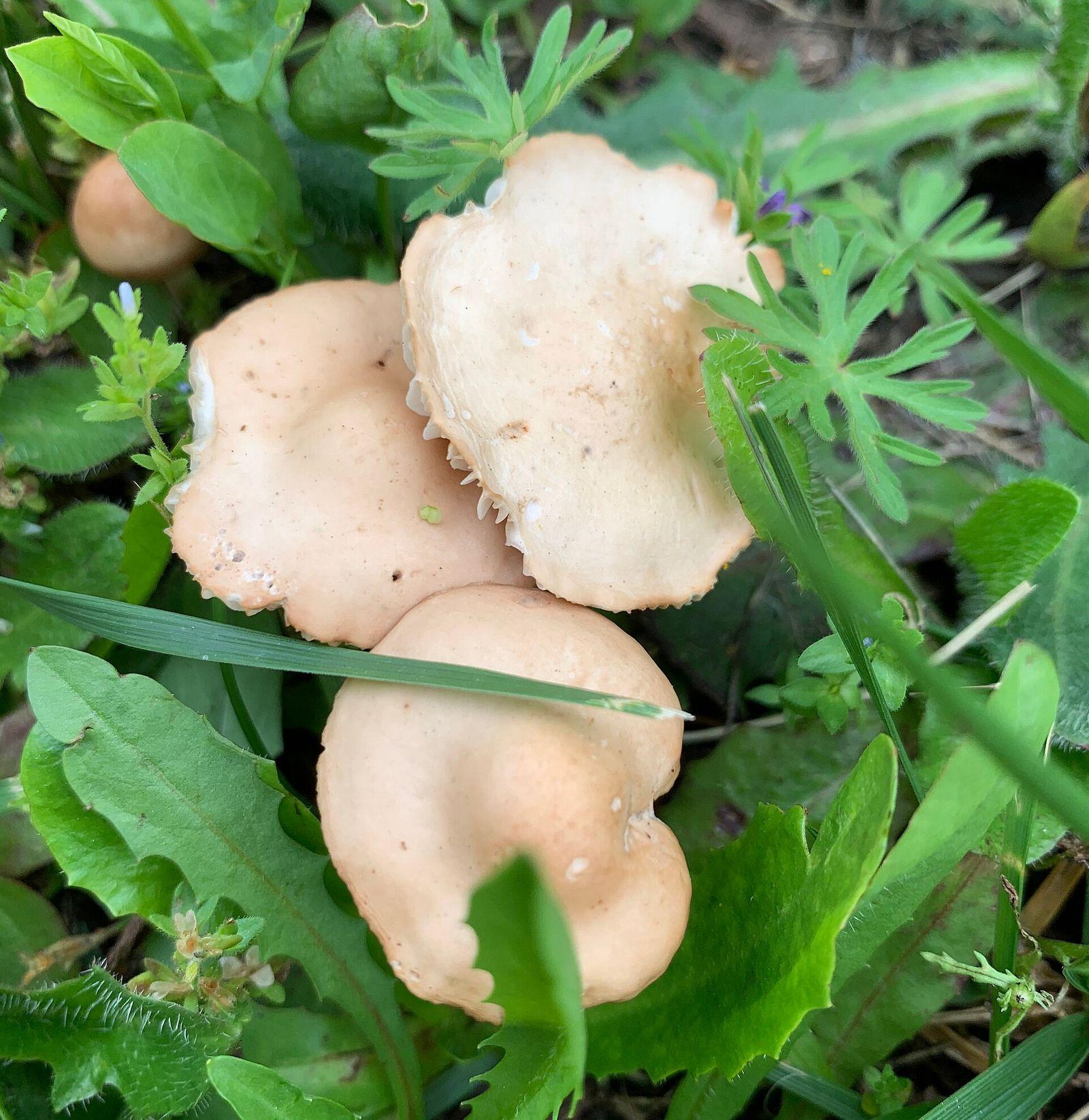
Haymaker's Mushroom
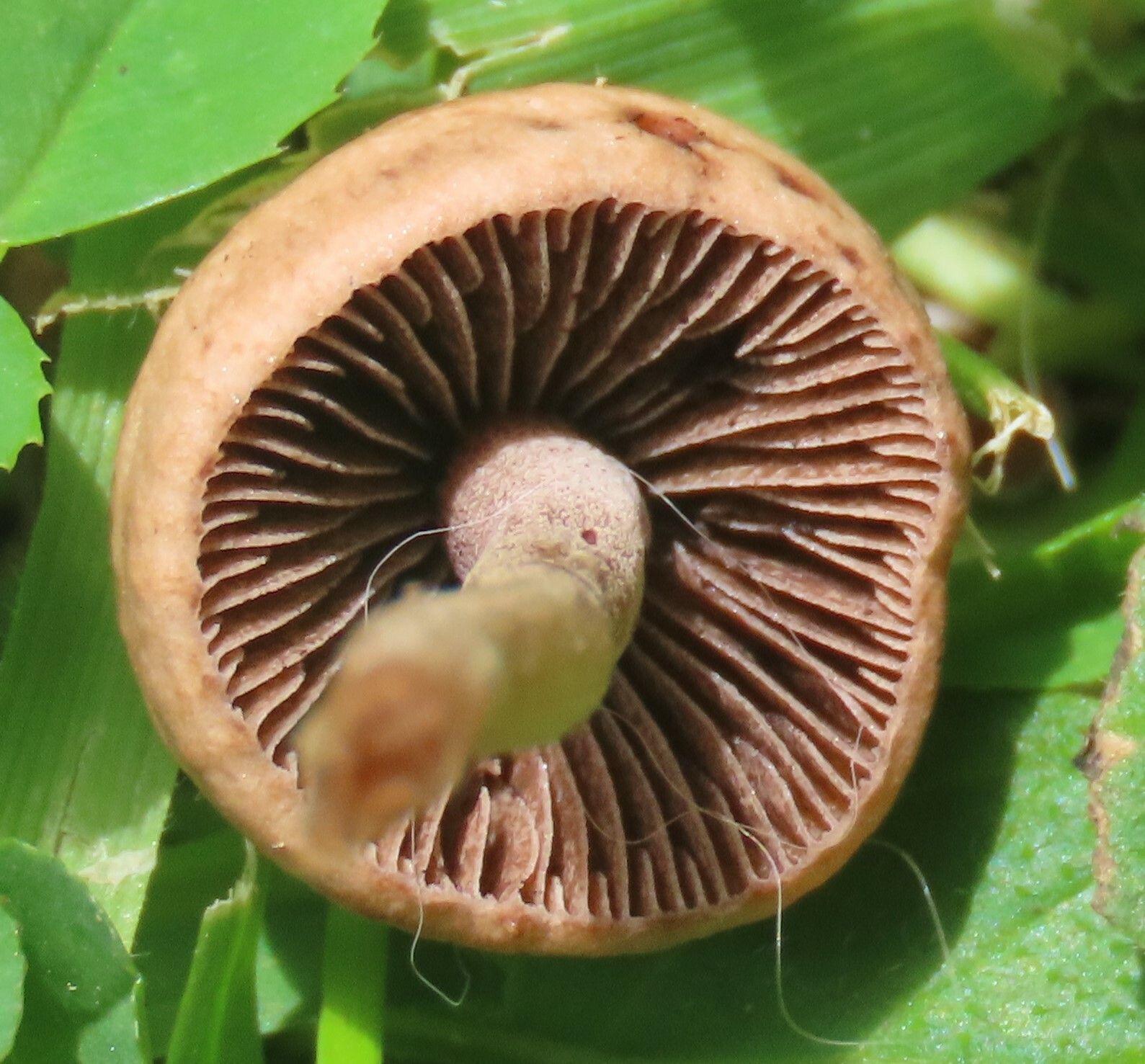
Panaeolus foenisecii
The haymaker's mushroom grows in lawns too, but it has no ring, mottled brown gills and a dark brown spore print.
Pholiotina rugosa
Also called conocybe filaris, ringed conecap.
The fool's conecap is a tiny orange-brown mushroom with a ring on its thin stem that grows in lawns, gardens and wood chip mulch. It contains amatoxins, the same toxins as the death cap, and is easy to overlook or mistake for other little brown mushrooms.
Pholiotina rugosa
Photo coming
The tell
Tiny orange-brown conical cap on a thin stem with a small movable ring, in lawns, mulch and wood chips.
Field marks
Cap, underside and stem show in a photo. The spore print does not, and it is often the deciding check.
Where and when
Lookalikes
Each card says how to tell the two apart.
Psilocybe mushrooms leave a dark purple-brown spore print, and many bruise blue. The fool's conecap leaves a rusty brown print and does not bruise blue.
Panaeolus foenisecii
The haymaker's mushroom grows in lawns too, but it has no ring, mottled brown gills and a dark brown spore print.
Galerina marginata
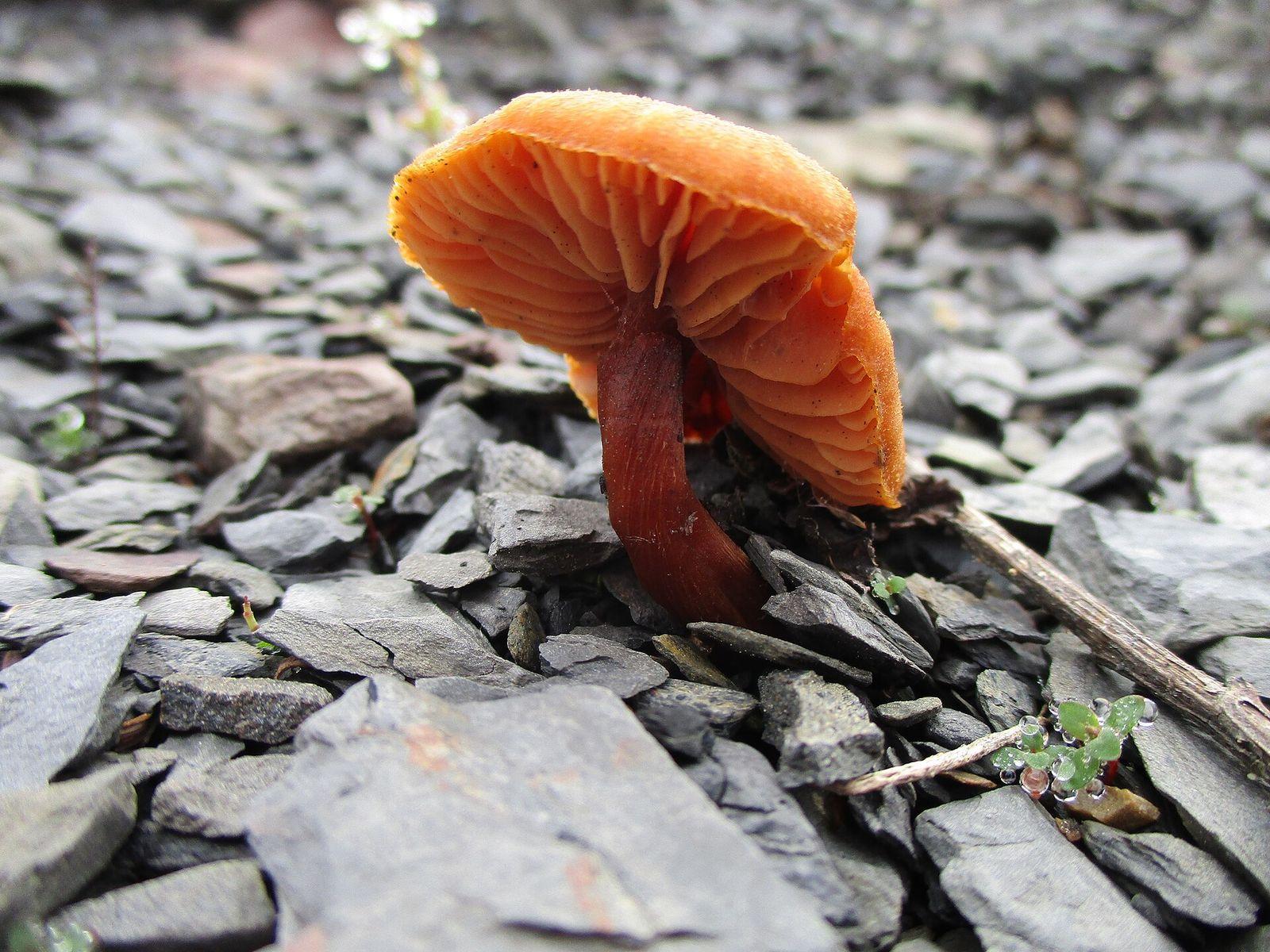
The deadly galerina is also rusty-spored with a ring and also contains amatoxins. It is usually larger and grows in clusters on rotting wood.
More side-by-side comparisons
Edibility
The fool's conecap contains amatoxins, the same toxins found in the death cap. They shut down protein production in liver and kidney cells. Symptoms usually begin 6 to 24 hours after the meal with severe vomiting and diarrhea, followed by liver and kidney failure. Field guides list it as deadly and warn of its resemblance to hallucinogenic Psilocybe species.
This page states what field guides record. It is not advice to eat, taste or handle anything, and a photo cannot settle edibility. If someone has eaten a wild mushroom that may be toxic, call poison control (1-800-222-1222 in the US) right away, before symptoms start: the deadliest species act hours later.
FAQ
Yes, it is deadly. It contains amatoxins, the same toxins as the death cap, which destroy liver and kidney cells.
It is a tiny mushroom with a conical orange-brown cap, rusty brown gills and a thin, fragile stem with a small ring. The ring is the feature that separates it from most similar lawn mushrooms.
In lawns, gardens, landscaping beds and wood chip mulch, often near houses. It is widespread in North America and reported most often from the Pacific Northwest.
Sources
MushroomExpert.com
MykoWeb, California Fungi
Index Fungorum
Waitlist
We will send one email when Mushrooms.id opens, and nothing else.
This opens your email app with the request written for you. Send it and we add you to the list. No email app? Write to hello@mushrooms.id with the subject “Add me to the Mushrooms.id waitlist”.