Lepiota subincarnata
Photo coming
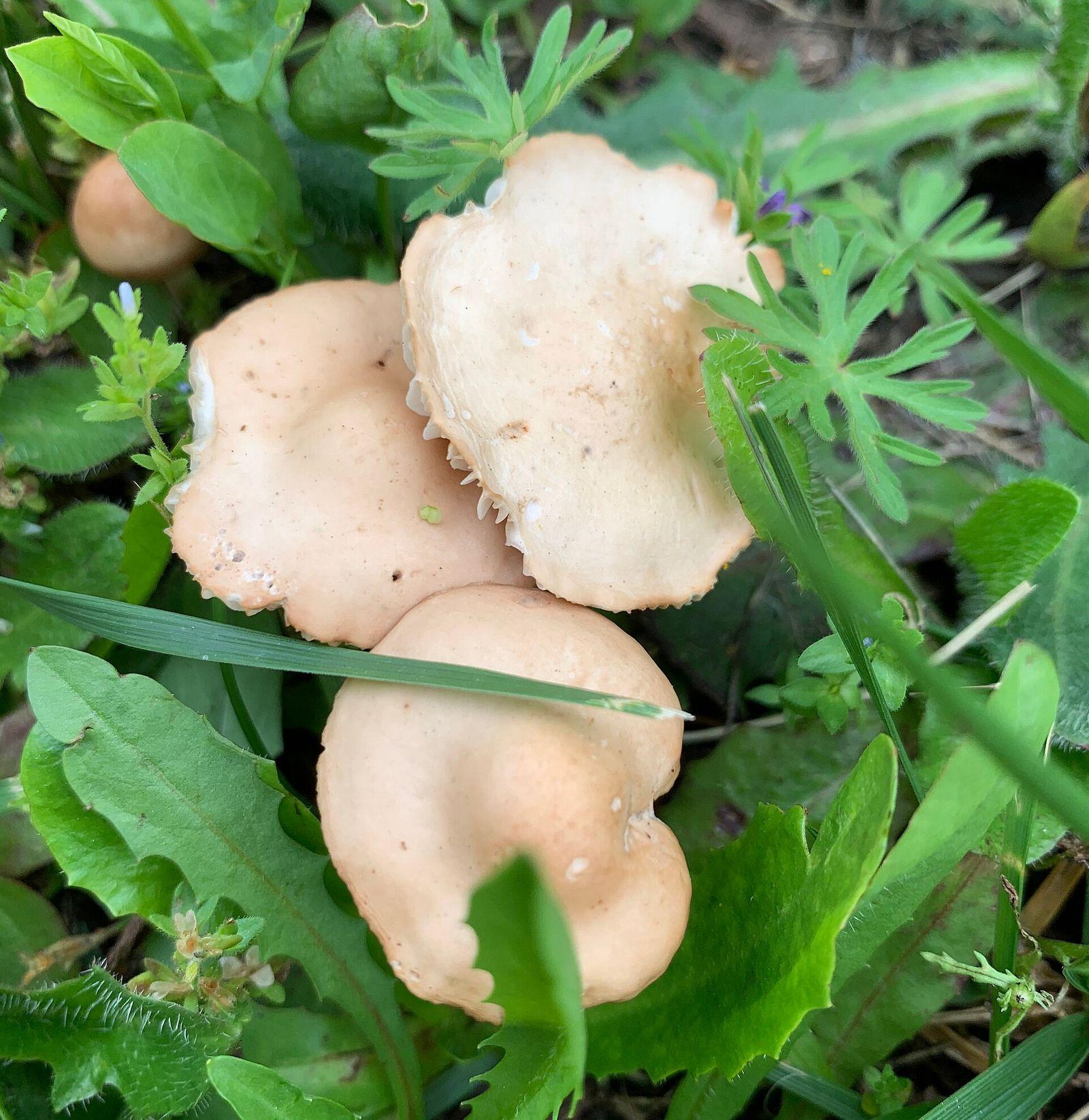
Deadly dapperling vs fairy ring mushroom
- Deadly Dapperling
The deadly dapperling has a scaly pinkish cap, crowded white gills and a banded stem. Fairy ring mushrooms have a smooth tan cap and spaced gills.
Quick answer
The fairy ring mushroom drops a white spore print, has no ring, and has a tough stem that twists without breaking; the fool's conecap drops a rusty brown print, has a small membranous ring in the upper half of a thin, fragile stem, and contains amatoxins. The fairy ring mushroom's gills are also broad and widely spaced, the conecap's fairly close.
Deadly lookalike
Unlike the fairy ring mushroom, the fool's conecap (Pholiotina rugosa) contains deadly amatoxins, according to MykoWeb's California Fungi, and the Bay Area Mycological Society lists it with the amatoxin species. Amatoxin symptoms usually begin 6 to 24 hours after eating with vomiting and diarrhea, followed by an apparent recovery and then liver damage from about 72 hours.
If someone has eaten a wild mushroom and feels unwell, or may have eaten one of these, call poison control now: 1-800-222-1222 in the US. Do not wait for symptoms.
Side by side
The tellTan, bell-shaped caps in rings in grass, widely spaced gills, and a tough, wiry stem that twists without snapping.
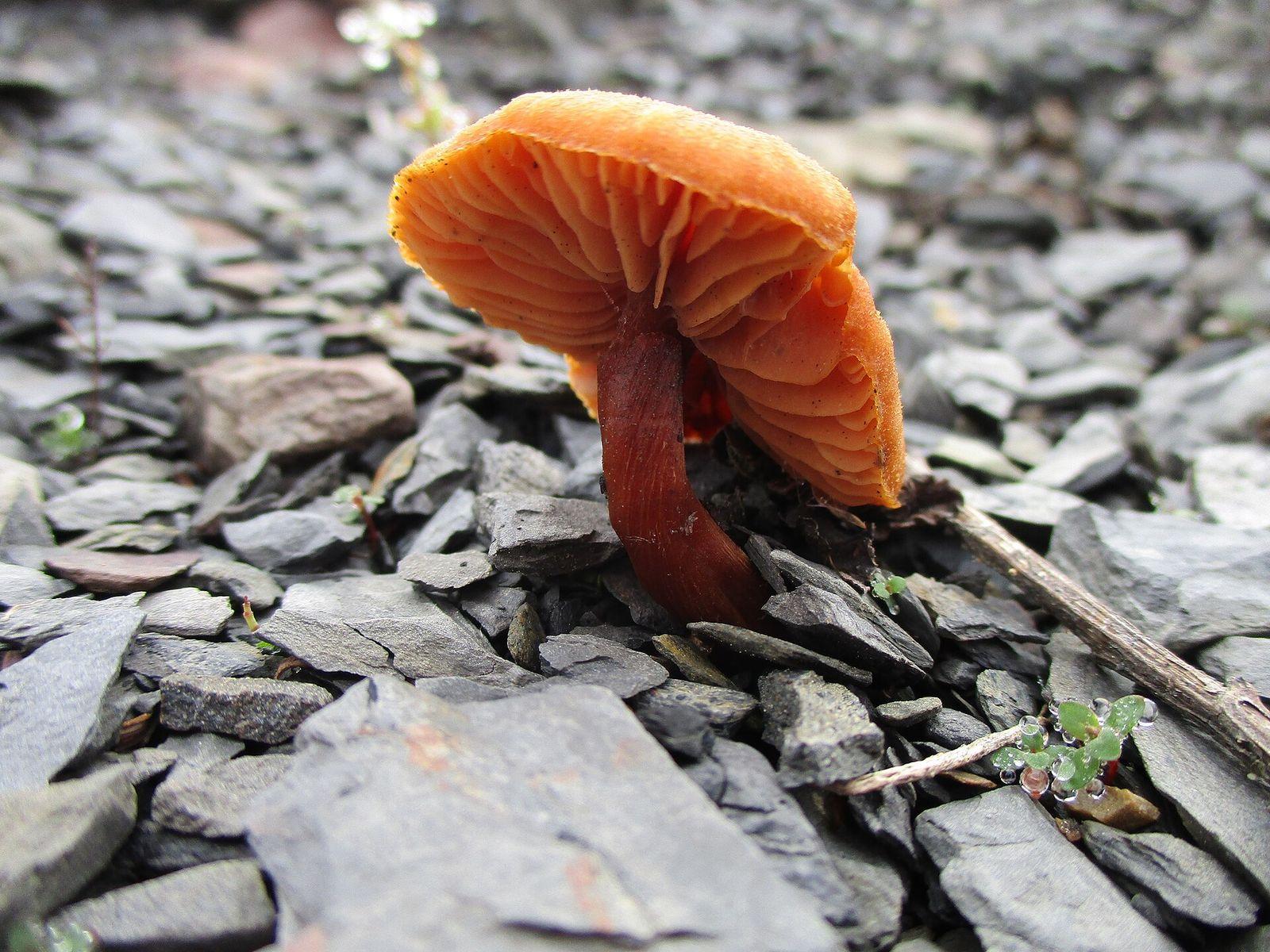
Pholiotina rugosa
Photo coming
The tellTiny orange-brown conical cap on a thin stem with a small movable ring, in lawns, mulch and wood chips.
| Feature | Fairy Ring Mushroom | Fool's Conecap |
|---|---|---|
| Spore print | Fairy Ring MushroomWhite. | Fool's ConecapDull rusty brown. |
| Ring | Fairy Ring MushroomNone. | Fool's ConecapA small, pale, membranous ring in the upper half that can fall off. |
| Stem | Fairy Ring MushroomTough and pliant; twists without breaking. | Fool's ConecapThin and fragile. |
| Gills | Fairy Ring MushroomBroad, widely spaced, whitish to pale tan. | Fool's ConecapFairly close, pale then rusty brown. |
| Cap | Fairy Ring MushroomBell-shaped to convex with a broad raised center, tan to buff, smooth. | Fool's ConecapConical to bell-shaped, orange-brown, finely lined at the edge when moist. |
| Growth | Fairy Ring MushroomIn full or partial rings in grass. | Fool's ConecapScattered in lawns, gardens, mulch, wood chips and moss. |
FAQ
They include the fool's conecap and small Lepiota species, which contain amatoxins, according to the Bay Area Mycological Society. The fairy ring mushroom differs from the fool's conecap in its white print, widely spaced gills and tough, ringless stem.
No. The name refers to the rings it forms in grass. A small brown lawn mushroom with a ring on its stem is not a fairy ring mushroom.
Sources
MushroomExpert.com
MushroomExpert.com
Bay Area Mycological Society
Keep checking
This page states what field guides record. It is not advice to eat, taste or handle anything, and a photo cannot settle edibility. If someone has eaten a wild mushroom that may be toxic, call poison control (1-800-222-1222 in the US) right away, before symptoms start: the deadliest species act hours later.
More comparisons
Lepiota subincarnata
Photo coming
The deadly dapperling has a scaly pinkish cap, crowded white gills and a banded stem. Fairy ring mushrooms have a smooth tan cap and spaced gills.
Pholiotina rugosa
Photo coming
Both contain amatoxins, print rusty brown and have a ring. The galerina clusters on rotting wood; the fool's conecap grows in lawns and mulch.
Pholiotina rugosa
Photo coming
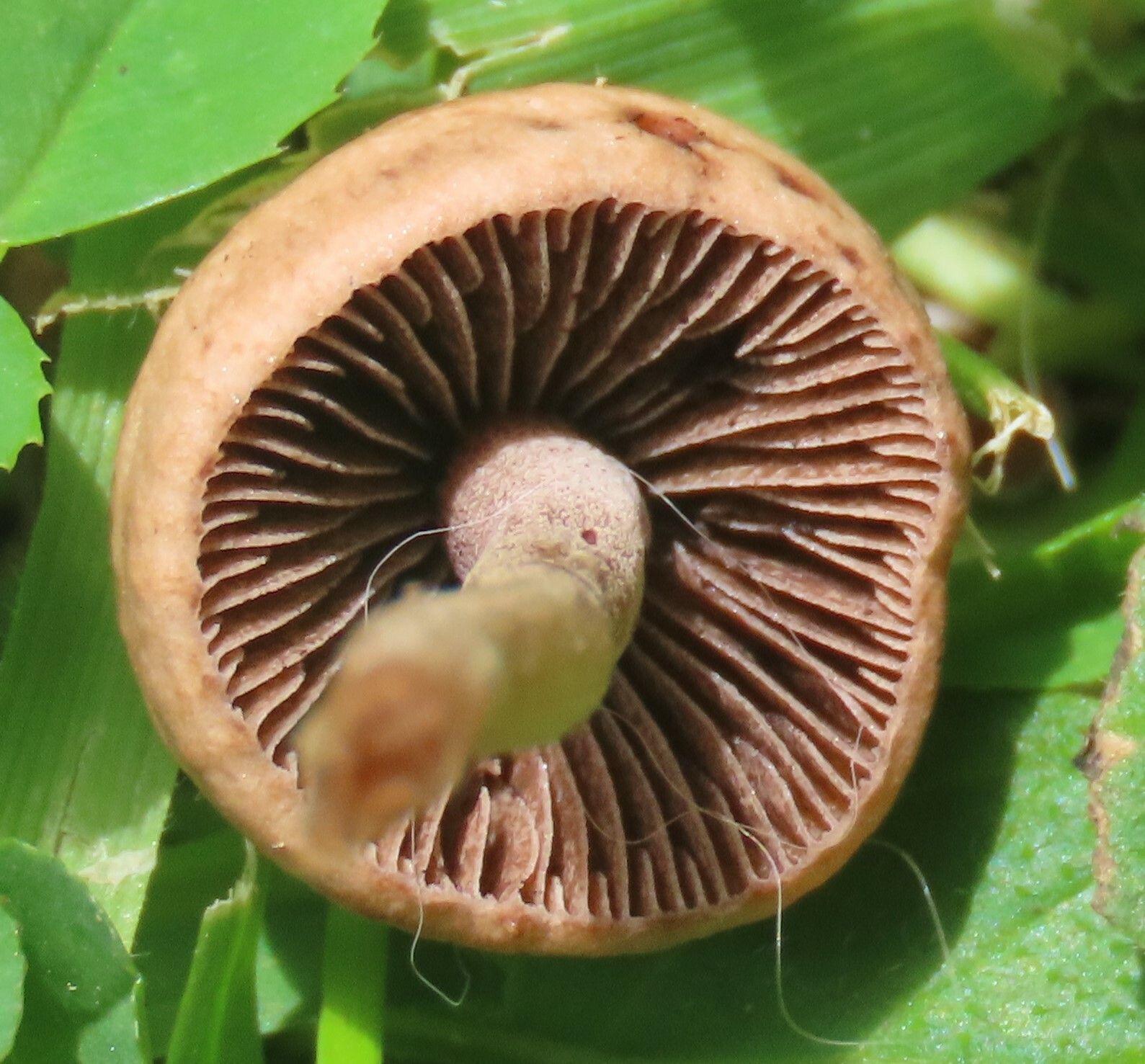
The fool's conecap has a ring and a rusty brown print. The haymaker's mushroom has no ring, mottled brown gills and a dark brown print.
Waitlist
We will send one email when Mushrooms.id opens, and nothing else.
This opens your email app with the request written for you. Send it and we add you to the list. No email app? Write to hello@mushrooms.id with the subject “Add me to the Mushrooms.id waitlist”.