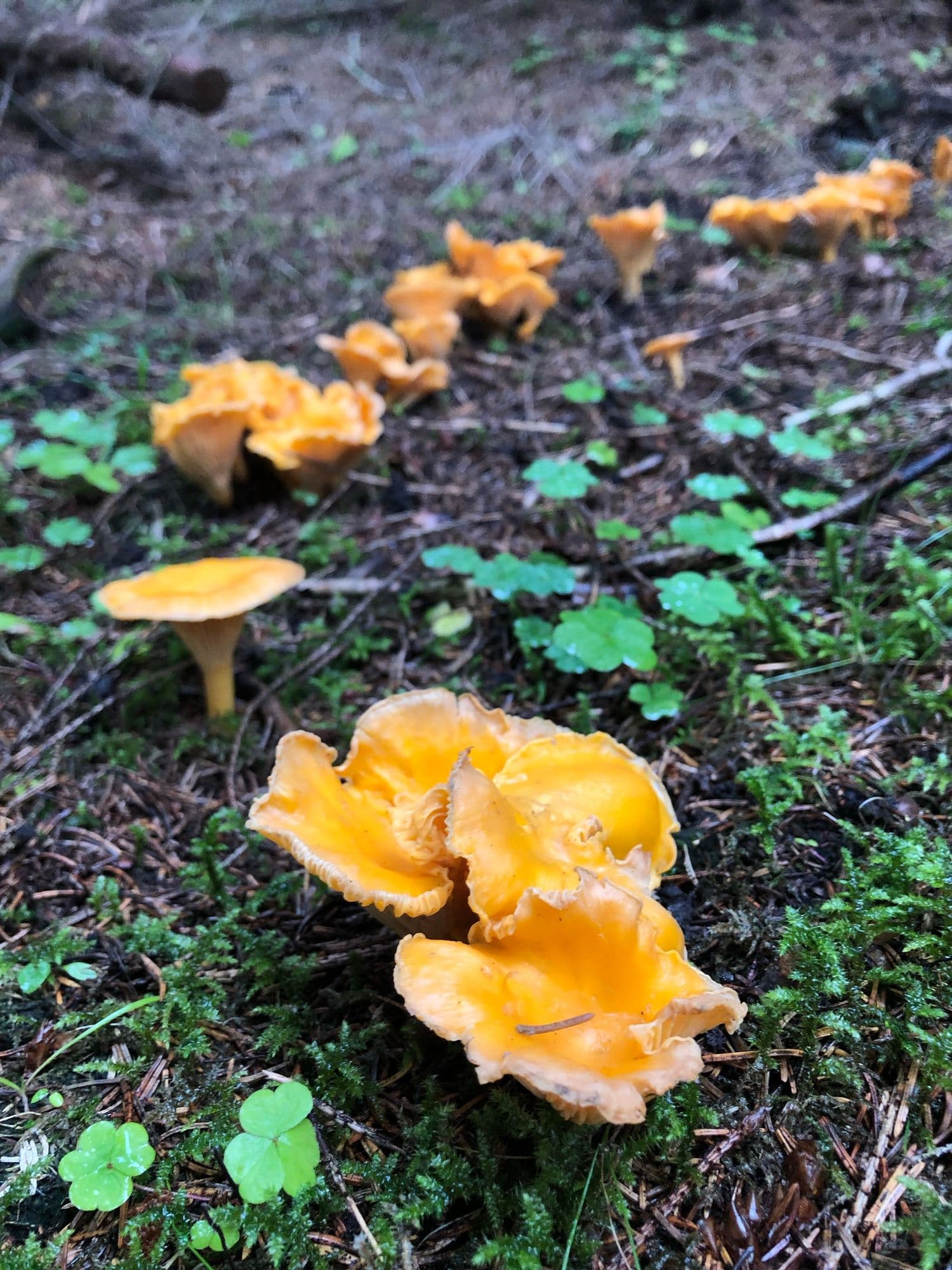
Edible
Golden Chanterelle
Cantharellus cibarius
Chanterelles have blunt, forked ridges that run down the stem instead of true gills, a pale spore print, and no veil. The deadly webcap has true gills and a rusty brown spore print.
Cortinarius rubellus
Also called deadly cortinarius, cortinarius speciosissimus.
The deadly webcap is an orange-brown Cortinarius of wet, mossy conifer forests. It contains orellanine, a toxin that destroys the kidneys, with symptoms that can take days to weeks to appear. Poisonings have followed its confusion with chanterelles.
Cortinarius rubellus
Photo coming
The tell
Orange-brown, pointed cap, rusty brown gills, and yellowish bands of veil on the stem, in mossy conifer woods.
Field marks
Cap, underside and stem show in a photo. The spore print does not, and it is often the deciding check.
Where and when
Lookalikes
Each card says how to tell the two apart.
Cantharellus cibarius
Chanterelles have blunt, forked ridges that run down the stem instead of true gills, a pale spore print, and no veil. The deadly webcap has true gills and a rusty brown spore print.
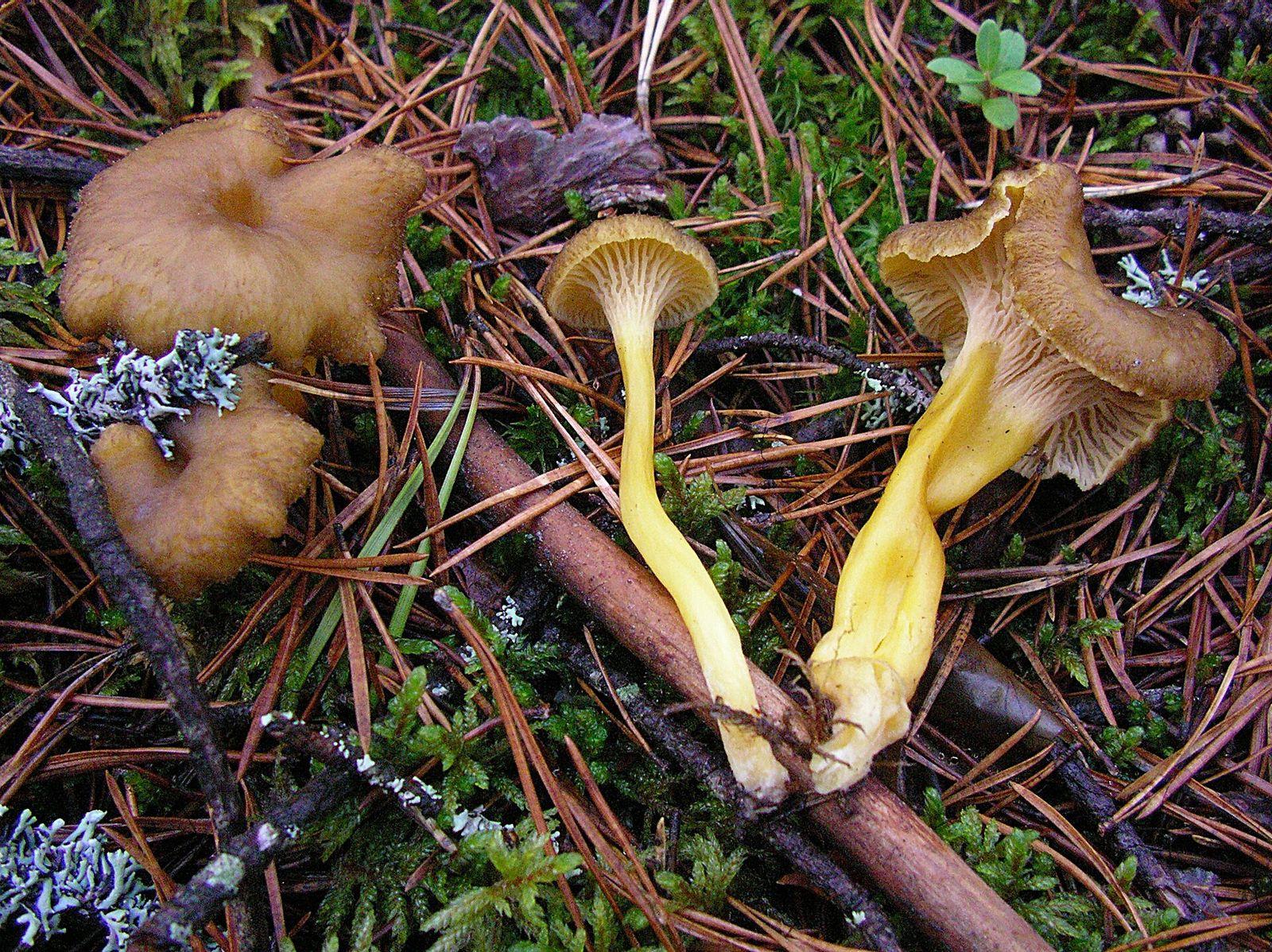
Craterellus tubaeformis
Yellowfoot has a hollow yellow stem, a funnel-shaped brownish cap and blunt, forked ridges instead of gills. Its spore print is pale.
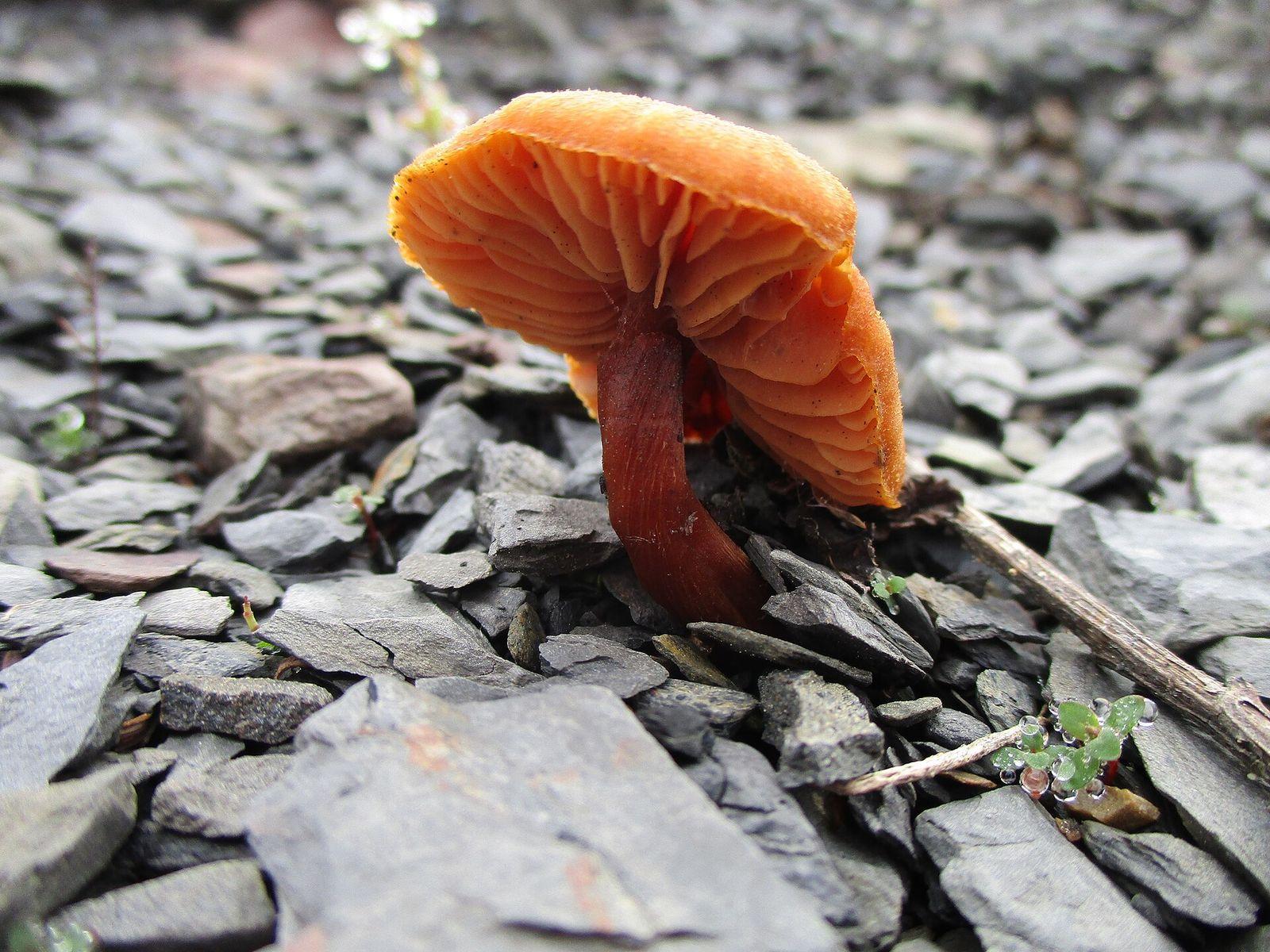
Galerina marginata
Also small, brown and rusty-spored, but the galerina grows on rotting wood and has a membranous ring. It contains amatoxins rather than orellanine.
More side-by-side comparisons
Edibility
The deadly webcap contains orellanine, a toxin that damages the kidneys. Field guides record that symptoms are delayed by two days to three weeks after the meal, beginning with nausea, thirst, headache and back pain, and progressing to kidney failure. Many patients need long-term dialysis or a kidney transplant. Cooking does not destroy orellanine.
This page states what field guides record. It is not advice to eat, taste or handle anything, and a photo cannot settle edibility. If someone has eaten a wild mushroom that may be toxic, call poison control (1-800-222-1222 in the US) right away, before symptoms start: the deadliest species act hours later.
FAQ
Yes. It contains orellanine, which destroys kidney tissue. Symptoms can take from two days to three weeks to appear, by which time kidney damage is often permanent.
It has an orange-brown, pointed cap, rusty brown gills and an orange-brown stem with yellowish bands of veil tissue. Young specimens have a cobweb-like veil over the gills, and the spore print is rusty brown.
The long delay means people rarely connect their illness to the meal, and by the time kidney problems appear, the damage is often done. Field guides record many cases ending in dialysis or transplant.
Sources
First Nature
Index Fungorum
Also on Mushrooms.id
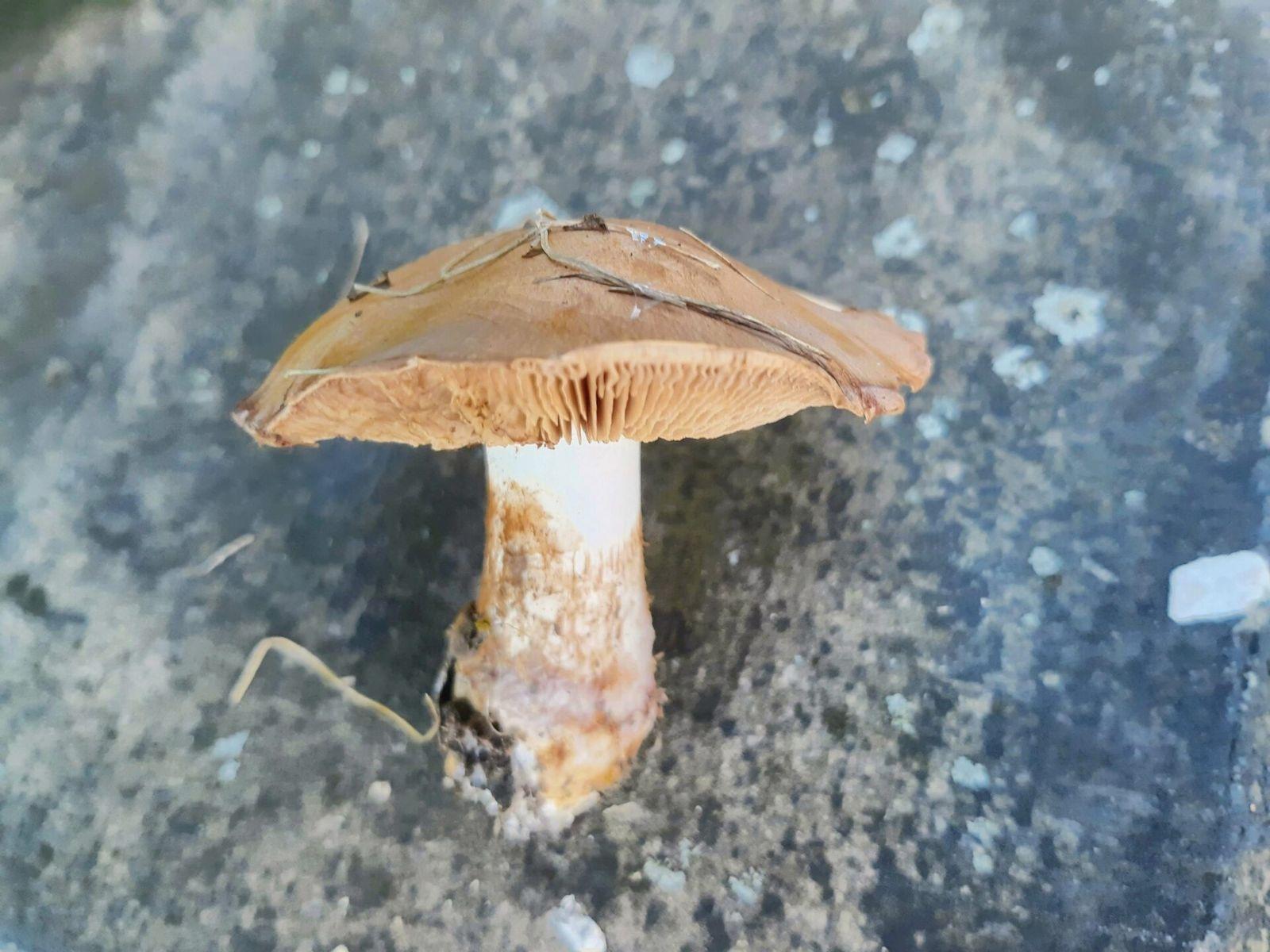
Hebeloma crustuliniforme
Pale tan, sticky cap; in damp weather the gill edges carry tiny beads of water, and it smells of radish.
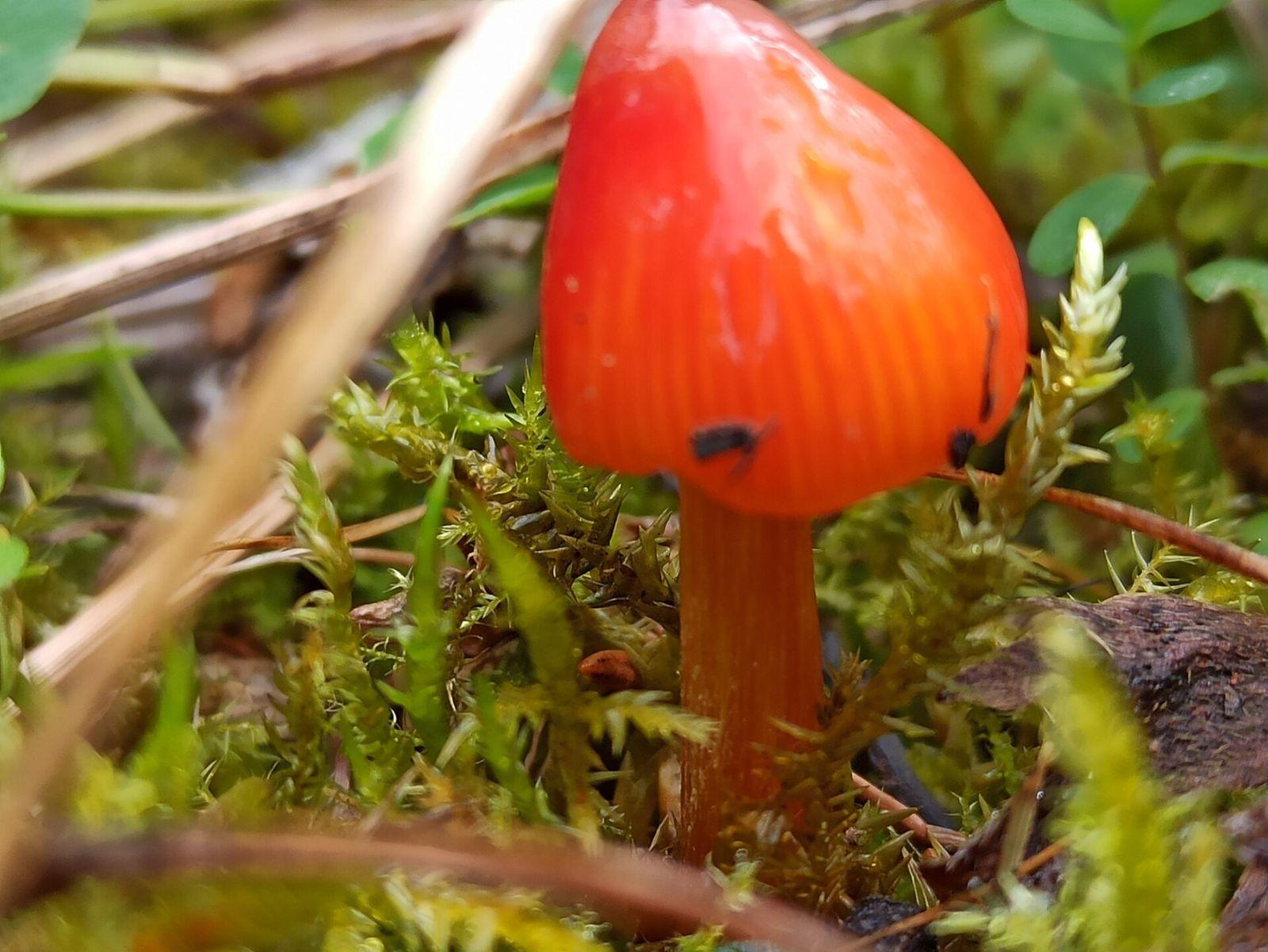
Hygrocybe conica
A pointed red, orange or yellow waxy cap that turns black where handled and with age.
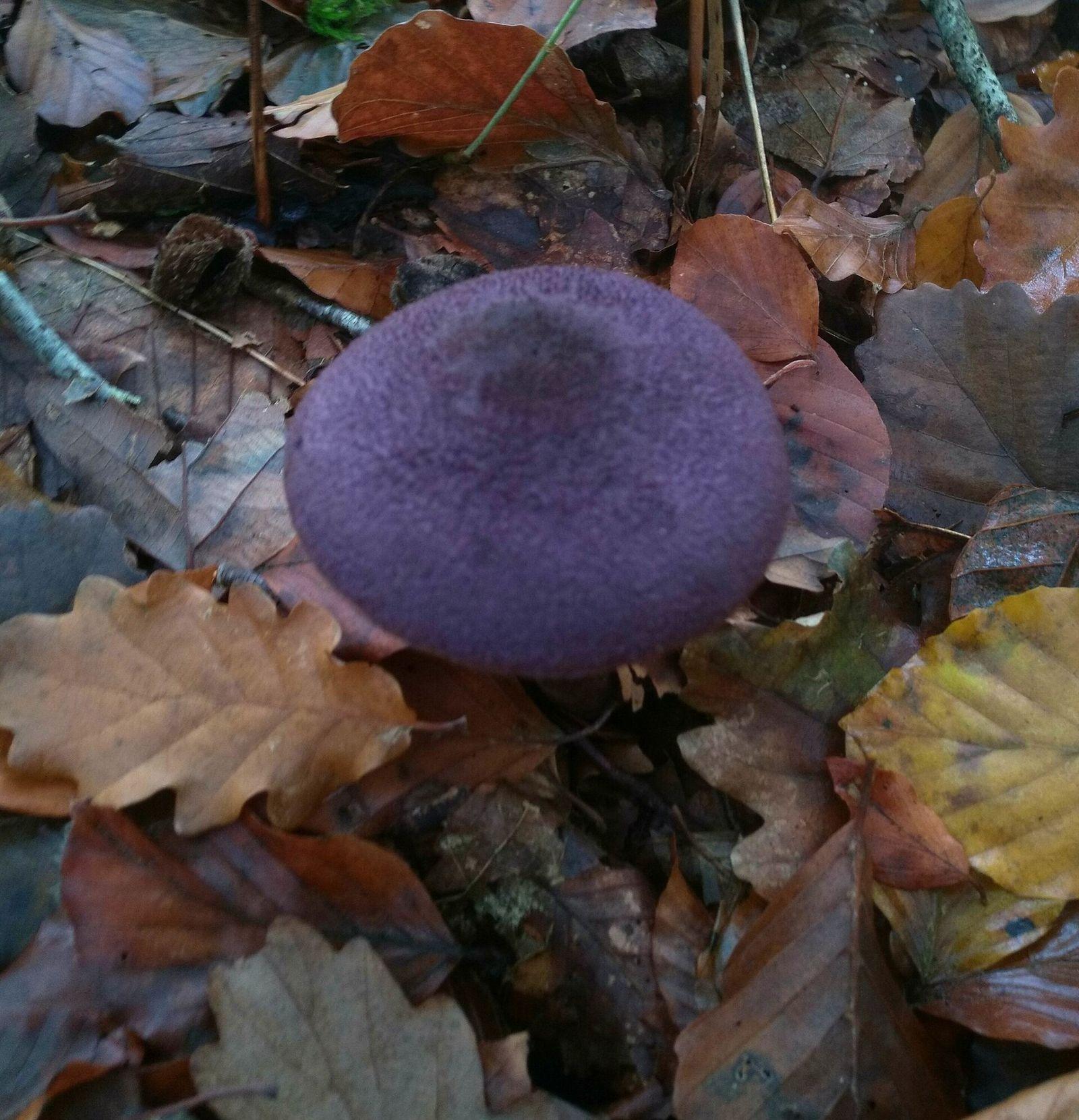
Cortinarius violaceus
Dark violet all over, with a finely scaly cap, a cobweb veil when young and a rusty brown spore print.
Waitlist
We will send one email when Mushrooms.id opens, and nothing else.
This opens your email app with the request written for you. Send it and we add you to the list. No email app? Write to hello@mushrooms.id with the subject “Add me to the Mushrooms.id waitlist”.