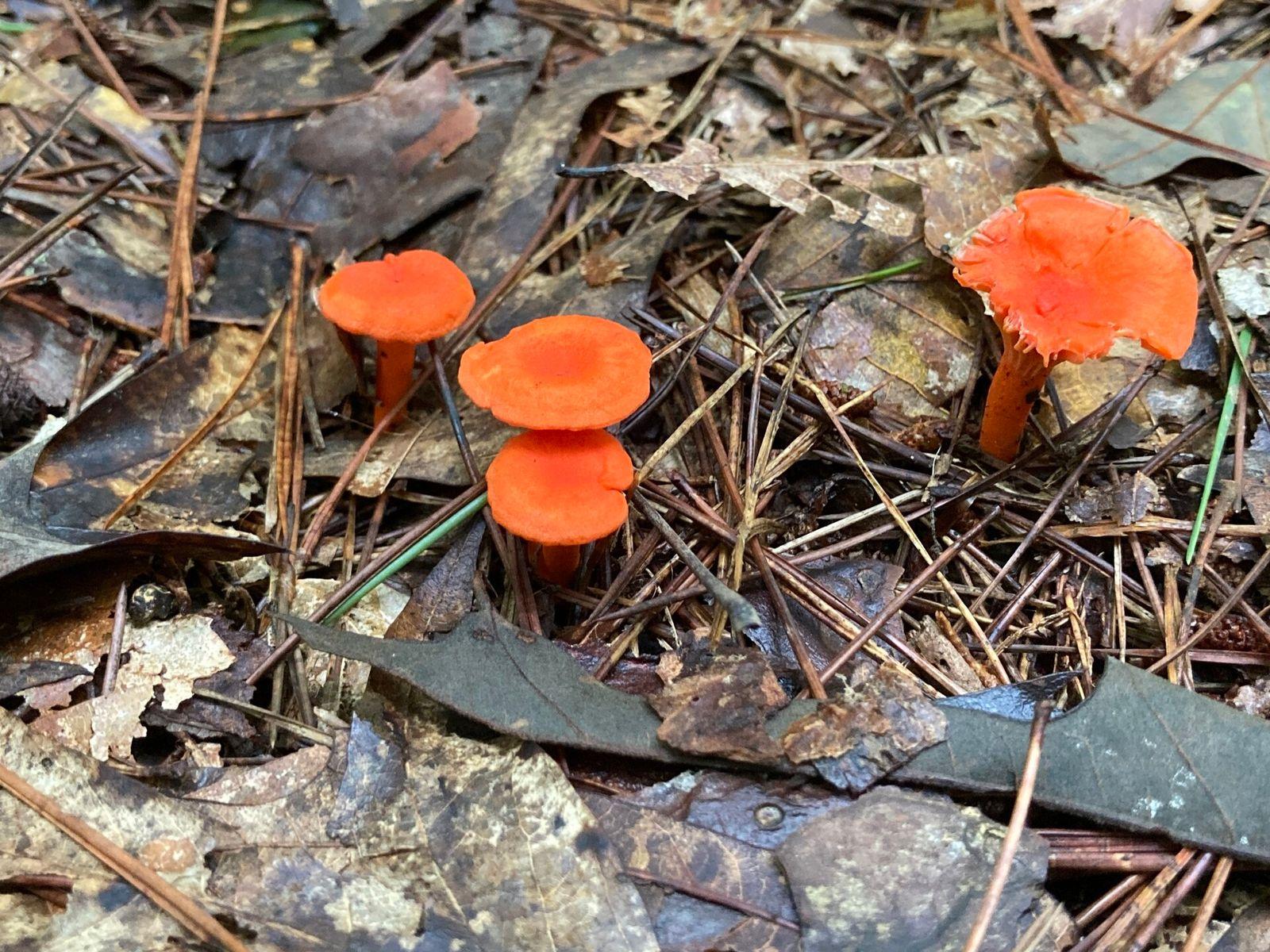
Cortinarius rubellus
Photo coming
Deadly
Deadly Webcap
Cortinarius rubellus
Also has a pointed orange-brown cap, but it is dry and fibrous rather than waxy, has a cobweb-like veil when young, leaves a rusty-brown spore print and does not blacken.
Hygrocybe conica
Also called conic waxcap, blackening waxcap.
The witch's hat is a small waxcap with a pointed, scarlet to orange or yellow cap. Its whole fruiting body blackens with age or bruising, so old specimens look charred. It grows on the ground in woods and grassy places across North America.
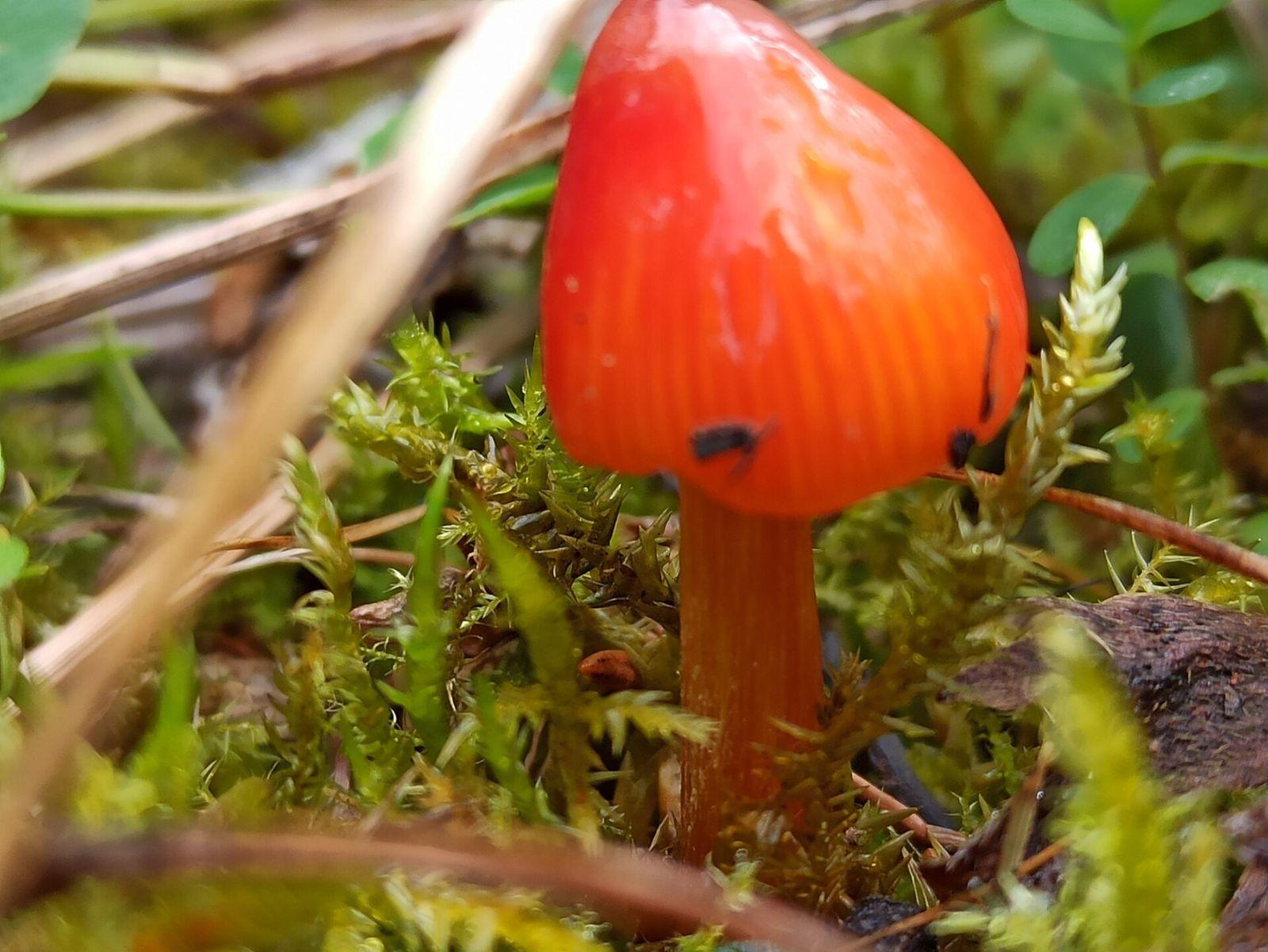
The tell
A pointed red, orange or yellow waxy cap that turns black where handled and with age.
Field marks
Cap, underside and stem show in a photo. The spore print does not, and it is often the deciding check.
Where and when
Lookalikes
Each card says how to tell the two apart.
Cortinarius rubellus
Photo coming
Cortinarius rubellus
Also has a pointed orange-brown cap, but it is dry and fibrous rather than waxy, has a cobweb-like veil when young, leaves a rusty-brown spore print and does not blacken.
Similar pointed yellow to orange cap, but it does not blacken with age or handling.
Bright red but with a rounded, not pointed, cap and gills attached to the stem. It does not blacken.
Edibility
Field guides list the witch's hat as inedible or of doubtful edibility. Some older reports describe poisoning, but they are not well documented, and no toxin has been identified. It is too small and thin to be collected for food in North America.
This page states what field guides record. It is not advice to eat, taste or handle anything, and a photo cannot settle edibility. If someone has eaten a wild mushroom that may be toxic, call poison control (1-800-222-1222 in the US) right away, before symptoms start: the deadliest species act hours later.
FAQ
Its tissue blackens as it ages and wherever it is bruised. Old specimens can be entirely black, while fresh ones are scarlet, orange or yellow with black edges.
Field guides list it as inedible. Some older reports mention poisoning, but they are poorly documented and no toxin is known.
On the ground in forests, mossy areas, clearings and lawns across North America, from summer through fall and into winter on the Pacific Coast.
Sources
MushroomExpert.com
MykoWeb, California Fungi
Index Fungorum
Waitlist
We will send one email when Mushrooms.id opens, and nothing else.
This opens your email app with the request written for you. Send it and we add you to the list. No email app? Write to hello@mushrooms.id with the subject “Add me to the Mushrooms.id waitlist”.