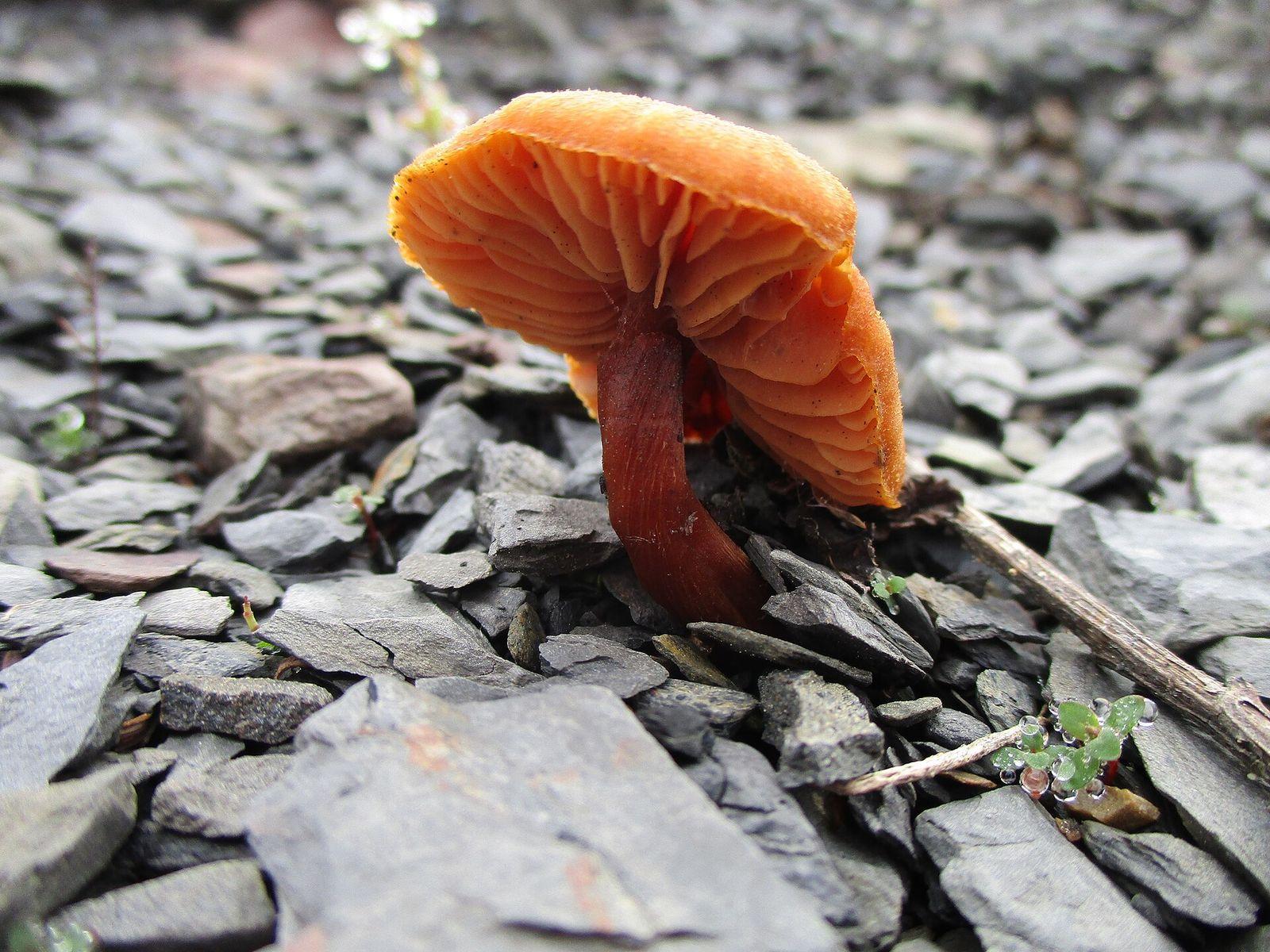
Cortinarius rubellus
Photo coming
Deadly galerina vs deadly webcap
- Deadly Galerina
- Deadly Webcap
Both are deadly and print rusty brown. The galerina grows on wood with a ring; the webcap grows from conifer moss with a cobweb veil.
Quick answer
The witch's hat is waxy to slightly sticky and blackens from the edges and wherever it is touched, and drops a white print; the deadly webcap is dry and fibrous, does not blacken, has a cobweb-like veil when young and drops a rusty brown print. A fresh, unhandled witch's hat in a photo can look like a webcap.
Deadly lookalike
Unlike the witch's hat, the deadly webcap (Cortinarius rubellus) contains orellanine, which destroys the kidneys. First Nature records that the first symptoms are usually delayed by two or three days, then flu-like symptoms, headache and vomiting, followed by kidney failure. In an Estonian series of seven orellanine poisonings, first symptoms could appear up to three weeks after the meal; six patients needed dialysis, and ten months later three were still on it. The witch's hat (Hygrocybe conica) is listed as inedible; First Nature notes one poisoning report from China but no identified toxin.
If someone has eaten a wild mushroom and feels unwell, or may have eaten one of these, call poison control now: 1-800-222-1222 in the US. Do not wait for symptoms.
Side by side
Cortinarius rubellus
Photo coming
The tellOrange-brown, pointed cap, rusty brown gills, and yellowish bands of veil on the stem, in mossy conifer woods.
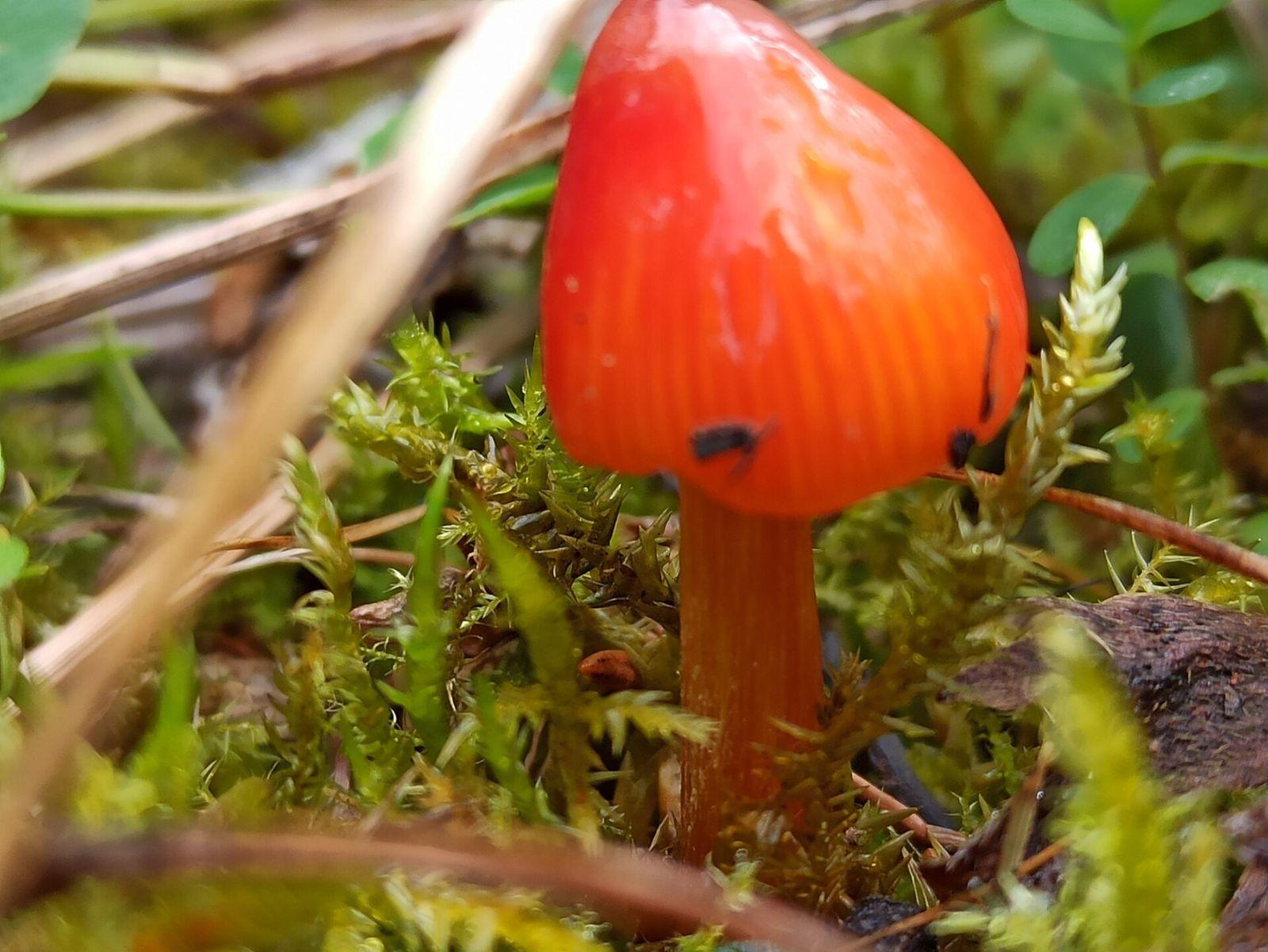
The tellA pointed red, orange or yellow waxy cap that turns black where handled and with age.
| Feature | Deadly Webcap | Witch's Hat |
|---|---|---|
| Cap surface | Deadly WebcapDry, with fine fibers or tiny scales. | Witch's HatWaxy to slightly sticky. |
| Blackening | Deadly WebcapDoes not blacken. | Witch's HatTurns black with age and wherever handled. |
| Gills | Deadly WebcapYellowish brown then rusty cinnamon, attached to the stem. | Witch's HatPale yellow to orange, waxy, nearly free, blackening. |
| Spore print | Deadly WebcapRusty brown. | Witch's HatWhite. |
| Veil | Deadly WebcapA cobweb-like veil on young caps; yellowish bands on the stem. | Witch's HatNone. |
| Habitat | Deadly WebcapWet conifer forests with spruce and pine, in moss or bogs. | Witch's HatForests, mossy areas, grassy clearings and lawns. |
FAQ
Its cap, gills and stem blacken with age and wherever they are handled. The deadly webcap does not blacken.
It is listed as inedible or of doubtful edibility. Some reports describe poisoning, but they are not well documented and no toxin has been identified.
Sources
First Nature
MushroomExpert.com
First Nature
Eesti Arst (Estonian Medical Journal)
Keep checking
This page states what field guides record. It is not advice to eat, taste or handle anything, and a photo cannot settle edibility. If someone has eaten a wild mushroom that may be toxic, call poison control (1-800-222-1222 in the US) right away, before symptoms start: the deadliest species act hours later.
More comparisons
Cortinarius rubellus
Photo coming
Both are deadly and print rusty brown. The galerina grows on wood with a ring; the webcap grows from conifer moss with a cobweb veil.
Cortinarius rubellus
Photo coming
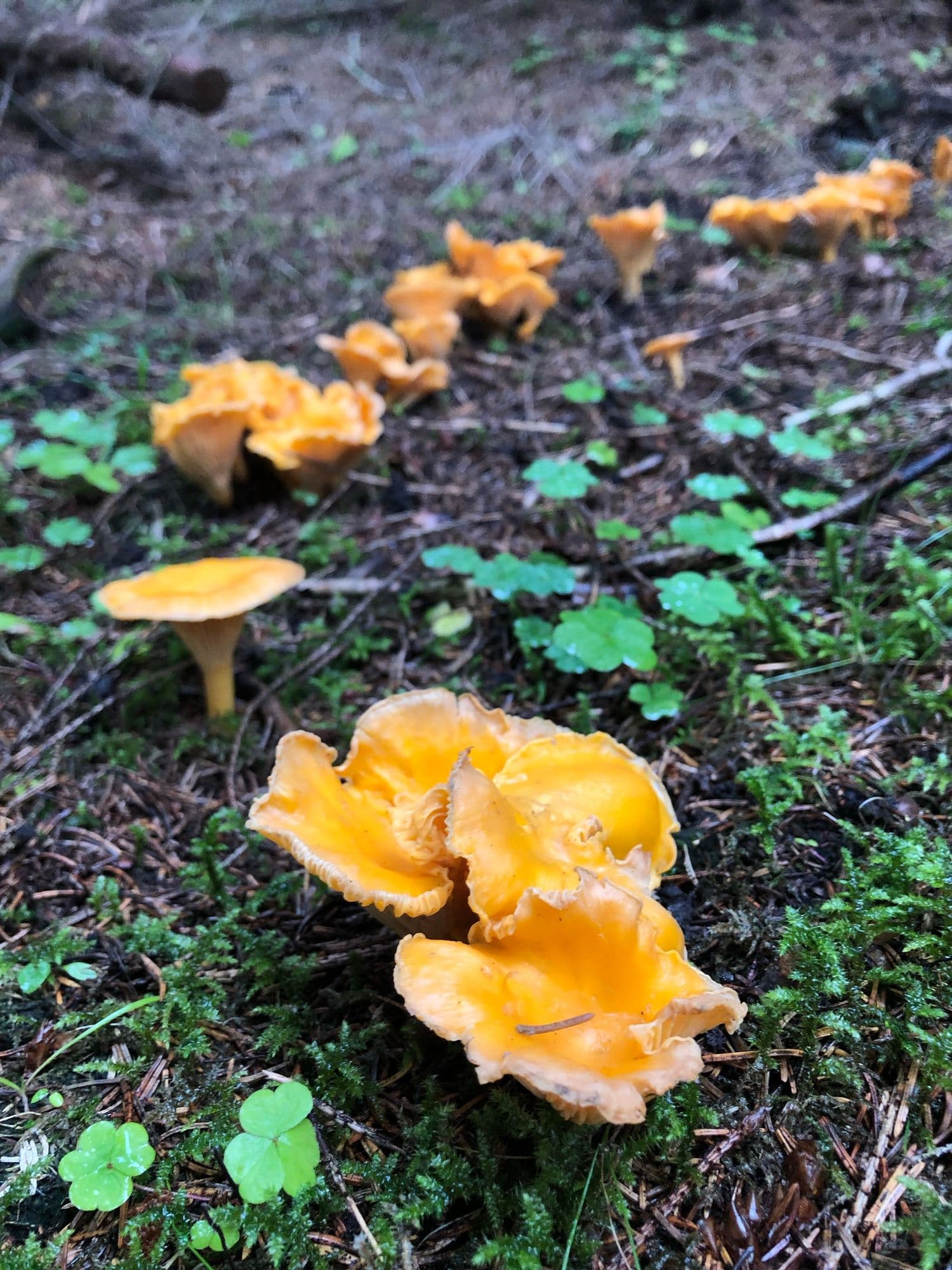
The deadly webcap has true rusty gills, a cobweb veil and a pointed cap. Chanterelles have blunt forked ridges, white stringy flesh and no veil.
Cortinarius rubellus
Photo coming
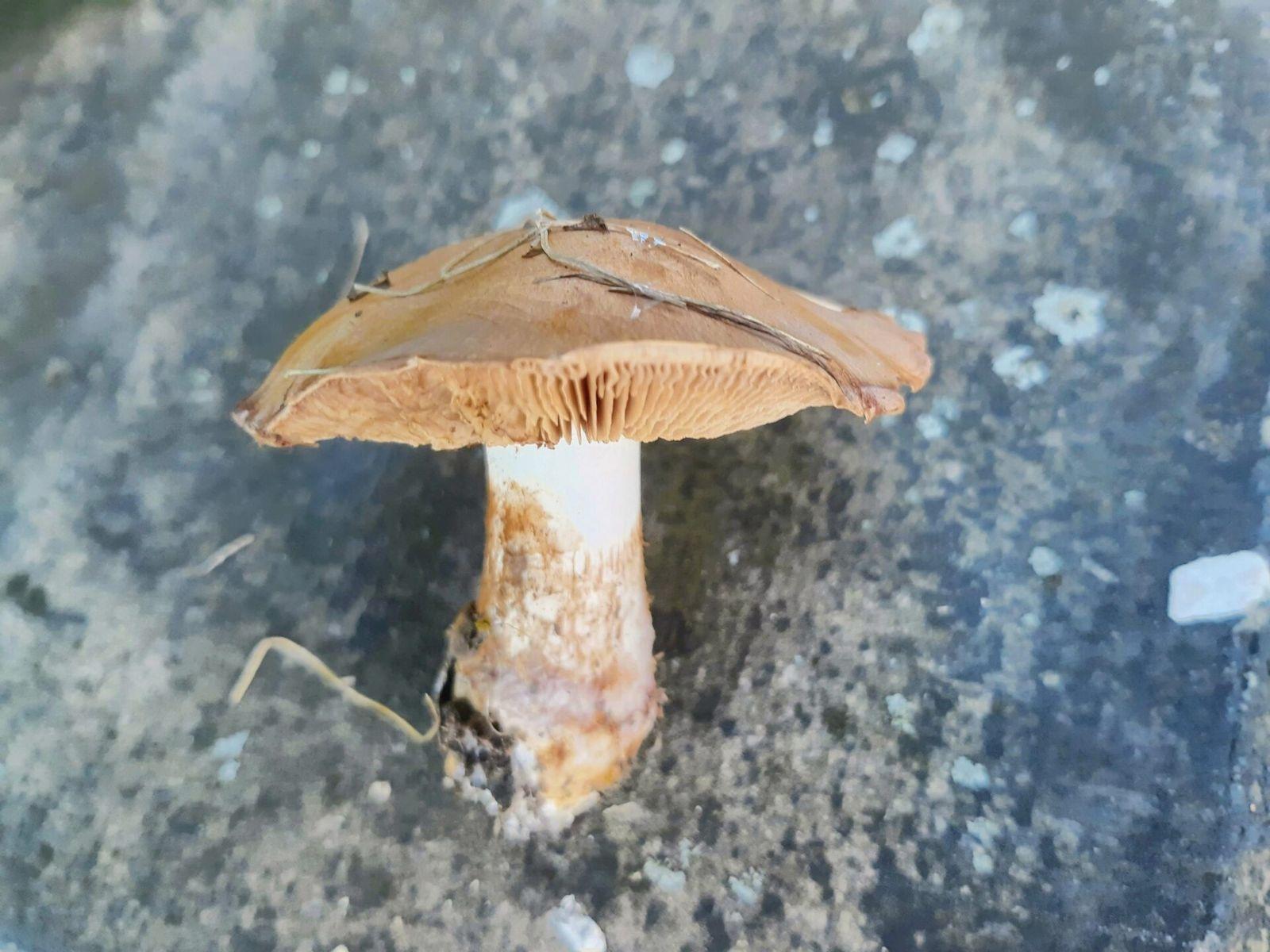
The deadly webcap is tawny orange with a pointed cap and cobweb veil. Poison pie is pale tan and sticky, and its gills weep droplets.
Waitlist
We will send one email when Mushrooms.id opens, and nothing else.
This opens your email app with the request written for you. Send it and we add you to the list. No email app? Write to hello@mushrooms.id with the subject “Add me to the Mushrooms.id waitlist”.