Deadly
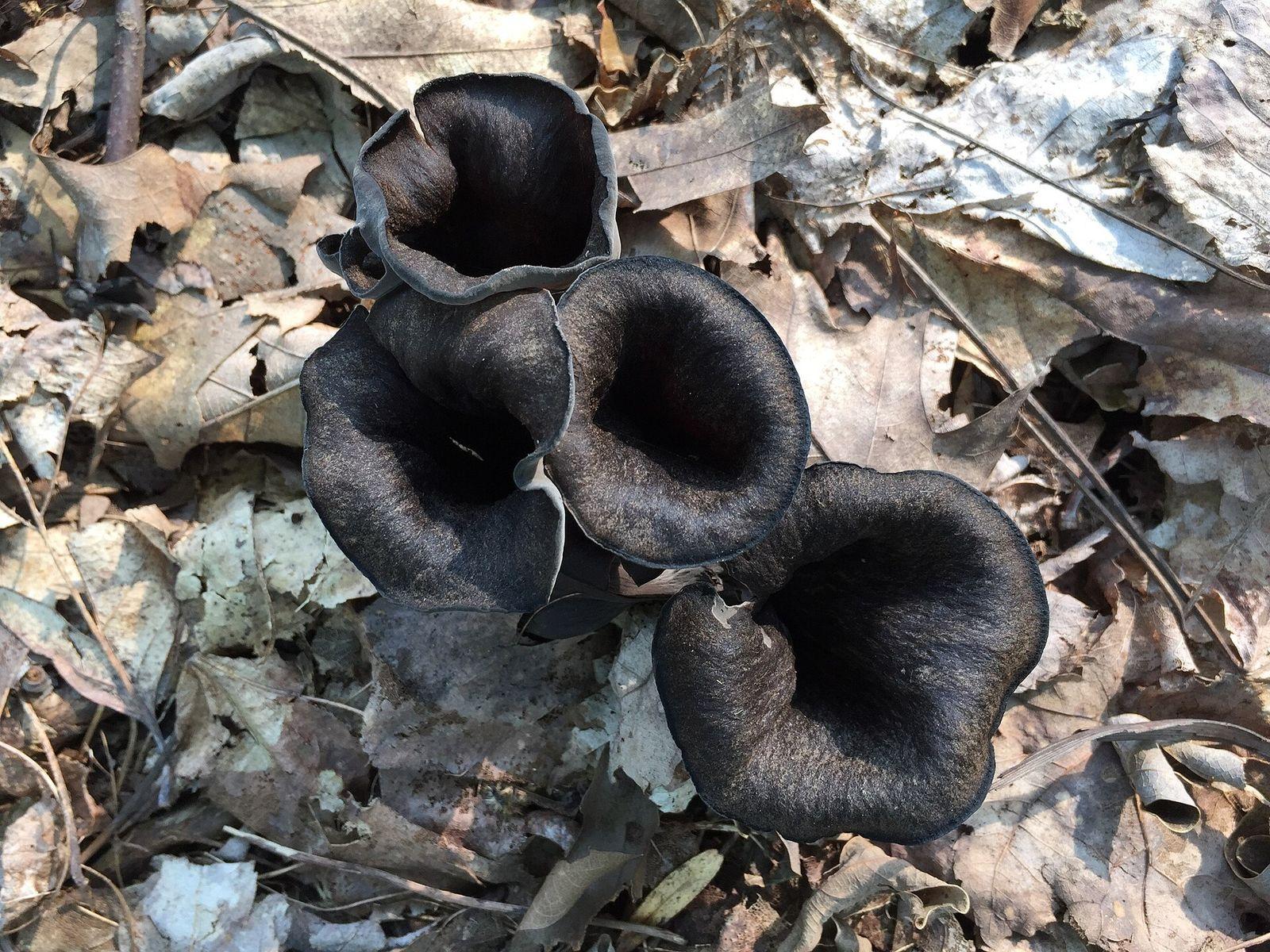
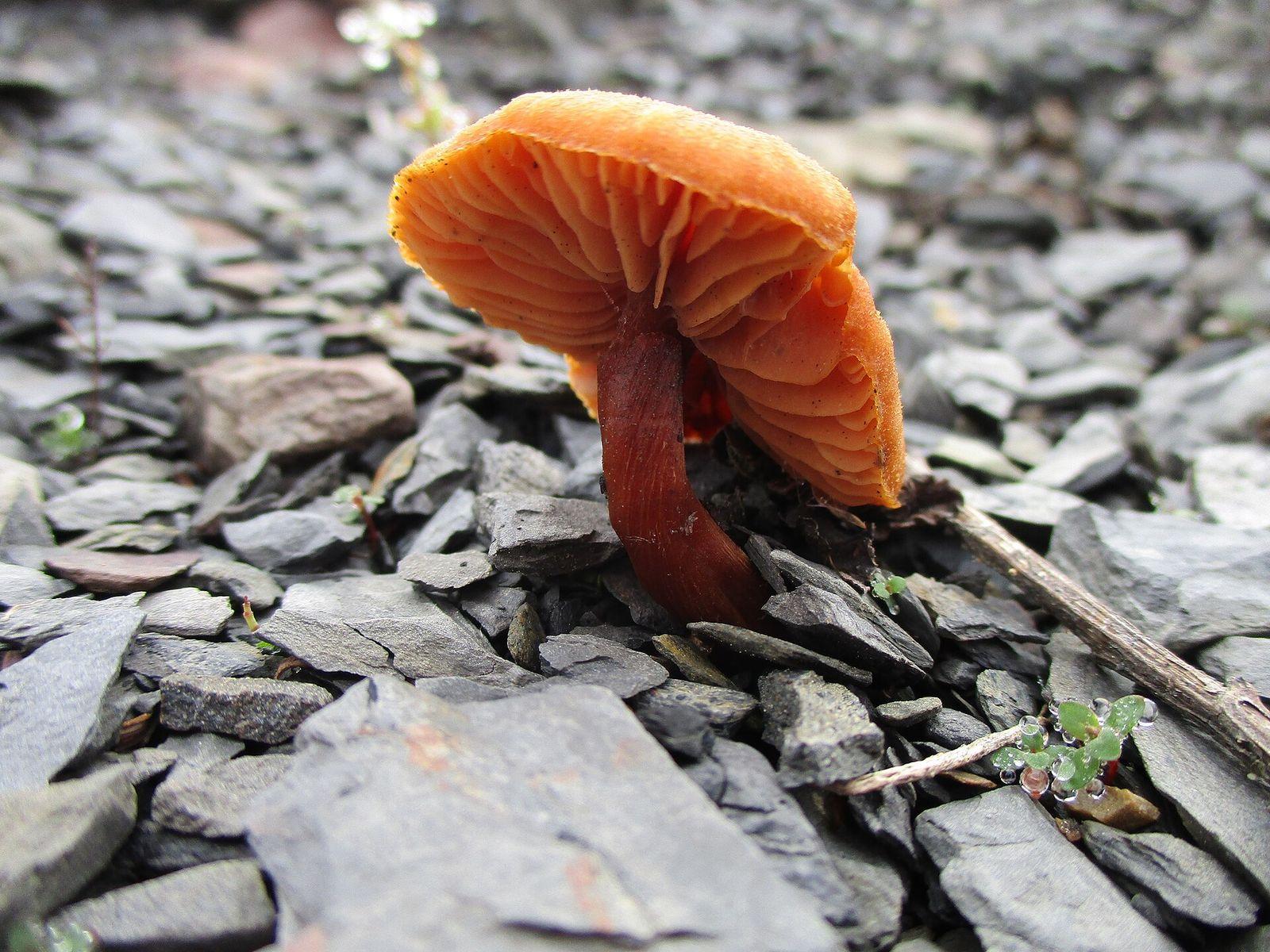
Deadly Galerina
Galerina marginata
A small brown mushroom of the same mossy, rotting-wood habitat, but it has sharp true gills, a thin ring or ring zone on the stem when fresh, and a rusty-brown spore print.
Craterellus tubaeformis
Also called winter chanterelle, funnel chanterelle, yellow-legs.
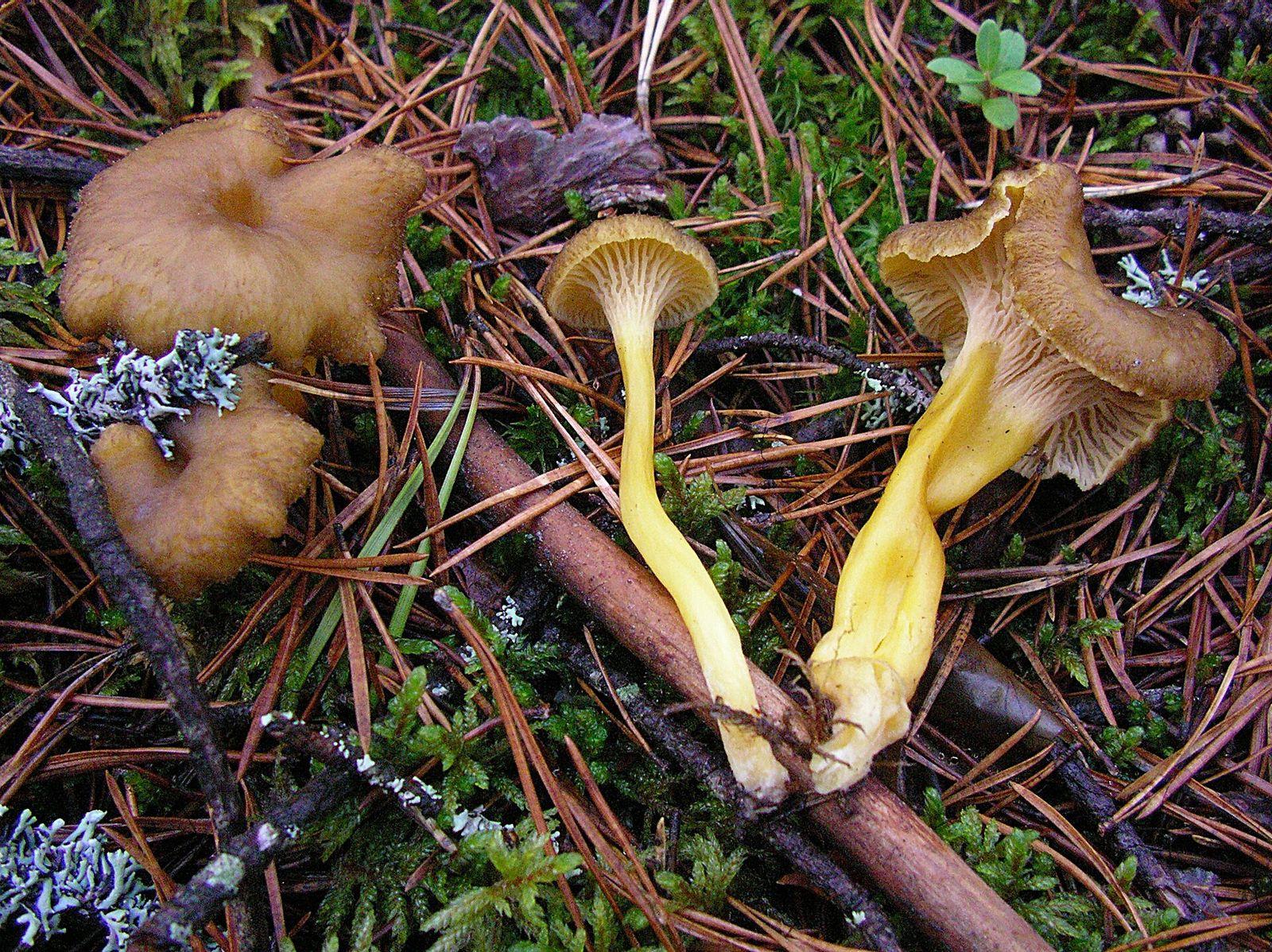
The yellowfoot is a small chanterelle relative with a brown, funnel-shaped cap and a hollow yellow stem. It fruits in large numbers on moss and rotting wood in conifer forests and bogs from late summer into winter.
The tell
Small brown funnel cap over grayish false gills and a hollow yellow-orange stem.
Field marks
Cap, underside and stem show in a photo. The spore print does not, and it is often the deciding check.
Where and when
Lookalikes
Each card says how to tell the two apart.
Galerina marginata
A small brown mushroom of the same mossy, rotting-wood habitat, but it has sharp true gills, a thin ring or ring zone on the stem when fresh, and a rusty-brown spore print.
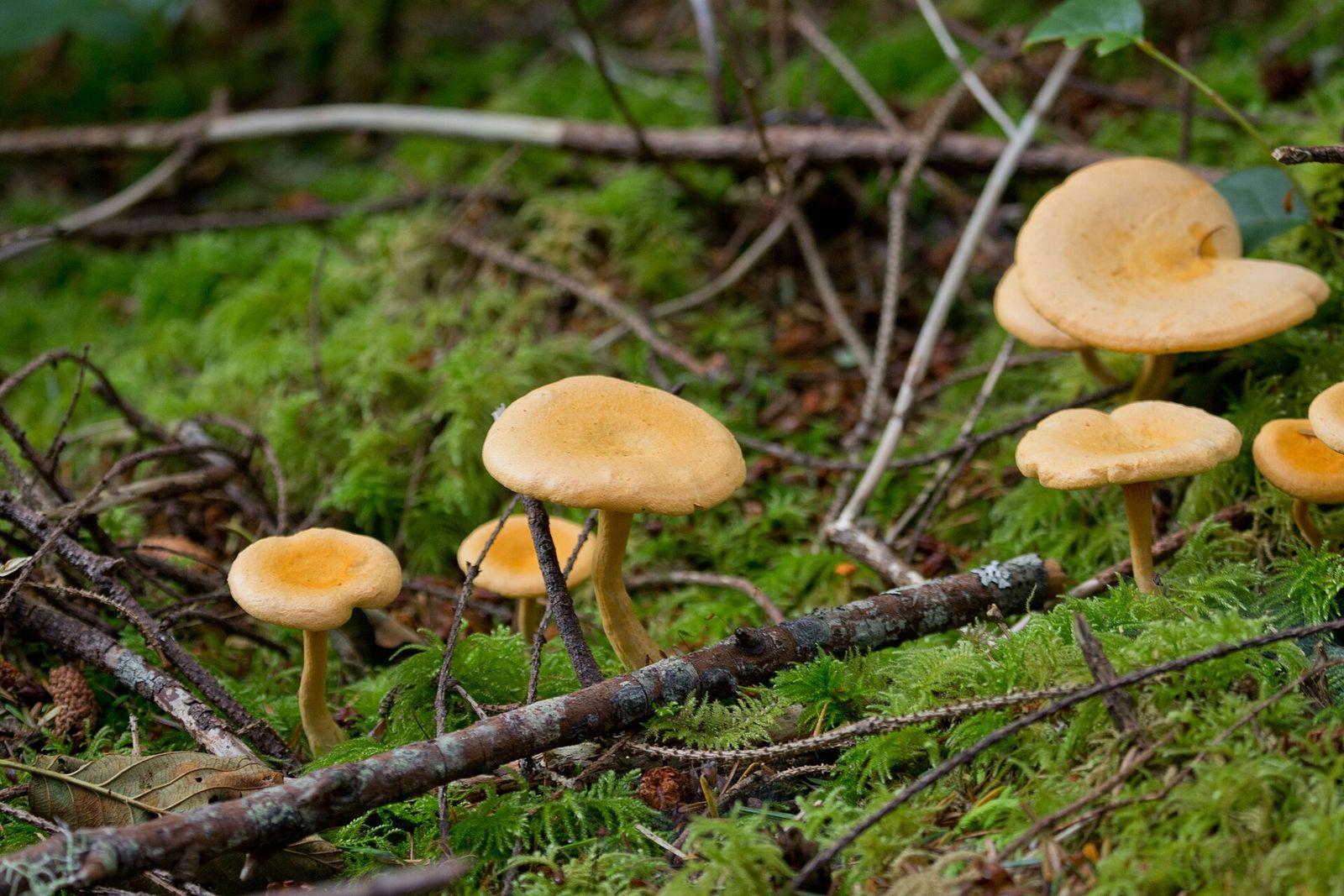
Hygrophoropsis aurantiaca
Orange throughout, with crowded, repeatedly forked true gills and a solid stem, not a brown cap over a hollow yellow stem.
A close relative with a brighter orange-yellow underside that is nearly smooth or only shallowly veined, rather than grayish ridges.
More side-by-side comparisons
Edibility
Field guides list the yellowfoot as edible and good. It is often gathered in quantity in late fall and winter because it fruits after most other edible mushrooms are done. Small brown mushrooms with true gills, including the deadly galerina, share its mossy, rotting-wood habitat.
This page states what field guides record. It is not advice to eat, taste or handle anything, and a photo cannot settle edibility. If someone has eaten a wild mushroom that may be toxic, call poison control (1-800-222-1222 in the US) right away, before symptoms start: the deadliest species act hours later.
FAQ
A small chanterelle relative, Craterellus tubaeformis, with a brown funnel cap, grayish false gills and a hollow yellow stem. It grows in large numbers in moss and rotting wood in conifer forests from late summer into winter.
Yes. Yellowfoot, winter chanterelle, funnel chanterelle and yellow-legs are common names for Craterellus tubaeformis. The name winter chanterelle comes from its late season on the West Coast, where it fruits well into winter.
The dangerous one is the deadly galerina, a small brown mushroom that grows in the same mossy, rotting-wood habitat. Galerina has sharp true gills, a thin ring on the stem when fresh, and a rusty-brown spore print, while the yellowfoot has blunt gray ridges and a hollow yellow stem.
Sources
MushroomExpert.com
MykoWeb, California Fungi
Index Fungorum
Also on Mushrooms.id
Waitlist
We will send one email when Mushrooms.id opens, and nothing else.
This opens your email app with the request written for you. Send it and we add you to the list. No email app? Write to hello@mushrooms.id with the subject “Add me to the Mushrooms.id waitlist”.