Edible
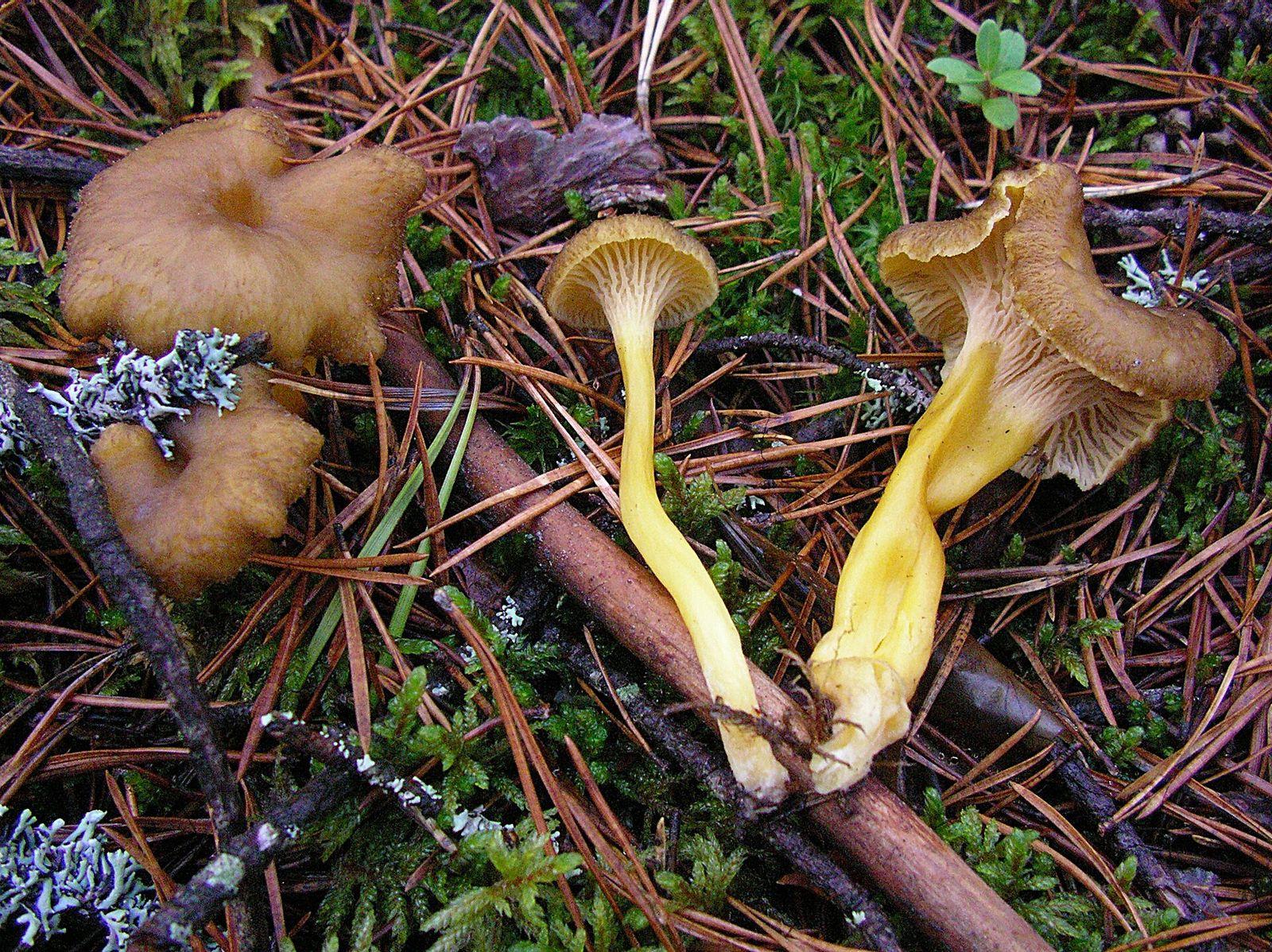
Yellowfoot
Craterellus tubaeformis
Small brown funnel cap over grayish false gills and a hollow yellow-orange stem.
Craterellus fallax
Also called horn of plenty, black chanterelle.
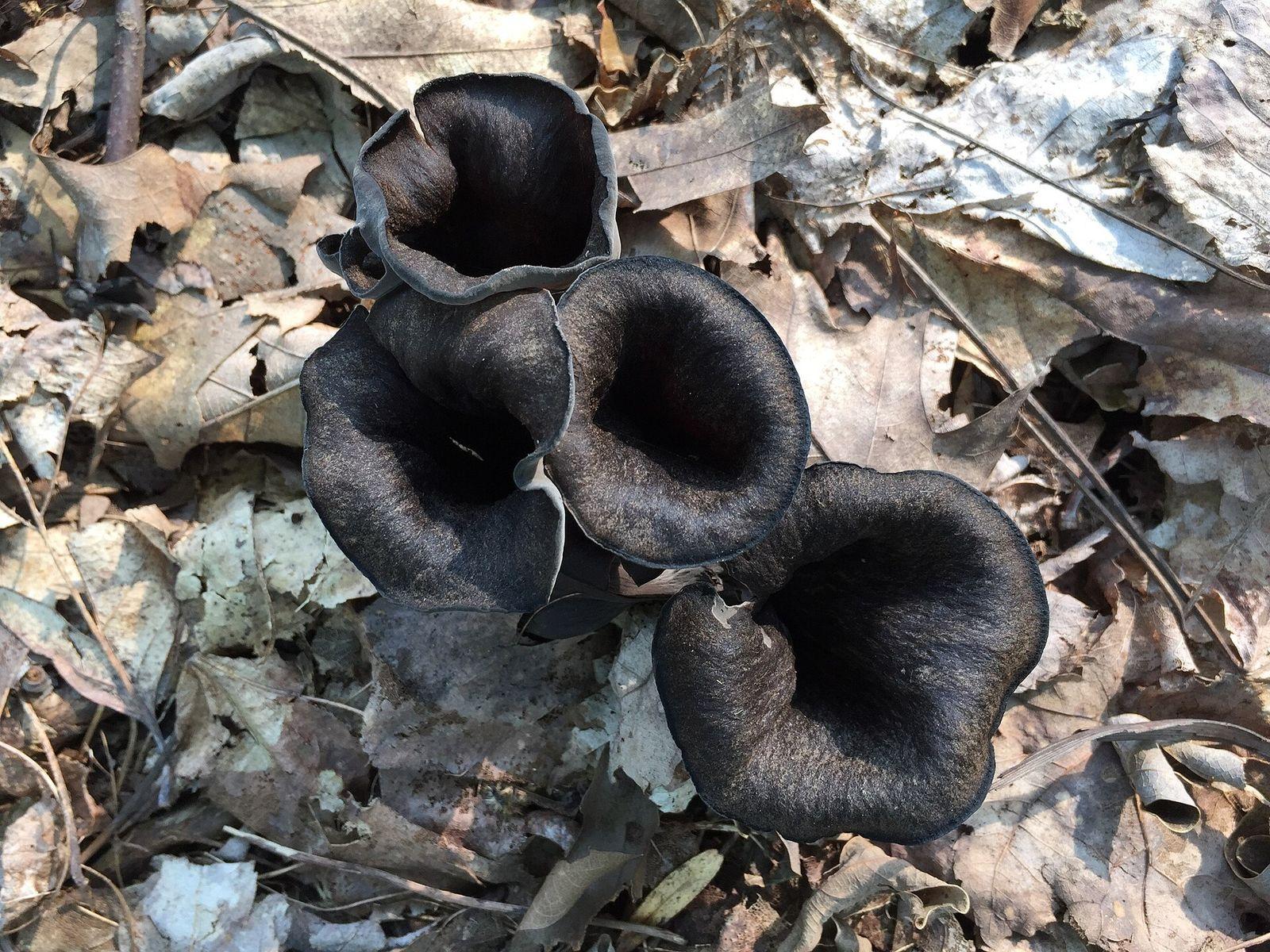
The black trumpet is a thin, hollow, funnel-shaped mushroom, gray to black, that blends into the leaf litter of eastern hardwood forests in summer and fall. Its outer surface is smooth to slightly wrinkled with no gills, and it has few close lookalikes.
The tell
Thin, hollow, gray-black trumpet with a smooth outer surface and no gills.
Field marks
Cap, underside and stem show in a photo. The spore print does not, and it is often the deciding check.
Where and when
Lookalikes
Each card says how to tell the two apart.
A black cup fungus that grows on fallen hardwood sticks in early spring. It is tough and leathery, with a thicker, felty outer surface.
Similar in color and shape but with distinct, vein-like wrinkles on the outer surface, and it often grows in fused clusters.
Edibility
Field guides list the black trumpet as a choice edible, and it has few dangerous lookalikes because of its hollow, gill-less trumpet shape. Older guides call it Craterellus cornucopioides, a European name; eastern North American black trumpets with salmon spore prints are now called Craterellus fallax.
This page states what field guides record. It is not advice to eat, taste or handle anything, and a photo cannot settle edibility. If someone has eaten a wild mushroom that may be toxic, call poison control (1-800-222-1222 in the US) right away, before symptoms start: the deadliest species act hours later.
FAQ
Field guides list black trumpets as a choice edible and record no toxic species with the same thin, hollow, gill-less trumpet shape. They are widely sold dried.
On the ground in eastern hardwood forests, especially under oak and beech, from July to October. They favor moss, bare soil along streams and slopes, and often grow in groups.
Their gray-black color blends into dark leaf litter and shadow, so they are easy to miss even when abundant.
Sources
MushroomExpert.com
Missouri Department of Conservation
Index Fungorum
Waitlist
We will send one email when Mushrooms.id opens, and nothing else.
This opens your email app with the request written for you. Send it and we add you to the list. No email app? Write to hello@mushrooms.id with the subject “Add me to the Mushrooms.id waitlist”.