Toxic lookalike
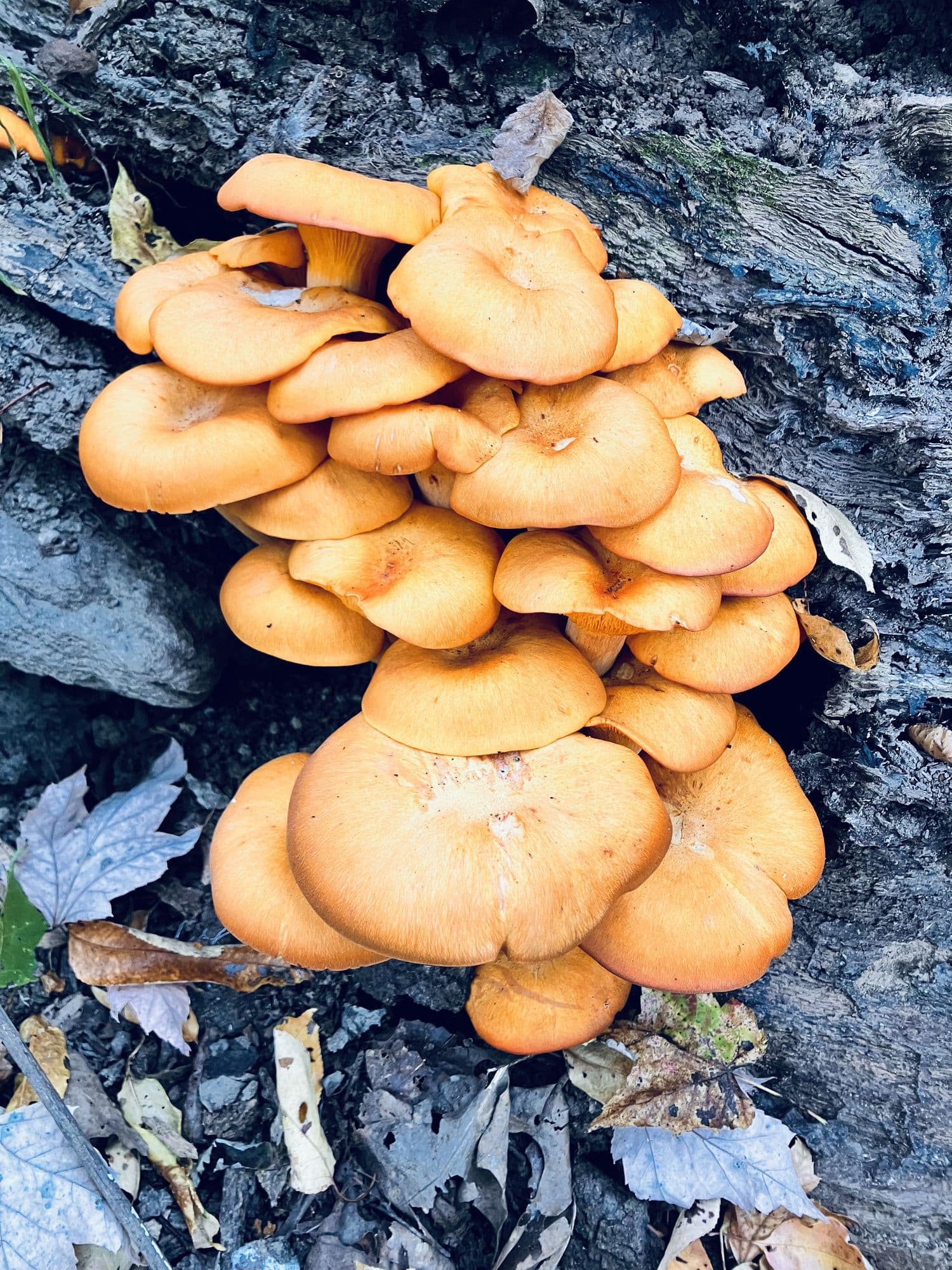
Jack-o'-Lantern
Omphalotus illudens
Larger and brighter orange, growing in dense clusters from hardwood stumps or roots, with orange flesh. Its gills are sharp but do not fork repeatedly.
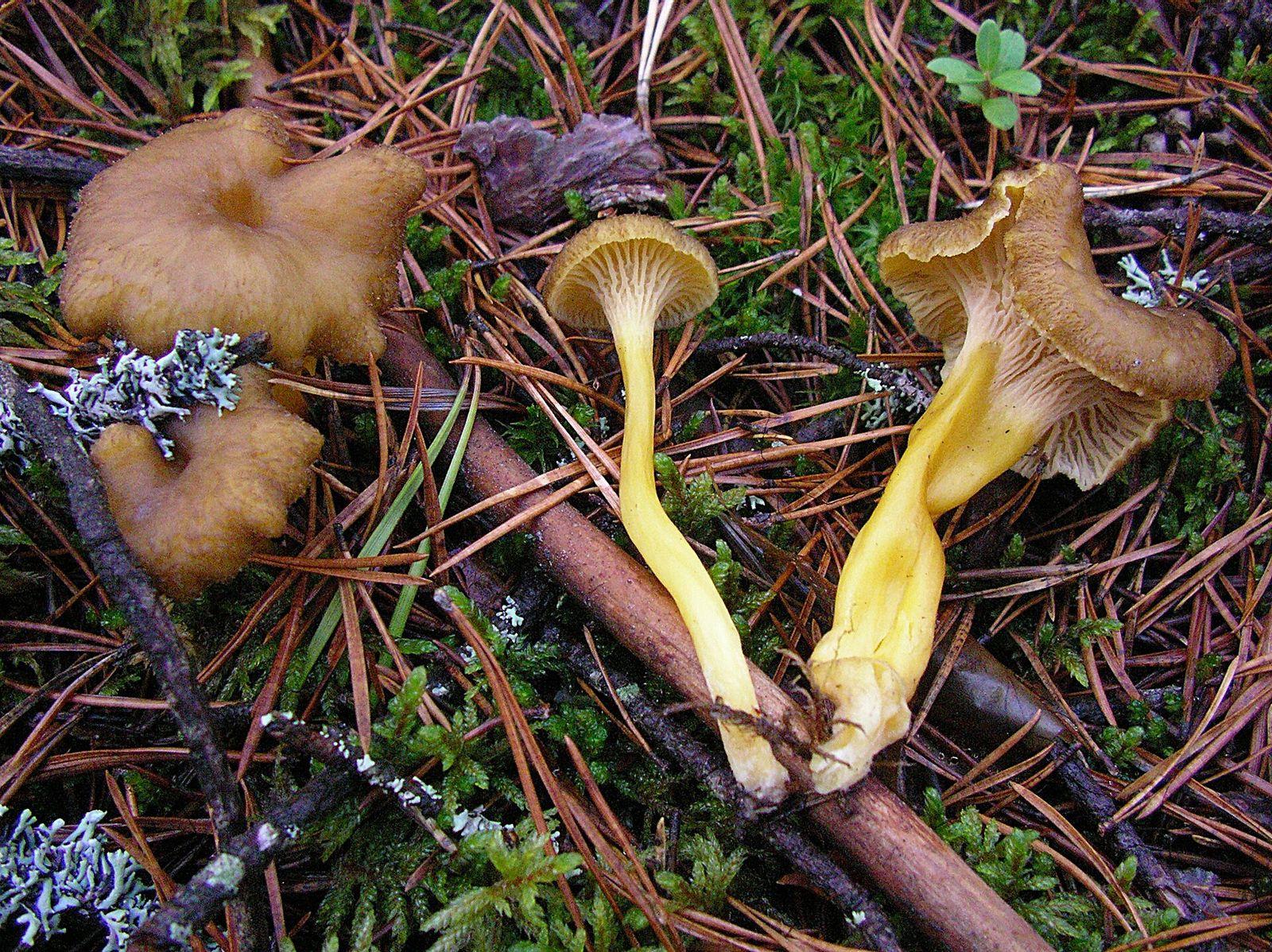
Hygrophoropsis aurantiaca
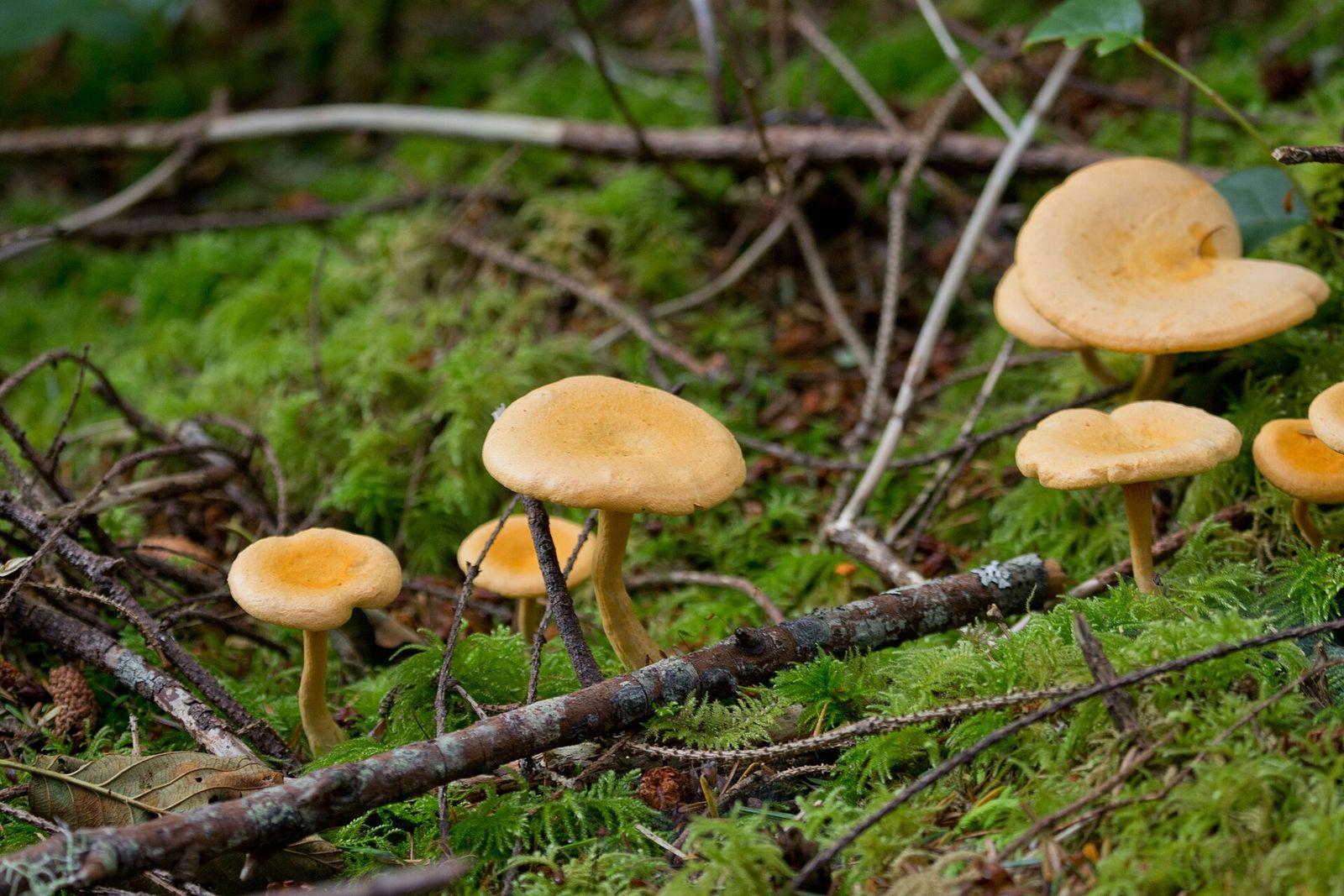
The false chanterelle is an orange mushroom of conifer forests and wood chips that is often mistaken for a golden chanterelle. Its gills are thin, crowded and repeatedly forked, and its flesh is soft rather than stringy. Field guides disagree on whether it is edible.
The tell
Orange cap with thin, crowded, repeatedly forked true gills, on rotting conifer wood or duff.
Field marks
Cap, underside and stem show in a photo. The spore print does not, and it is often the deciding check.
Where and when
Lookalikes
Each card says how to tell the two apart.
Omphalotus illudens
Larger and brighter orange, growing in dense clusters from hardwood stumps or roots, with orange flesh. Its gills are sharp but do not fork repeatedly.
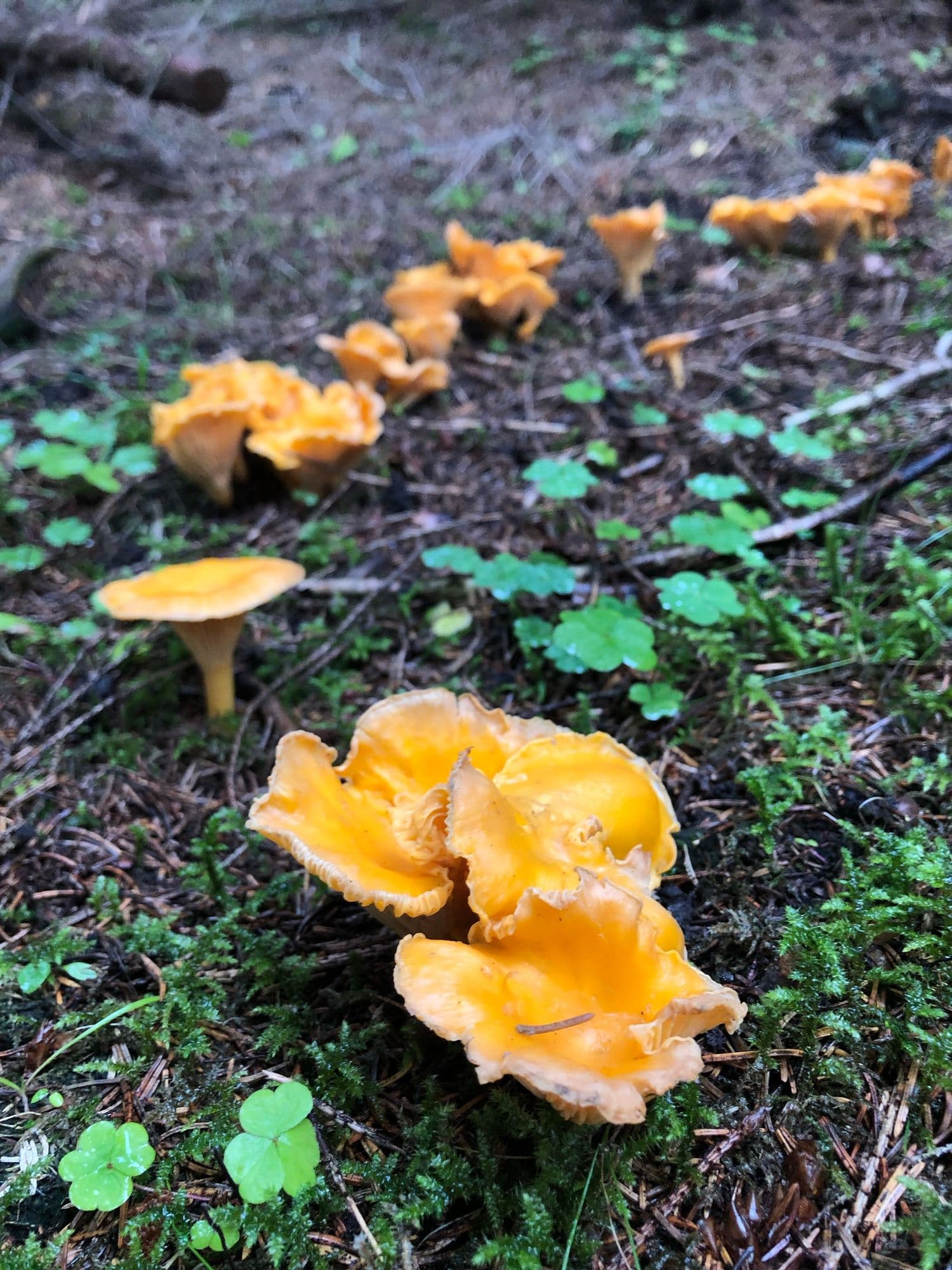
Cantharellus cibarius
A chanterelle has blunt, shallow ridges rather than thin true gills and white stringy flesh, and it grows on soil.
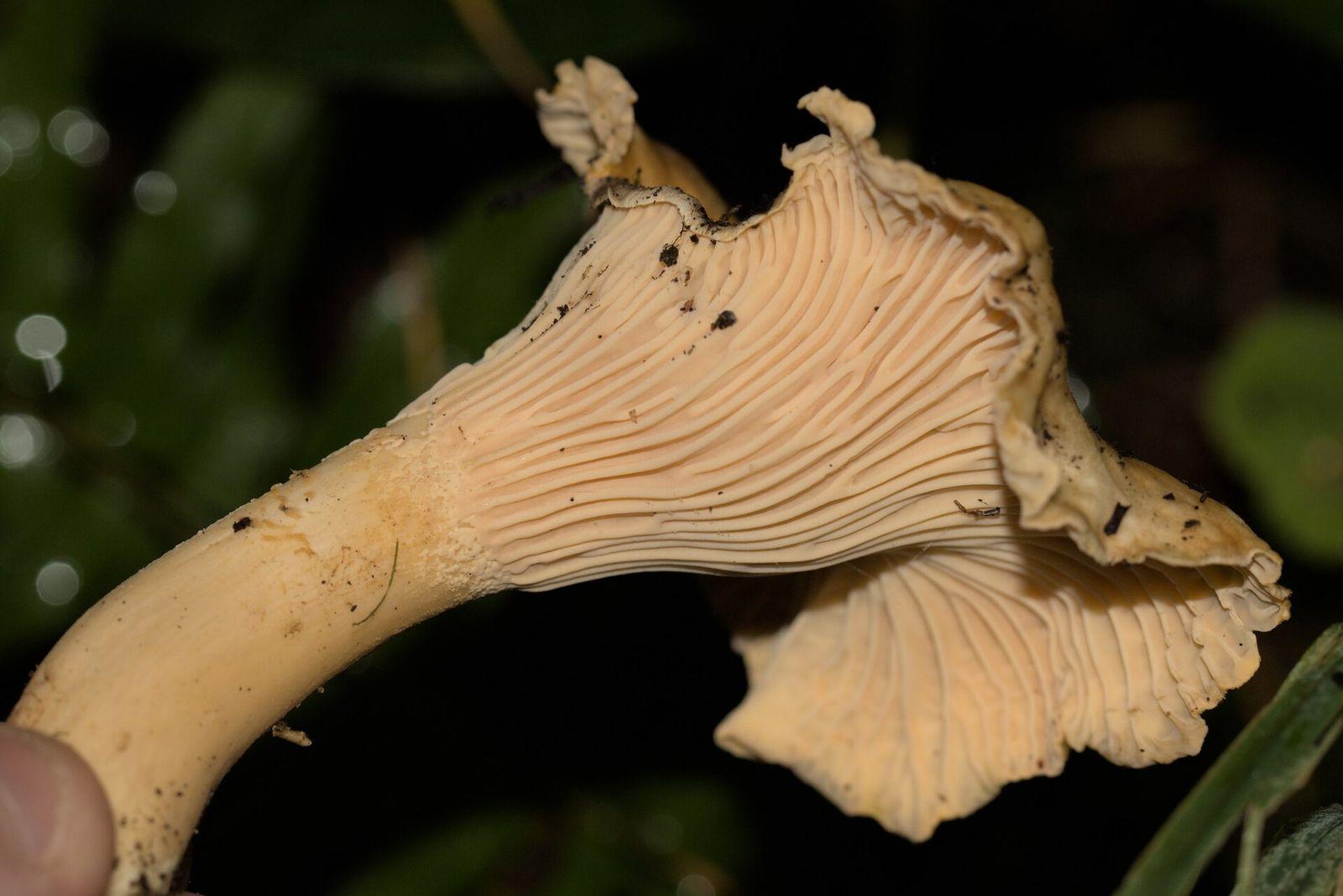
Cantharellus formosus
Shares its conifer forests in the Pacific Northwest, but has blunt ridges, firm white stringy flesh and a thicker stem.
Edibility
Field guides disagree on this species. Some list it as edible but poor in flavor, while others list it as not recommended because it has caused gastrointestinal upset in some people. It is not among the dangerously poisonous species, and field guides cover it mainly as a chanterelle lookalike.
This page states what field guides record. It is not advice to eat, taste or handle anything, and a photo cannot settle edibility. If someone has eaten a wild mushroom that may be toxic, call poison control (1-800-222-1222 in the US) right away, before symptoms start: the deadliest species act hours later.
FAQ
Sources disagree. Some field guides list Hygrophoropsis aurantiaca as edible but poor, and others as not recommended because it has upset some people's stomachs. It is not considered dangerously poisonous.
A false chanterelle has thin, crowded, true gills that fork again and again and are deeper orange than the cap. Its flesh is soft and not stringy, and it usually grows on rotting conifer wood or wood chips. A real chanterelle has blunt, shallow ridges and white stringy flesh, and grows on soil.
On rotting conifer wood, needle duff, wood chips and mulch, in conifer and mixed forests across North America. It fruits from late summer through fall, and into winter on the West Coast.
Sources
MushroomExpert.com
Fungi Growing on Wood, Gary Emberger (MushroomExpert.com)
Beaty Biodiversity Museum, University of British Columbia
Index Fungorum
Waitlist
We will send one email when Mushrooms.id opens, and nothing else.
This opens your email app with the request written for you. Send it and we add you to the list. No email app? Write to hello@mushrooms.id with the subject “Add me to the Mushrooms.id waitlist”.