Toxic lookalike
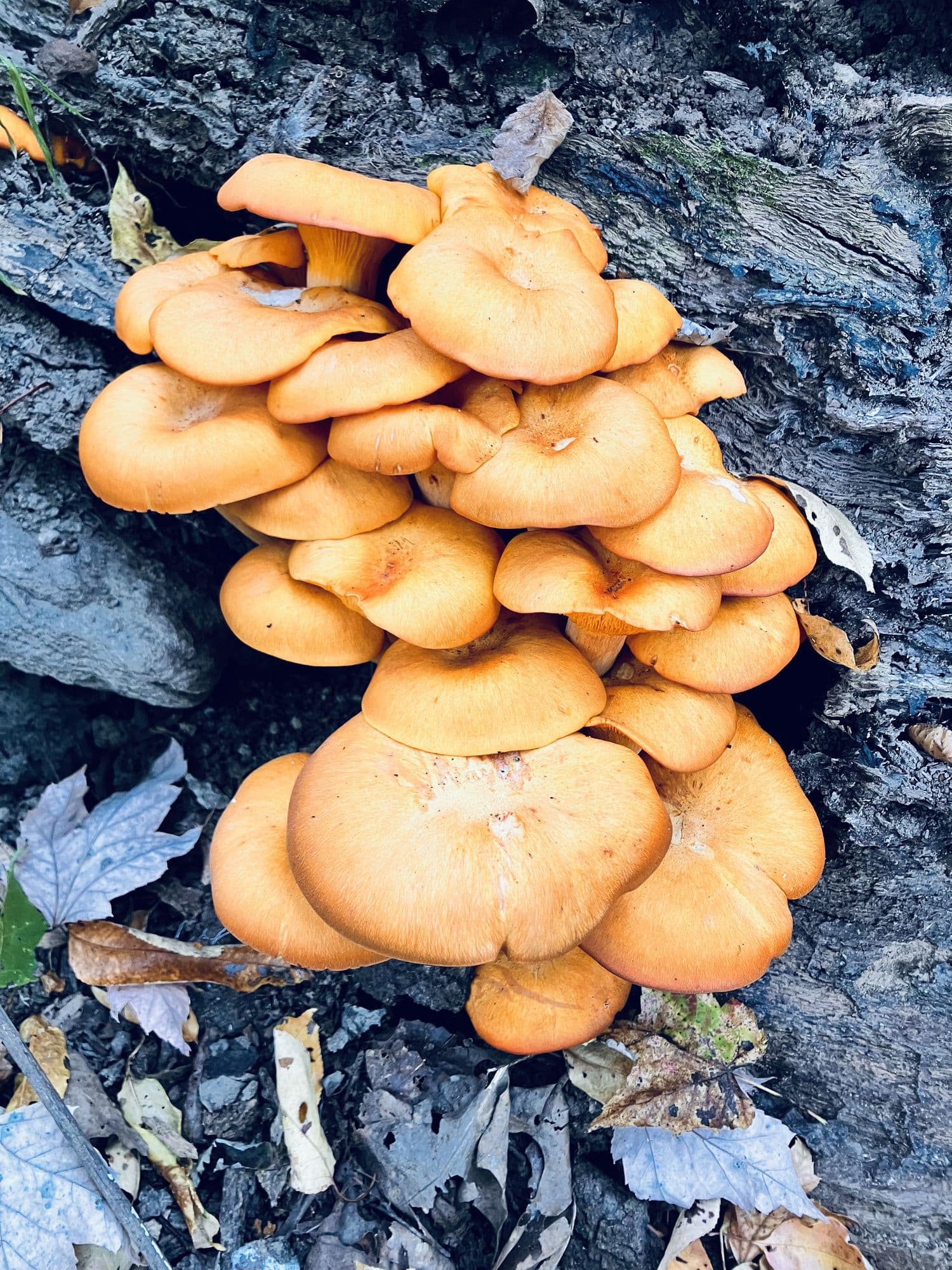
Jack-o'-Lantern
Omphalotus illudens
Jack-o'-lanterns grow in tight clusters from wood or buried roots and have sharp, crowded true gills. Their flesh is orange throughout, while a chanterelle is white inside.
Cantharellus cibarius
Also called chanterelle, girolle.
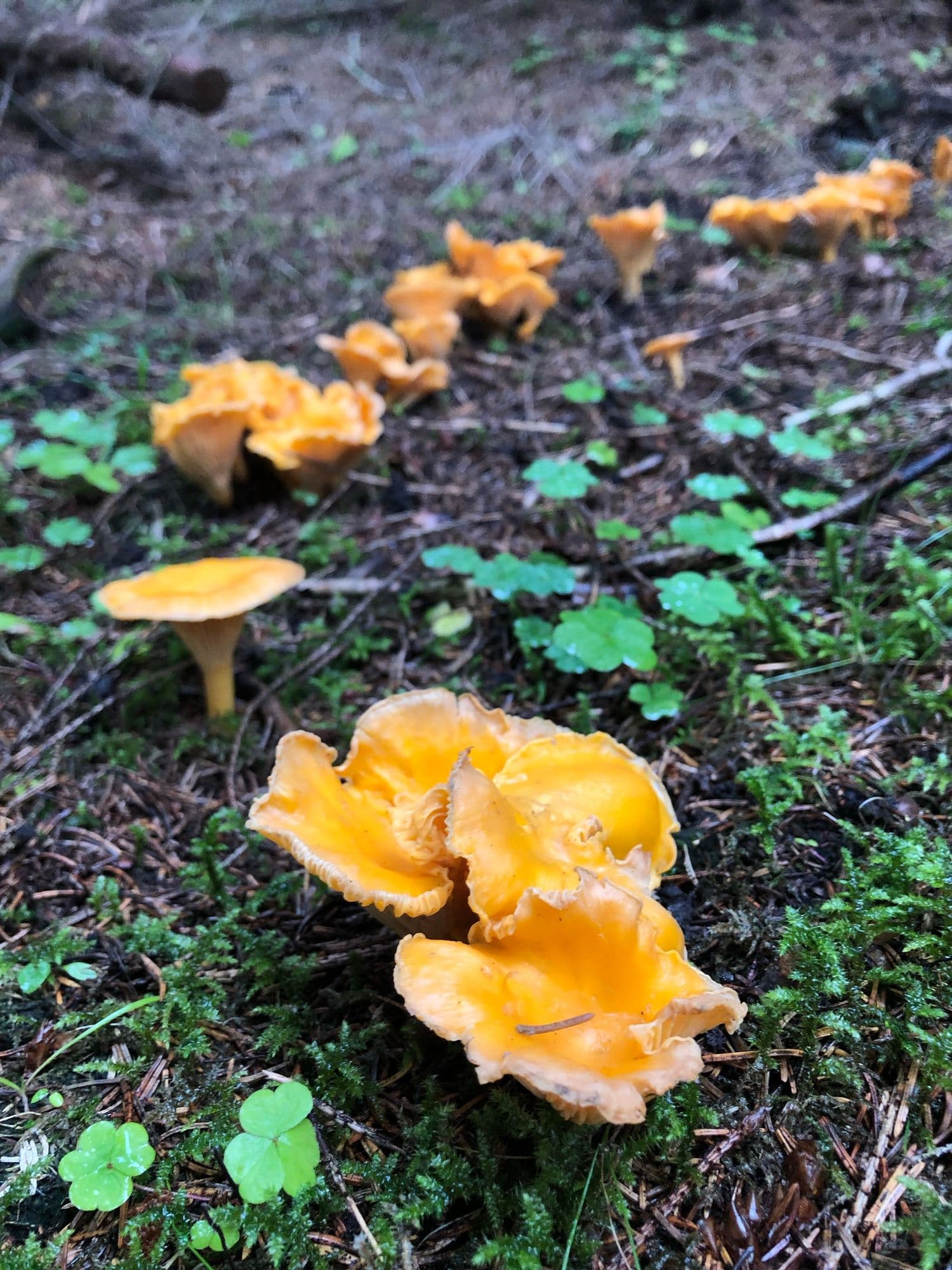
The golden chanterelle is a yellow to orange, vase-shaped mushroom with blunt false gills that run down the stem. It grows on the ground in summer and fall woods. North American goldens are now split into several species, and the toxic jack-o'-lantern is the main lookalike.
The tell
Egg-yolk yellow to orange vase with blunt, forked ridges instead of true gills.
Field marks
Cap, underside and stem show in a photo. The spore print does not, and it is often the deciding check.
Where and when
Lookalikes
Each card says how to tell the two apart.
Omphalotus illudens
Jack-o'-lanterns grow in tight clusters from wood or buried roots and have sharp, crowded true gills. Their flesh is orange throughout, while a chanterelle is white inside.
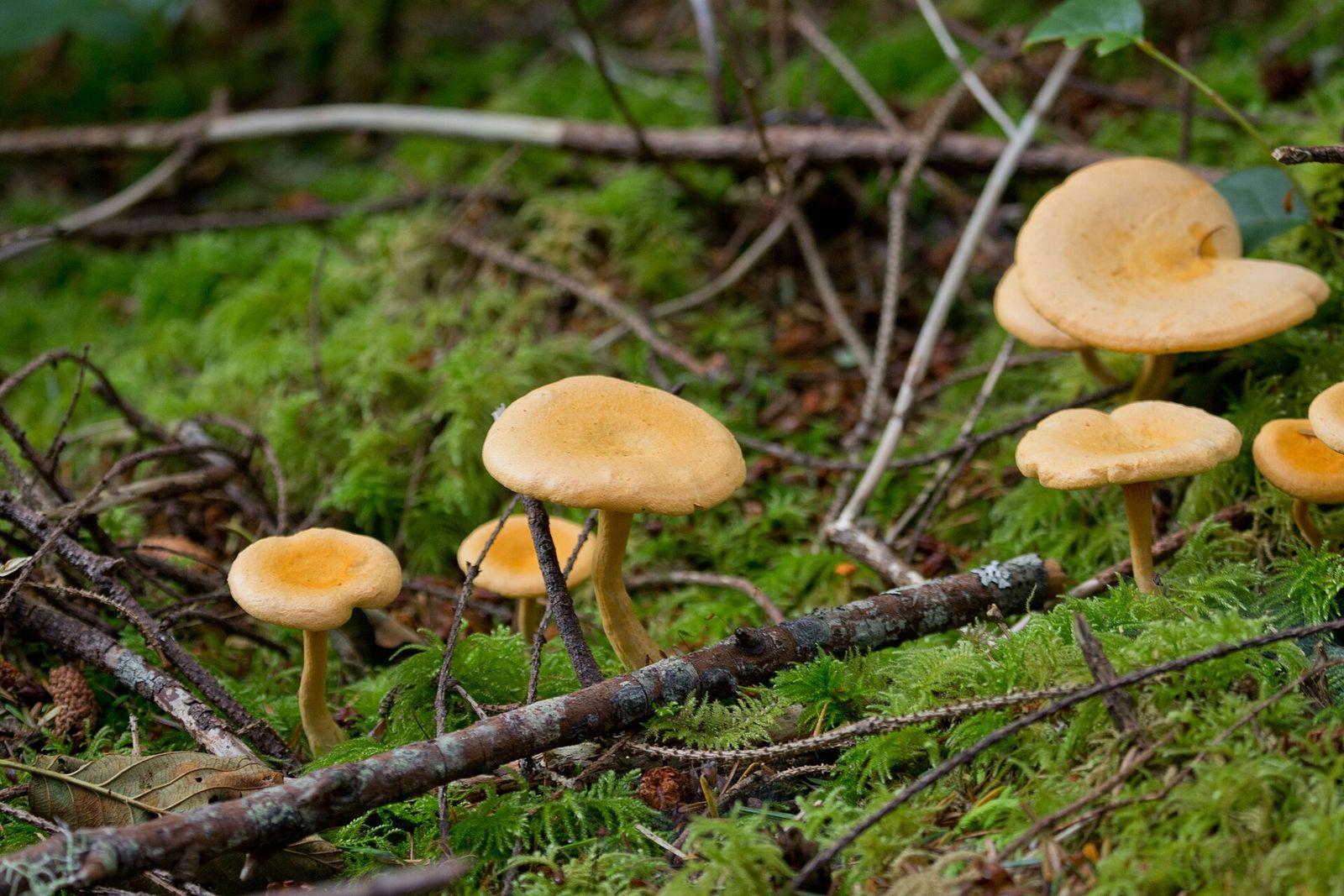
Hygrophoropsis aurantiaca
Thin, crowded true gills that fork repeatedly and are deeper orange than the cap. It grows on rotting conifer wood or duff and its soft flesh does not tear into strings.
Turbinellus floccosus
Photo coming
Turbinellus floccosus
A tall orange trumpet with a deep hollow center and a scaly top. Its wrinkled underside is cream to buff, much paler than the cap.
More side-by-side comparisons
Edibility
Field guides list the golden chanterelle as a choice edible, and it is one of the most widely collected wild mushrooms in North America. Its main toxic lookalike, the jack-o'-lantern, contains illudins, which cause severe vomiting and diarrhea within hours of a meal.
This page states what field guides record. It is not advice to eat, taste or handle anything, and a photo cannot settle edibility. If someone has eaten a wild mushroom that may be toxic, call poison control (1-800-222-1222 in the US) right away, before symptoms start: the deadliest species act hours later.
FAQ
By the underside. A chanterelle has blunt, shallow ridges that fork and run down the stem, not sharp, blade-like gills. The flesh is white inside and pulls apart in strings, the smell is fruity, and it grows singly or scattered on the ground.
Jack-o'-lanterns grow in tight clusters from stumps or buried roots, have sharp, crowded true gills, and are orange inside. Chanterelles grow singly or scattered on soil, have blunt, forked ridges, and are white inside. The jack-o'-lantern causes severe vomiting.
In eastern North America, from June to September, usually a few days after heavy summer rain. On the West Coast they fruit from fall into winter.
Sources
MushroomExpert.com
Missouri Department of Conservation
Index Fungorum
Also on Mushrooms.id
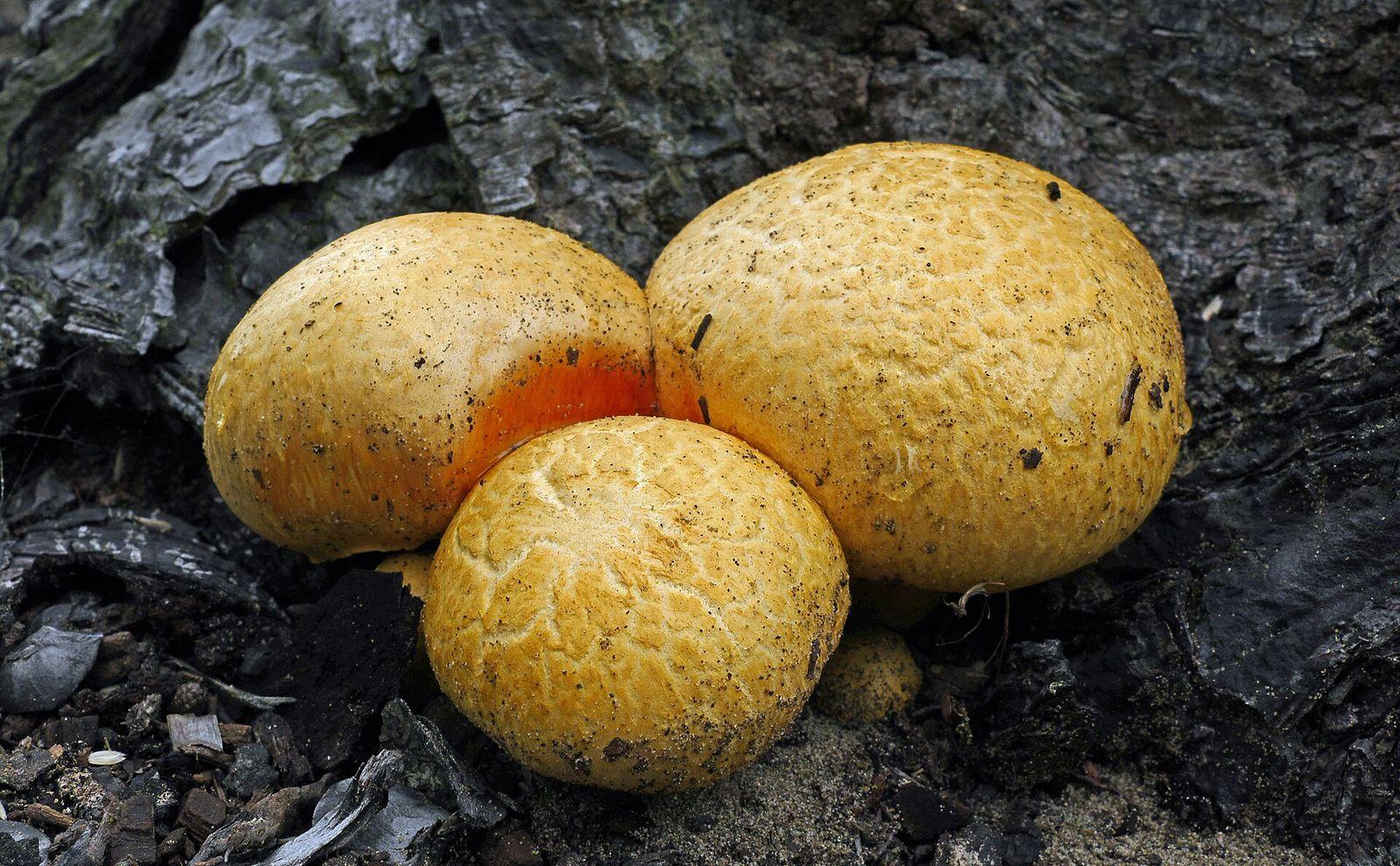
Gymnopilus junonius
A large, orange-yellow cluster on wood with a ring on a thick stem and a rusty orange spore print.
Cortinarius rubellus
Photo coming
Cortinarius rubellus
Orange-brown, pointed cap, rusty brown gills, and yellowish bands of veil on the stem, in mossy conifer woods.
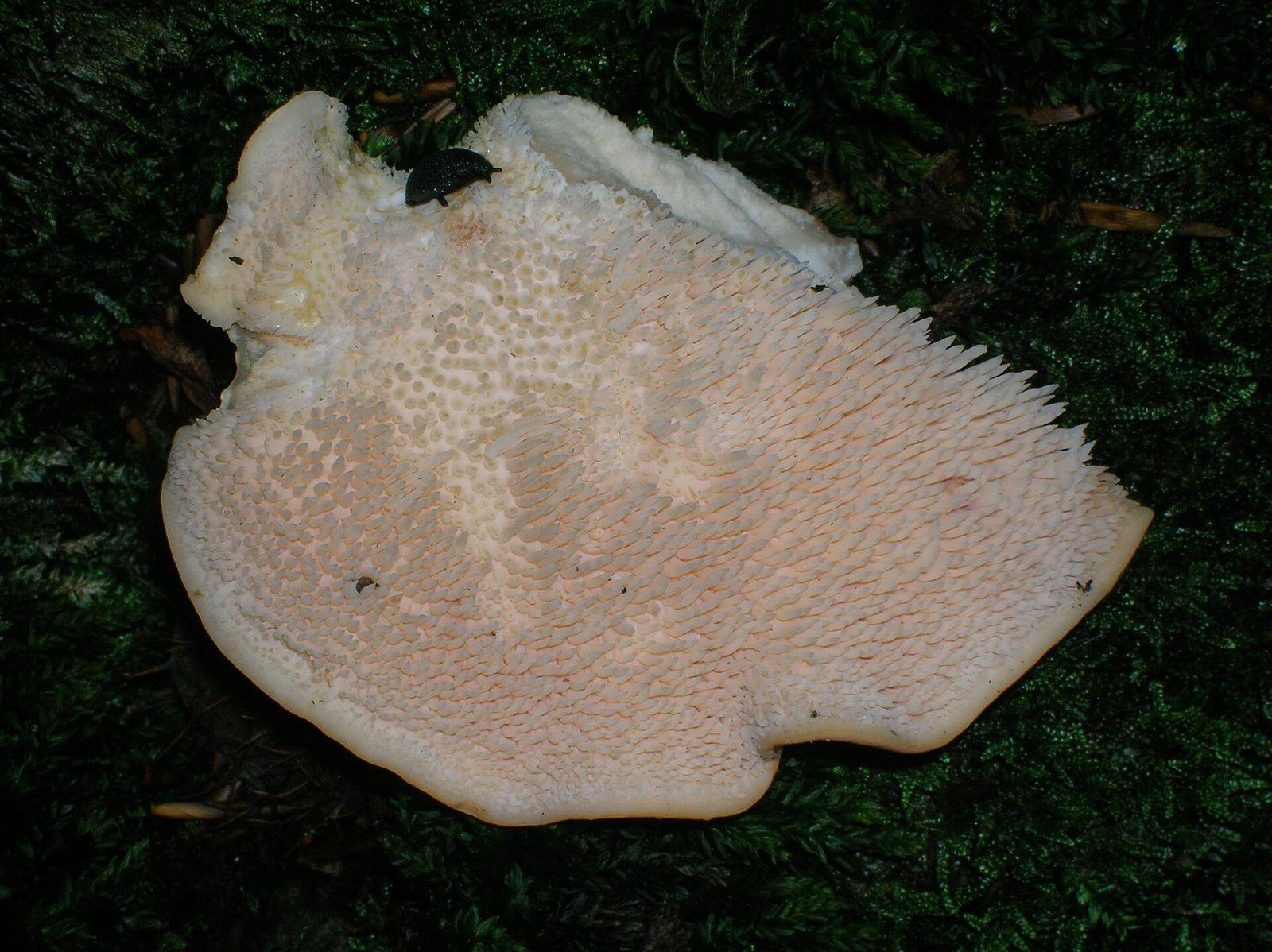
Hydnum repandum
Soft, crowded spines hang from the underside of the cap instead of gills or pores.
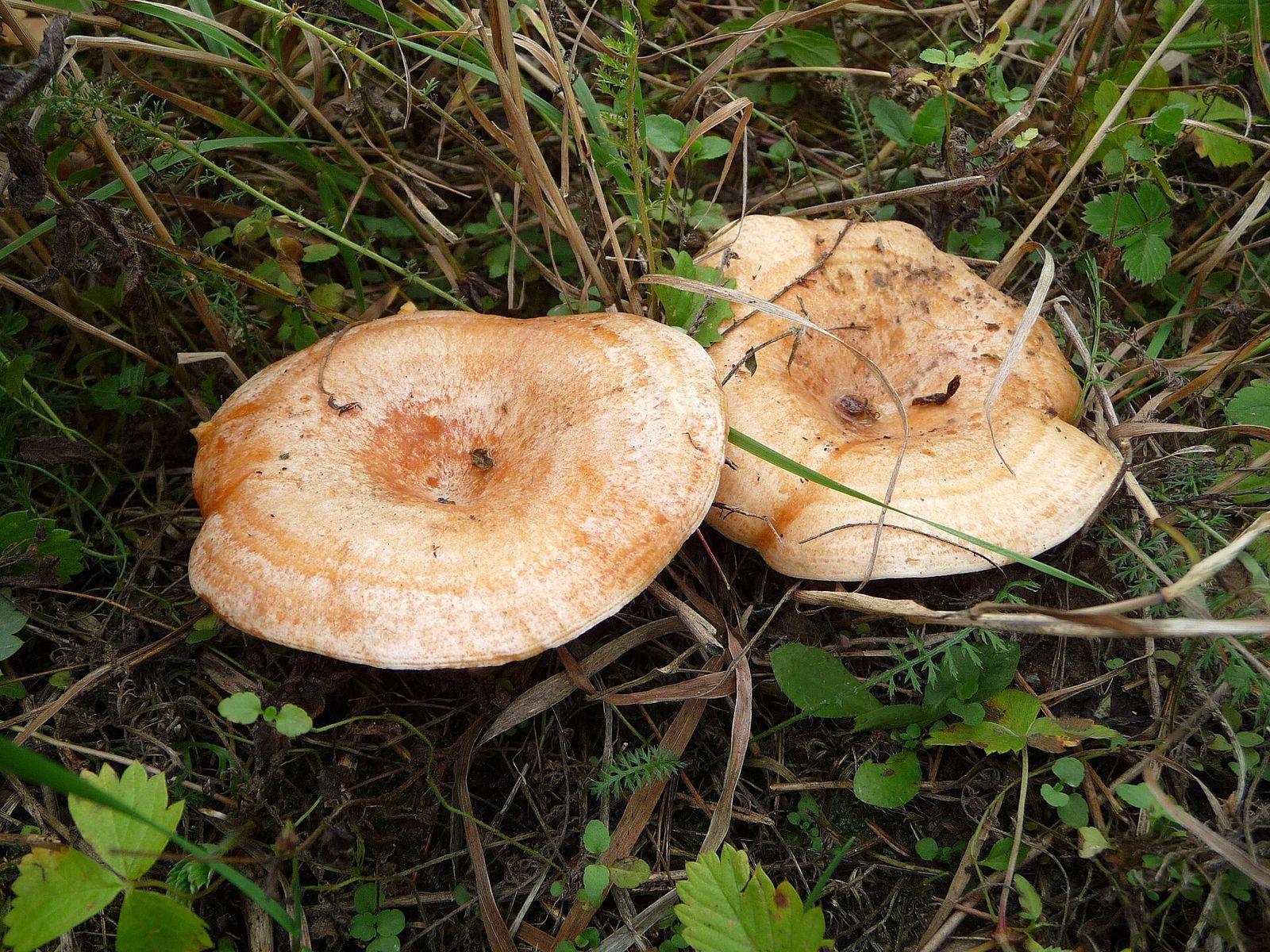
Lactarius deliciosus
Carrot-orange milk oozes from cut gills and slowly turns green.
Waitlist
We will send one email when Mushrooms.id opens, and nothing else.
This opens your email app with the request written for you. Send it and we add you to the list. No email app? Write to hello@mushrooms.id with the subject “Add me to the Mushrooms.id waitlist”.