Edible
Golden Chanterelle
Cantharellus cibarius
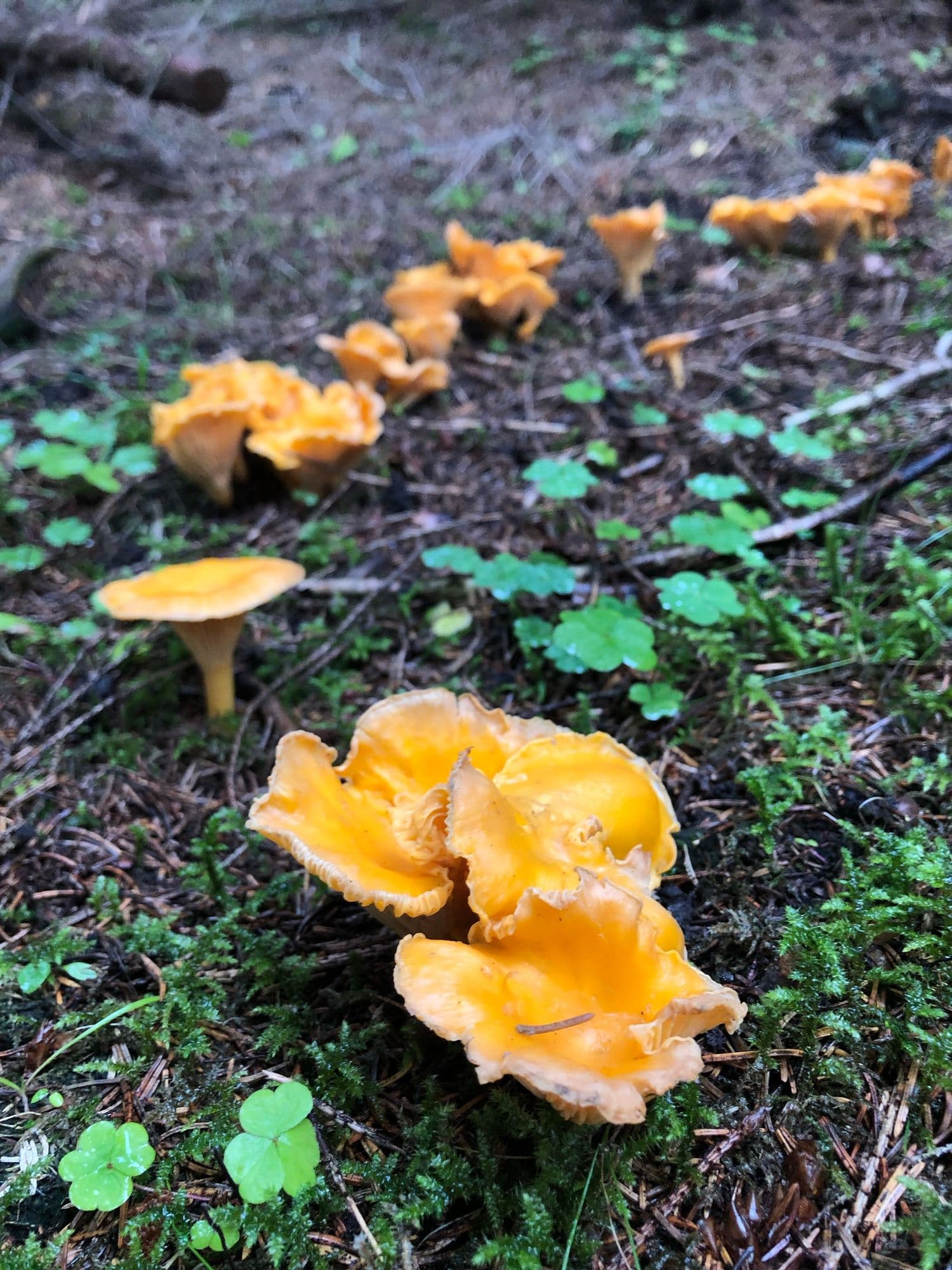
A golden chanterelle is flatter, with a smooth yellow to orange cap that is not deeply hollow or scaly, and its underside is the same color as the cap.
Turbinellus floccosus
Also called woolly chanterelle, scaly vase chanterelle.
The scaly chanterelle is a tall orange to reddish-orange trumpet of conifer forests, with a deep hollow top lined with scales and a pale, wrinkled underside. Despite its name it is not a true chanterelle, and it causes gastrointestinal upset in many people.
Turbinellus floccosus
Photo coming
The tell
Tall orange trumpet with a scaly, hollow top and a cream, wrinkled underside.
Field marks
Cap, underside and stem show in a photo. The spore print does not, and it is often the deciding check.
Where and when
Lookalikes
Each card says how to tell the two apart.
Cantharellus cibarius
A golden chanterelle is flatter, with a smooth yellow to orange cap that is not deeply hollow or scaly, and its underside is the same color as the cap.
Cantharellus formosus
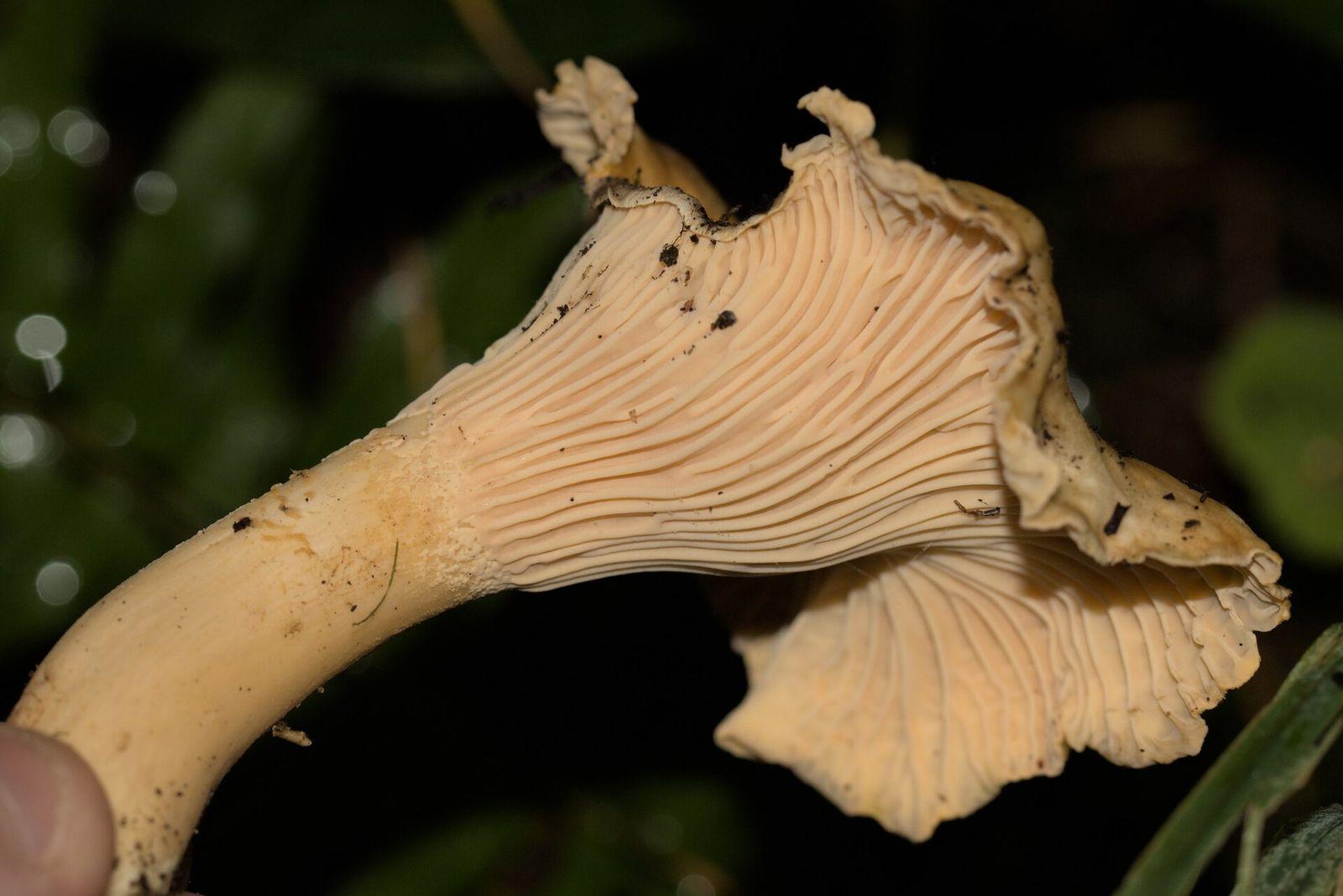
Shares western conifer forests, but has a smooth to finely fibrous golden cap, no deep hollow, and yellow to pinkish ridges rather than cream ones.
A related species with a flat, purplish-tan to lilac top and a purplish wrinkled underside, without the bright orange scaly hollow.
Edibility
Field guides list the scaly chanterelle as poisonous or not recommended. It causes nausea, vomiting and diarrhea in many people, while others report eating it without symptoms. It has been placed in Gomphus and now Turbinellus, not the true chanterelle genus Cantharellus.
This page states what field guides record. It is not advice to eat, taste or handle anything, and a photo cannot settle edibility. If someone has eaten a wild mushroom that may be toxic, call poison control (1-800-222-1222 in the US) right away, before symptoms start: the deadliest species act hours later.
FAQ
Field guides list Turbinellus floccosus as poisonous or not recommended because it causes nausea, vomiting and diarrhea in many people. Reactions vary, and some people report no symptoms.
No. It belongs to the genus Turbinellus, formerly Gomphus, in a different family from the true chanterelles. Its wrinkled underside resembles a chanterelle's, but its tall, scaly, hollow trumpet shape and pale underside separate it.
On the ground in conifer forests, especially under fir, hemlock, spruce and Douglas-fir, from summer into fall. They are most common in the western mountains and Pacific Northwest but occur across North America.
Sources
MushroomExpert.com
Beaty Biodiversity Museum, University of British Columbia
MykoWeb, California Fungi
Index Fungorum
Waitlist
We will send one email when Mushrooms.id opens, and nothing else.
This opens your email app with the request written for you. Send it and we add you to the list. No email app? Write to hello@mushrooms.id with the subject “Add me to the Mushrooms.id waitlist”.