False chanterelle vs jack-o'-lantern
- Toxic: Jack-o'-Lantern
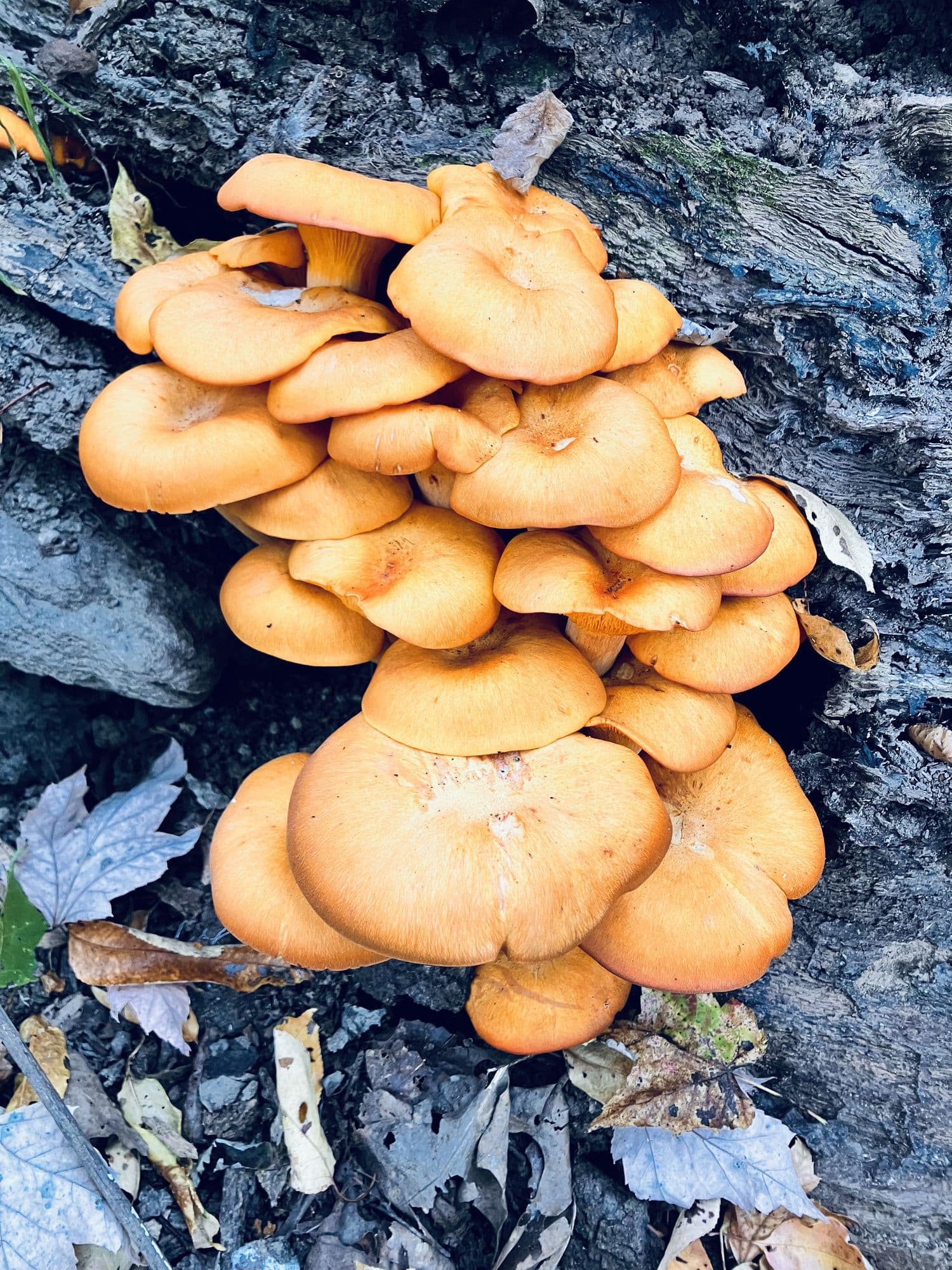
Both have true orange gills. False chanterelle gills fork repeatedly and it grows alone on conifer debris; jack-o'-lanterns cluster on hardwood.
Quick answer
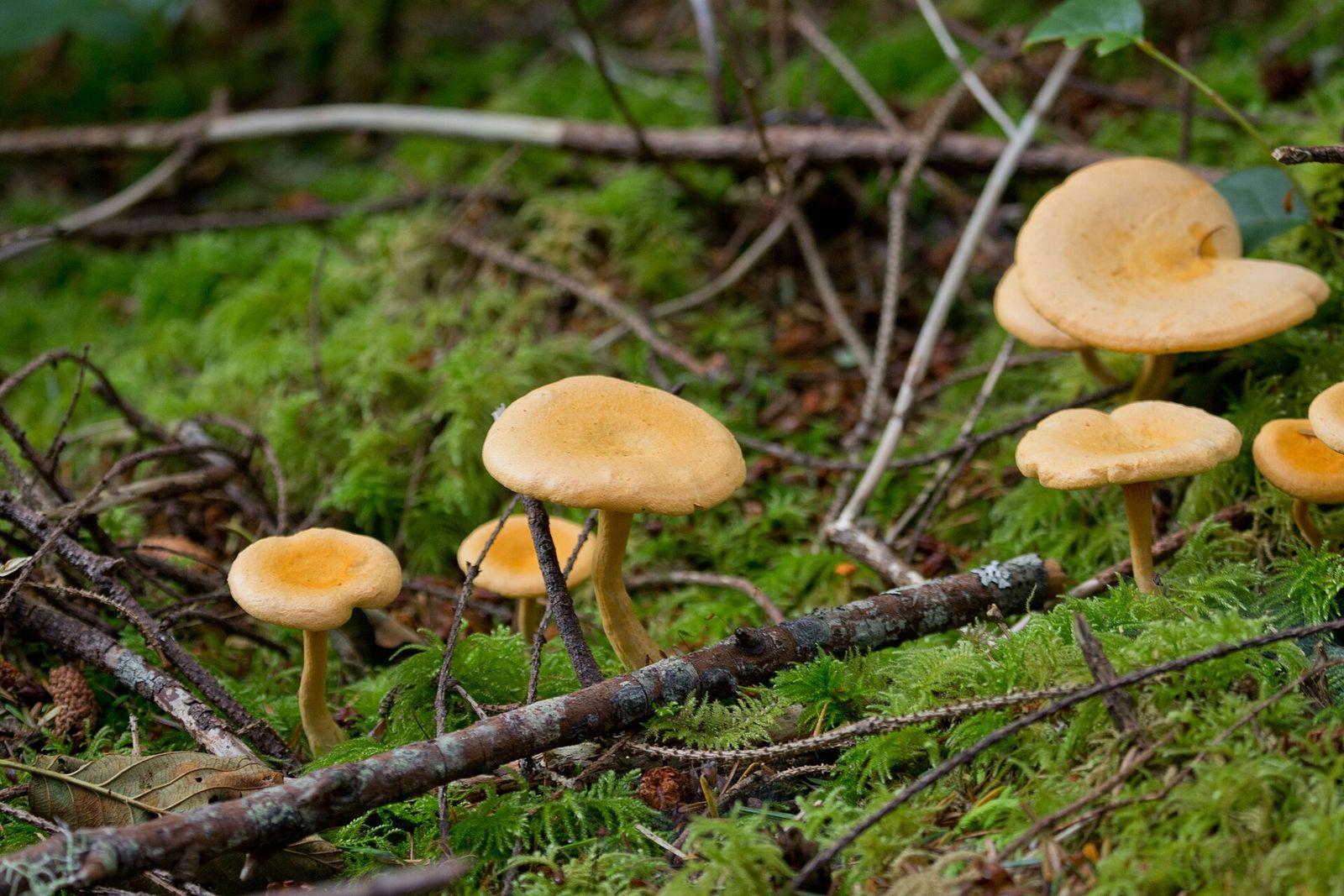
The false chanterelle has thin, crowded true gills that fork repeatedly and are usually deeper orange than the cap, and its soft flesh does not tear into strings; the golden chanterelle has blunt, shallow ridges with cross-veins, the same color as the cap or paler, and firm white flesh that pulls apart like string cheese. The false chanterelle grows on rotting conifer wood, duff or wood chips, the golden chanterelle from soil.
Toxicity
The false chanterelle (Hygrophoropsis aurantiaca) is not recorded as a dangerous poison. The University of British Columbia's Mushrooms Up! guide records that information on its edibility conflicts, that some field guides report adverse reactions, and that only one case of gastrointestinal upset appeared in the poisoning records summarized by the North American Mycological Association.
Side by side
The tellOrange cap with thin, crowded, repeatedly forked true gills, on rotting conifer wood or duff.
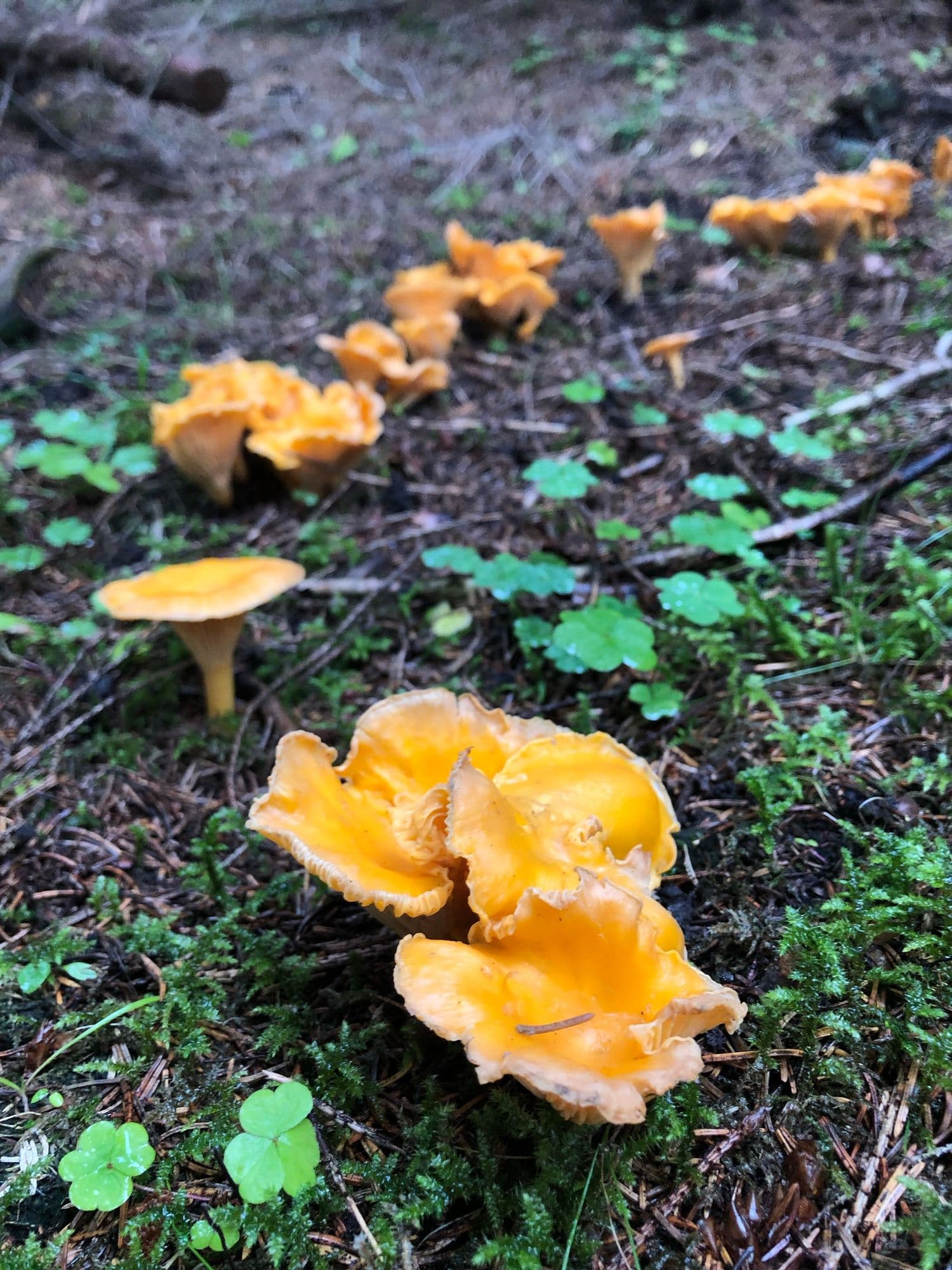
The tellEgg-yolk yellow to orange vase with blunt, forked ridges instead of true gills.
| Feature | False Chanterelle | Golden Chanterelle |
|---|---|---|
| Underside | False ChanterelleThin, crowded true gills that fork repeatedly. | Golden ChanterelleBlunt, shallow, forked ridges with cross-veins. |
| Underside color | False ChanterelleBright orange, usually deeper than the cap. | Golden ChanterelleThe same color as the cap or paler. |
| Flesh | False ChanterelleThin, soft, pale orange to whitish; not stringy. | Golden ChanterelleFirm, white to pale yellow, tearing into strings. |
| What it grows on | False ChanterelleRotting conifer wood, needle duff, wood chips and mulch. | Golden ChanterelleSoil, often in moss; never on wood. |
| Cap | False ChanterelleOrange to orange-brown, often darker at the center, dry and finely velvety. | Golden ChanterelleEgg-yolk yellow to golden orange, smooth to slightly felty. |
| Smell | False ChanterelleNot distinctive. | Golden ChanterelleFruity, often compared to apricots. |
FAQ
A false chanterelle has thin, true gills that fork repeatedly and soft flesh. A real chanterelle has blunt ridges and firm white flesh that tears into strings. MushroomExpert.com describes the false chanterelle as a soft, flimsy mushroom compared with the sturdy chanterelles.
Reports conflict, and it is not among the dangerous species. Some field guides record adverse reactions, but North American poisoning records summarized by NAMA show only one case of gastrointestinal upset.
Often, if the underside is sharp in the picture: crowded, knife-thin gills versus blunt, low ridges. A photo of the top alone cannot show the difference.
Sources
MushroomExpert.com
MushroomExpert.com
Beaty Biodiversity Museum, University of British Columbia
Missouri Department of Conservation
Keep checking
This page states what field guides record. It is not advice to eat, taste or handle anything, and a photo cannot settle edibility. If someone has eaten a wild mushroom that may be toxic, call poison control (1-800-222-1222 in the US) right away, before symptoms start: the deadliest species act hours later.
More comparisons
Both have true orange gills. False chanterelle gills fork repeatedly and it grows alone on conifer debris; jack-o'-lanterns cluster on hardwood.
Chanterelles have blunt forked ridges, white stringy flesh and grow from soil. Jack-o'-lanterns have sharp gills, orange flesh and cluster on wood.
Cortinarius rubellus
Photo coming
The deadly webcap has true rusty gills, a cobweb veil and a pointed cap. Chanterelles have blunt forked ridges, white stringy flesh and no veil.
Waitlist
We will send one email when Mushrooms.id opens, and nothing else.
This opens your email app with the request written for you. Send it and we add you to the list. No email app? Write to hello@mushrooms.id with the subject “Add me to the Mushrooms.id waitlist”.