Chicken of the woods vs jack-o'-lantern
- Toxic: Jack-o'-Lantern
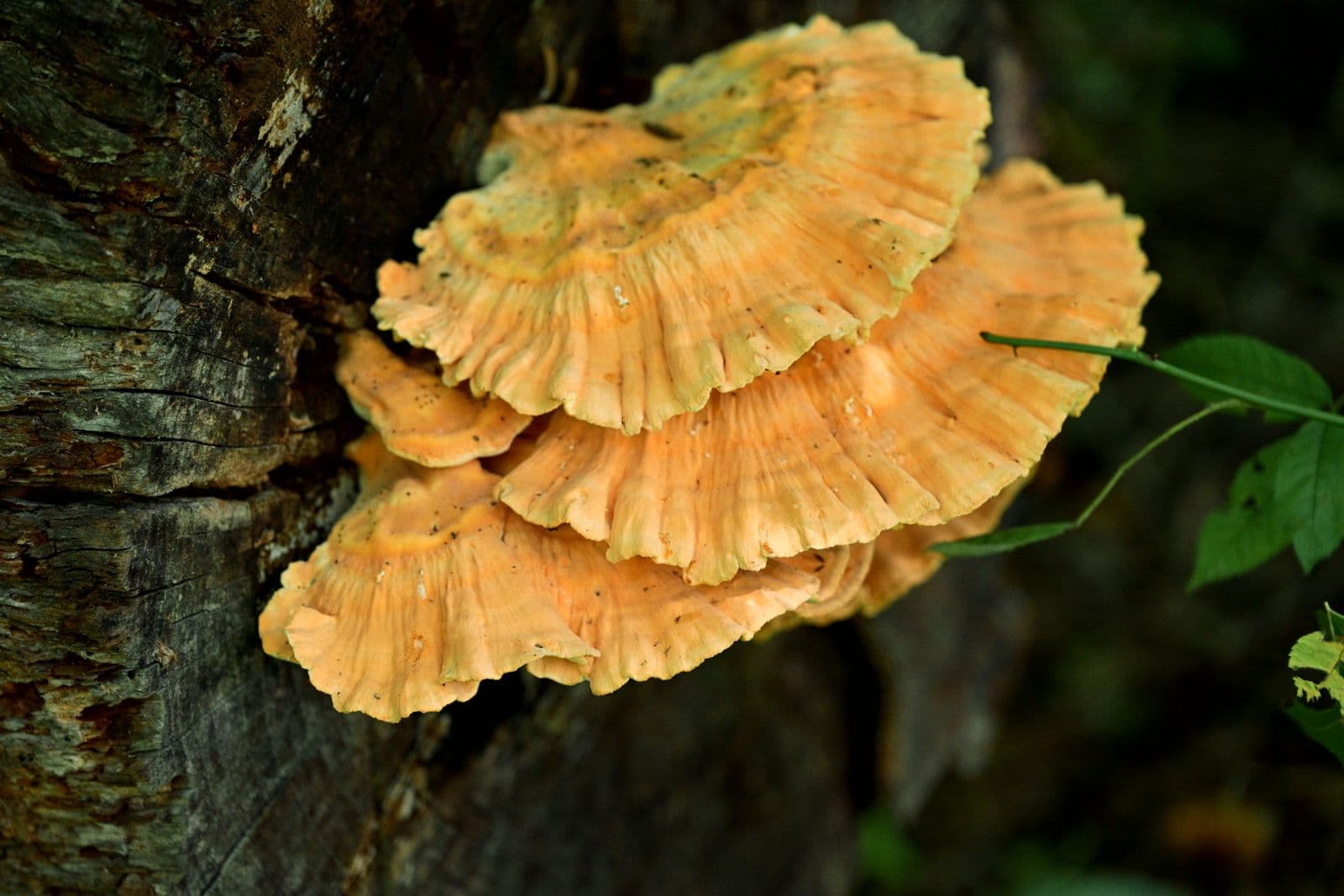
Look under the orange: chicken of the woods has yellow pores and no stems. A jack-o'-lantern has sharp orange gills on separate stems.
Quick answer
A golden chanterelle has blunt, shallow, forked ridges with cross-veins instead of true gills, and white flesh that pulls apart in strings; a jack-o'-lantern has sharp, crowded true gills and orange flesh right through the stem. They also grow differently: chanterelles come up singly or scattered from soil, jack-o'-lanterns in tight clusters from wood or buried roots.
Toxic lookalike
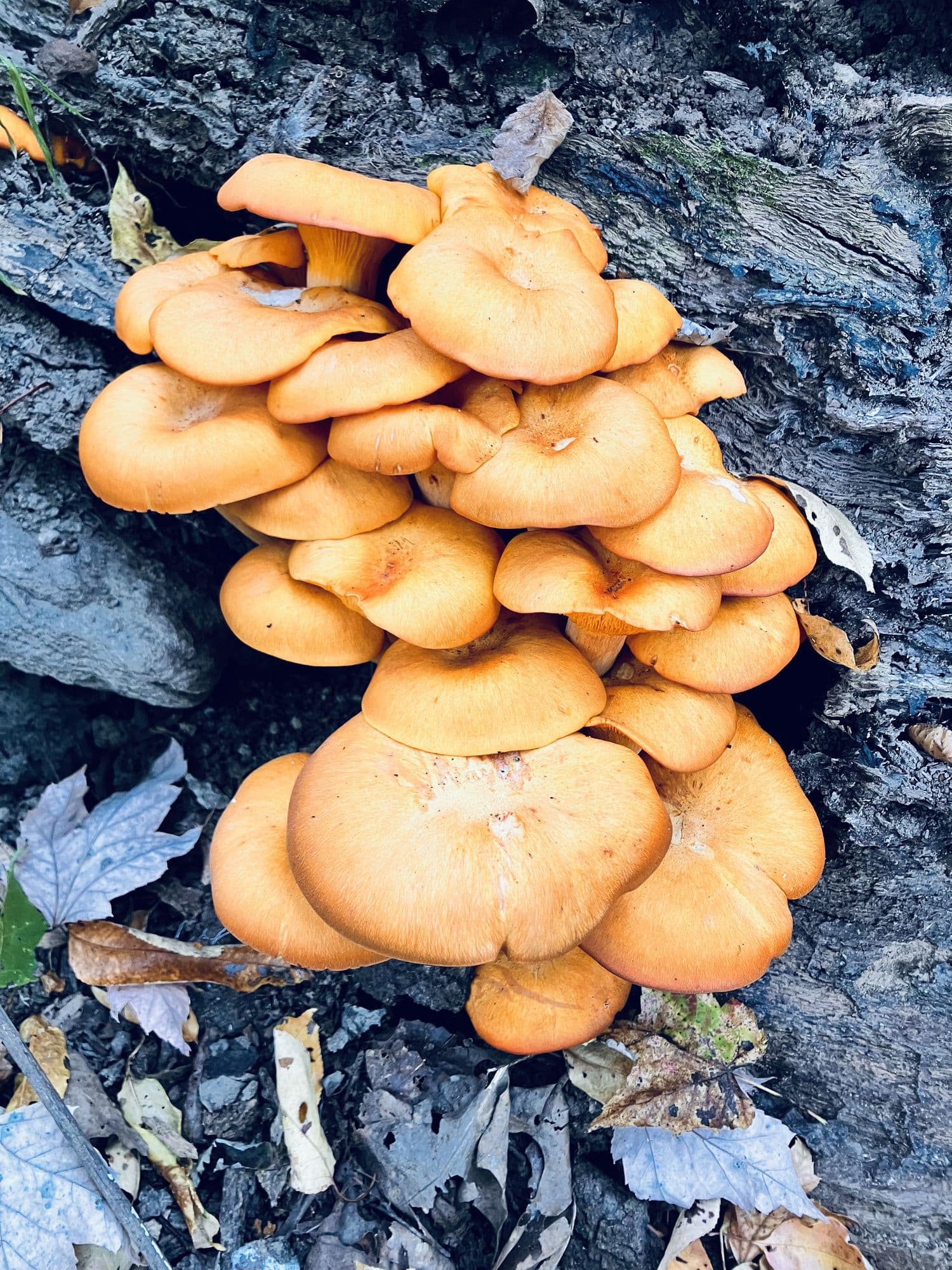
Unlike the golden chanterelle, the jack-o'-lantern (Omphalotus illudens) is poisonous. The Bay Area Mycological Society names illudins M and S as the main toxins in Omphalotus and describes a rapid onset of serious gastrointestinal symptoms, sometimes lasting several days. Tom Volk records severe cramps, vomiting and diarrhea, and the Missouri Department of Conservation notes that it is not life-threatening to healthy adults.
If someone has eaten a wild mushroom and feels unwell, or may have eaten one of these, call poison control now: 1-800-222-1222 in the US. Do not wait for symptoms.
Side by side
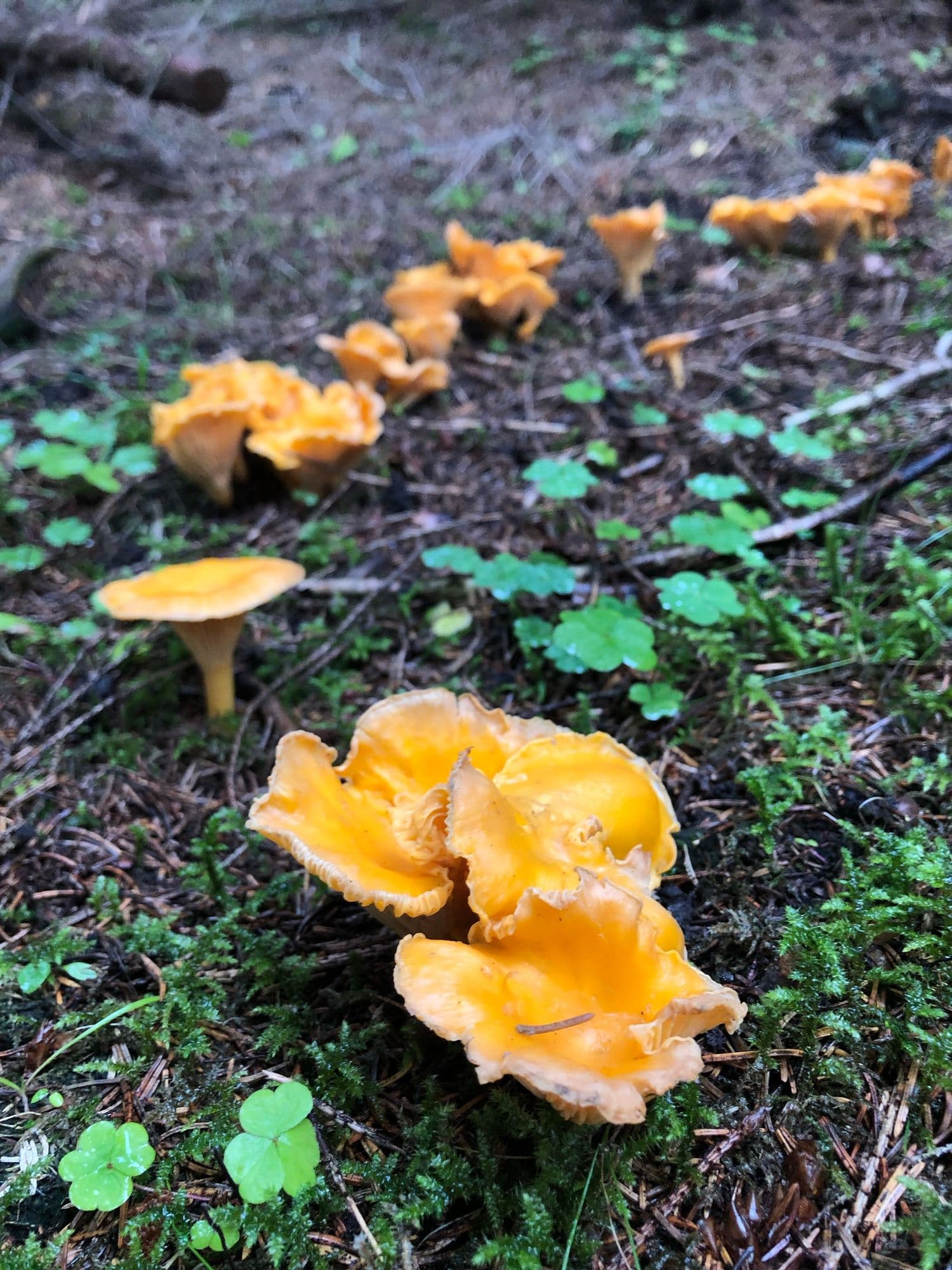
The tellEgg-yolk yellow to orange vase with blunt, forked ridges instead of true gills.
The tellBright orange clusters on wood with sharp true gills and orange flesh.
| Feature | Golden Chanterelle | Jack-o'-Lantern |
|---|---|---|
| Underside | Golden ChanterelleBlunt, shallow, forked ridges with cross-veins. | Jack-o'-LanternSharp, crowded true gills. |
| Flesh | Golden ChanterelleWhite to pale yellow, firm, tearing into strings. | Jack-o'-LanternOrange to pale orange throughout, including the stem. |
| Growth | Golden ChanterelleSingle or scattered. | Jack-o'-LanternTight clusters with stems fused at the base. |
| What it grows on | Golden ChanterelleSoil, often in moss; never on wood. | Jack-o'-LanternStumps, tree bases and buried roots, so clusters can seem to grow from soil. |
| Cap | Golden ChanterelleFlat to vase-shaped with a wavy, lobed edge. | Jack-o'-LanternConvex to funnel-shaped, often with a small central knob. |
| Smell | Golden ChanterelleFruity, often compared to apricots. | Jack-o'-LanternNot distinctive. |
FAQ
Chanterelles have blunt, forked ridges, white flesh and grow from soil. Jack-o'-lanterns have sharp true gills, orange flesh and grow in clusters from wood.
It can look that way. Jack-o'-lanterns often grow from buried roots, so a cluster in a lawn or at the foot of a tree may be attached to wood below the surface.
Often, if the underside is shown: blunt ridges versus sharp gills. From the top alone they can look alike, and color does not help, since both are orange.
Sources
MushroomExpert.com
MushroomExpert.com
Missouri Department of Conservation
Bay Area Mycological Society
Keep checking
This page states what field guides record. It is not advice to eat, taste or handle anything, and a photo cannot settle edibility. If someone has eaten a wild mushroom that may be toxic, call poison control (1-800-222-1222 in the US) right away, before symptoms start: the deadliest species act hours later.
More comparisons
Look under the orange: chicken of the woods has yellow pores and no stems. A jack-o'-lantern has sharp orange gills on separate stems.
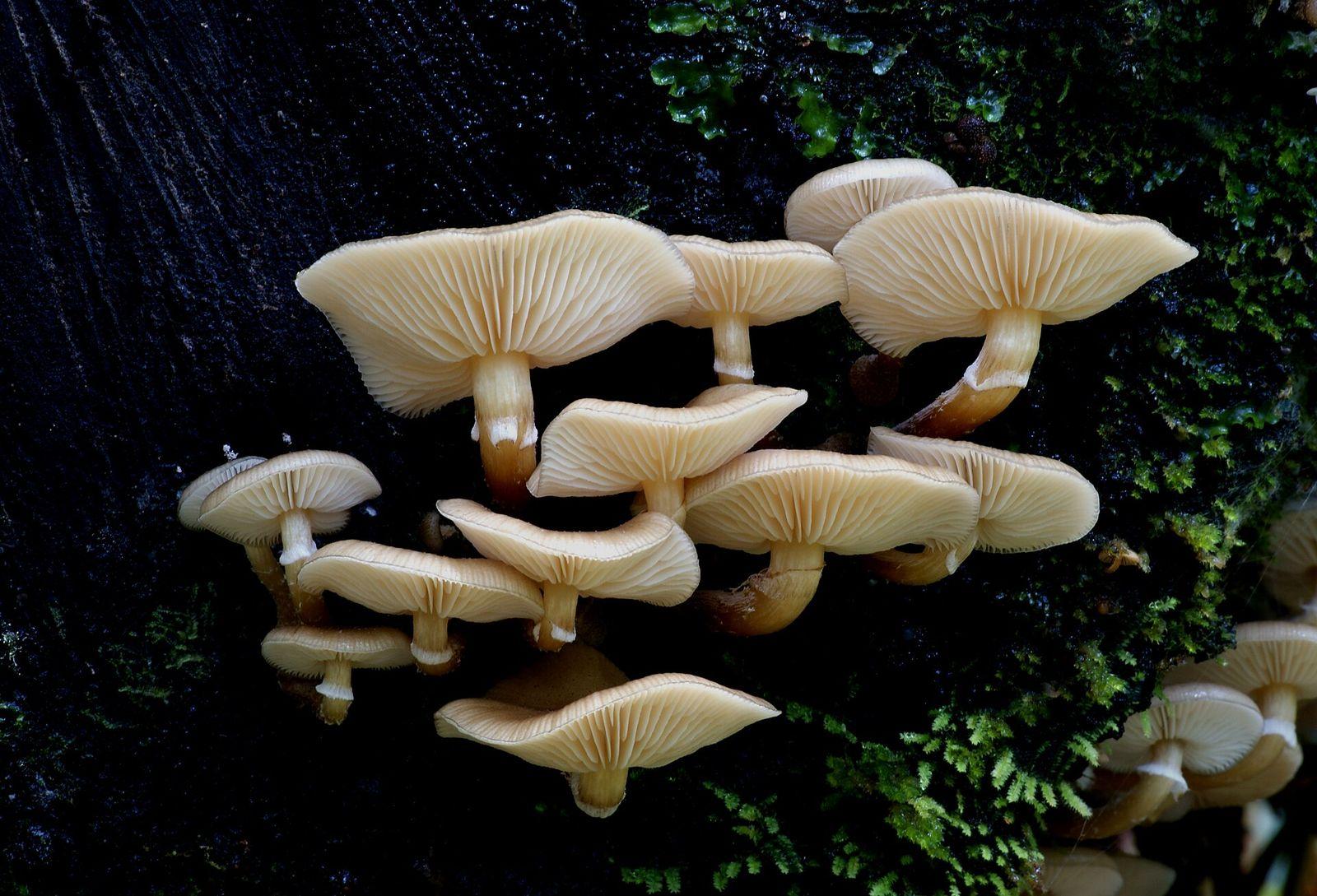
Honey mushrooms have a ring, white gills and white flesh. Jack-o'-lanterns have no ring, sharp orange gills and orange flesh.
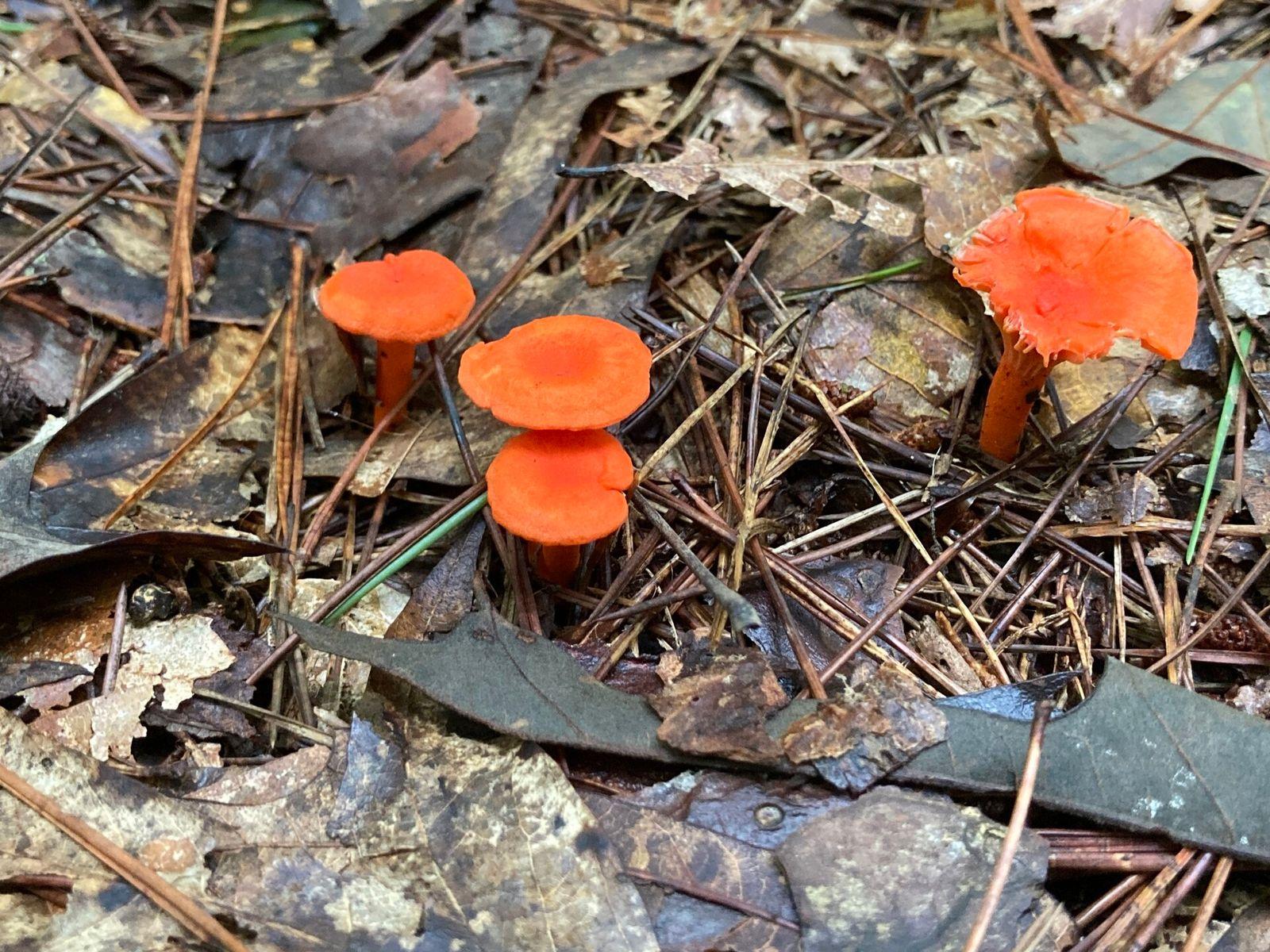
The cinnabar chanterelle is small, red and grows alone on soil with forked false gills. Jack-o'-lanterns are large, orange and clustered on wood.
Waitlist
We will send one email when Mushrooms.id opens, and nothing else.
This opens your email app with the request written for you. Send it and we add you to the list. No email app? Write to hello@mushrooms.id with the subject “Add me to the Mushrooms.id waitlist”.