Lactarius indigo
Photo coming
Edible
Indigo Milk Cap
Lactarius indigo
Shares the green staining, but the whole mushroom and its latex are blue.
Lactarius deliciosus
Also called delicious milk cap, red pine mushroom.
The saffron milk cap is an orange, zoned milk cap that grows under pines and other conifers. Cut or broken, it oozes orange latex, and its gills and cap stain green with age or handling. North American collections include several close relatives.
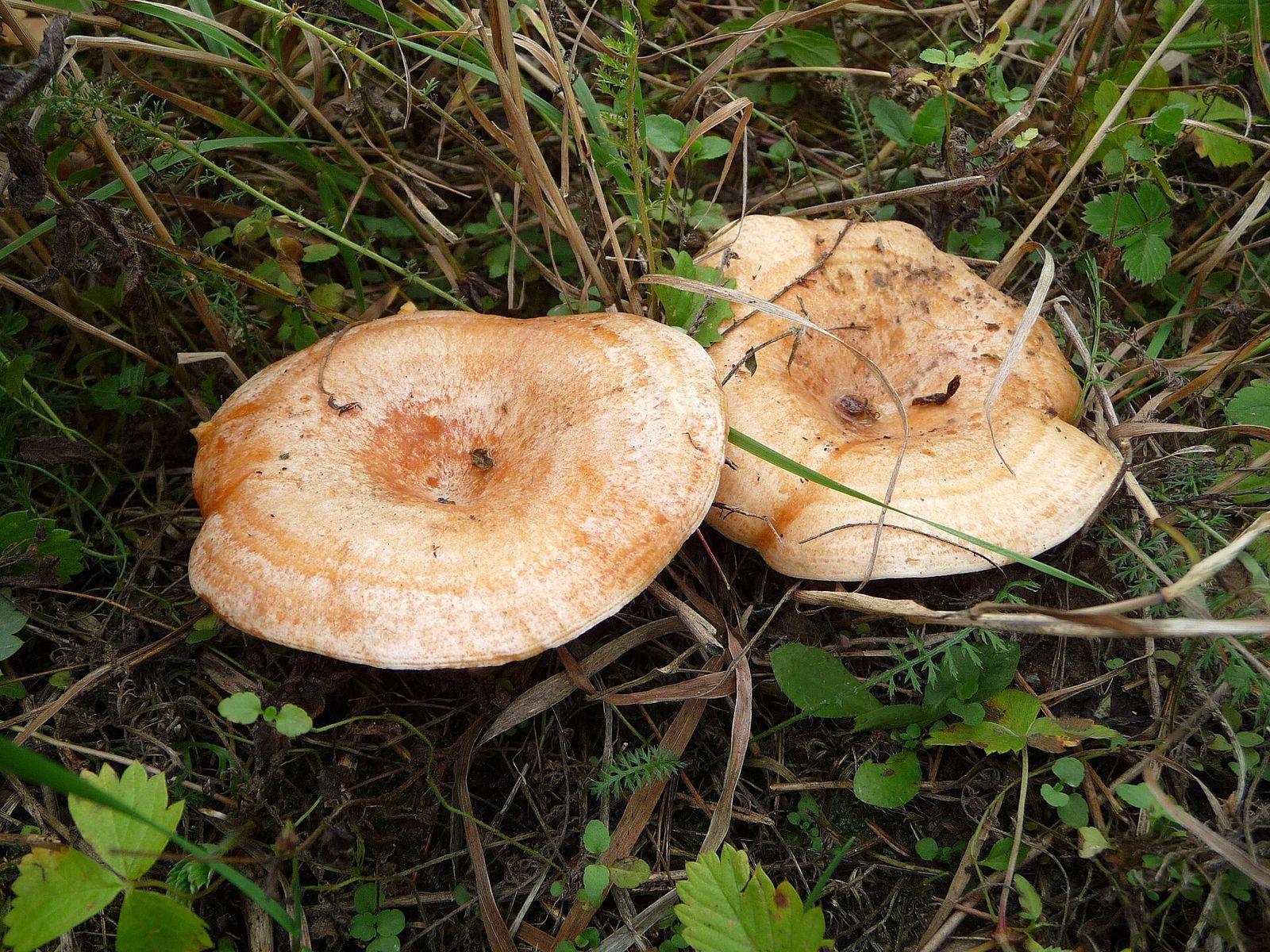
The tell
Carrot-orange milk oozes from cut gills and slowly turns green.
Field marks
Cap, underside and stem show in a photo. The spore print does not, and it is often the deciding check.
Where and when
Lookalikes
Each card says how to tell the two apart.
Pinkish with a shaggy, woolly cap margin, and its latex is white rather than orange. Field guides list it as poisonous, causing stomach upset.
A western relative whose latex is dark red to wine-colored rather than orange. It also stains green.
Lactarius indigo
Photo coming
Lactarius indigo
Shares the green staining, but the whole mushroom and its latex are blue.
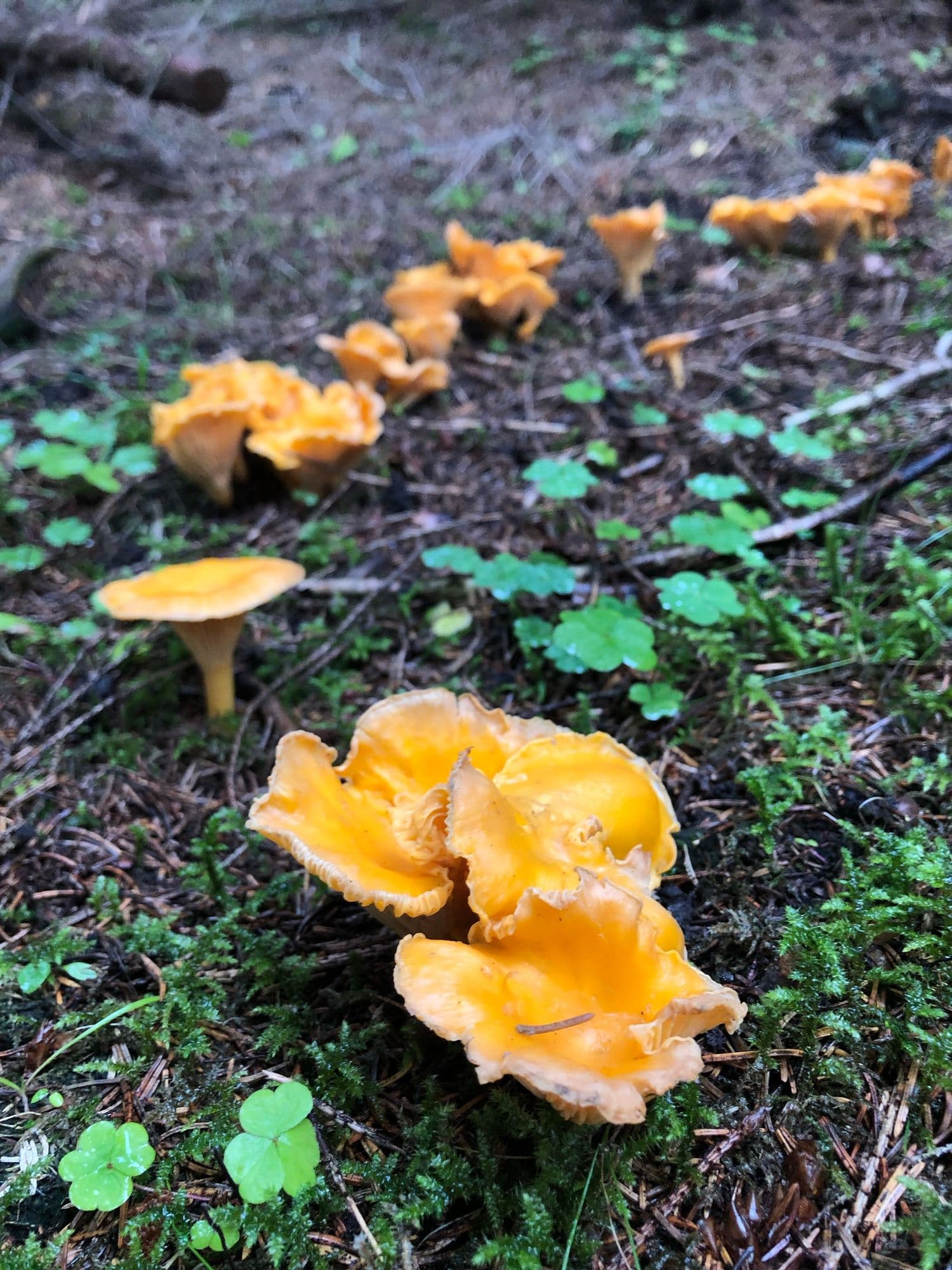
Cantharellus cibarius
Has blunt ridges instead of true gills, gives no latex when cut, and does not stain green.
Edibility
Field guides list the saffron milk cap as edible, and it is widely collected in Europe. North American guides rate local forms from good to mediocre, with a grainy texture. Its main toxic confusion is the woolly milk cap and other milk caps with white, acrid latex, which cause gastrointestinal upset.
This page states what field guides record. It is not advice to eat, taste or handle anything, and a photo cannot settle edibility. If someone has eaten a wild mushroom that may be toxic, call poison control (1-800-222-1222 in the US) right away, before symptoms start: the deadliest species act hours later.
FAQ
Its orange latex and the tissue around it turn green when cut, bruised or old. The green patches on the cap and gills are a key field mark, not a sign of decay.
Field guides list it as edible. Milk caps with white latex, such as the woolly milk cap, are listed as poisonous, so latex color is the main point of separation.
On the ground under pines and other conifers, including pine plantations and parks. It fruits from late summer through fall, and later into winter along the Pacific Coast.
Sources
MushroomExpert.com
Beaty Biodiversity Museum, University of British Columbia
MykoWeb, California Fungi
Index Fungorum
Waitlist
We will send one email when Mushrooms.id opens, and nothing else.
This opens your email app with the request written for you. Send it and we add you to the list. No email app? Write to hello@mushrooms.id with the subject “Add me to the Mushrooms.id waitlist”.