Edible
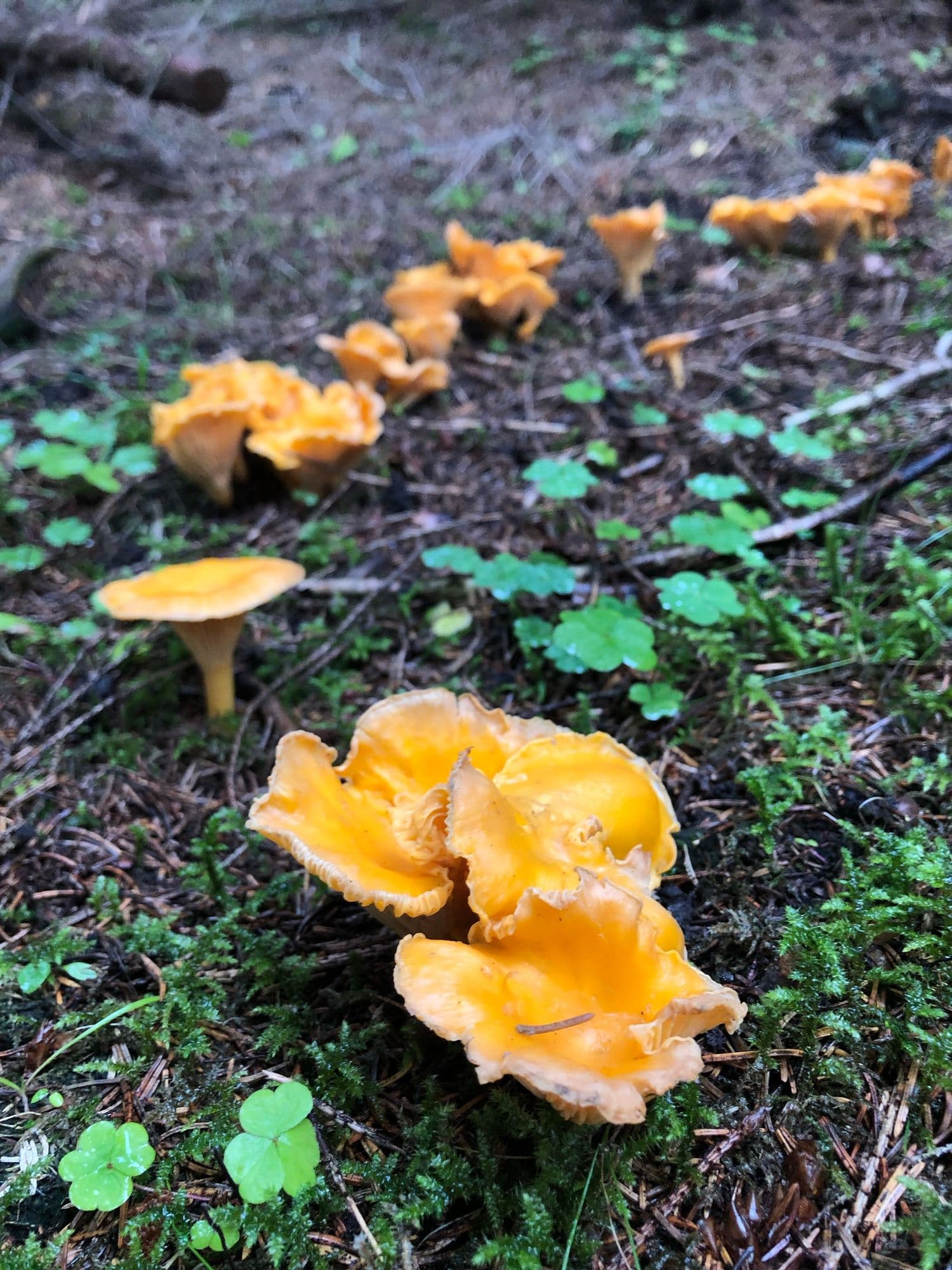
Golden Chanterelle
Cantharellus cibarius
From above the two look alike. A chanterelle has blunt, forked ridges running down the stem; a hedgehog has loose spines.
Hydnum repandum
Also called sweet tooth, wood hedgehog, pied de mouton.
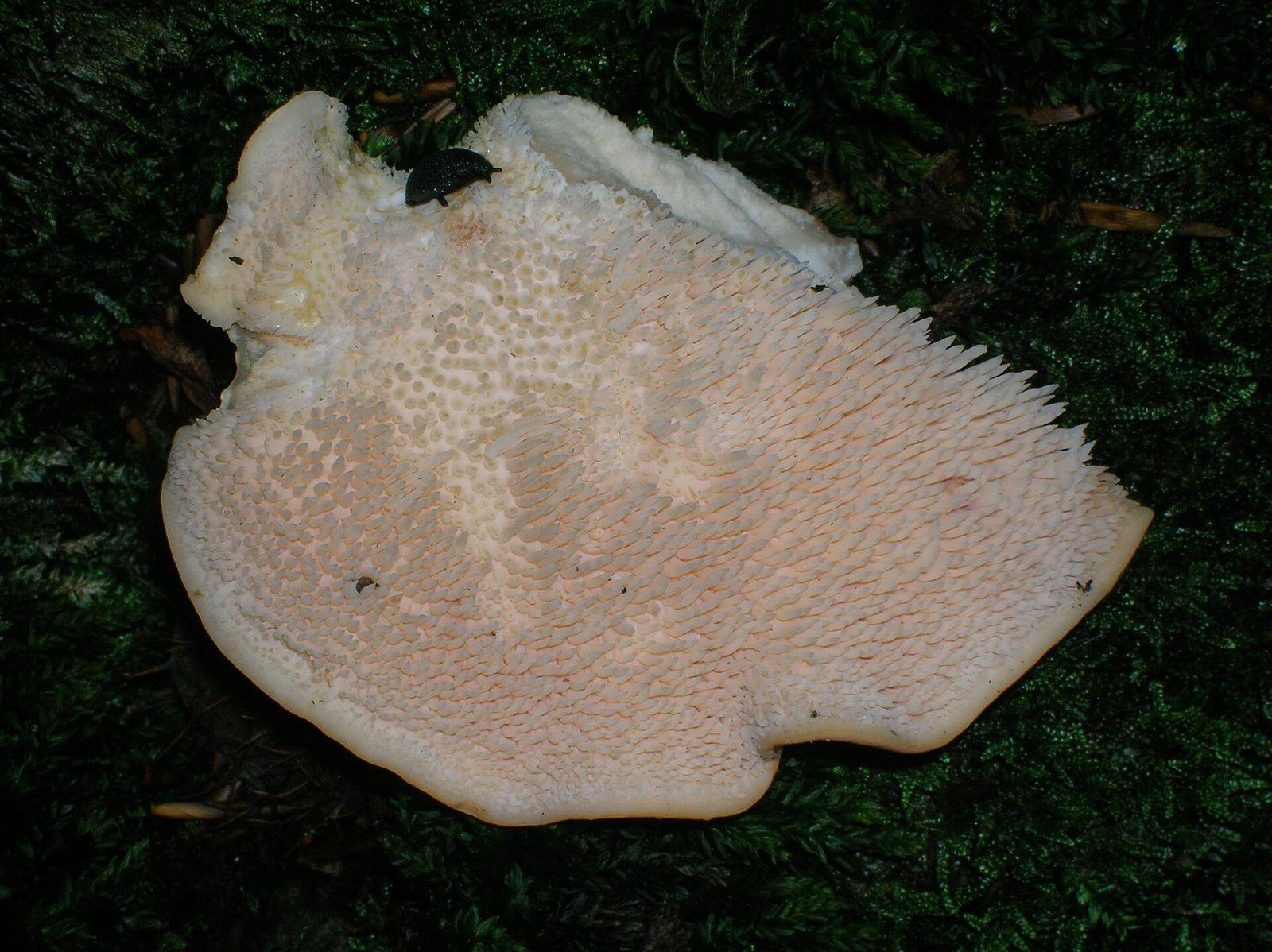
The hedgehog mushroom is a pale orange to buff woodland mushroom with small spines under the cap where gills would be. It grows on the ground under conifers and hardwoods from summer into fall, and it is one of the easier edible mushrooms to recognize.
The tell
Soft, crowded spines hang from the underside of the cap instead of gills or pores.
Field marks
Cap, underside and stem show in a photo. The spore print does not, and it is often the deciding check.
Where and when
Lookalikes
Each card says how to tell the two apart.
These also have spines, but they are tough, corky or scaly, often brown, bluish or zoned, and many are bitter. The hedgehog mushroom is soft, pale and smooth-capped.
Cantharellus cibarius
From above the two look alike. A chanterelle has blunt, forked ridges running down the stem; a hedgehog has loose spines.
A smaller, thinner relative with a navel-like dip in the cap center and a more slender stem. Field guides list it as edible as well.
Edibility
Field guides across North America list the hedgehog mushroom as a choice edible. Older and larger specimens are recorded as becoming bitter. No spined mushroom in North America is known to be deadly, and the soft spines and pale color separate it from the tough, corky tooth fungi.
This page states what field guides record. It is not advice to eat, taste or handle anything, and a photo cannot settle edibility. If someone has eaten a wild mushroom that may be toxic, call poison control (1-800-222-1222 in the US) right away, before symptoms start: the deadliest species act hours later.
FAQ
A pale orange to buff cap on a short, thick, whitish stem, with soft spines on the underside instead of gills. The cap is often lumpy or irregular, and the flesh is firm and white.
Field guides do not list it as poisonous. They list it as edible and among the most distinctive wild mushrooms because of its spines. Old specimens are described as bitter.
On the ground in forests with conifers or hardwoods, often in moss along trails. They fruit from summer through fall in most of North America and through the winter rainy season in California.
Sources
MushroomExpert.com
Missouri Department of Conservation
MykoWeb, California Fungi
Index Fungorum
Waitlist
We will send one email when Mushrooms.id opens, and nothing else.
This opens your email app with the request written for you. Send it and we add you to the list. No email app? Write to hello@mushrooms.id with the subject “Add me to the Mushrooms.id waitlist”.